



Rococo Revival Urns
Rococo revival urns bring sculptural excess and painterly warmth into a room, offering the collector a riot of gilt and porcelain.
What these pieces are
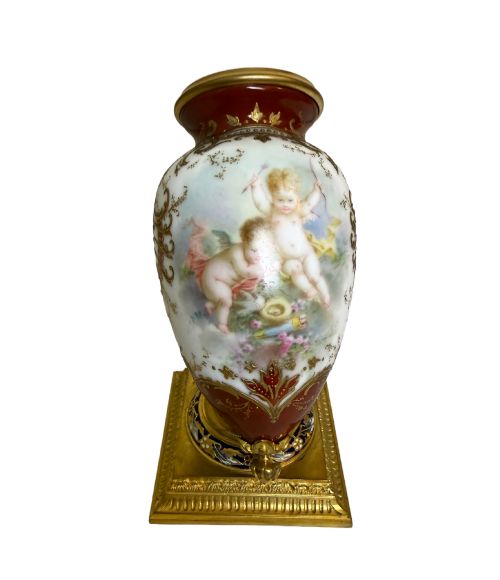
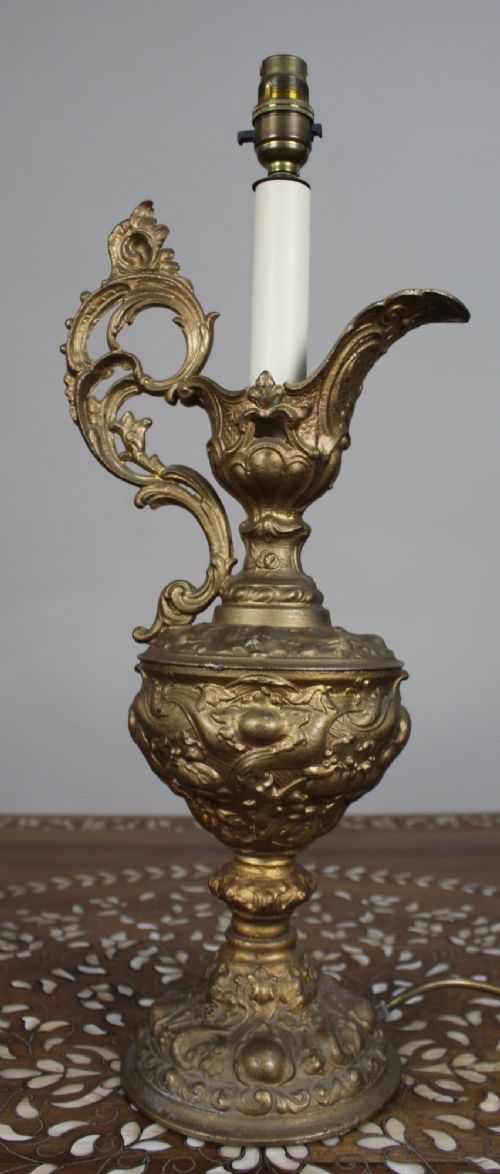
Rococo revival urns are decorative vessels that channel the sweeping curves and asymmetrical flourishes of the mid-eighteenth century. Buyers searching for rococo revival urns encounter porcelain and ormolu pieces originating from French and German factories.
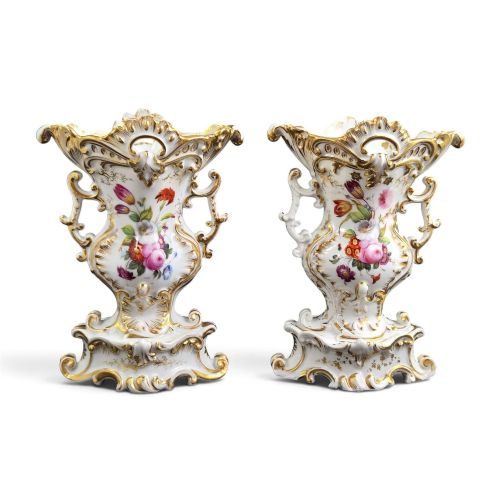
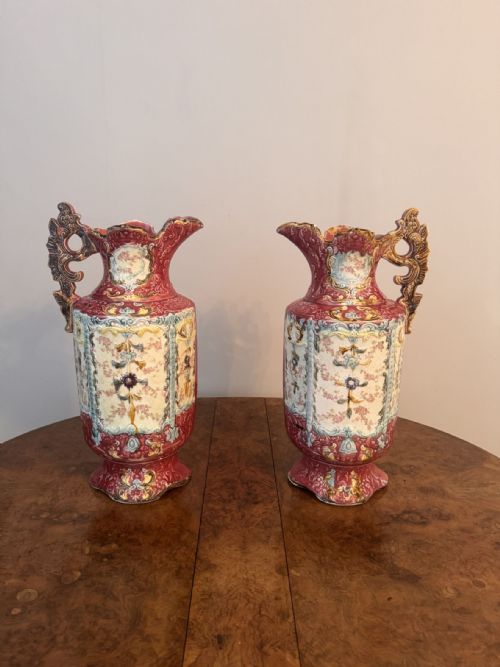
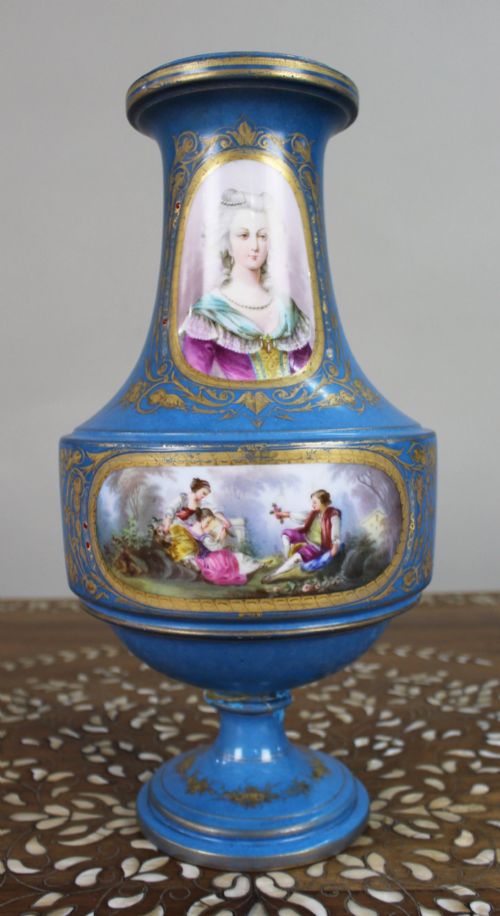
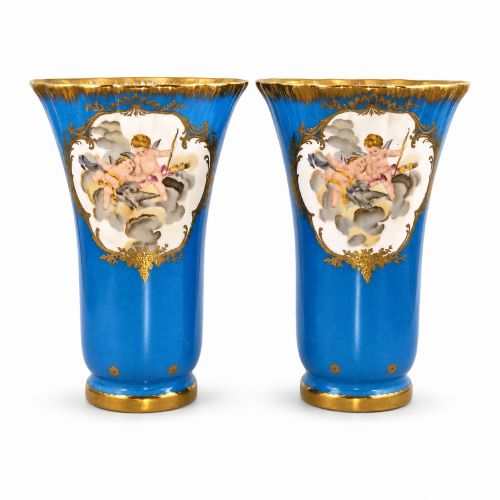
The selections available here span the nineteenth century and the early twentieth century, taking the form of lidded potpourri vases and pairs of decorative vases. These objects reflect both the Regency era and later Victorian tastes for French Sevres style porcelain.
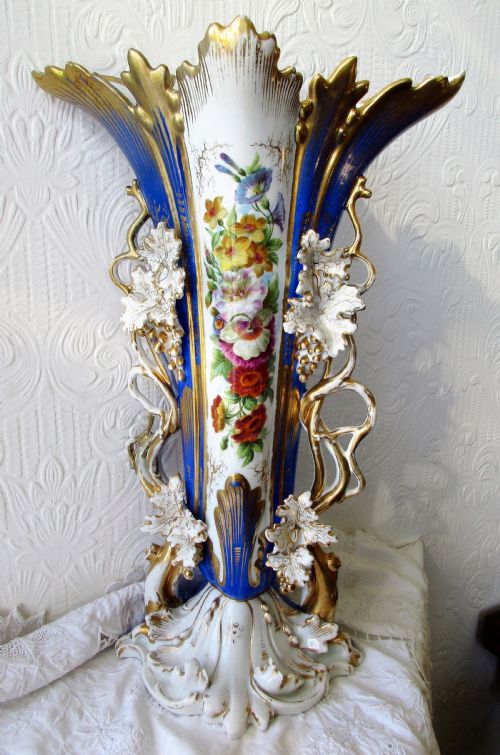
Makers such as Jacob Petit and Sitzendorf defined this repertoire, producing pieces that combine floral painting with lavish gilding. They serve as mantel centrepieces or decorative focal points in traditional interiors.
How they were made
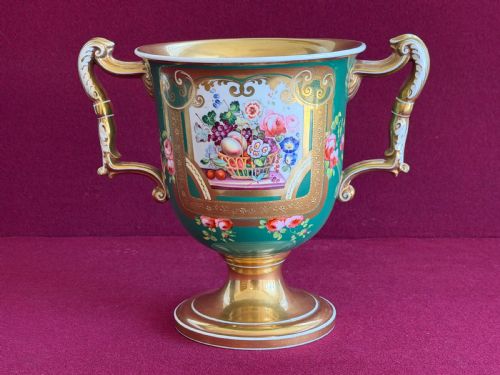
These urns rely on hard-paste porcelain bodies moulded into complex, undulating forms with scrolled handles and pierced covers. Artisans applied cobalt blue, enamel colours, and hand-painted reserves depicting figures or landscapes directly onto the glazed ceramic.
Metal mounts in ormolu and gilt bronze frame the porcelain, requiring precise casting and chiselling to match the organic contours of the ceramic body. Gold leaf accents highlight the raised relief work and accentuate the scrollwork typical of the style.
Retail Price Guide 2026
Typical UK retail prices for rococo revival urns, calculated from the Sellingantiques database of over a million retail prices indexed since 2003. This retail price guide relies exclusively on Sellingantiques data; no external sources or auction records are used, so the figures do not describe the wider market.
Sitzendorf porcelain figures and vases still bear traces of historical kiln dust, reminding us of coal fires in nineteenth-century German workshops.
What varies in quality
Quality in these pieces rests upon the crispness of the porcelain moulding and the artistic merit of the hand-painted reserves. Superior examples display finely rendered miniatures with deep, vibrant enamel colours that remain untraced by hasty brushwork.
The integration of the ormolu mounts dictates the upper tier of the range, where heavy, fire-gilt bronze complements rather than overpowers the ceramic vessel. Inferior pieces often show flat, mechanical gilding and clumsy metal fittings that obscure the lines of the body.
Jacob Petit·Sitzendorf
The Rococo Revival Urns Glossary
- Ormolu
- Gilded bronze mounts applied to furniture and porcelain. This technique creates a rich golden contrast against ceramic bodies and dark wood.
- Potpourri
- A lidded vase pierced to allow scent to diffuse from dried herbs and petals within. These vessels are frequently elaborately decorated with painted panels.
- Hard-paste porcelain
- A durable ceramic made from kaolin and petuntse fired at high temperatures. It forms the smooth, vitreous base for nineteenth century decorative urns.
Frequently Asked Questions
How do I clean my rococo revival urn?
Dust these decorative vases gently with a soft, dry brush to protect the delicate enamel and gold leaf. Avoid liquid cleaners that can tarnish the ormolu mounts or lift fragile surface pigments.
Keep the urns away from direct sunlight to preserve the vibrancy of the hand-painted porcelain panels. Handle the lidded pieces with care, lifting covers by their finials rather than the pierced decorative edges.
Where should I display my urn?
Place these decorative vessels on sturdy mantelpieces, console tables, or cabinets where their gilded mounts and painted scenes catch the light. Pairs work effectively as symmetrical focal points in a traditional interior scheme.
Ensure the display location is secure and free from heavy foot traffic that could cause accidental bumps. Because many examples include removable lids, placement below eye level allows you to appreciate the interior craftsmanship.
What periods do these urns come from?
The pieces available span the nineteenth century and the early twentieth century, capturing various revival movements. You will find items dating from the Regency period through to eighteen-eighty and nineteen-twenty.
These later nineteenth-century interpretations often look back to French Sevres models. The timeline reflects sustained European enthusiasm for ornate, eighteenth-century aesthetic forms throughout the Victorian era.
Are these vases functional?
While potpourri lidded urns were originally designed to hold scented dried botanicals, most surviving examples serve primarily as decorative objects today. Their intricate handles, pierced covers, and delicate ormolu mounts make them more suited to visual display than everyday utility.
Filling them with water is generally discouraged, as nineteenth-century glazes and repairs can be vulnerable to moisture. They remain sculptural statements rather than practical vessels for fresh flowers.