
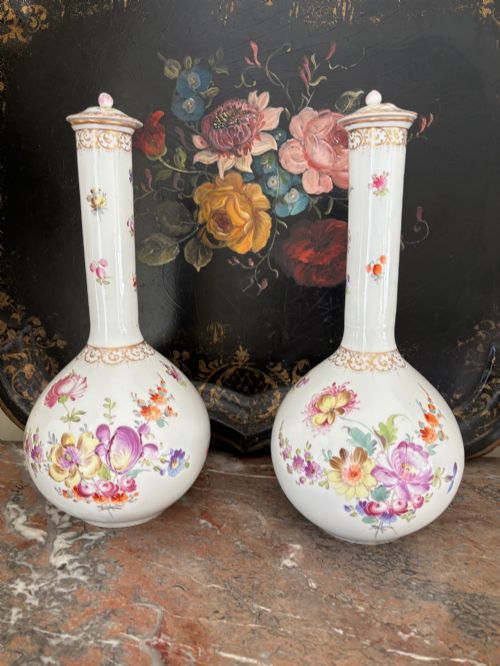
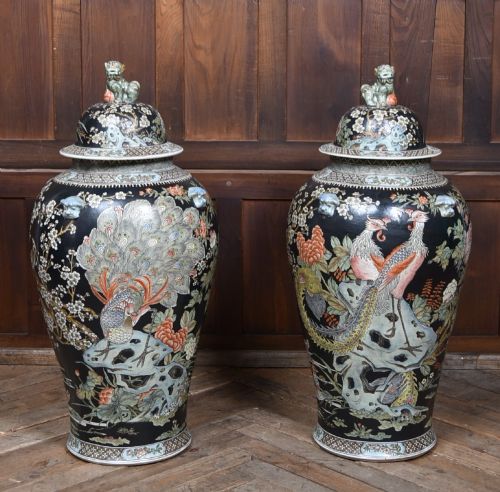
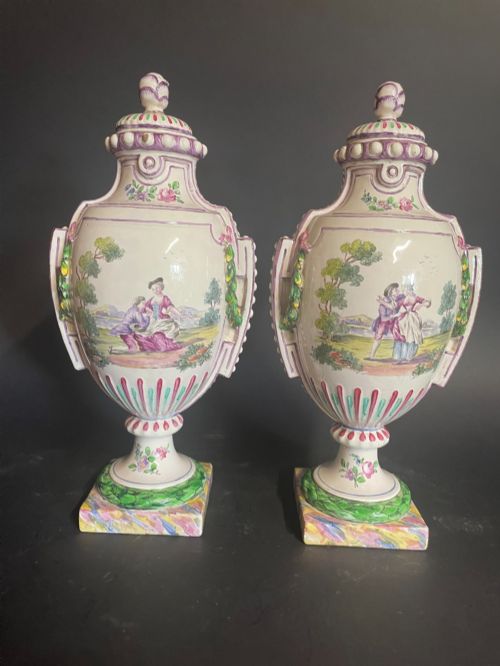
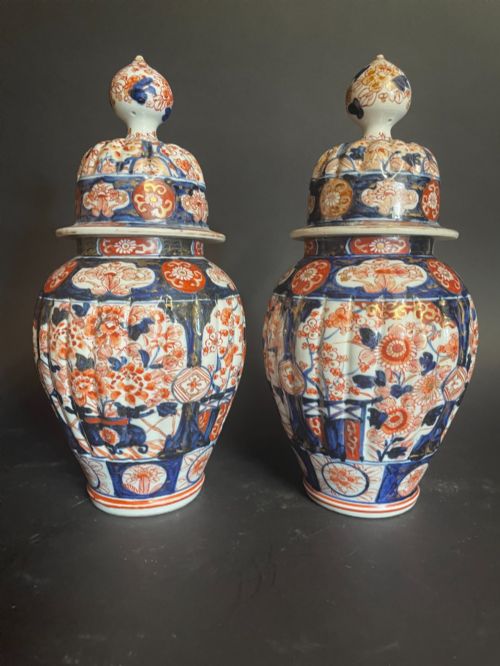
Pair Porcelain Vases
These pair porcelain vases bring symmetry and hand-painted artistry to a mantelpiece, ranging from French Paris porcelain to Japanese Kutani works.
Identifying pair porcelain vases
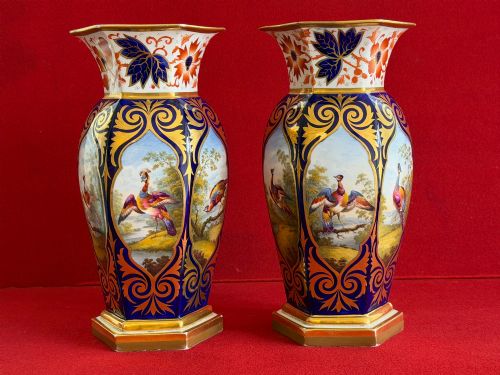
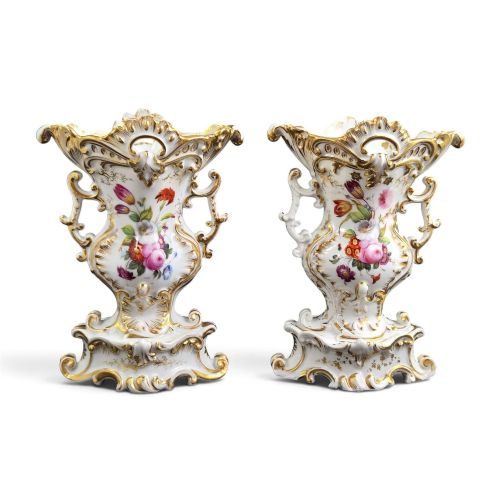
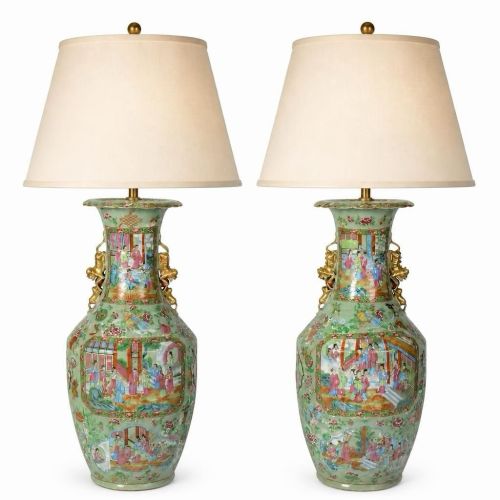
When buyers search for pair porcelain vases, they encounter matched dual vessels intended for symmetrical display on mantelpieces, sideboards and pedestals. The items documented here span European and Asian traditions, including French Paris wares, English factories such as Royal Worcester and Derby, and Japanese Kutani and Imari exports.
Most examples date from the nineteenth and early twentieth centuries, covering periods like the Meiji era and the Art Deco years. Forms range from modest bud vases and urns to large scale lidded vessels and baluster shapes.
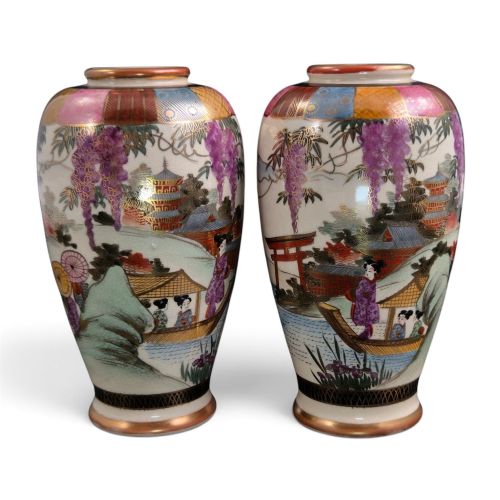
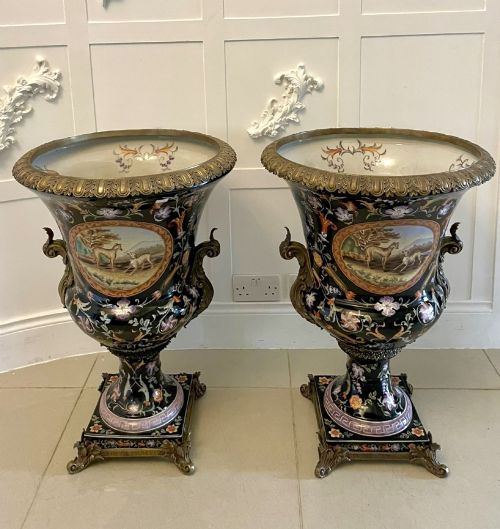
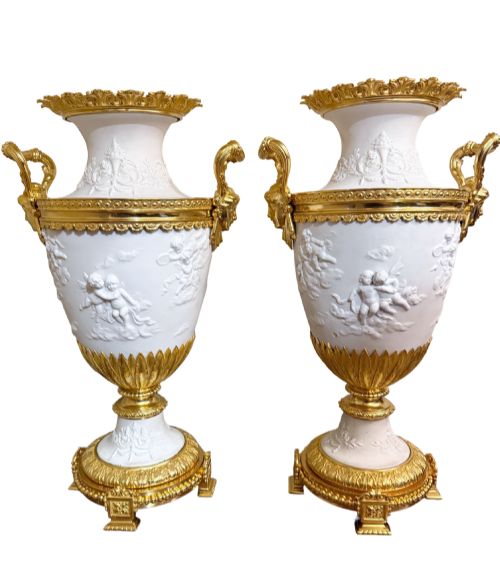
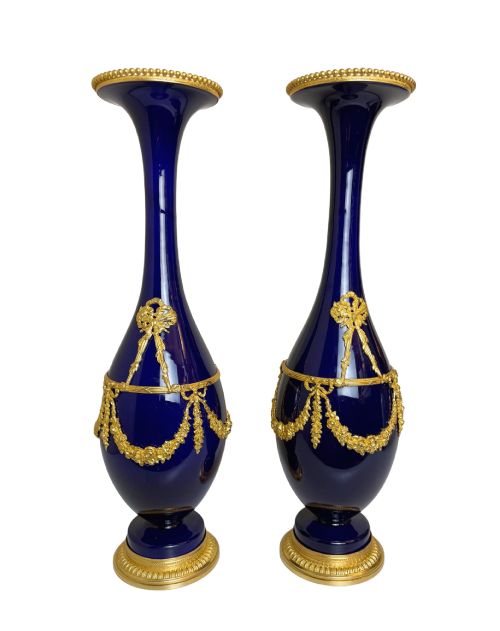
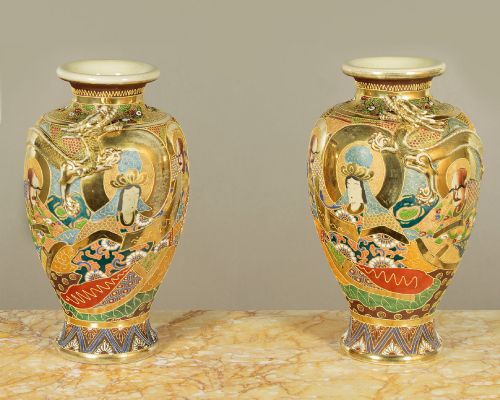
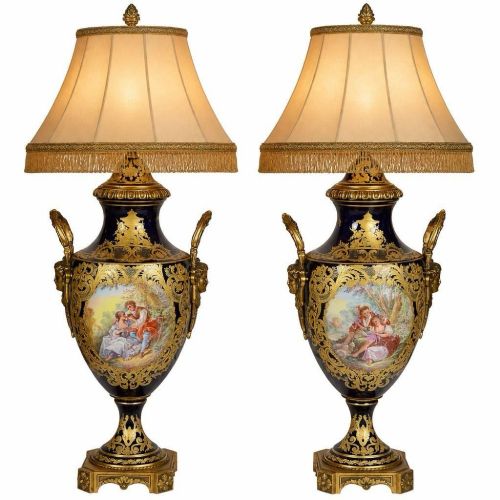
European specimens often lean towards Sevres style decoration, cobalt blue glazes and ormolu mounts, whilst Japanese counterparts showcase detailed hand-painted scenes and traditional iron red and gold palettes.
Materials and construction
The underlying material comprises fired porcelain or bone china, sometimes enriched with lustre glazes, enamel colours and gold leaf highlights. Many pieces incorporate cast metal components, specifically gilt bronze and ormolu mounts that frame the ceramic bodies.
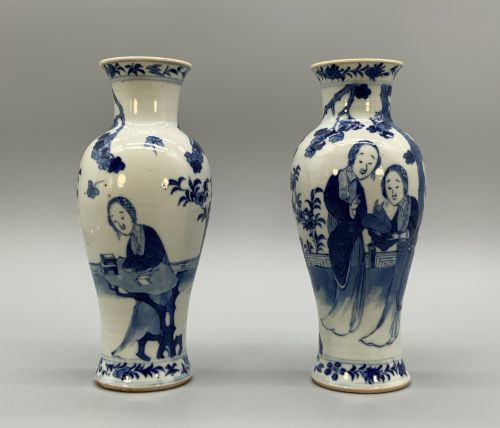
Makers applied hand-painted scenes, floral medallions and figural decoration directly onto the porcelain surface before secondary firing. Certain decorative wares also combine lacquer decoration or specialised blue and white pigments.
Retail Price Guide 2026
Typical UK retail prices for pair porcelain vases, calculated from the Sellingantiques database of over a million retail prices indexed since 2003. This retail price guide relies exclusively on Sellingantiques data; no external sources or auction records are used, so the figures do not describe the wider market.
Listings feature porcelain from the 18th, 19th and early 20th centuries, spanning Art Deco, French Empire, Victorian Aesthetic, and Meiji periods.
Evaluating the range
Quality rests upon the crispness of the hand-painted brushwork and the ambition of the ceramic form. Finer works display meticulous detail in figurative scenes and floral medallions, executed by named artists or specialised factory studios.
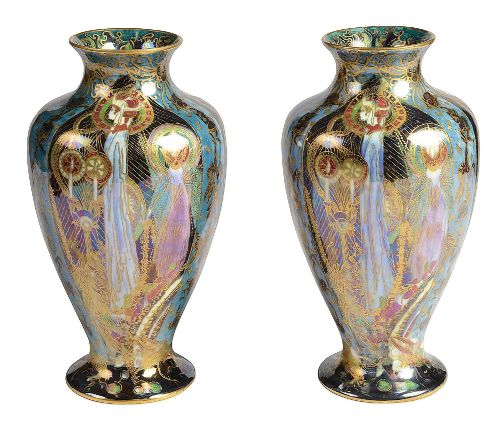
The presence of high-grade mounts, such as fire-gilt ormolu, elevates a pair beyond standard production pieces. Furthermore, the precision of the glaze work, whether a deep cobalt blue or an intricate fairyland lustre, distinguishes exceptional examples from simpler decorative output.
Wedgwood·Royal Worcester·Derby·Fukugawa·Tomimoto Kenkichi·Meissen·Coalport·Noritake·Paul Milet
The Pair Porcelain Vases Glossary
- Ormolu
- Gilded bronze mounts applied to the base, handles or rim of a ceramic vessel. This technique was frequently utilised on French nineteenth-century pieces to add architectural weight and decorative luxury.
- Lustre Glaze
- A metallic ceramic glaze that produces an iridescent sheen upon firing. Wedgwood pieces utilised this method to create shimmering, multicoloured surface effects.
- Baluster
- A vase shape characterised by a rounded body that tapers toward a narrow neck and widens again at the base. This classic silhouette appears frequently across both European and Asian ceramic traditions.
- Kutani
- Japanese painted porcelain originating from Ishikawa prefecture, typically distinguished by rich iron-red and gold palettes. These export wares often feature dense figural or natural scenes.
- Bone China
- A type of soft-paste porcelain incorporating bone ash, developed in England to create a durable, milky-white body. Factories like Royal Worcester utilised this material for fine painted decorative items.
Frequently Asked Questions
How were pair porcelain vases used?
These matched vessels were traditionally displayed symmetrically on mantelpieces, sideboards or pedestals to anchor a room's interior decoration.
Larger scale pieces stood on the floor or dedicated stands, whilst smaller urns and bud vases held seasonal flowers or served purely as ornamental objects.
How do I tell French Sevres style from English porcelain?
French Sevres style pieces often incorporate rich cobalt blue grounds paired with elaborate ormolu mounts and classical hand-painted scenes.
English makers such as Royal Worcester or Derby typically favoured bone china bodies, blush ivory grounds and delicate floral or bird motifs signed by individual artists.
What is the difference between Kutani and Imari porcelain?
Kutani porcelain originates from Japan and is easily recognised by its bold use of iron red and gold pigment depicting figural or natural scenes.
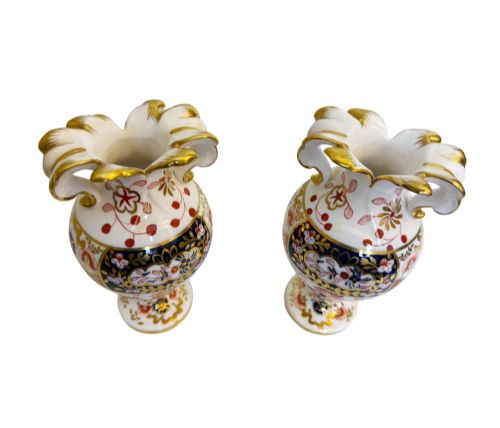
Imari wares also hail from Japan, utilising a distinct palette of underglaze blue, iron red and gilt highlights arranged in intricate geometric and floral patterns.
How should I clean antique porcelain vases?
Dust gently with a soft, dry brush to prevent accumulation without risking delicate hand-painted enamel or gold leaf details.
Avoid immersing pieces in water, particularly those with ormolu mounts or fragile antique glazes that could be compromised by moisture.