


Wedgwood Fairyland Lustre
Wedgwood Fairyland Lustre pieces bring rich mythical scenes and vibrant ceramic finishes straight into a room.
Wedgwood Fairyland Lustre
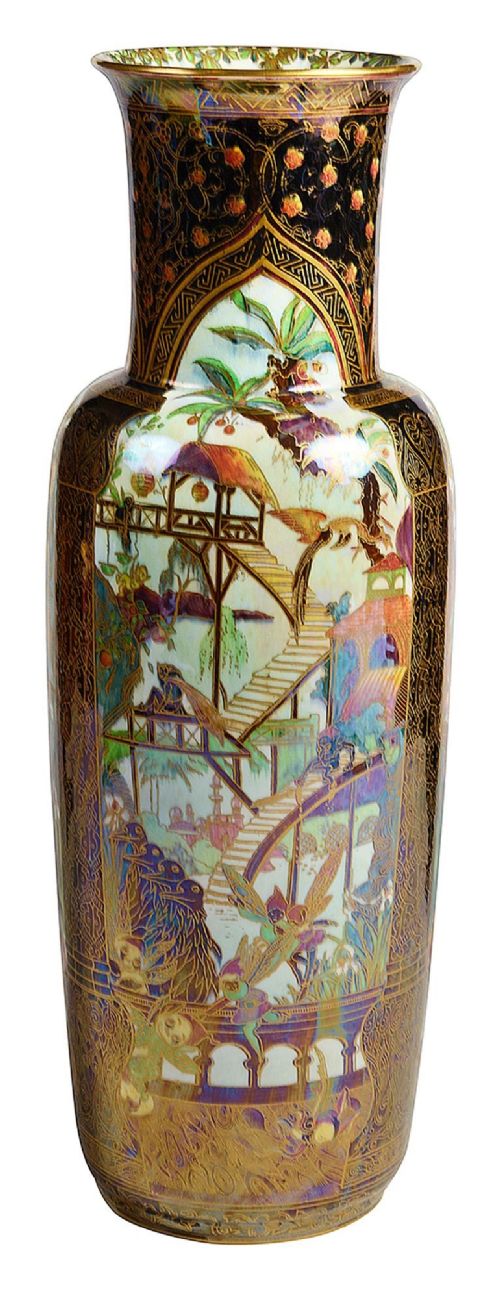
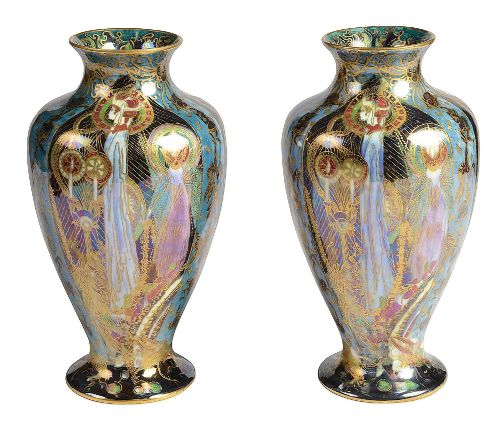
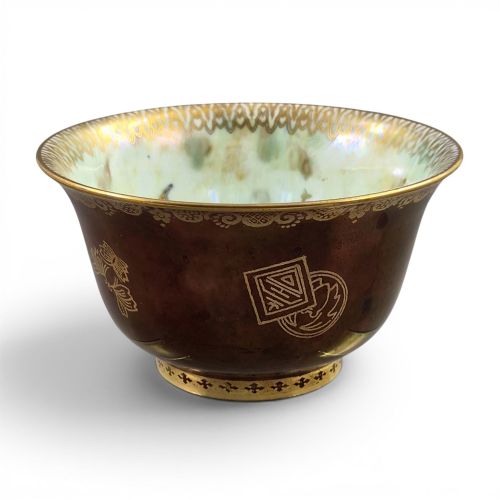
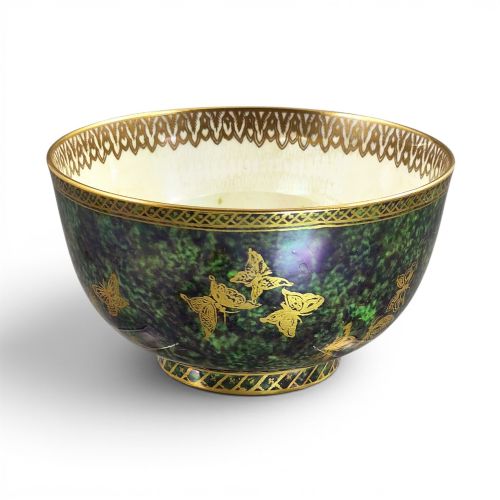
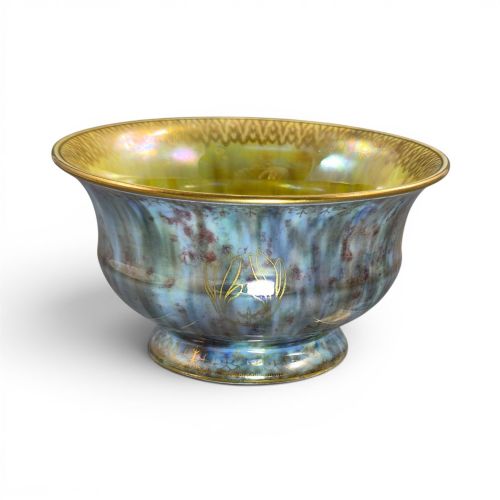
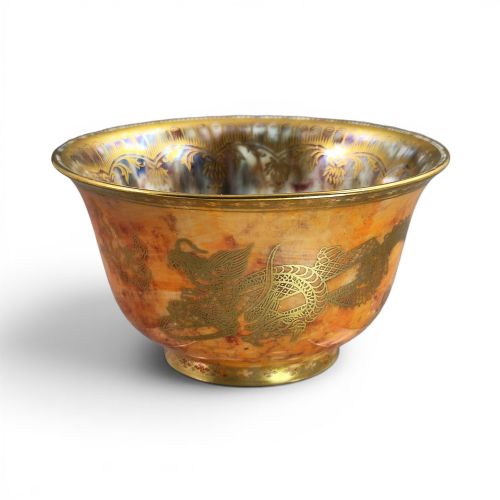
When searching for Wedgwood Fairyland Lustre, a collector encounters highly imaginative decorative bowls and baluster vases produced during the Edwardian period and the 1920s. These ceramics display intricate fantastical themes derived from folklore and mythology, created largely during the Art Nouveau and Art Deco stylistic transitions. The pieces on this page most commonly take the form of richly decorated bowls and vases.
The objects stem from designs by Daisy Makeig-Jones, whose fantastical patterns define the range. Examples span from miniature bowls to substantial display vessels utilising specific pattern numbers such as Z4828 and Z4832. Forms range from simple tea bowls and octagonal vessels to large decorative bowls and pairs of baluster vases.
Subjects depicted across the inventory include named designs like Candlemas, King Dragon, Night and Day, and Hummingbird Fairyland. Other recurring motifs feature coiling dragons, celestial dragons, butterflies, and poplar trees. These diverse designs showcase the breadth of imaginative narrative scenes applied to the pottery.
Materials and Technique
The construction utilises fine porcelain, bone china, and earthenware as the foundational bodies for the ceramics. Artisans shaped these clay bases by hand into bowls, cups, and vases before applying decorative elements. Gold leaf and gold gilding were incorporated to highlight specific details within the intricate patterns.
The characteristic finish relies on lustre glaze, metallic glaze, and standard glaze applications to achieve shimmering surface effects. This chemical glazing process interacts with the underlying pigments during firing to produce deep ruby, orange-red, and blue-green colour variations. Artisans then added metallic finishes over the fired glaze to complete the luminous designs.
Retail Price Guide 2026
Typical UK retail prices for wedgwood fairyland lustre, calculated from the Sellingantiques database of over a million retail prices indexed since 2003. This retail price guide relies exclusively on Sellingantiques data; no external sources or auction records are used, so the figures do not describe the wider market.
Listings feature items from the 1910, Edwardian, and 1920 periods, executed in porcelain, bone china, and earthenware.
Quality Variations
The distinction between tiers of the range rests upon the complexity and precision of the narrative transfer work and hand-painted gilt embellishments. Pieces featuring dense, multi-layered mythical themes like Candlemas or comprehensive celestial dragon motifs demand superior painting skill compared to simpler single-motif designs. The distribution of gold leaf and metallic lustre across intricate backgrounds marks the differentiation between standard production and exceptional examples.
The depth and brilliance of the lustre glaze itself separates ordinary items from superior works. Uniformity in the shimmering metallic reaction across complex shapes, such as baluster vases or octagonal bowls, indicates high technical control during the kiln firing process. The clarity of the underlying porcelain or bone china also contributes to the visual richness of the final piece.
Daisy Makeig Jones·Wedgwood
The Wedgwood Fairyland Lustre Glossary
- Lustre Glaze
- A type of ceramic glaze containing metallic salts that produce an iridescent, metallic sheen upon firing. This technique creates the shimmering surface quality characteristic of the ware.
- Baluster Vase
- A decorative vessel shaped with a rounded lower body that tapers into a narrow neck and flares slightly at the rim. This form provides a curved surface suitable for continuous narrative scenes.
- Bone China
- A type of soft-paste porcelain composed of bone ash, feldspathic material, and kaolin. It offers a bright white, translucent body that supports detailed enamel painting.
- Gilt
- Applied gold leaf or gold powder used to decorate the surface of ceramics. This material catches the light and outlines the fantastical elements in the designs.
- Pattern Number
- An alphanumeric code assigned by the factory to identify a specific design and colourway combination. Codes such as Z4828 appear in listings to distinguish individual decorative schemes.
Frequently Asked Questions
What is Wedgwood Fairyland Lustre?
Wedgwood Fairyland Lustre is a line of decorative ceramics featuring fantastical, mythical scenes designed by Daisy Makeig-Jones during the early twentieth century. The range includes bowls and vases adorned with colourful imaginary figures, landscapes, and creatures.
The items combine traditional pottery forms with iridescent metallic glazes and detailed gilt work. They represent a distinct departure from standard tableware into imaginative art pottery.
Who designed Fairyland Lustre?
The designs were created by Daisy Makeig-Jones, an art director and designer working for the Wedgwood pottery firm. Her imaginative narratives drew heavily on folklore, fairy tales, and oriental motifs.
Makeig-Jones developed complex pattern schemes involving intricate transfers combined with hand-painted enamel and gold details. Her work remains the defining artistic force behind these wares.
How do you date these pieces?
Dating relies primarily on factory backstamps, recorded pattern numbers, and the known operational periods of the designers and makers. Most production took place during the Edwardian era and the 1920s.
Listing details often reference specific production years such as 1915 or 1920 alongside stylistic indicators like Art Deco or Art Nouveau. Examining the pattern code helps narrow down the manufacturing window.
How were these items used?
These ceramic vessels served primarily as decorative display pieces rather than functional tableware. Bowls and baluster vases were placed on mantels, sideboards, and display cabinets to showcase their intricate artistry.
The rich colours and reflective lustre glazes were intended to catch natural light in domestic interiors. Items ranged from large centrepiece bowls to miniature cabinet pieces.
What materials are used in the glaze?
The distinct surface finish is achieved using lustre glazes and metallic glazes that incorporate metallic salts. When fired in the kiln, these elements react to create an iridescent, pearl-like sheen.
Additional highlights were often applied using gold leaf and gold gilding over the primary glaze layer. This combination produced the characteristic luminous depth seen across the wares.