


Daisy Makeig Jones
Daisy Makeig Jones ceramic designs unite imaginative porcelain forms and shimmering lustre glazes from the early twentieth century.
Daisy Makeig Jones
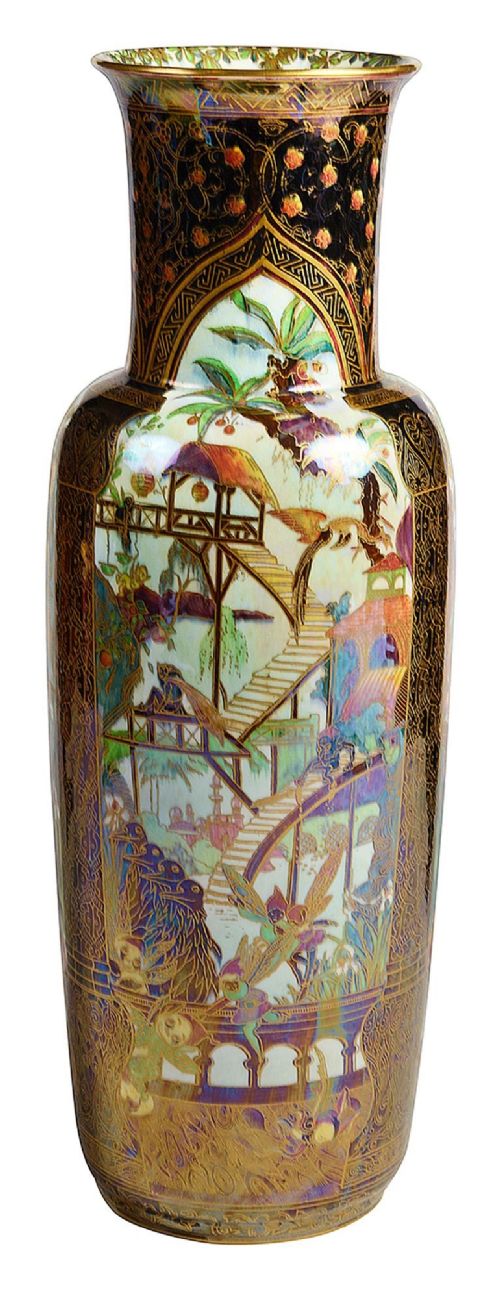
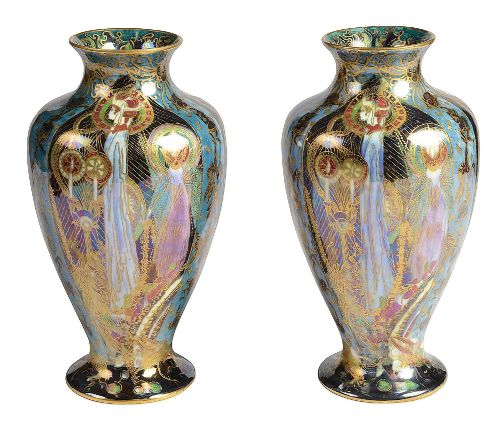
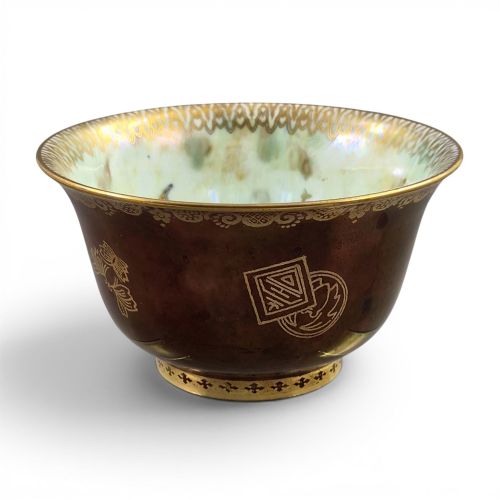
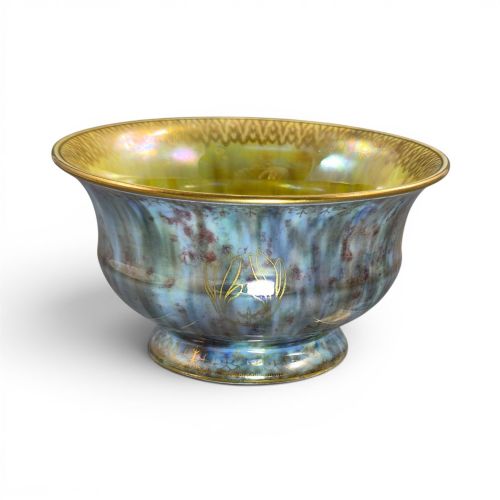
Items associated with daisy makeig jones span the Edwardian period through the 1920s, predominantly taking the form of decorative bowls, vases, and miniature cups. Collectors encounter various shapes including baluster vases, octagonal bowls, and three-handled mugs carrying fantastical motifs.
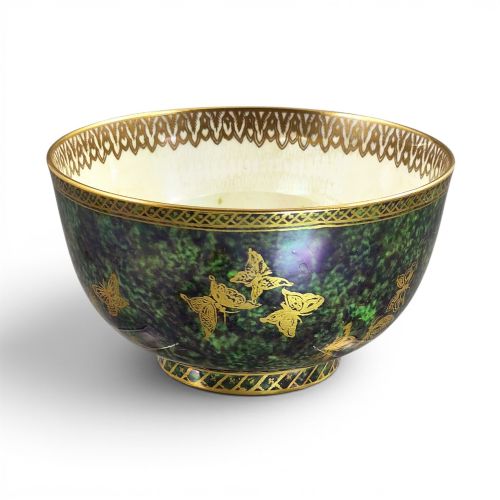
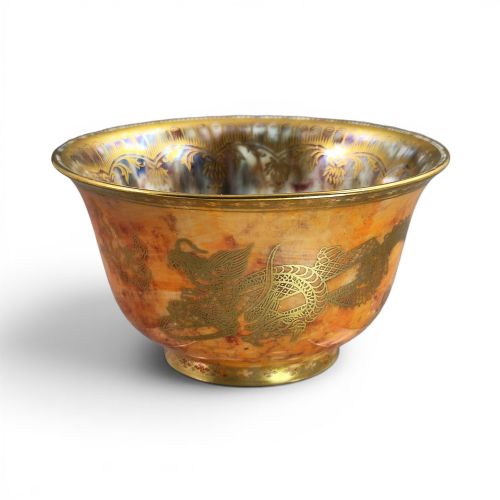
The decorative themes range from Fairyland Lustre scenes such as Candlemas and Leapfrogging Elves to standard lustre patterns featuring dragons, butterflies, and hummingbirds. These objects reflect Art Nouveau and Art Deco design influences applied to British art pottery and bone china.
Manufacturing and Materials
Production relied upon porcelain and bone china bodies formed into vessels before receiving intricate hand-painted or transferred surface decoration. Artisans applied specialised lustre glazes to achieve iridescent optical effects across the ceramic surface.
The application of gold leaf, gilding, and gold gilt accents defined many finished pieces, highlighting detailed motifs like coiling dragons, celestial dragons, and floating butterflies against mottled orange, blue, or green backgrounds.
Daisy Makeig Jones Retail Price Guide 2026
Typical asking prices for daisy makeig jones among the pieces listed under this phrase on Sellingantiques today, from the lower quarter to the upper quarter. They describe what is for sale here now, not the wider market.
Listings feature porcelain and bone china vessels decorated with lustre glazes, gold leaf, and gilt across Edwardian, Art Nouveau, and Art Deco styles.
Assessing Quality and Execution
Differentiation across these pieces lies in the complexity of the pattern work, such as the elaborate pictorial storytelling found in Fairyland Lustre series compared to simpler ordinary lustre geometric or animal designs. The depth and iridescence of the lustre glaze play a vital role in the visual success of each item.
The precision of the gilding and the crispness of the gold leaf application contribute significantly to the visual execution of bowls and vases, alongside the complexity of form from standard circular bodies to multifaceted octagonal shapes.
Wedgwood
The Daisy Makeig Jones Glossary
- Lustre Glaze
- A type of ceramic glaze containing metallic oxides that produce an iridescent, metallic sheen upon firing. This technique creates the signature glowing surface effects seen on porcelain and bone china.
- Fairyland Lustre
- A distinctive line of decorative wares featuring fantastical subjects like elves, goblins, and mythical creatures. These elaborate patterns represent some of the most complex designs produced during the period.
- Octagonal Bowl
- A vessel shape featuring eight distinct flat sides rather than a traditional round profile. This geometric form often provides expanded panels for detailed landscape or creature motifs.
- Baluster Vase
- A tall vase form characterised by a curved body that swells near the base and tapers toward the neck. These pieces frequently showcase sweeping dragon or butterfly designs.
- Bone China
- A type of soft-paste porcelain incorporating animal bone ash that produces a strong, milky-white body. It served as a primary canvas for intricate painted and gilded decoration.
Daisy Makeig Jones: Frequently Asked Questions
What periods do these ceramics come from?
These ceramics date primarily from the Edwardian era through the 1920s, spanning the early decades of the twentieth century.
Production aligns with the active periods of design innovation during the 1900s, 1910s, and 1920s.
How were these decorative bowls used?
Items such as bowls and vases served primarily as ornamental display pieces in Edwardian and Art Deco interiors rather than for utilitarian dining.
Miniature cups and tea bowls functioned as cabinet specimens intended to showcase intricate glaze work and miniature painted detail.
What motifs appear on the pottery?
Common motifs include mythical creatures such as dragons, phoenixes, and fudogs, alongside natural subjects like butterflies, hummingbirds, and fruit.
Fairyland designs introduce whimsical narrative scenes featuring elves, floating figures, and magical landscapes across the ceramic surface.
How do standard lustre and Fairyland lustre differ?
Standard lustre wares typically feature repeating geometric borders, single animal subjects like dragons or butterflies, and mottled colour fields.
Fairyland lustre encompasses dense, multi-layered pictorial scenes populated by fantasy figures and complex mythical narratives.