


Fairyland Lustre Ceramics
Fairyland lustre ceramics bring fantastical folklore to life through iridescent surfaces and intricate patterns.
Fairyland Lustre Ceramics
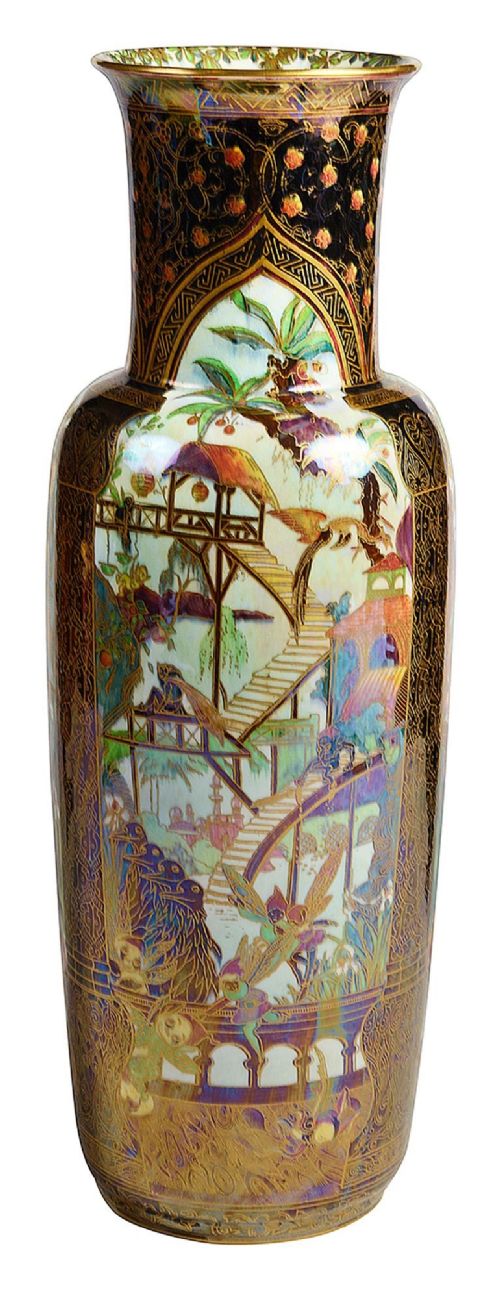
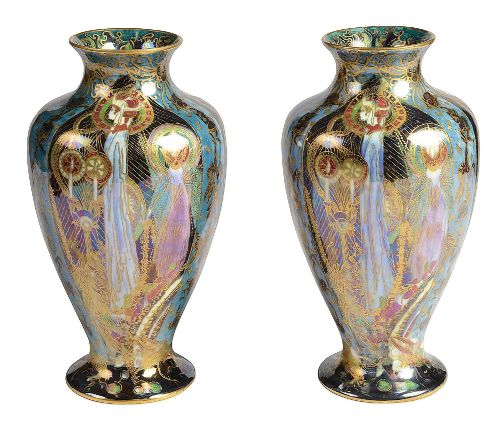
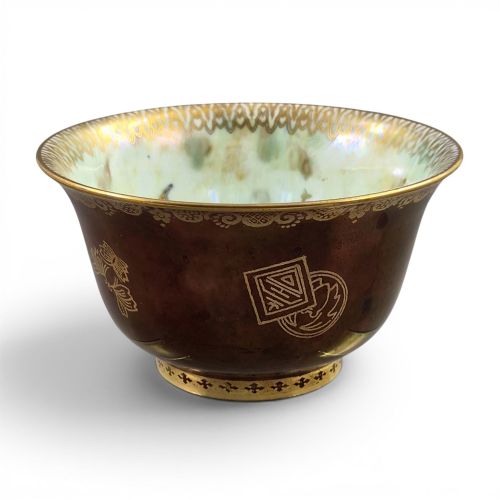
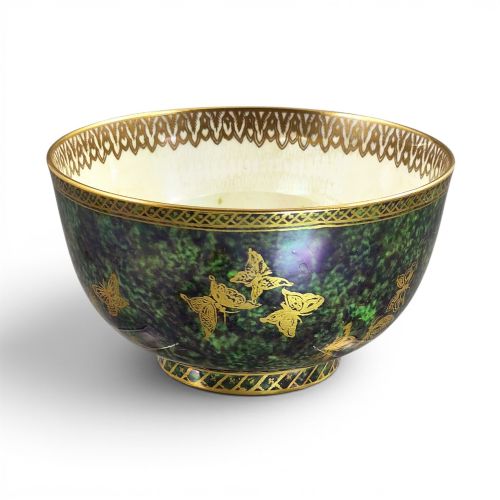
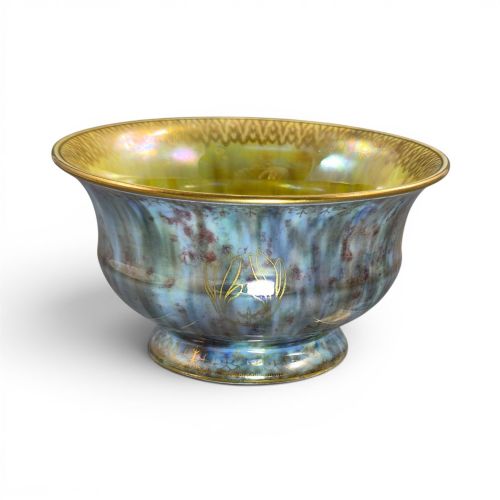
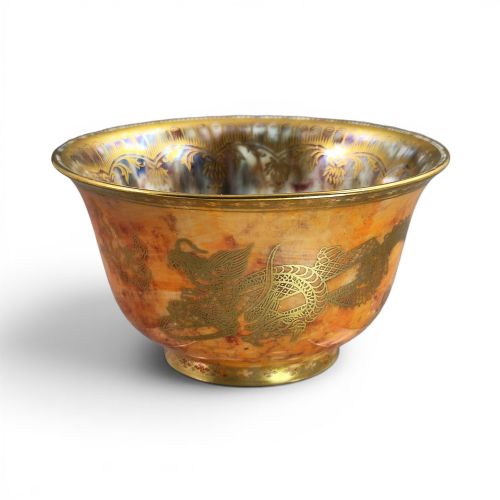
Fairyland lustre ceramics are distinctive decorative pieces featuring mythical scenes and vivid colour palettes. When searching for fairyland lustre ceramics, collectors frequently encounter ornamental bowls and vases created during the early twentieth century. The selection on this page centres on Edwardian pieces produced by Wedgwood, showcasing specific designs such as dragon and butterfly motifs.
The forms range from large baluster vases to octagonal bowls and miniature cups. Most examples originate from the 1900 to 1920 period, reflecting Edwardian, Art Nouveau, and Art Deco stylistic influences. These items function primarily as decorative objects rather than utilitarian tableware.
Materials and production
These pieces utilise porcelain and bone china as base bodies for detailed surface decoration. Artisans applied lustre glaze over enamel colours to create an iridescent sheen that catches the light differently from various angles. Gold leaf, gilt, and gold gilding highlights accentuate the fantastical scenes and structural rims.
The decorative process required multiple firings to fix the metallic oxides and enamels onto the glazed ceramic surface. Wedgwood workshops employed specialised techniques developed by designer Daisy Makeig-Jones to achieve the trademark shimmering effect.
Fairyland Lustre Ceramics Retail Price Guide 2026
Typical asking prices for fairyland lustre ceramics among the pieces listed under this phrase on Sellingantiques today, from the lower quarter to the upper quarter. They describe what is for sale here now, not the wider market.
Listings feature porcelain and bone china items decorated with gold leaf, lustre glaze, and enamel from the Edwardian period.
Judging quality in lustre ware
Quality rests upon the complexity of the specific pattern, such as Candlemas or Celestial Dragon, and the density of the gilt work. Pieces featuring extensive gold leaf application and multi-layered enamel detailing require greater skill during execution.
The richness and depth of the lustre glaze determine visual success, with stronger iridescence commanding attention. Symmetry in form, particularly on octagonal bowls and baluster vases, indicates careful workshop production.
Daisy Makeig Jones·Wedgwood
The Fairyland Lustre Ceramics Glossary
- Lustre glaze
- A type of ceramic glaze containing metallic oxides that produce an iridescent, pearlescent sheen upon firing. This finish is central to the visual identity of fairyland lustre ceramics.
- Baluster vase
- A decorative vessel characterised by a rounded body that tapers toward the top and sits on a flanged base. This form supports tall pictorial scenes.
- Octagonal bowl
- A vessel possessing eight distinct sides rather than a standard circular profile. This geometry alters how light reflects off the lustre glaze.
- Bone china
- A type of soft-paste porcelain incorporating animal bone ash for added strength and whiteness. It provides a smooth canvas for enamel painting.
- Enamel
- Opaque vitreous composition applied to ceramics for surface decoration and colour. It fuses with the glaze during kiln firing.
Fairyland Lustre Ceramics: Frequently Asked Questions
What are fairyland lustre ceramics?
Fairyland lustre ceramics are ornamental porcelain and bone china items decorated with mythical and fantastical subjects. They emerged from early twentieth-century British potteries.
The pieces rely on special glaze formulations and enamel painting to create iridescent surfaces. Collectors prize them for their imaginative storytelling and vibrant colour schemes.
Who designed fairyland lustre ware?
Designer Daisy Makeig-Jones created the iconic fairyland lustre patterns for Wedgwood during the Edwardian era. Her work introduced elaborate fairy and dragon motifs to ceramic decoration.
Her designs required precise enamel application and multiple firings to achieve their distinctive appearance. Pieces bearing her patterns remain the primary focus for collectors of this genre.
How should I display these bowls?
Display these bowls in well-lit areas where natural light can interact with the iridescent glaze and gold gilding. Placing them away from direct sunlight protects the enamel colours from fading over time.
Use stable surfaces and secure plate stands for octagonal bowls and miniature cups. Keeping them clear of heavy traffic areas prevents accidental knocks.
How do I identify Edwardian pieces?
Edwardian pieces often feature specific pattern numbers and backstamps corresponding to the early 1900s production years. Stylistic clues include Art Nouveau curves and distinct transitional designs toward Art Deco.
The presence of specific motifs like the coiling dragon or butterfly designs helps date the object. Comparing the form against documented Wedgwood shapes confirms the manufacturing period.