
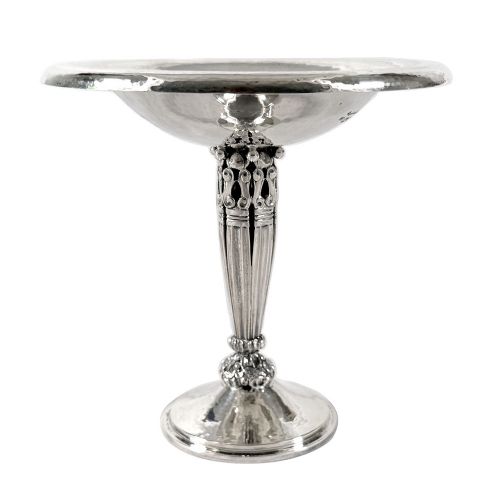


Art Deco Decorative Bowl
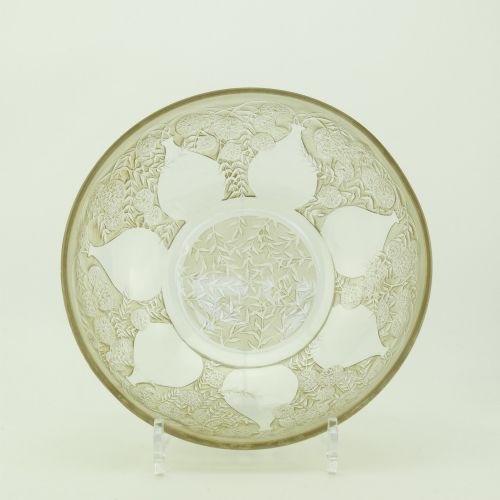
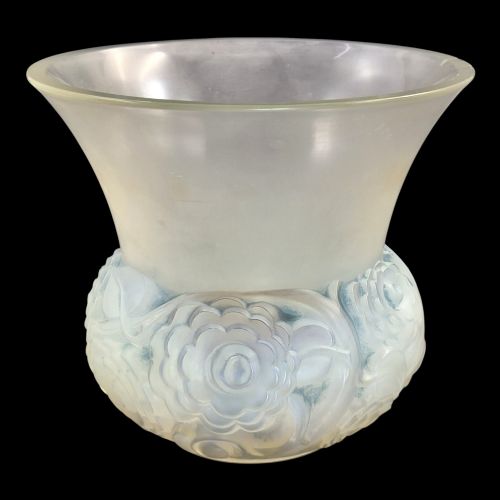
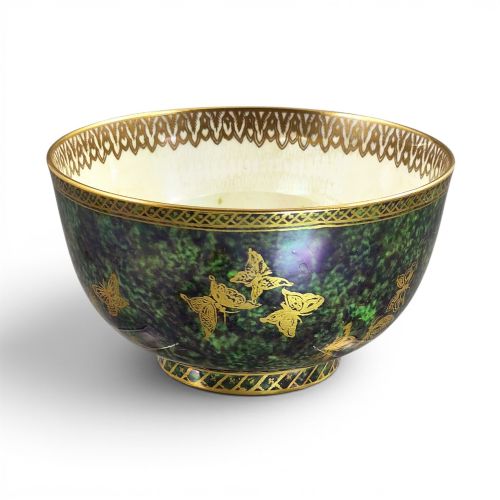
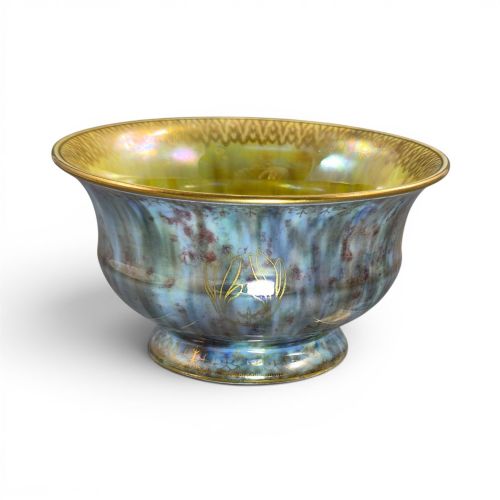
These art deco decorative bowl examples bring together moulded opalescent glass and lustred pottery from the early twentieth century.
Art Deco Decorative Bowl
An art deco decorative bowl encompasses shallow glass vessels, footed coupes, and octagonal ceramic dishes produced during the early decades of the twentieth century. The selection ranges from pressed opalescent glass pieces bearing floral and aquatic motifs to glazed earthenware decorated with intricate lustre patterns.
Most pieces date from the nineteen-twenties and nineteen-thirties, aligning with the height of the Art Deco movement, alongside earlier examples that retain transitional Edwardian or Art Nouveau characteristics. Formats vary from large display chargers and fruit bowls to smaller serving vessels and tazzas.
Materials and Manufacture
Glass vessels rely on press-moulding techniques, often utilising opalescent glass that shifts in tone between milky white and pale blue depending on the light. Artisans achieved surface depth through acid-etching, frosting, and staining the raised relief details.
Ceramic examples employ earthenware or bone china bodies finished with specialised lustre glazes, metallic oxides, and occasional applications of gold leaf. These chemical treatments create iridescent surfaces reflecting multiple colours across dragon, butterfly, and geometric designs.
Several bowls feature swimming fish, coiling dragons, and hovering hummingbirds frozen mid-flight in glass and glaze.
Markers of Quality
Quality rests in the crispness of the moulded relief and the depth of the opalescence within the glass, where sharper contrast defines superior examples. In ceramics, the vibrancy of the lustre glaze and the complexity of the hand-finished transfer or painted details dictate the standing of a piece.
Clarity of maker marks and factory stamps on the underside provides evidence of origin and production standard. The precision of the finish, from polished glass rims to even glaze distribution, separates standard production runs from master works.
Rene Lalique·Daisy Makeig Jones·Charles Boyton·Val St Lambert·Charlotte Rhead·Sabino
The Art Deco Decorative Bowl Glossary
- Opalescent Glass
- Glass containing agents that create a milky, semi-transparent appearance with blue or orange highlights in transmitted light.
- Lustre Glaze
- A ceramic finish incorporating metallic oxides that produce an iridescent, shimmering surface upon firing.
- Tazza
- An ornate shallow bowl or cup raised on a high foot and stem, used for display or serving.
- Coupe
- A broad, shallow bowl with a rounded or flat base, frequently utilised in twentieth-century glass production.
- Bone China
- A type of porcelain containing animal bone ash, producing a strong, milky-white ceramic body.
Art Deco Decorative Bowl: Frequently Asked Questions
How do I clean an antique glass bowl?
Wash the vessel by hand in warm water using a mild, non-abrasive detergent and a soft cloth. Avoid submerging pieces with applied gold leaf for extended periods to protect the metallic surfaces.
Dry thoroughly with a lint-free towel to prevent water spots on opalescent or frosted glass areas.
Are these bowls suitable for daily use?
Most decorative vessels serve primarily as display pieces or dry-service items due to their delicate materials and historic nature. Lustre ceramics and opalescent glass can scratch or wear with heavy cutlery contact.
Keep them away from dishwashers and microwaves to preserve the integrity of the glazes and glass chemistry.
How can I identify the production period?
Examine the underside for factory stamps, moulded signatures, and registration numbers associated with specific designers and potteries. Stylistic indicators like geometric motifs point to the nineteen-twenties and nineteen-thirties.
Earlier Edwardian or Art Nouveau precursors often display more flowing, organic lines compared to strict art deco symmetry.
What causes the milky blue tone in glass?
The milky blue appearance results from specific chemical compounds added to the molten glass batch, which scatter light as it passes through. Opacifiers create this optical effect when illuminated from the side or front.
Variations in the cooling process alter the intensity of the opalescence across the relief design.