




Vintage Green Glass Dish
A vintage green glass dish brings rich colour and light to a room, ranging from delicate Victorian opaline to bold Art Deco designs.
Vintage Green Glass Dish
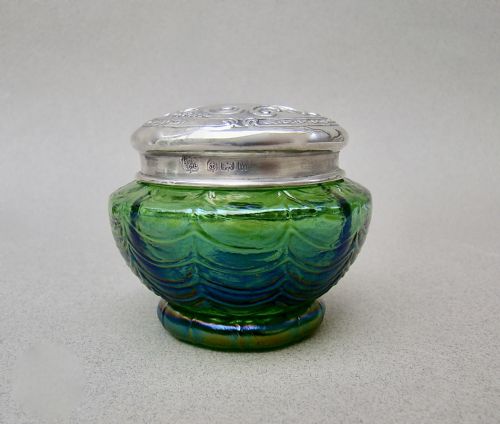
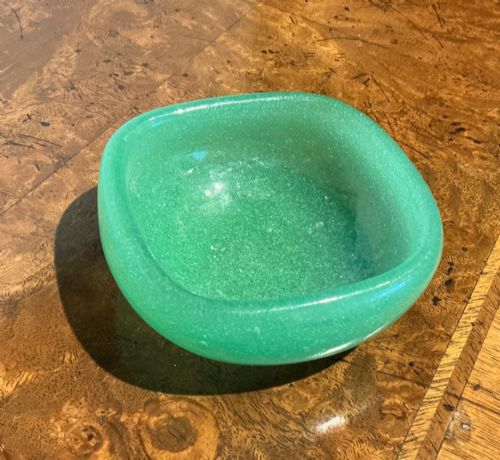
A vintage green glass dish encompasses everything from Victorian dressing table sets and Mary Gregory pieces to Art Deco bowls from makers such as Val St. Lambert and Venini. These items serve primarily as decorative bowls, trinket boxes, and dressing table accessories rather than everyday tableware.
The pieces span several decades, featuring works from the nineteenth century alongside later twentieth-century creations in Art Nouveau, Arts and Crafts, and Mid-Century Modern styles. Buyers encounter forms decorated with gold leaf, enamel, sterling silver mounts, and green overlay techniques.
English, French, Belgian, Italian, and Scottish origins appear frequently across the selection. The most common forms on this page are decorative dishes and bowls that display distinct coloured glass characteristics from their respective eras.
How they were made
Glassmaking techniques for these items involve free-blowing, moulding, and overlay methods where a green glass layer is cut away to reveal clear crystal beneath. Makers also applied cane decoration, enamel painting, and gold leaf detailing directly onto the surface.
Many pieces incorporate metal elements, combining silver lids or gilt edges with the glass body. Sterling silver mounts bear hallmarks that confirm the date and origin of the piece.
Scallop shell dishes in green opaline bring a touch of nineteenth-century coastal fantasy straight to the dressing table.
What varies in quality
Quality depends upon the depth and clarity of the glass colour, alongside the precision of any cut crystal facets or overlay work. Superior examples demonstrate expert handling of form, whether in a moulded bowl or a delicate opaline shell dish.
The presence of documented design attribution, original factory marks, or integrated precious metals like sterling silver and gold leaf elevates a piece. Craftsmanship in surface decoration, such as fine enamel work or cane placement, distinguishes standard items from exceptional ones.
A. J. Pepper & Co·Val St. Lambert·René Lalique·Daum France
The Vintage Green Glass Dish Glossary
- Opaline glass
- An opaque or translucent glass popular in nineteenth-century France, frequently moulded into decorative items like scallop shell dishes.
- Overlay glass
- A technique involving layers of different coloured glass, where the outer layer is partially cut away to create contrasting patterns.
- Pâte de verre
- A glass-casting method where crushed glass is packed into a mould and fused in a kiln, producing dense textured objects.
- Mary Gregory glass
- Victorian glassware decorated with silhouette figures painted in white enamel, usually depicting children in pastoral settings.
- Monart glass
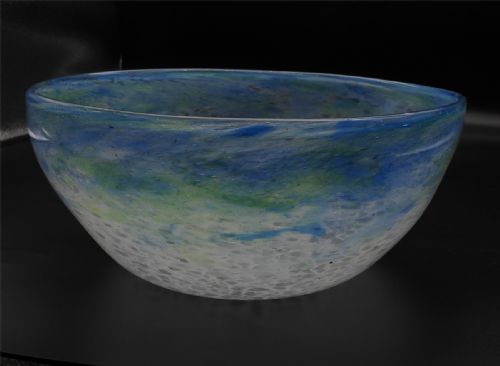
- A style of Scottish art glass characterised by swirling coloured vanes and mottled effects suspended within the body.
Vintage Green Glass Dish: Frequently Asked Questions
How do I clean a vintage green glass dish?
Wash the item gently in warm soapy water using a soft cloth, avoiding harsh abrasive materials that might scratch the surface.
Dry the piece immediately with a lint-free cloth, taking particular care around any applied gold leaf or silver mounts.
Can I use these dishes for food?
Most antique and vintage glass dishes function best as decorative objects, trinket holders, or dressing table display pieces rather than everyday tableware.
Older items, particularly those with enamel decoration or precious metal additions, require careful handling and are unsuited for heavy culinary use.
How do I identify Victorian green glass?
Victorian pieces often feature heavy pedestal forms, Mary Gregory enamel painting, or opaque opaline finishes influenced by nineteenth-century styles.
Examining the base for pontil marks and wear patterns helps confirm the age of these older items.
What is Art Deco green glass?
Art Deco glass typically displays geometric lines, stylized motifs, and strong colour saturation characteristic of the interwar period.
Works from this era often bear factory marks or bear attribution to designers working in Belgium, France, and Britain.