
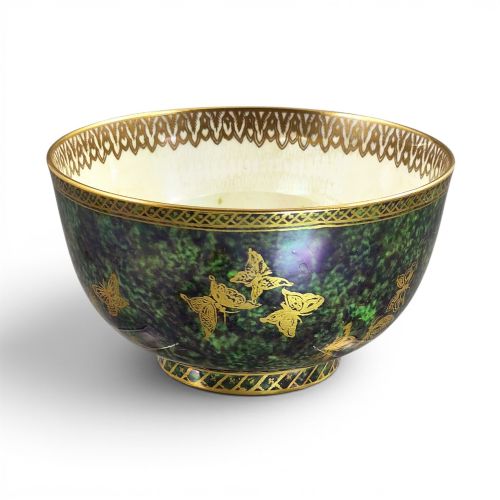
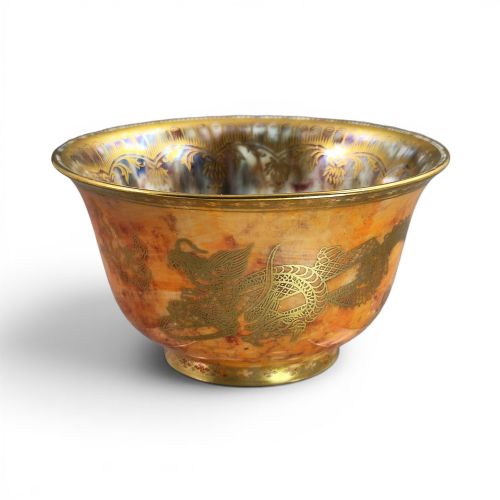


English Art Pottery Bowl
An English art pottery bowl brings vivid glaze work and distinct period design to a table.
English Art Pottery Bowl
An English art pottery bowl combines practical vessel forms with the decorative ambitions of the late nineteenth and early twentieth centuries. Pieces matching this search phrase span movements from Victorian times through the Edwardian era and into the 1930s.
Buyers frequently encounter works featuring distinct glaze effects, transfer prints, and hand-painted patterns from prominent potteries. The selection includes everything from miniature lustre pieces to large decorative chargers and fruit bowls.
Makers focused on both sculptural presence and surface ornament, creating items that served as centrepieces or matching components of larger sets. The styles present move from organic lines to geometric patterns as the decades progress.
How they were made
Potters shaped earthenware, stoneware, and bone china on the wheel or by moulding clay before applying intricate surface decoration. Many pieces received multiple firings to set complex underglaze designs and colourful enamel finishes.
Specialised techniques such as lustre glazing introduced metallic sheens and iridescent colours that reacted during firing. Artisans often added touches of gold leaf and enamel over the base glaze to highlight specific motifs.
Stamps, marks, and pattern numbers were typically pressed or painted onto the underside before the final glaze firing. This process secured the maker's mark permanently into the ceramic body.
Listings feature works spanning the Edwardian period through the 1930s, utilising earthenware, stoneware, bone china, and porcelain.
What varies in quality
The refinement of the glaze application and the richness of the metallic lustre distinguish superior examples from standard production. Complex patterns that demand precise hand-painting require greater skill than simple printed designs.
The clarity of the maker's stamp and the crispness of moulded details indicate the care taken during manufacture. Pieces that maintain vibrant colours without heavy surface wear demonstrate better preservation over time.
Daisy Makeig Jones·James Hodgkiss·Charlotte Rhead·Moorcroft Macintyre And Co·Gladstone Potteries
The English Art Pottery Bowl Glossary
- Lustre
- A type of ceramic glaze containing metallic salts that produce an iridescent sheen upon firing. This finish creates a reflective, rainbow-like surface effect.
- Earthenware
- Porous pottery fired at lower temperatures than stoneware or porcelain. It requires an impermeable glaze to hold liquids securely.
- Charger
- A large decorative plate used traditionally for display rather than for serving food. These pieces often showcase the fullest expression of a pottery's pattern work.
- Stoneware
- A dense, impermeable ceramic fired at high temperatures until vitrified. It provides a robust body suited for heavy utility vessels.
- Enamel
- Opaque coloured glass fused to the ceramic surface during a secondary low-temperature firing. It adds bright surface details that stand out against the base glaze.
English Art Pottery Bowl: Frequently Asked Questions
Can I use these bowls for food?
Many older ceramic vessels contain lead or other materials in the glaze that are unsuitable for modern dietary use. It is safer to treat decorative bowls as display items rather than tableware.
Using them for dry presentation avoids direct contact with acidic foods that might affect the historic surface.
How do I date a piece of pottery?
Examine the underside for impressed factory marks, printed stamps, and registration numbers. These factory ciphers often correspond to specific years of production.
Stylistic indicators such as Art Nouveau curves or Art Deco geometries also point toward particular decades.
What is the difference between earthenware and stoneware?
Earthenware is fired at lower temperatures, leaving the clay body porous and requiring a glaze to remain watertight. Stoneware reaches higher temperatures until the material vitrifies into a dense, stone-like substance.
Stoneware naturally resists moisture even without a complete glaze covering.