



Arts and Crafts Dish
An arts and crafts dish brings handmade metalwork and earthenware into the home, prized for honest construction and distinctive hammered surfaces.
Arts and Crafts Dish
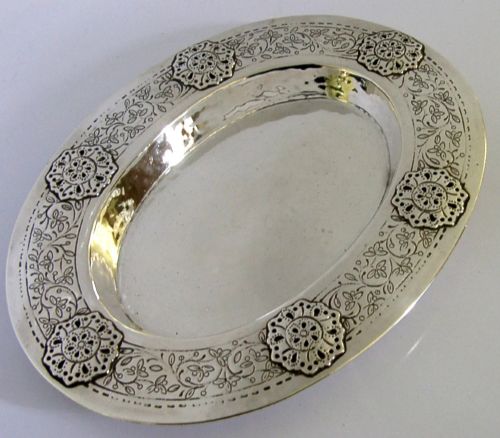
An arts and crafts dish encompasses diverse domestic vessels, ranging from small sterling silver tazzas and card trays to large copper chargers and pewter bowls. These pieces emerge primarily from workshops operating between the late nineteenth century and the mid twentieth century, reflecting a rejection of mass production in favour of individual craftsmanship.
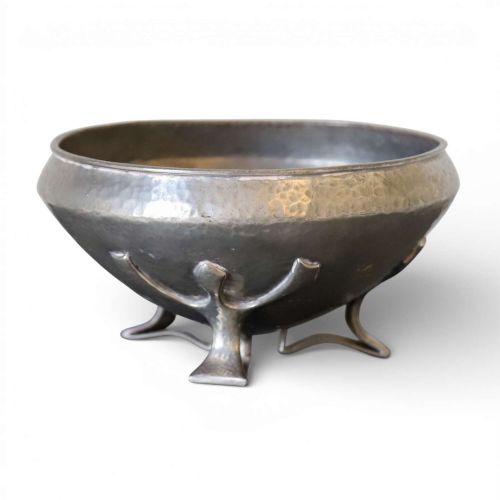
The version most commonly met on this page is the hammered copper or pewter vessel, often produced by prominent commercial houses or regional guilds. Alongside metalwork, buyers frequently encounter earthenware bowls featuring slip decoration or distinctive floral motifs, representing the broader output of the period.
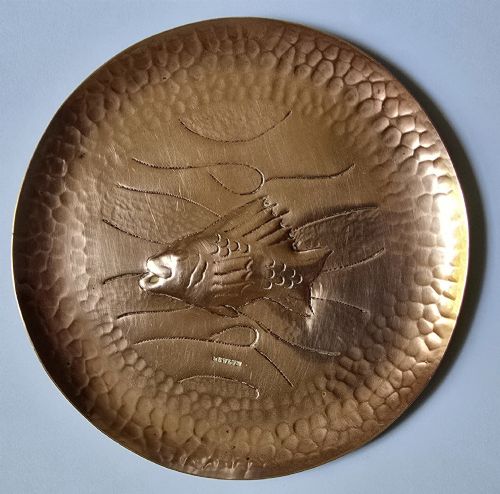
Form follows function closely in these objects, whether intended as decorative centrepieces, fruit bowls, or visiting card trays for a hallway. The design vocabulary draws heavily on natural forms, incorporating pomegranates, clover, fish, and intertwined foliage directly into the metal or ceramic surface.
Materials and Technique
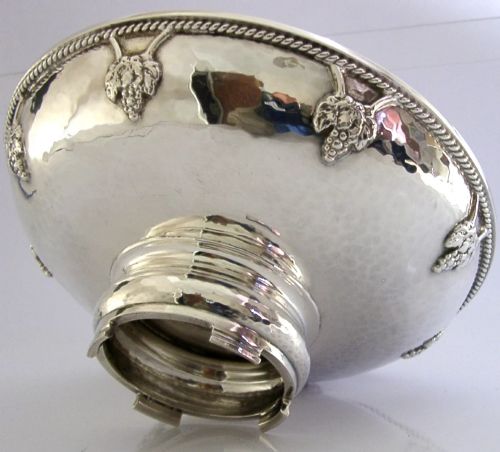
Metalworking defines the physical character of these items, with copper, sterling silver, and pewter shaped through deliberate hand hammering and planishing. Craftsmen left visible tool marks across the surface to record the manual labour involved in raising a bowl or tray from a flat sheet of metal.
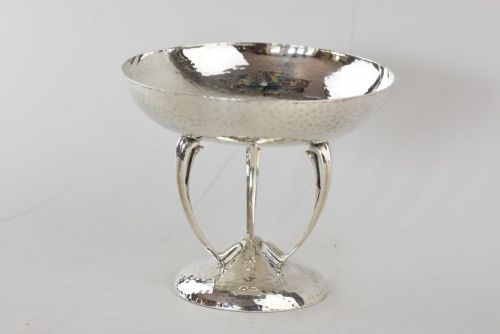
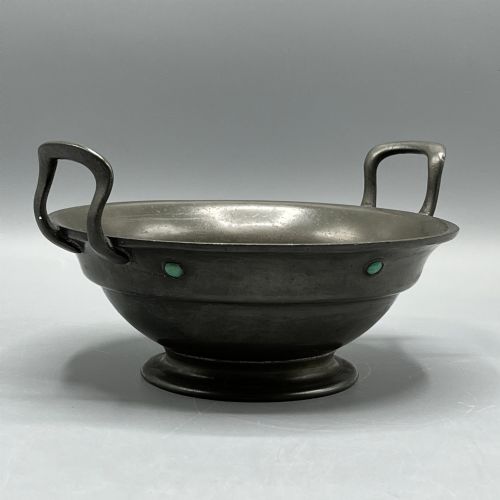
Ceramics and glass rely on distinct decorative techniques, including slip-cast earthenware, stoneware with incised foliage, and enamelled glass. Artisans frequently integrated cabochons of coloured glass, turquoise, or hardstones into the metal mounts of silver and pewter dishes to provide contrast.
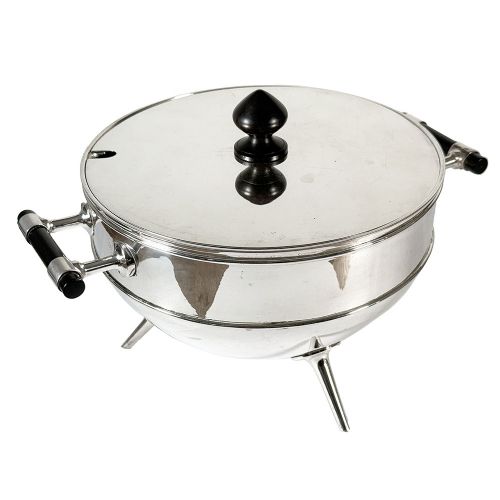
Woodwork and silver plating appear alongside solid metals, utilising ebonised accents and carved fruitwood to complement the central vessel. Construction methods prioritise visible rivets, soldered joints, and structural honesty over concealed assembly.
An anonymous duck managed to paddle across a brass charger, immortalised forever in the company of three fish and a central fountain.
Evaluating Quality
Quality rests upon the crispness of the hand-beaten surface and the sensitivity of the decorative relief. Superior pieces display rhythmic, even hammer marks that follow the contours of the form rather than chaotic or mechanical indentation.
The depth of artistic collaboration distinguishes finer examples, particularly where notable designers created specific models for commercial retailers. Weight, gauge of metal, and the secure setting of cabochon stones or enamels separate standard production items from exceptional workshop output.
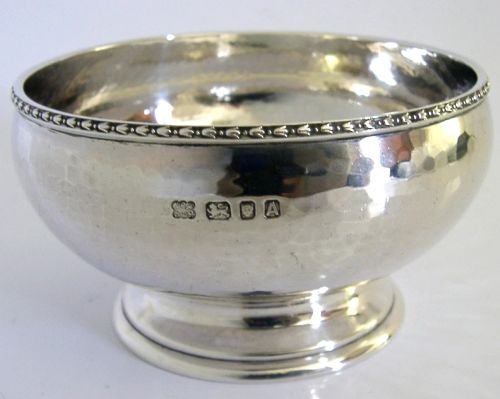
Maker identification and clear hallmarks elevate an object, providing documentary evidence of its origin. The integration of motif and material demonstrates the maker's control over the medium, ensuring the design enhances rather than overpowers the functional vessel.
A E Jones·Goldsmiths and Silversmiths Company·Newlyn·Liberty & Co·Hukin & Heath·Doulton Lambeth·Faulkner Bronze Company·Roberts and Belk·John Barrett·William Moorcroft·Guild of Handicrafts
The Arts and Crafts Dish Glossary
- Planishing
- The process of smoothing and shaping metal using a small flat-faced hammer to create a textured, light-reflecting surface. This technique leaves distinct facet marks across copper and silver dishes.
- Tazza
- A small decorative cup or bowl raised on a high foot and stem, often used for serving fruit or sweets. These pedestal vessels frequently feature three-legged bases in arts and crafts silver.
- Tudric
- The trade name used by Liberty & Co. for their range of pewter ware, typically containing a high proportion of silver for enhanced lustre. Many pieces in this line were designed by leading guild artists.
- Cabochon
- A gemstone or piece of coloured glass shaped and polished brightly rather than faceted. They are frequently set directly into the rims or handles of metal dishes and bowls.
- Quaiche
- A traditional two-handled drinking vessel or shallow bowl of Scottish origin, reinterpreted in pewter and silver during the movement. The twin handles often feature pierced or hammered decoration.
- Slip
- Liquid clay applied to the surface of earthenware before firing to create raised patterns or background colour. It allows artists to draw organic lines directly onto ceramic bowls.
Arts and Crafts Dish: Frequently Asked Questions
How do I clean antique copper and pewter?
Wash metal dishes gently in warm soapy water using a soft cloth, avoiding abrasive scouring pads that destroy original patination.
Dry thoroughly with a lint-free towel and leave unpolished if you prefer a historical surface, or use a mild cream polish sparingly.
Were these bowls used for food?
Many metal and ceramic dishes served practical dining functions, such as holding fruit, nuts, or sweetmeats during meals.
Pepwer and silver vessels designed for sugar or biscuits saw regular household use, though delicate enamelled glass items remained purely decorative.
How can I identify a Liberty & Co piece?
Look for stamped maker marks, model numbers, or specific trade names like Tudric pewter on the base of the object.
Design characteristics often include organic floral motifs, Celtic-revival strapwork, and the distinct touch of designers like Archibald Knox or Oliver Baker.
What is the difference between a tazza and a bowl?
A tazza stands upon a raised pedestal foot and stem, elevating the vessel above the surface of a table.
Standard bowls rest flat on a base or on short feet, functioning as container dishes rather than pedestal display pieces.