




Wedgwood Dragon Bowl
These wedgwood dragon bowl pieces are striking works of ceramic art, offering vivid mythical motifs and rich glazes that collectors prize.
Wedgwood Dragon Bowl
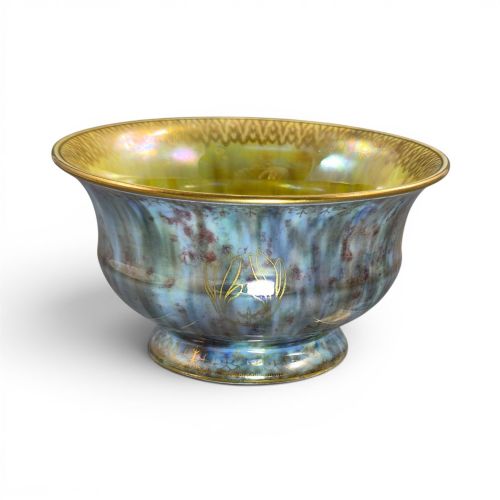
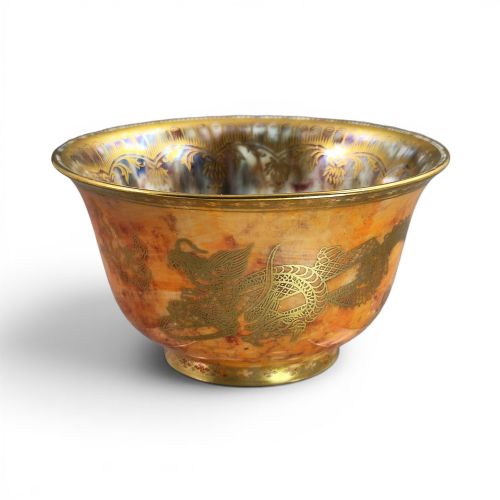
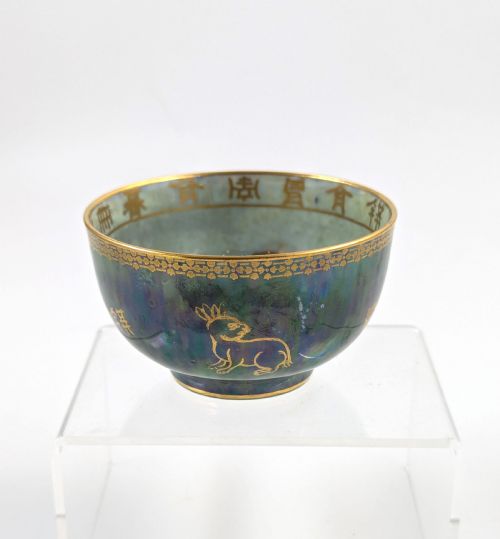
A wedgwood dragon bowl brings intricate mythical imagery into domestic spaces through imaginative ceramic design. These vessels display dragons, often chasing the pearl of wisdom, rendered across various forms including decorative bowls, octagonal bowls, lantern bowls, and miniature cups.
The pieces on this page emerge primarily from the Edwardian period and the decades spanning 1910 to 1920. They reflect the stylistic shifts of their time, blending traditional ceramic production with ornamental richness.
Most examples belong to the Fairyland Lustre series or related lustreware productions. Buyers encounter standard circular forms alongside octagonal variations, each serving primarily as decorative display objects rather than functional tableware.
How they were made
The manufacture of these bowls relies upon bone china and porcelain bodies formed into specific shapes before receiving detailed surface treatments. Ceramic glaze provides the smooth foundational layer necessary for subsequent decorative applications.
Makers applied lustre glaze and polychrome finishes to achieve iridescent optical effects across the surface. Gold leaf, gilt, and gold gilding were then added to highlight specific motifs and structural edges.
The material record spans the Edwardian period, 1910, and 1920s.
What varies in quality
Quality in a wedgwood dragon bowl rests upon the complexity and clarity of the transfer-printed or hand-finished imagery. Stronger examples display crisp delineation in the dragon motifs and vibrant iridescence within the lustre glazes.
The application of gilding and gold leaf introduces another distinction, where precise metalwork enhances the visual depth of the design. Form also plays a role, with octagonal and lantern variations offering greater architectural complexity than standard circular bowls.
Daisy Makeig-Jones·Wedgwood
The Wedgwood Dragon Bowl Glossary
- Lustre Glaze
- A metallic ceramic finish that produces an iridescent, pearl-like sheen when fired. This technique gives the surface its characteristic light-catching properties.
- Bone China
- A type of soft-paste porcelain incorporating animal bone ash. It provides a durable, bright white body suitable for intricate painting and glazing.
- Gold Gilding
- The application of finely beaten gold leaf or gold paint to ceramic surfaces. It creates bright metallic accents that contrast with coloured glazes.
- Octagonal Bowl
- A vessel featuring eight distinct planar sides rather than a circular profile. This geometric form requires specialised shaping during manufacture.
- Fairyland Lustre
- A decorative ceramic range known for fantastical subjects and rich colour palettes. It represents a pinnacle of ornamental pottery design from the early twentieth century.
Wedgwood Dragon Bowl: Frequently Asked Questions
What are these bowls made from?
These pieces use bone china and porcelain as their primary ceramic bodies. Makers applied specialised ceramic glaze to create smooth surfaces capable of holding complex metallic finishes.
Precious additions such as gold leaf, gilt, and gold gilding complete the decoration, providing bright contrasts against the lustrous background colours.
How do I date a bowl?
Dating relies on stylistic markers and production periods associated with early twentieth-century ceramic design. Most recorded examples date from the Edwardian era through the 1910s and 1920s.
Examining the specific lustre glaze formulas and pattern numbers helps place individual vessels within this chronological window.
Where should I display my bowl?
These decorative vessels suit prominent display locations where adequate lighting can activate their iridescent lustre glazes. Placing them on mantelpieces, cabinets, or dedicated tables allows light to catch the gilt and gold leaf.
Because they function primarily as ornamental art rather than utilityware, keeping them away from heavy daily handling preserves the delicate surface finishes.
What motifs appear on these bowls?
Dragon motifs dominate the design scheme, frequently depicting creatures chasing the pearl of wisdom or winding through abstract settings. Tibetan dragon motifs also appear among the decorative variations.
These mythical subjects draw upon imaginative visual traditions, utilising rich colours and metallic highlights to create narrative depth across the ceramic surface.