


Art Deco Lustreware
Art deco lustreware pieces catch the eye with metallic iridescence and rich enamel, bringing vibrant colour and intricate design to any room.
Art Deco Lustreware
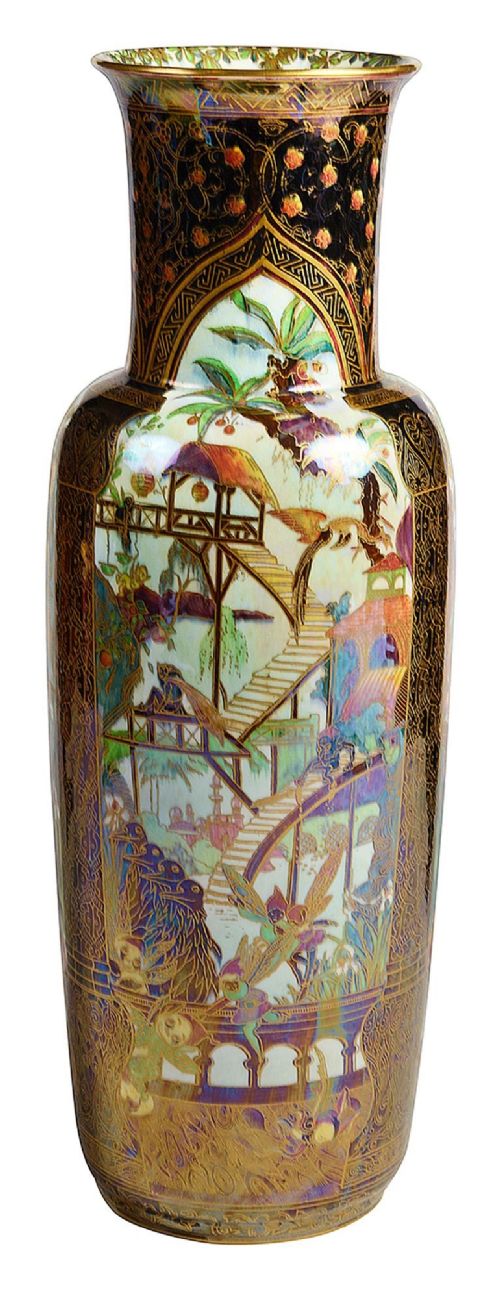
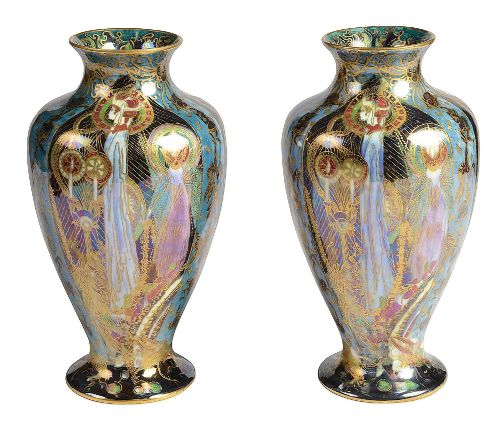
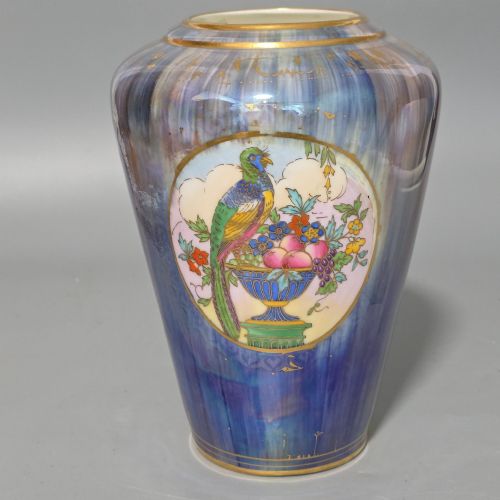
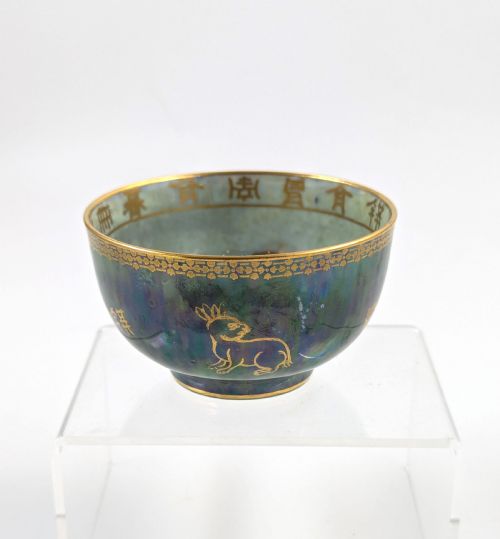
Art deco lustreware encompasses decorative ceramic items finished with a metallic glaze that creates an iridescent sheen. These pieces emerge primarily from early twentieth-century periods, specifically spanning the nineteen-hundreds through to the nineteen-thirties, embodying both art nouveau and art deco movements.
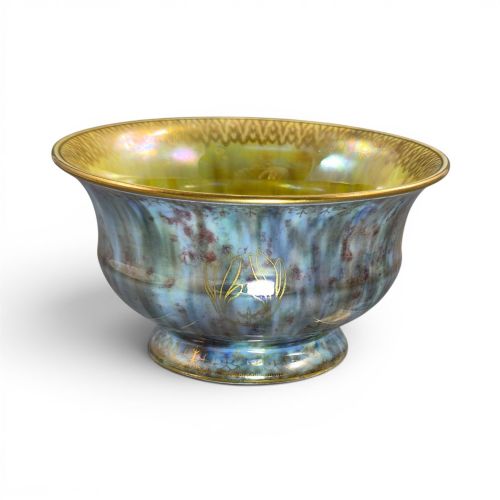
The form appears most frequently in functional and decorative shapes such as vases, baluster jars, decorative bowls, and octagonal bowls. Smaller items like perfume bottles, three-handled mugs, and decorative cups also surface across these periods.
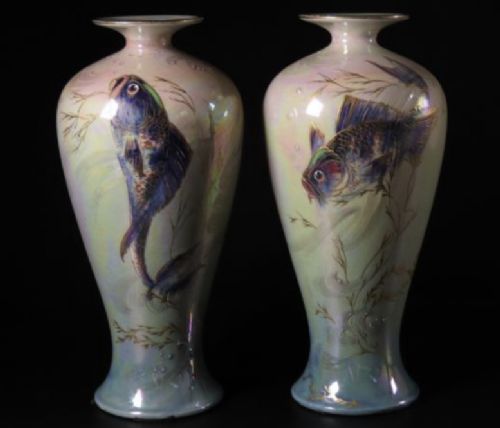
Makers and designers from English potteries dominate this selection, utilising earthenware, bone china, and porcelain as foundational bodies. Pieces often display elaborate pictorial scenes involving fairies, dragons, fish, and floral motifs rendered in rich enamel and gold leaf.
What varies in quality
The complexity and detail of the hand painting separate standard production items from masterworks. Intricate mythological or fairy motifs executed by notable designers display finer line work and richer enamel layering than simple mottled glazes.
The depth and brilliance of the iridescent lustre glaze influence the visual impact of each vessel. Even application and vibrant metallic reflection indicate superior firing control during the manufacturing process.
Daisy Makeig-Jones·Walter Slater·Charlotte Rhead
The Art Deco Lustreware Glossary
- Lustre glaze
- A type of ceramic glaze containing metallic salts that produce an iridescent, reflective surface upon firing. This technique creates the signature metallic sheen characteristic of these wares.
- Bone china
- A type of soft-paste porcelain containing bone ash, known for high strength, chip resistance, and translucency. It provides a smooth white base for detailed enamel painting.
- Baluster vase
- A decorative vase with a rounded body that tapers toward the base and swells near the middle. This classic shape frequently showcases wraparound pictorial designs.
- Earthenware
- Porous pottery fired at lower temperatures, commonly used as the foundational body for decorated ceramic vessels. It is typically glazed to ensure it holds liquid.
- Hand enamelling
- The meticulous application of coloured glass pigments onto a ceramic surface using a brush prior to firing. This technique allows for precise pictorial detail.
Art Deco Lustreware: Frequently Asked Questions
What is art deco lustreware?
Art deco lustreware comprises ceramic vases, bowls, and decorative items finished with a metallic glaze that produces an iridescent sheen. These objects integrate early twentieth-century design styles with complex hand-painted enamel decoration.
Potteries utilise earthenware and bone china as bases for these reflective glazes, often incorporating motifs like dragons, birds, and abstract patterns.
How do I care for lustreware?
Lustreware requires gentle handling due to the delicate nature of the surface glazes and gold leaf detailing. Dusting with a soft, dry cloth preserves the metallic finish without scratching the enamel.
Keep these ceramic pieces away from direct sunlight and moisture to protect the integrity of the glaze and pigments over time.
Are these pieces purely decorative?
Many items serve primarily as decorative art objects, including large baluster vases, display bowls, and covered jars designed for visual impact. Their intricate pictorial themes focus on aesthetic presentation rather than utility.
Other forms, such as mugs, cups, and perfume bottles, offer functional utility alongside their decorative lustre finishes.
How are different periods identified?
Periods are identified through specific maker marks, glaze characteristics, and stylistic shifts between art nouveau and art deco movements. Early twentieth-century pieces often feature distinct signature patterns and backstamps from English potteries.
Stylistic cues, such as symmetrical geometric motifs versus flowing mythical scenes, help distinguish nineteen-twenties work from earlier Edwardian examples.