





Iridescent Ceramic Bowl
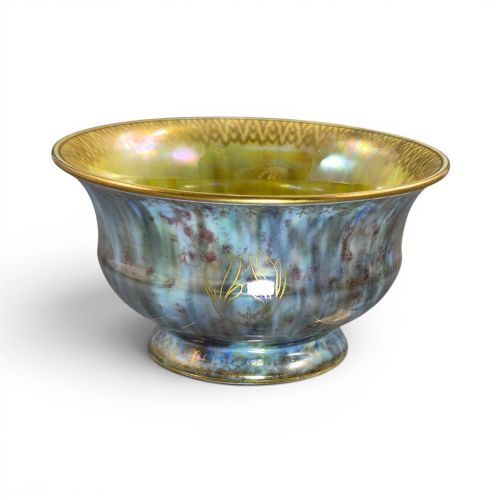
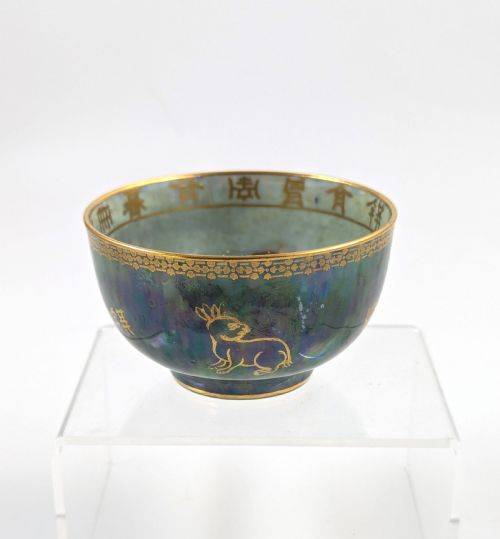
These iridescent ceramic bowl pieces bring luminous lustre glaze finishes and intricate dragons straight to any mantel.
Iridescent Ceramic Bowl
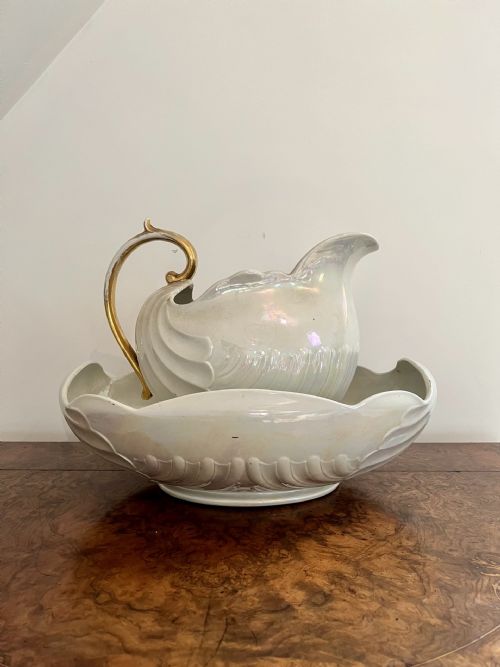
An iridescent ceramic bowl represents the decorative heights of early twentieth-century ceramic design, particularly pieces finished with shimmering lustre glazes. Buyers seeking these items will find decorative bowls, miniature cups, and jug and bowl sets originating from the Edwardian era up to the nineteen-twenties.
The selections here lean heavily toward intricate porcelain and bone china vessels produced during the nineteen-tens. Art Nouveau and Art Deco stylistic influences appear frequently across these vessels, often depicting mythological creatures and natural motifs.
How they were made
Potters built these pieces using fine porcelain and bone china bodies, providing a smooth canvas for the subsequent decoration. Artisans applied metallic glazes and lustre finishes to create the characteristic rainbow sheen.
Makers embellished the surfaces further with gold leaf, gold gilding, and gilt highlights. Firing techniques fixed these metallic oxides to the ceramic surface, producing permanent optical interference colours.
Iridescent Ceramic Bowl Retail Price Guide 2026
Typical asking prices for iridescent ceramic bowl among the pieces listed under this phrase on Sellingantiques today, from the lower quarter to the upper quarter. They describe what is for sale here now, not the wider market.
Design styles span Art Nouveau and Art Deco across the Edwardian era and the nineteen-twenties.
What varies in quality
The intricacy of the painted motifs and the density of the metallic lustre determine the visual impact of each piece. Superior examples display complex subjects like coiling dragons and detailed butterflies executed with precision.
The application of gold leaf and gilt detailing contributes significantly to the refinement of the vessel. Richly layered lustre glazes that catch the light from multiple angles separate standard wares from exceptional examples.
Wedgwood·Shelley
The Iridescent Ceramic Bowl Glossary
- Lustre Glaze
- A ceramic finish containing metallic oxides that produces an iridescent, rainbow-like sheen upon firing. This technique dates back centuries but found vibrant new expressions in the early twentieth century.
- Bone China
- A type of soft-paste porcelain incorporating animal bone ash. It offers high whiteness, translucency, and strength.
- Gold Gilding
- The application of fine gold leaf or gold powder to the surface of ceramics. It accentuates rims, handles, and pictorial details.
- Art Nouveau
- An international style of art, architecture, and applied art characterised by sinuous lines and flowing natural forms. It heavily influenced decorative objects from the turn of the twentieth century.
Iridescent Ceramic Bowl: Frequently Asked Questions
What periods do these bowls come from?
The pieces span the Edwardian period through the nineteen-twenties.
Most items date specifically to the nineteen-tens, reflecting early twentieth-century ceramic artistry.
How do lustre glazes achieve their shine?
Potters apply metallic oxides onto the ceramic surface before a specialised firing process.
This creates a thin film that refracts light to produce an iridescent effect.
What motifs appear on these bowls?
Designs frequently incorporate mythical subjects such as dragons, phoenixes, and imaginary landscapes.
Natural elements like butterflies, hummingbirds, and fish also feature prominently.
How should I display an iridescent bowl?
Position the piece where direct light can strike the lustre glaze surface.
Natural daylight or directional indoor lighting enhances the shifting rainbow colours.