


Chinoiserie Ceramic Vases
Chinoiserie ceramic vases bring imaginative Eastern motifs into domestic spaces through painted porcelain, ironstone, and delftware.
Chinoiserie Ceramic Vases
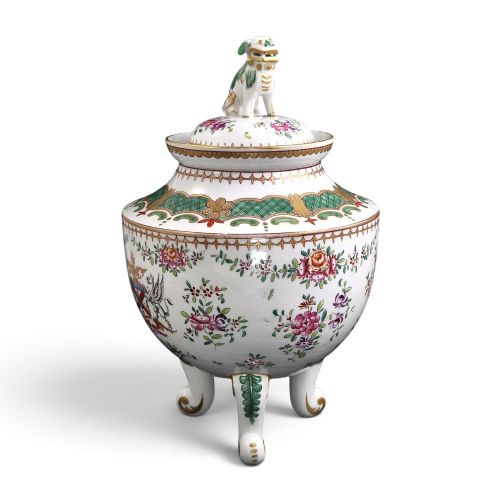
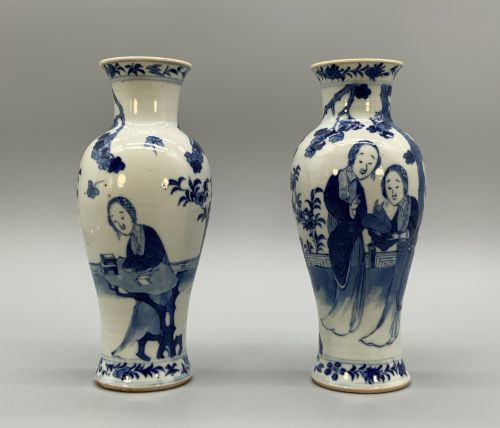
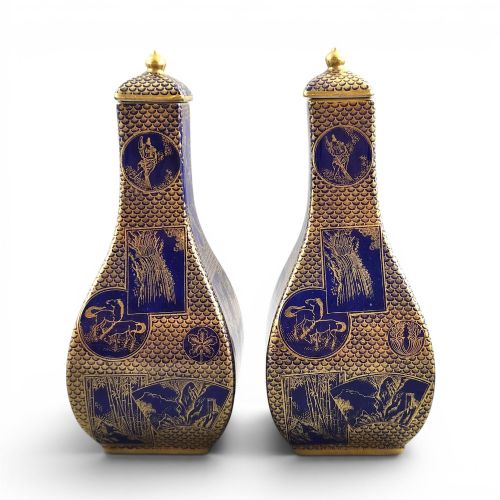
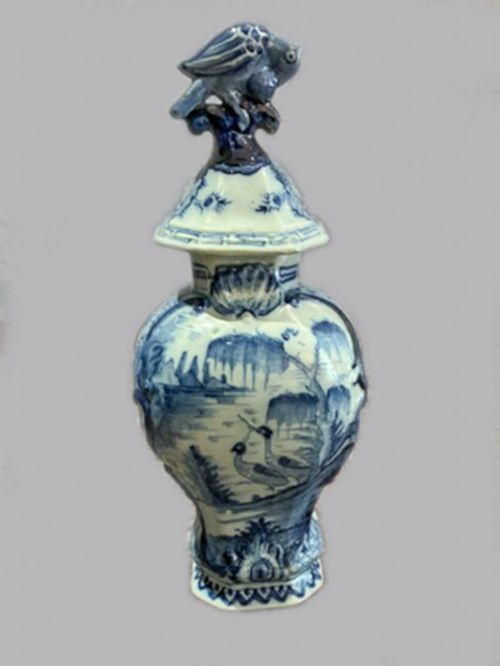
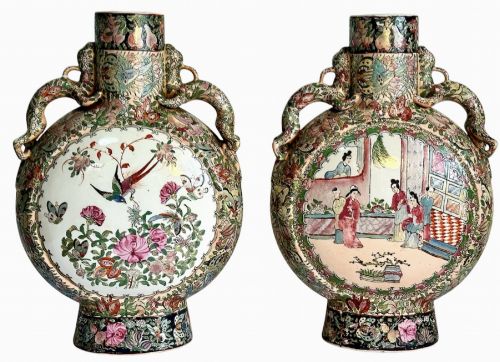
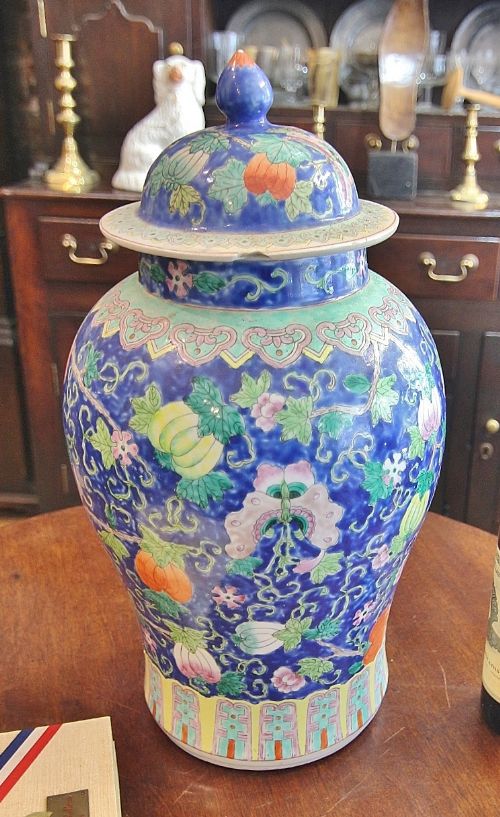
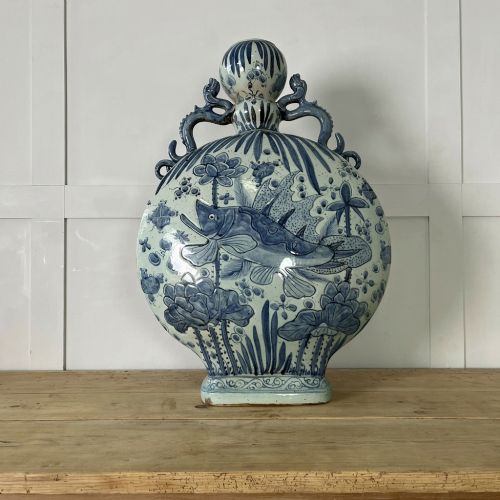
When searching for chinoiserie ceramic vases, collectors encounter a diverse array of vessels spanning multiple centuries, from 17th-century delftware to 19th-century porcelain and ironstone. These pieces range from lidded ginger jars and moon flasks to monumental hall vases and table lamps.
The objects on this page frequently display blue and white palettes, famille rose enamels, and armorial designs. Many items reflect European interpretations of Chinese aesthetics, such as Dutch delft and English ironstone produced in imitation of Kangxi and Qianlong models.
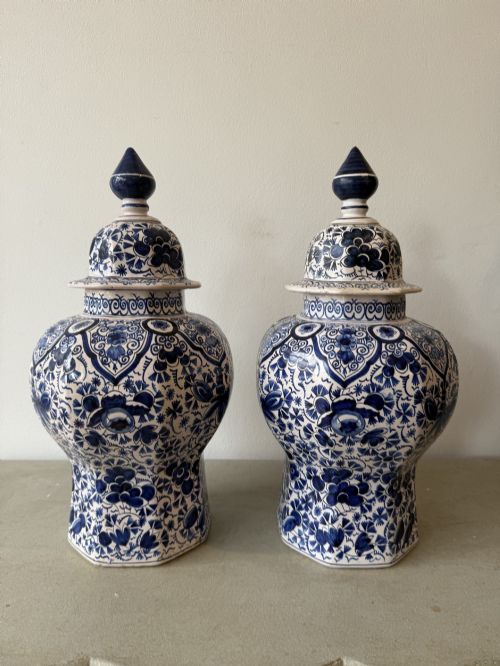
Vessels also include Japanese porcelain pieces decorated in related styles, alongside Continental maiolica and earthenware adaptations. Buyers will find both baluster forms and cylindrical bottle vases designed for display or functional conversion.

Materials and technique
Potters shaped these vessels using fine white clay bodies like porcelain, ironstone, and earthenware, often finished with tin-lead glazes or transparent glossy coats. Cobalt blue pigments were applied under the glaze before firing, while polychrome details such as famille rose enamels required secondary low-temperature firings.
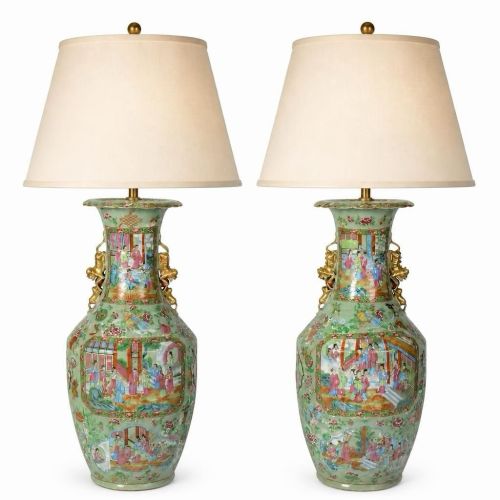
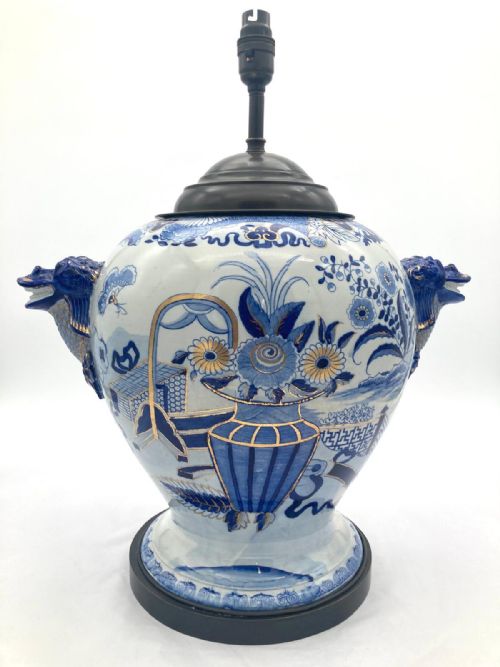
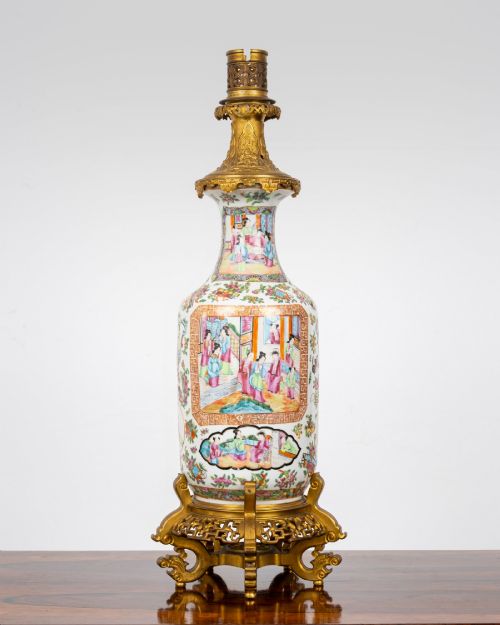
Manufacturing methods combined traditional Asian throwing techniques with European industrial innovations, particularly in English ironstone factories. Many finished vessels received brass, ormolu, or gilt bronze mounts during later periods, particularly when converted into table lamps.
Chinoiserie Ceramic Vases Retail Price Guide 2026
Typical asking prices for chinoiserie ceramic vases among the pieces listed under this phrase on Sellingantiques today, from the lower quarter to the upper quarter. They describe what is for sale here now, not the wider market.
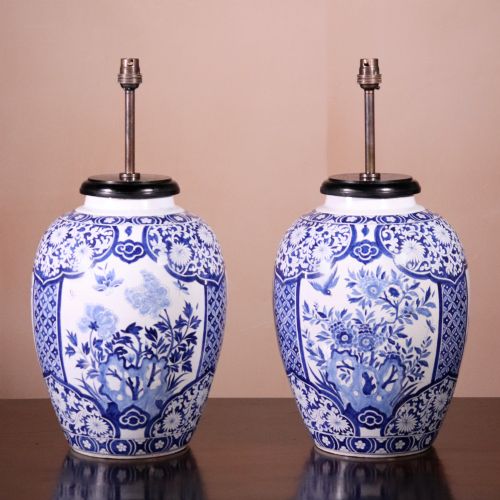
Many stately 19th-century porcelain vessels have quietly retired from holding flowers to spend their golden years moonlighting as illuminated table lamps.
Quality factors
The distinction between ordinary and superior pieces rests upon the crispness of the hand-painted brushwork and the depth of the glaze. Finer examples exhibit meticulous detail in figural scenes, botanical motifs, and avian subjects without blurring or pigment pooling.
Material density and weight also define the grade of the vessel, particularly in ironstone and porcelain bodies. Additionally, the preservation of original covers, intact polychrome enamel layers, and high-quality contemporary metal mounts elevate the standing of a piece.
Mason's·Hicks and Meigh·Royal Doulton·Samson Paris·Carlton Ware·Lambeth Pottery
The Chinoiserie Ceramic Vases Glossary
- Famille rose
- A palette of opaque rose-pink and other soft enamel colours introduced in Chinese ceramics during the Qing dynasty. This technique allowed for nuanced shading and detailed pictorial compositions.
- Ironstone
- A heavy, durable type of earthenware patented in England during the 19th century to imitate Chinese porcelain. It provided a robust surface for dense cobalt blue and exotic bird patterns.
- Delftware
- Tin-glazed earthenware produced in the Netherlands and England, heavily influenced by imported Chinese blue and white porcelain. Early examples often feature spontaneous interpretations of oriental landscapes.
- Moon flask
- A flattened circular vessel with a short neck and two loop handles, derived from ancient metal canteen shapes. These pieces offer wide flat panels suited for elaborate painted scenes.
- Ormolu
- Gilded bronze mounts applied to the bases, rims, or handles of ceramic vessels. They served both decorative and structural purposes, frequently added during 19th-century luxury conversions.
- Baluster
- A vase profile featuring a bulbous lower body that tapers towards a narrow neck and flaring rim. This classical silhouette provides stability and balanced proportions.
Chinoiserie Ceramic Vases: Frequently Asked Questions
What is a chinoiserie ceramic vase?
These vessels are decorative or utilitarian ceramic containers produced in Europe and Asia that feature European imaginative interpretations of Chinese and East Asian artistic traditions. They encompass blue and white delftware, English ironstone, and porcelain.
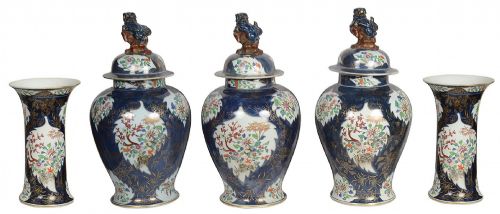
Potters and painters utilised motifs such as pagodas, exotic birds, and figures in landscape settings. The category includes lidded ginger jars, bottle vases, garniture sets, and pieces later adapted as table lamps.
How do I date an antique vase?
Dating relies upon examining the clay body, glaze characteristics, underglaze marks, and stylistic indicators such as colour palettes. For instance, ironstone pieces often point to 19th-century English manufacturing, while tin-glazed delftware typically indicates 17th or 18th-century production.
Secondary additions like 19th-century ormolu mounts or later electrical conversions also provide chronological clues. Comparing painted details against documented factory periods helps narrow the timeframe.
Were these vases made in Europe or Asia?
The selection includes items manufactured in both regions, reflecting centuries of global trade and artistic exchange. Many pieces originated in Chinese kilns during the Qing dynasty or in Japanese workshops.
Simultaneously, European potteries in England, France, and the Netherlands produced substantial quantities of tin-glazed earthenware and ironstone inspired by those imported Eastern designs.
How can I display these vases at home?
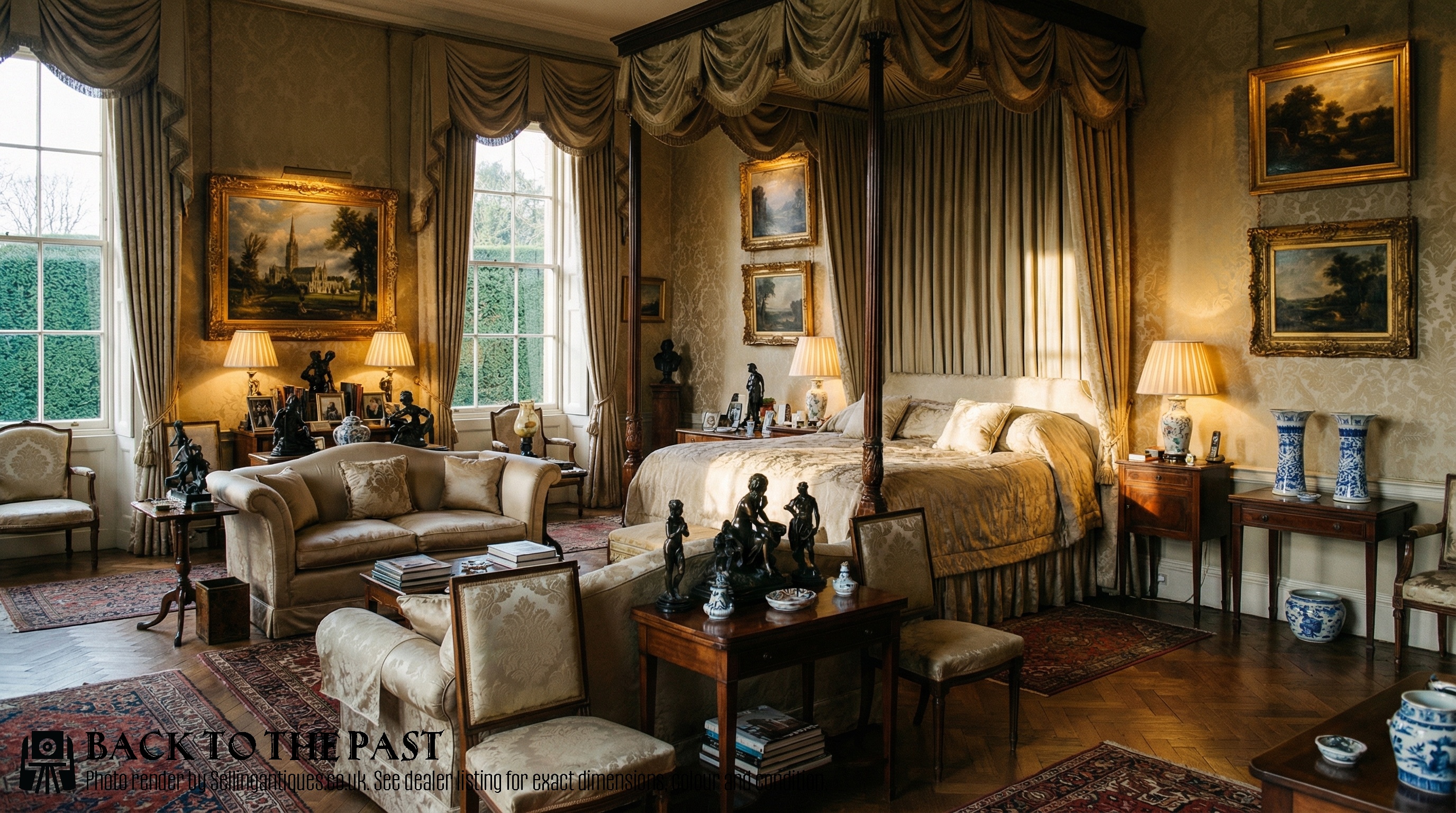
These versatile vessels suit various interior settings, functioning as standalone mantelpiece ornaments, table centerpieces, or fitted table lamps. Lidded jars and moon flasks add height and structural interest to bookcases or sideboards.
Pairing matching vases can create symmetrical displays, while individual bottle vases work well holding dried stems or standing alone as sculptural objects.