




Gilt Ironstone Urn
A gilt ironstone urn brings heavy earthenware body and gleaming gold leaf together, offering sturdy presence for any table or mantelpiece.

Gilt Ironstone Urn
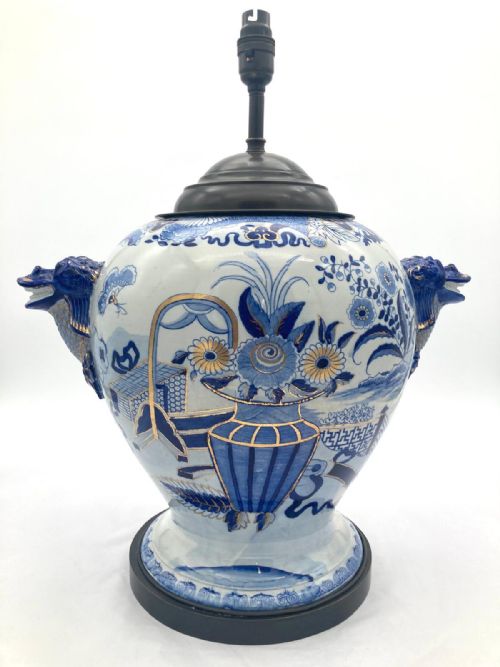
When you search for a gilt ironstone urn, you find robust ceramic vessels shaped as vases, pot pourri jars, garnitures and table lamps. These pieces originate from nineteenth century production, spanning the Georgian, Regency and Victorian periods.
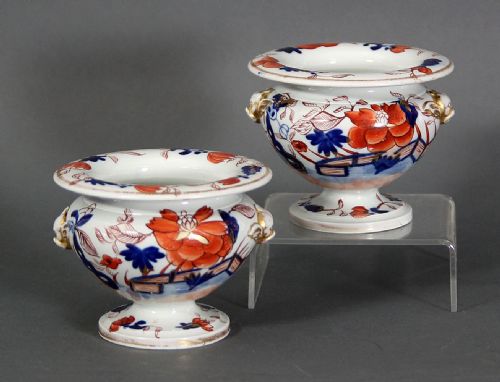
You most frequently meet Mason's ironstone examples on this page, often decorated in Chinoiserie patterns or rich mazarine blue. Other pieces include pairs by Hicks and Meigh, Spode items, and functional salts alongside larger decorative display urns.
How they were made
Potters formed these heavy wares using dense ironstone ceramic body, which provided a durable foundation capable of supporting elaborate vessel shapes. Artisans applied transfer printing or hand painting in enamel colours to build up intricate surface designs.
Finishing touches involved the application of gilt, gilding and gold leaf to highlight rims, handles and decorative motifs. Brass components occasionally appear on pieces that were later converted into table lamps.
Some nineteenth century ceramic vessels had entirely different careers later in life, ending up wired as heavy table lamps.
What varies in quality
The refinement of the painted and gilt decoration dictates the standing of an individual piece. Crisp execution of transfer printing and carefully applied gold leaf distinguish finer vessels from simpler production.
Scale and complexity also influence the character of the object, with large garnitures, matched pairs and unusual pot pourri forms representing the more ambitious outputs of the potteries.
Hicks and Meigh·Spode·Mason's Ironstone
The Gilt Ironstone Urn Glossary
- Ironstone
- A patented heavy earthenware developed in the nineteenth century for its durability and resistance to chipping. It serves as the sturdy ceramic base for these gilt vessels.
- Gilding
- The application of gold leaf or gilt paint to the ceramic surface. This technique highlights raised mouldings and rims.
- Pot pourri
- A vase or jar featuring a pierced cover designed to hold dried scented plant material. These containers often form part of matched garniture sets.
- Chinoiserie
- A decorative style inspired by European interpretations of East Asian art. It appears frequently in the colourful patterns ornamenting these nineteenth century pieces.
- Garniture
- A set of three or more matching vases or urns designed to be displayed together on a mantelpiece or sideboard.
Gilt Ironstone Urn: Frequently Asked Questions
What is a gilt ironstone urn?
A gilt ironstone urn is a durable ceramic vessel decorated with gold leaf or gilding, produced primarily during the nineteenth century by English potteries.
These pieces range from covered pot pourri jars and garniture vases to large hall displays and items later converted into table lamps.
How do I date these urns?
Dating relies on stylistic evidence from the Georgian, Regency and Victorian periods, alongside specific decorative patterns and factory marks where present.
Many examples on this page date from the early decades of the nineteenth century, reflecting the peak of ironstone manufacturing.
Were these urns used for flowers?
Some vessels served as decorative display pieces or containers for scented dried herbs rather than holding water for fresh cut flowers.
Pot pourri urns specifically feature pierced lids designed to release fragrance into a room while concealing the contents within.
How do I care for gilt ironstone?
Gentle dusting with a dry cloth helps preserve the ceramic body and protects the delicate gold leaf from unnecessary wear.
Harsh cleaning agents and abrasive materials should be avoided entirely to maintain the integrity of the enamel and gilt surfaces.