



Masons Ironstone Vases
These masons ironstone vases bring durable ceramic body and rich pattern to any room.

Masons Ironstone Vases
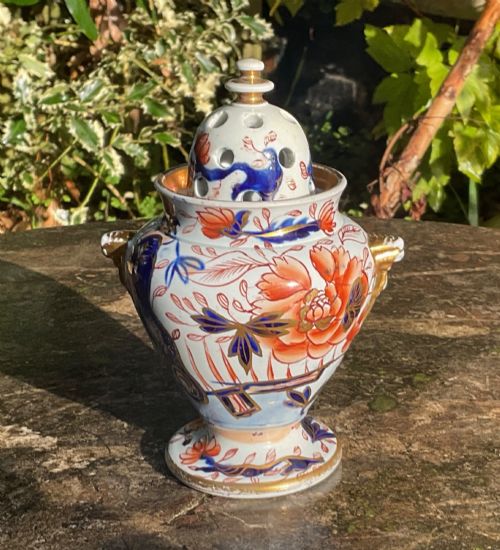
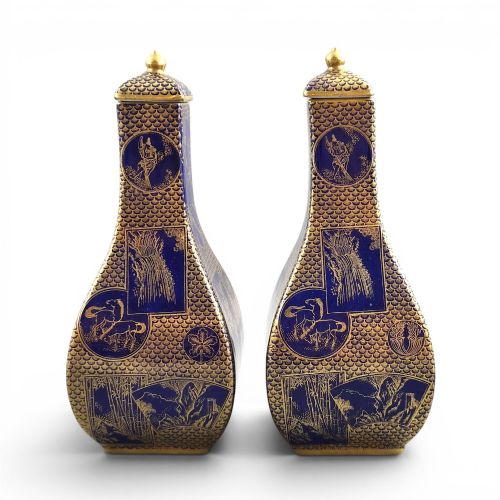
When you search for masons ironstone vases, you encounter robust ceramic vessels spanning the Georgian, Regency, Victorian, and Edwardian periods. The selection encompasses single decorative pots, matched pairs, garnitures, and lidded potpourri containers.
You are most likely to meet pieces decorated with Chinoiserie motifs, English Imari palettes, or specific patterns such as the Bandana design and exotic birds against mazarine blue grounds. Forms range from large hall vases to small posy vessels.
Materials and technique
These items utilise a dense ironstone ceramic body developed to withstand daily use while mimicking porcelain. Artisans applied enamel paints alongside gold leaf, gilt, and gilding to enrich the glazed surfaces.
Decoration relied heavily on transfer printing combined with hand-painted enamel details, particularly in Chinoiserie and Imari styles. Firing at high temperatures set the glaze and fixed the vibrant pigments firmly into the ceramic paste.
Masons Ironstone Vases Retail Price Guide 2026
Typical asking prices for masons ironstone vases among the pieces listed under this phrase on Sellingantiques today, from the lower quarter to the upper quarter. They describe what is for sale here now, not the wider market.
Some large nineteenth-century vases found a second life as table lamps long after their mantelpiece days ended.
Assessing quality
The standard of a piece depends on the crispness of the transfer printing and the precision of the hand-applied enamel and gilding. Early examples from the Georgian and Regency periods often display more intricate painting and richer mazarine blue grounds.
Shape complexity and scale also differentiate the range, with large garnitures, unusual forms, and matched pairs commanding greater attention than standard single vessels. The preservation of the original glaze and gold leaf remains central to the integrity of each item.
Miles Mason
The Masons Ironstone Vases Glossary
- Ironstone
- A heavy, durable ceramic body patented to create sturdy vessels that resemble oriental porcelain. It forms the structural foundation for nearly all pieces found in this category.
- Garniture
- A set of three or more matching vases designed to be displayed together on a mantelpiece or sideboard. These sets frequently appear in nineteenth-century arrangements.
- Imari
- A decorative style borrowing from Japanese export wares, typically featuring a palette of iron red, cobalt blue, and gold. English potters adapted this aesthetic extensively.
- Potpourri
- A vase featuring a pierced or perforated cover designed to hold dried scented plant materials. These lidded vessels serve both decorative and functional purposes.
- Chinoiserie
- A European decorative style reflecting imaginative interpretations of Chinese artistic traditions. It appears frequently in the landscape and bird motifs on these ceramics.
Masons Ironstone Vases: Frequently Asked Questions
How do I date masons ironstone vases?
Dating relies upon stylistic markers, body weight, and specific pattern names recorded in the evidence. Georgian and Regency examples often feature hand-painted Chinoiserie details, whilst later nineteenth-century and Edwardian pieces show shifts in palette and form.
Examining the base marks, where present, alongside the application of gold leaf and enamel helps place the vessel within a specific period.
What is a garniture of vases?
A garniture is a matching set of vessels, usually numbering three or more, created to sit together symmetrically on a mantelpiece or furniture top. These sets share identical decorative themes, such as Bandana patterns or exotic birds.
Historically, they provided a balanced focal point in period interiors.
How were potpourri vases used?
Potpourri vases held dried flower petals mixed with spices to freshen the air in nineteenth-century rooms. The pierced or perforated covers allowed the fragrance to diffuse gently into the surrounding space.
Many survive today with their original covers intact.
What defines the Imari style on these pieces?
The Imari style on these ceramics employs a distinct palette dominated by deep cobalt blue, iron red, and added gold leaf highlights. English makers adapted this Japanese aesthetic to suit domestic tastes.
These pieces combine complex geometric borders with naturalistic motifs.