
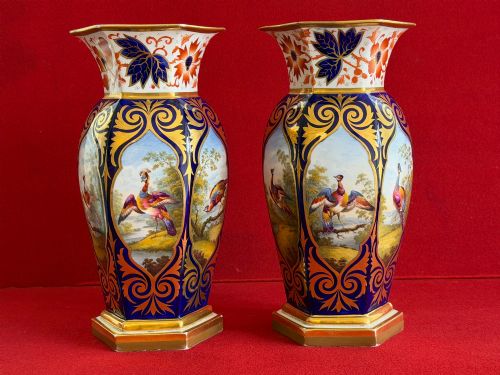
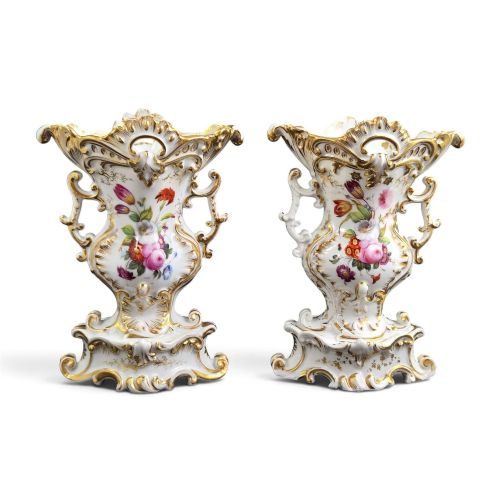
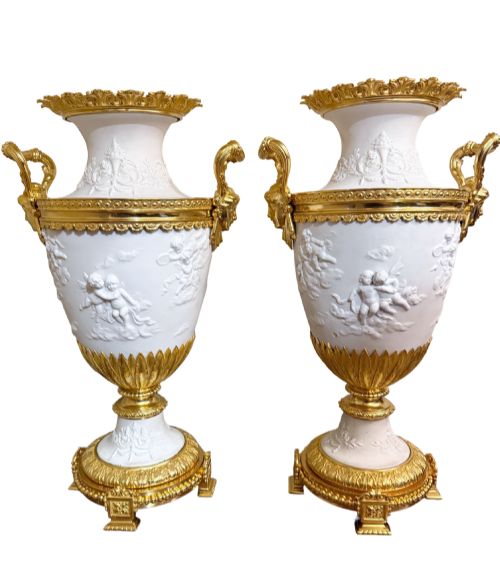
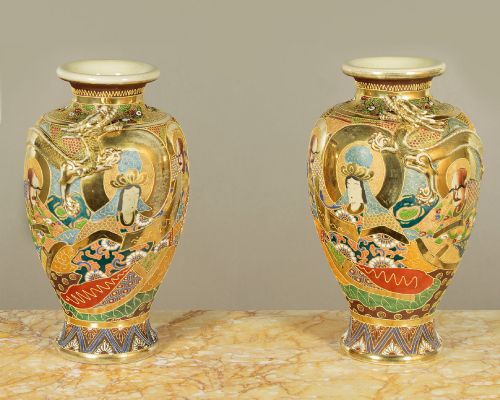
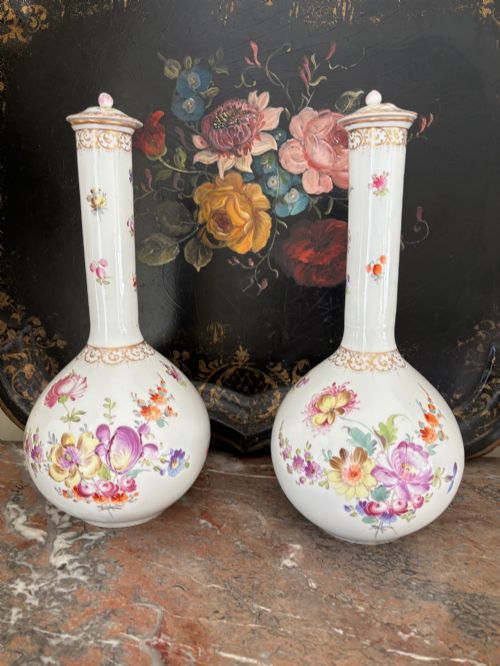
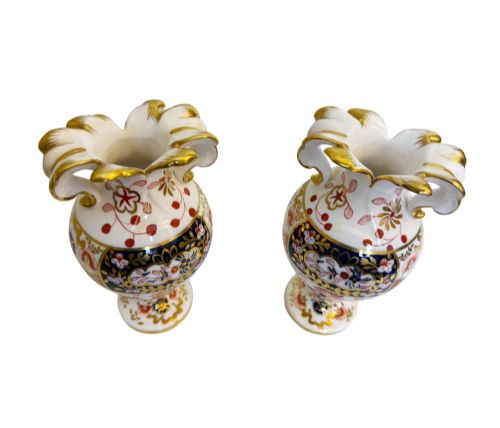
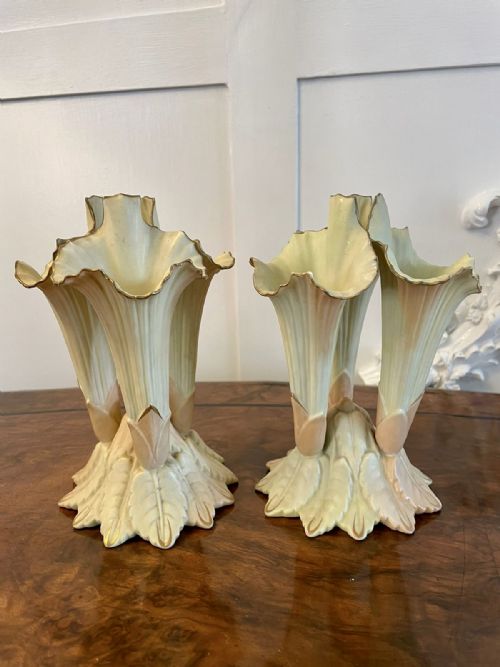

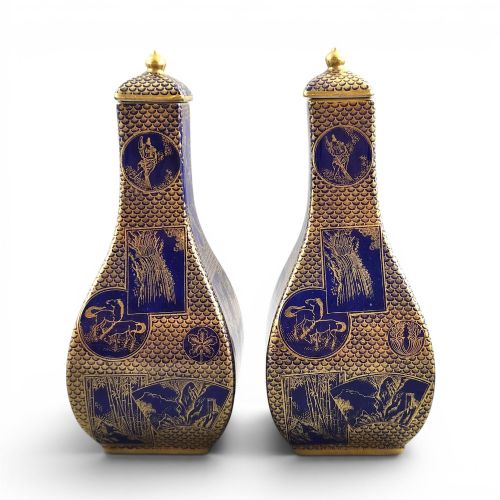
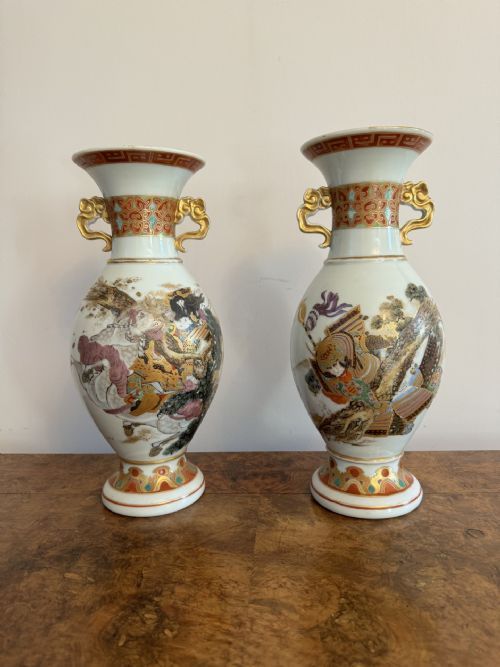
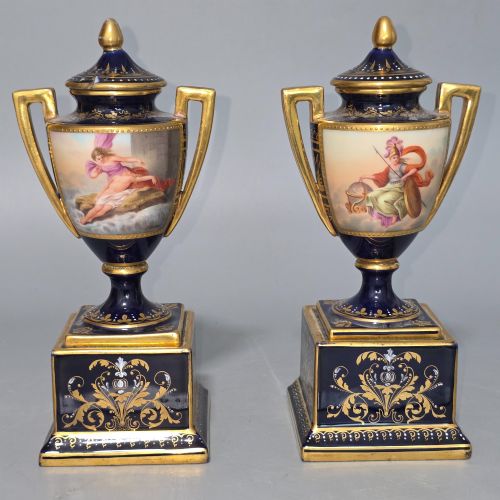
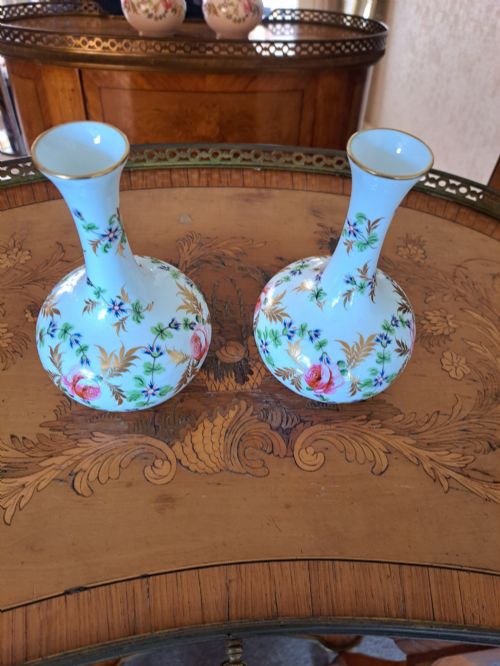
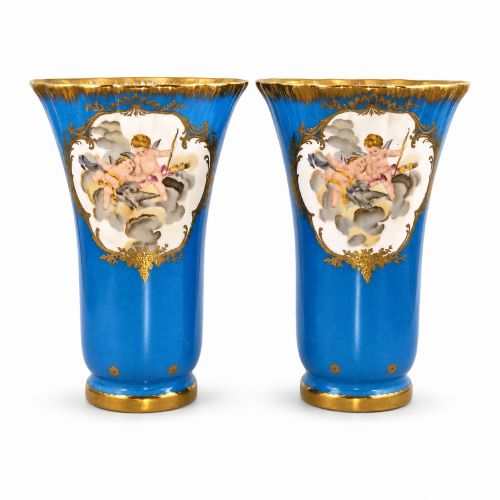
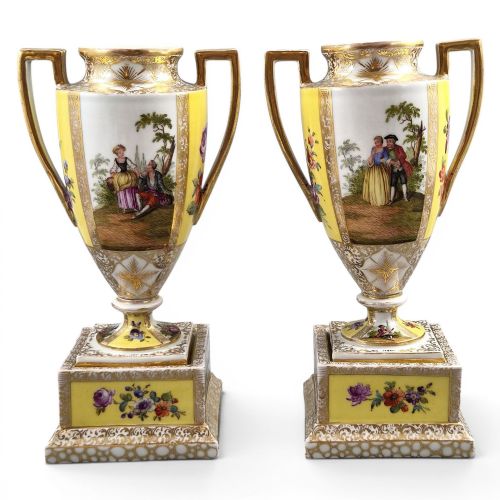
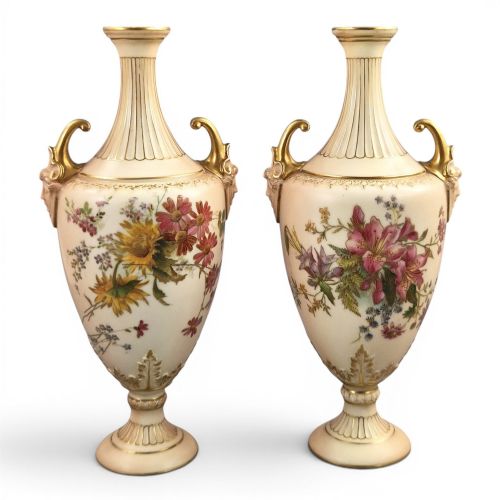
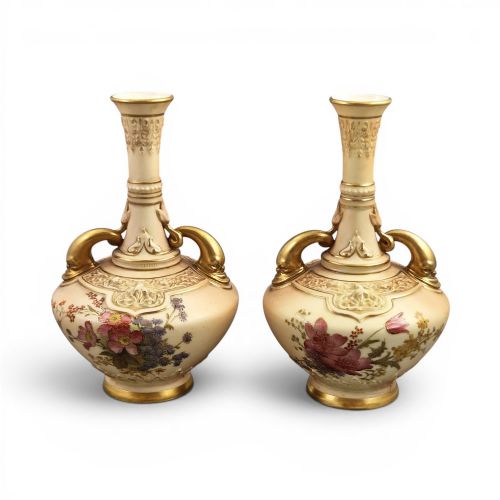
Gilded Porcelain Vase Pair
When you search for a gilded porcelain vase pair, you are looking at matched vessels combining ceramic bodies with gold leaf or metallic paint.
Gilded Porcelain Vase Pair
A gilded porcelain vase pair consists of two matching ceramic vessels decorated with gold leaf, gilt bronze, or painted metallic highlights. These matched items serve primarily as decorative ornaments, garnitures for mantelpieces, or converted table lamps.
The selections available here span diverse manufacturing traditions, ranging from English factories like Worcester and Spode to continental European makers such as Sèvres, Vienna, and Sitzendorf. Japanese Satsuma, Imari, and Kutani pieces also appear frequently among the listings.
Periods represented stretch from the Regency era through the Victorian epoch into the Edwardian period and the early twentieth century. Forms include bulbous lidded jars, campana shapes, slender bud vessels, and handled ewers.
How they were made
The foundational bodies utilise porcelain, earthenware, or ironstone, shaped either by throwing on a potter's wheel or casting in moulds. These ceramic bases receive hand-painted floral, landscape, or figurative decoration in enamel colours before a secondary firing.
Gilding is applied using gold leaf or powdered gold suspended in a medium, which is then fused to the surface in a kiln and hand-burnished to achieve a bright finish. Some examples incorporate cast gilt bronze mounts secured to the ceramic body.
Some nineteenth-century makers concealed tiny painted beetles inside their vase rims to surprise observant buyers.
What varies in quality
The precision and detail of the hand-painted decoration separate simpler factory output from superior studio work. Artisans who executed intricate scenes or precise floral motifs achieved a higher artistic standard.
The application and burnishing of the gilding determine the visual depth of the metalwork. Solid application with crisp burnished highlights indicates superior craftsmanship compared to flat, printed gold finishes.
Flight Barr and Barr·Jacob Petit·Mason·Royal Worcester
The Gilded Porcelain Vase Pair Glossary
- Gilding
- The application of gold leaf or gold paint to the surface of porcelain. This technique adds metallic lustre and highlights specific decorative elements.
- Campana
- A bell-shaped urn or vase form popular in classical designs. These vessels typically feature flared rims and pedestal bases.
- Satsuma
- A type of Japanese earthenware featuring an ivory-coloured crackle glaze. Pieces from this tradition are frequently decorated with intricate polychrome enamels and raised gold.
- Imari
- A traditional style of Japanese porcelain decorated in underglaze blue, iron red, and gold. European factories frequently copied these distinctive colour palettes.
- Ewer
- A large jug or pitcher with a wide spout and a substantial handle. In decorative ceramics, these items often function purely as ornamental vases.
Gilded Porcelain Vase Pair: Frequently Asked Questions
How were these pairs used originally?
These pairs typically served as decorative garnitures placed symmetrically on mantelpieces, sideboards, or large tables in formal reception rooms. Owners used them to display dried botanicals, fresh stems, or simply as standalone works of art that demonstrated household wealth.
Over time, many surviving pairs were adapted into lighting fixtures by adding electrical components. This practical conversion allowed Victorian and Edwardian households to continue displaying antique ceramics in modern living spaces.
How do I tell English from continental pieces?
English factories like Worcester and Spode often utilised softer floral motifs and distinctive porcelain bodies developed during the Regency and Victorian eras. Continental workshops, including Sèvres and Vienna, frequently employed neoclassical amphora shapes and cobalt blue or rich yellow ground colours.
Examining the base markings usually confirms the origin. Many continental and English pieces carry painted or impressed factory ciphers, whereas unmarked items require stylistic comparison with known regional forms.
What is the difference between Satsuma and Imari?
Satsuma wares feature an earthenware body covered in a characteristic creamy crackle glaze, heavily decorated with polychrome enamels and raised gold. These pieces originated from Japanese workshops aimed at both domestic and export markets.
Imari pieces are true porcelains characterised by a distinct colour palette consisting primarily of underglaze blue, iron red, and supplementary gilding. The patterns tend to be geometric and floral rather than figurative.
Can I use them as functional vases?
While these vessels were constructed to hold water and flowers in period settings, antique porcelain requires careful handling. Thermal shock or moisture exposure can compromise historic glazes and interior surfaces.
Using them strictly for dry arrangements or as decorative display pieces preserves the delicate hand-painted enamel and gold leaf decorations. Modern liners are sometimes utilised if fresh stems must be accommodated.