

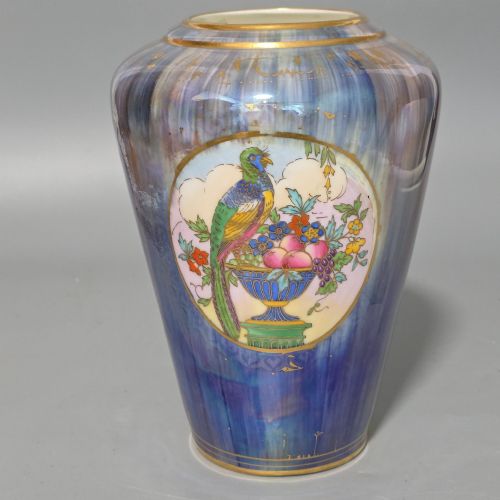


Vintage Decorative Porcelain Vases
Vintage decorative porcelain vases bring painted scenes, gold leaf and rich glaze into a room, offering centuries of ceramic artistry.
Vintage Decorative Porcelain Vases
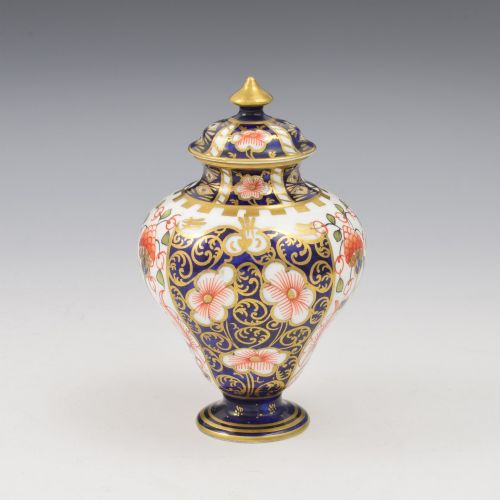
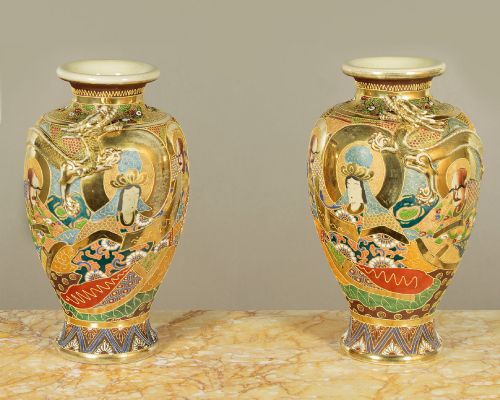
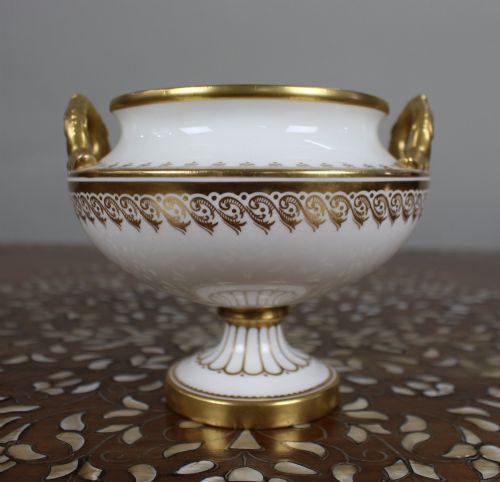
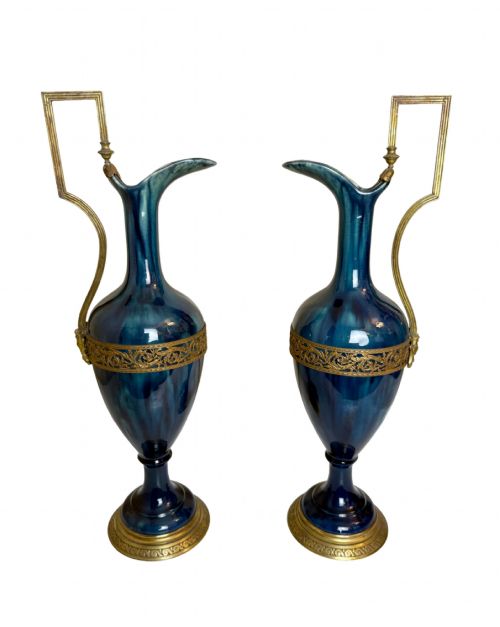
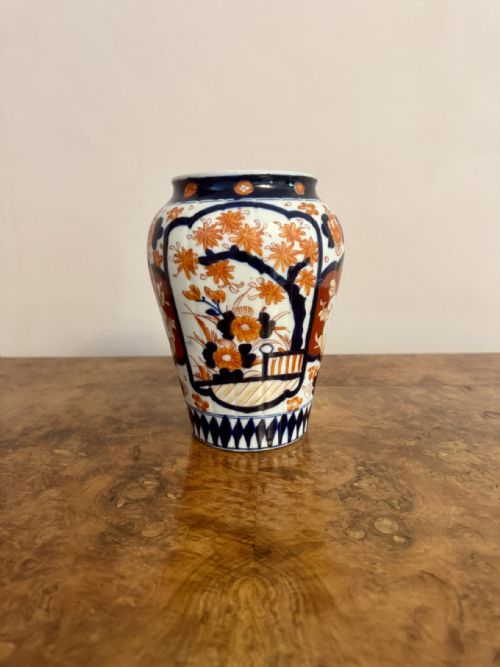
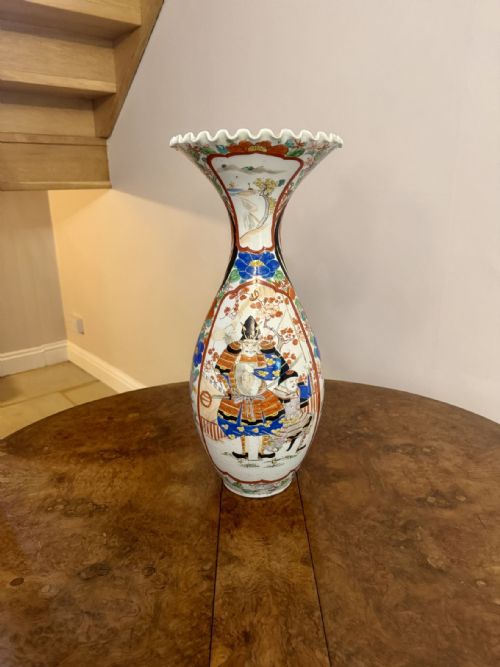
Vintage decorative porcelain vases encompass everything from Japanese Satsuma and Imari pieces to English works by Royal Worcester and Minton, spanning the nineteenth century through the mid-twentieth century. Buyers searching for vintage decorative porcelain vases encounter forms ranging from covered ginger jars and urns to spill vases and tall display vessels.
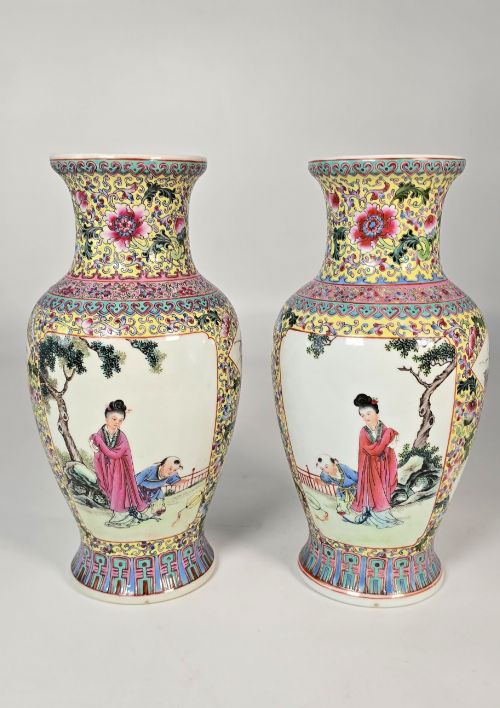
The selection here includes both pairs and individual vessels, often featuring hand-painted motifs like birds, landscapes, and floral designs. Pieces emerge from distinct stylistic movements, including Victorian, Art Deco, and the Meiji period.
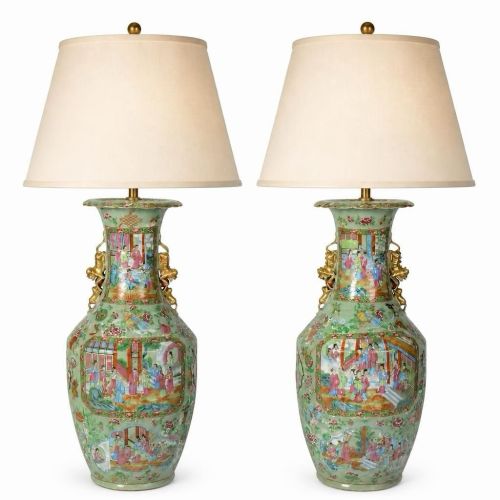
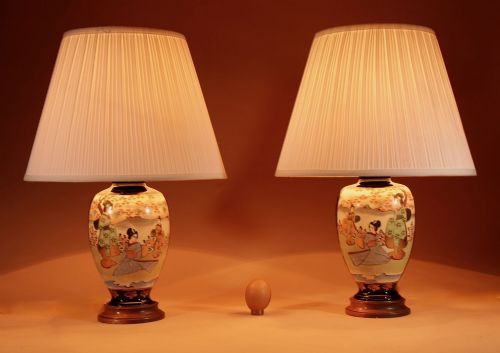
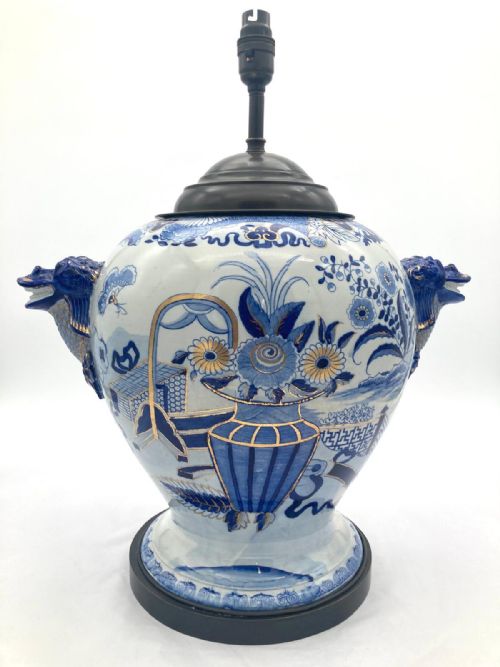
Makers and potteries from England, Japan, and continental Europe dominate the selection, utilising ironstone, earthenware, and fine porcelain bodies. Many surviving examples retain original covers, twin handles, or later conversions into table lamps.
Materials and production methods
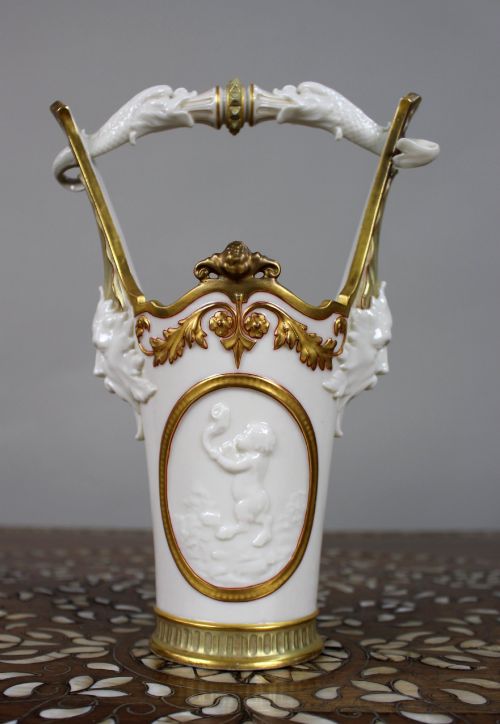
Potters shaped fine porcelain, earthenware, and ironstone into varied forms before applying coloured glazes and intricate hand-painted enamels. Many vessels incorporate raised gold leaf or gilt detailing to accentuate the painted scenes and borders.
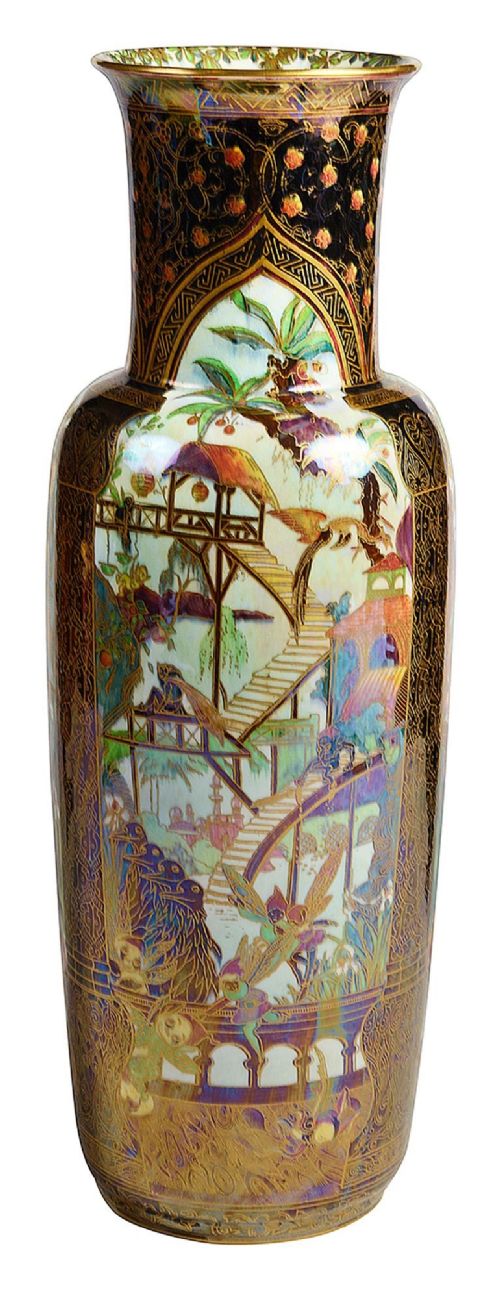
Firing techniques allowed for specialised finishes, including lustre glazes that catch the light and detailed transfer printing combined with brushwork. Artisans built up surface decoration using multiple kiln firings to set cobalt blue, polychrome enamels, and gilding.
Listings feature 19th century and early 20th century pieces, utilising materials such as gold leaf, enamel, earthenware, and fine porcelain.
Assessing quality in ceramic vessels
Quality rests upon the precision of the hand-painted brushwork, the depth of the glaze, and the crispness of the gilt accents. Superior pieces display finely detailed figures, botanical accuracy, and well-balanced forms that demonstrate the skill of the painter.
The reputation of the pottery and the clarity of factory marks further distinguish standard production ware from exhibition-quality pieces. Condition also plays a part, with intact handles, crisp gilding, and original covers preserving the integrity of the design.
Royal Crown Derby·Royal Worcester·Wedgwood·Minton·Carlton Ware·Royal Vienna·Royal Doulton
The Vintage Decorative Porcelain Vases Glossary
- Imari
- A Japanese style of porcelain decorated in underglaze blue, iron red, and gold, named after the port of export. These pieces often feature dense geometric and floral panels.
- Satsuma
- A type of Japanese earthenware with a pale, cracked ivory glaze that is typically decorated with polychrome enamels and gilt. It gained widespread popularity during the Meiji period.
- Gilding
- The application of gold leaf or gold powder to the surface of porcelain to highlight rims, handles, and painted details. This technique adds metallic contrast to the fired ceramic.
- Pot Pourri
- A decorative vase or jar featuring a pierced cover designed to hold dried flower petals and spices for scenting a room. These vessels often stand on matching pedestals.
- Lustre
- A metallic or iridescent glaze finish that produces a reflective sheen on the ceramic surface. Potters achieve this effect by applying metallic oxides before a specialised kiln firing.
Vintage Decorative Porcelain Vases: Frequently Asked Questions
How do I date an antique porcelain vase?
Dating relies on factory marks stamped or painted on the base, stylistic clues like Art Deco geometry or Victorian ornamentation, and the type of glaze used.
Comparing the painting style and signature to recorded factory production periods helps narrow down the exact decade of manufacture.
Can converted lamp vases be restored?
Most lamp conversions involve drilling a hole through the base or adding wired fixtures to the top without removing original ceramic material.
Restorers can remove modern electrical fittings, though the drilled base hole usually remains part of the vessel's history.
How should I clean painted porcelain?
Dust surfaces gently with a soft, dry brush and avoid submerging pieces with old gilt or hand-enamelled decoration in water.
Moisture can damage fragile overglaze enamels and lift delicate gold leaf from the ceramic body.
What is the difference between porcelain and ironstone?
Porcelain is a fine, translucent ceramic fired at high temperatures, whereas ironstone is a heavy, durable type of earthenware developed for strength.
Ironstone offers a sturdier body suitable for large kitchen and dining vessels, while porcelain allows for delicate, thin-walled forms.