
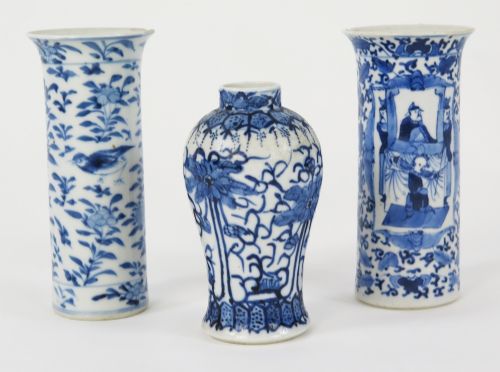
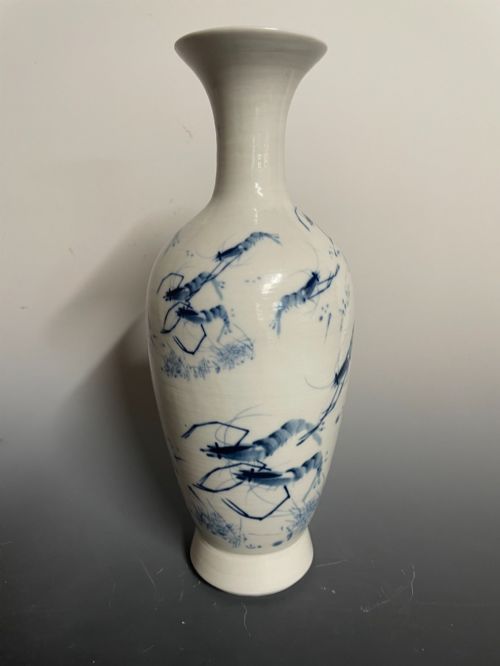
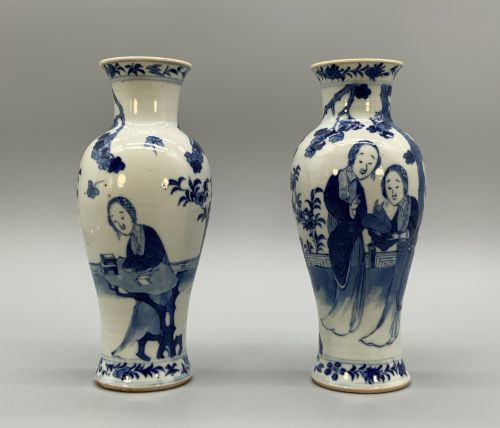
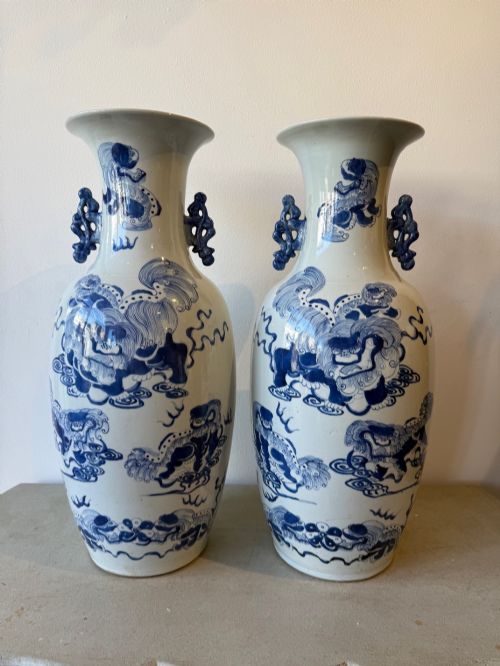

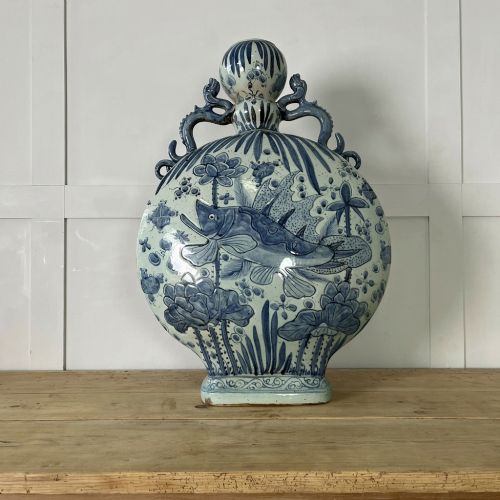


Oriental Style Porcelain Vases
These oriental style porcelain vases bring decorative presence to a room through painted motifs and varied ceramic forms spanning the nineteenth and twentieth centuries.
Oriental Style Porcelain Vases
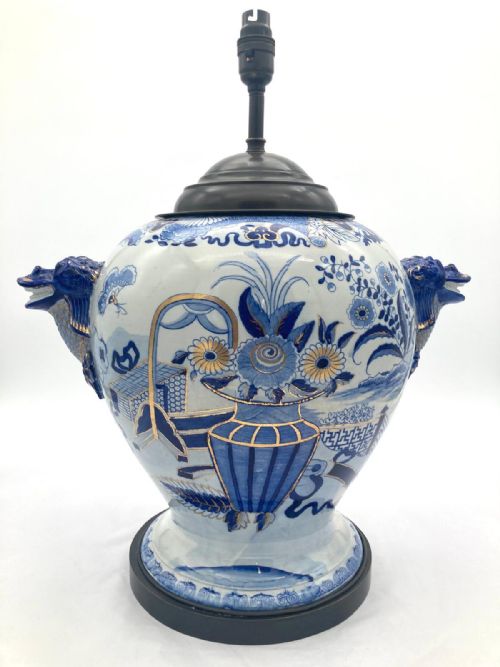
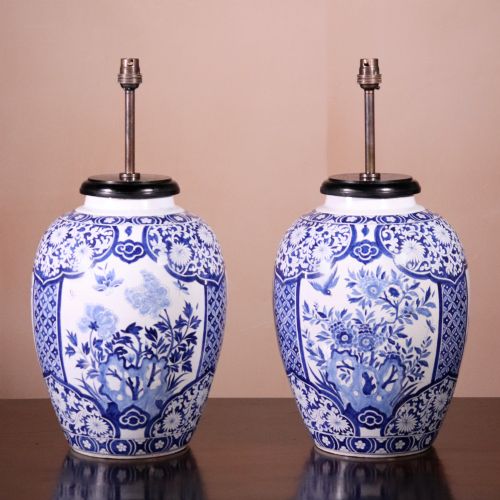
Oriental style porcelain vases encompass both traditional eastern production and western interpretations drawing on Chinese and Japanese aesthetics. Pieces range from blue and white bottle vases and moon flasks to lidded ginger jars and large decorative vessels.
Many survivors from the nineteenth and twentieth centuries arrive modified into table lamps or fitted with brass, ormolu, and hardwood stands. Collectors encounter styles spanning Qing dynasty designs, Imari palettes, and Satsuma work alongside English chinoiserie adaptations.
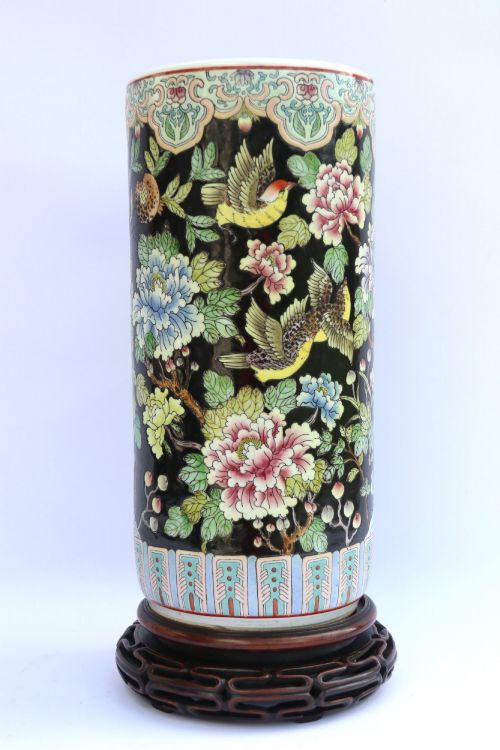
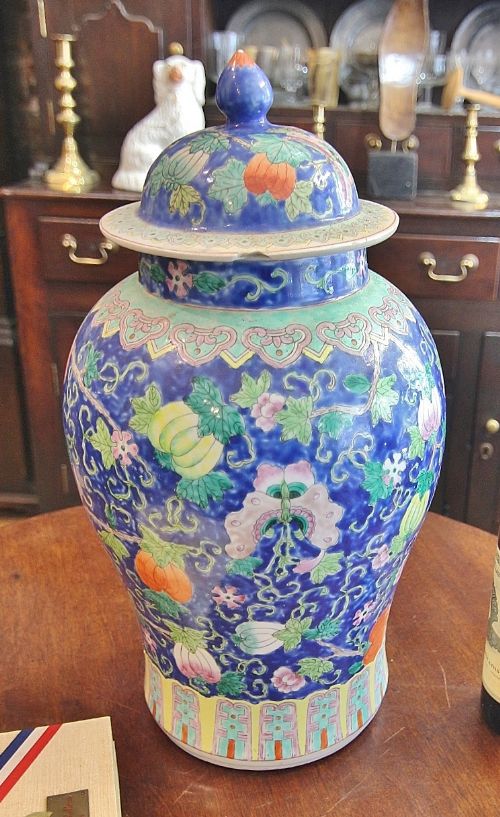
The selection here draws heavily on nineteenth-century examples and early twentieth-century productions from diverse international potteries. Blue and white schemes and polychrome famille rose or verte palettes dominate the physical forms.
How they were made
Makers shaped high-fired ceramic bodies by hand or on the wheel before applying underglaze blue pigments or overglaze enamel colours. Gilding and crackleware glazes frequently finish the surfaces, creating textured interaction with the light.
Conversions often incorporate secondary materials such as carved wood bases, brass mountings, and silk or fabric shades to adapt the vessels for domestic lighting. These structural additions reflect nineteenth and twentieth-century interior tastes.
Materials across the listings include porcelain, brass, enamel, fabric, wood, glaze, ceramic, and silk.
What varies in quality
Quality rests in the precision of the hand-painted brushwork, the clarity of the underglaze cobalt or polychrome enamels, and the crispness of the porcelain body. Superior examples display balanced proportions and refined detail within the facial expressions of figural scenes or geometric panels.
The integration of mounts and stands alters the overall character, where original hardwood supports or finely chased ormolu mounts elevate the piece. The depth and stability of the glaze application distinguish standard production from finer studio output.
Hicks and Meigh·Carlton Ware·Royal Doulton·Wedgwood·Samson
The Oriental Style Porcelain Vases Glossary
- Famille verte
- A green-dominant palette of overglaze enamels introduced during the Qing dynasty. This polychrome style often depicts figures, birds, and botanical scenes.
- Imari
- A style of Japanese porcelain featuring a characteristic palette of cobalt blue, iron red, and gold. Production centred on the port of Imari for export markets.
- Moon flask
- A flattened circular flask with a short neck and two small handles. The form derives from ancient bronze vessels and requires skilled ceramic throwing.
- Blue and white
- Pottery decorated with cobalt blue pigment applied beneath a transparent glaze. This technique achieved high technical refinement during the Kangxi period.
- Crackleware
- A ceramic glaze marked by a network of fine cracks formed during cooling. The deliberate craze pattern adds textural depth to the surface.
Oriental Style Porcelain Vases: Frequently Asked Questions
How do I identify a reproduction?
Examine the weight, the consistency of the glaze, and the pigment application under magnification. Older pieces show natural wear patterns and hand-mixed mineral colours rather than flat, uniform print transfers.
Compare the base marks against known periods, though keep in mind that reign marks were frequently used as a tribute rather than a direct dating tool.
Were these vases made as lamps?
Many surviving pieces were converted into table lamps during the nineteenth and twentieth centuries to suit western domestic interiors. Drilling or wiring typically accompanies these structural alterations.
Unaligned lamp fittings do not detract from the ceramic body itself, but buyers should inspect the wiring for safety and compliance with modern standards.
What is the difference between Satsuma and Imari?
Satsuma pottery employs an ivory-coloured earthenware body with a fine crackle glaze, decorated with detailed enamel and gilt motifs. Imari ware uses a hard porcelain body with a distinct palette dominated by iron red and cobalt blue.
Both styles were produced extensively for export, yet their tactile qualities and primary firing materials remain entirely distinct.