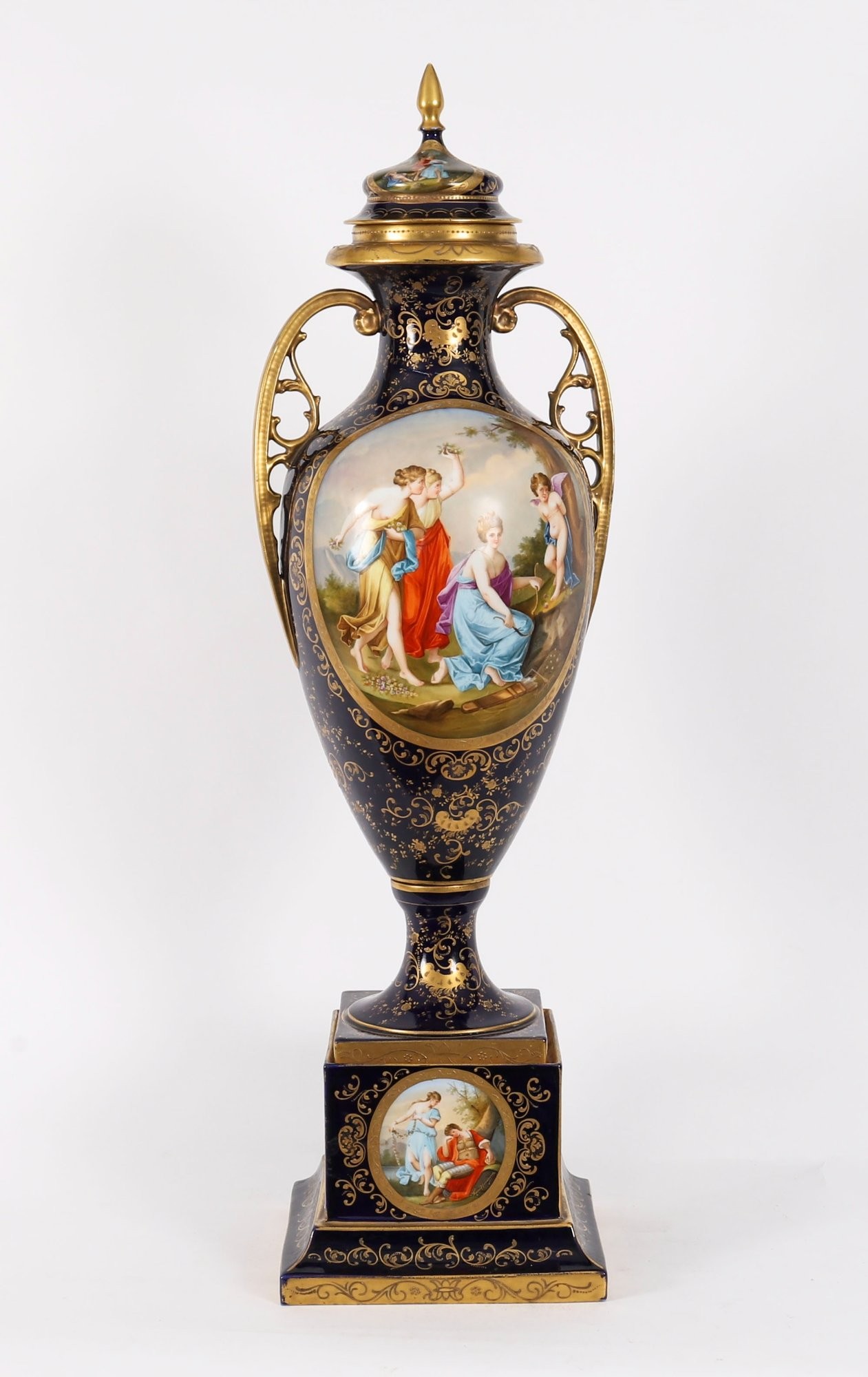
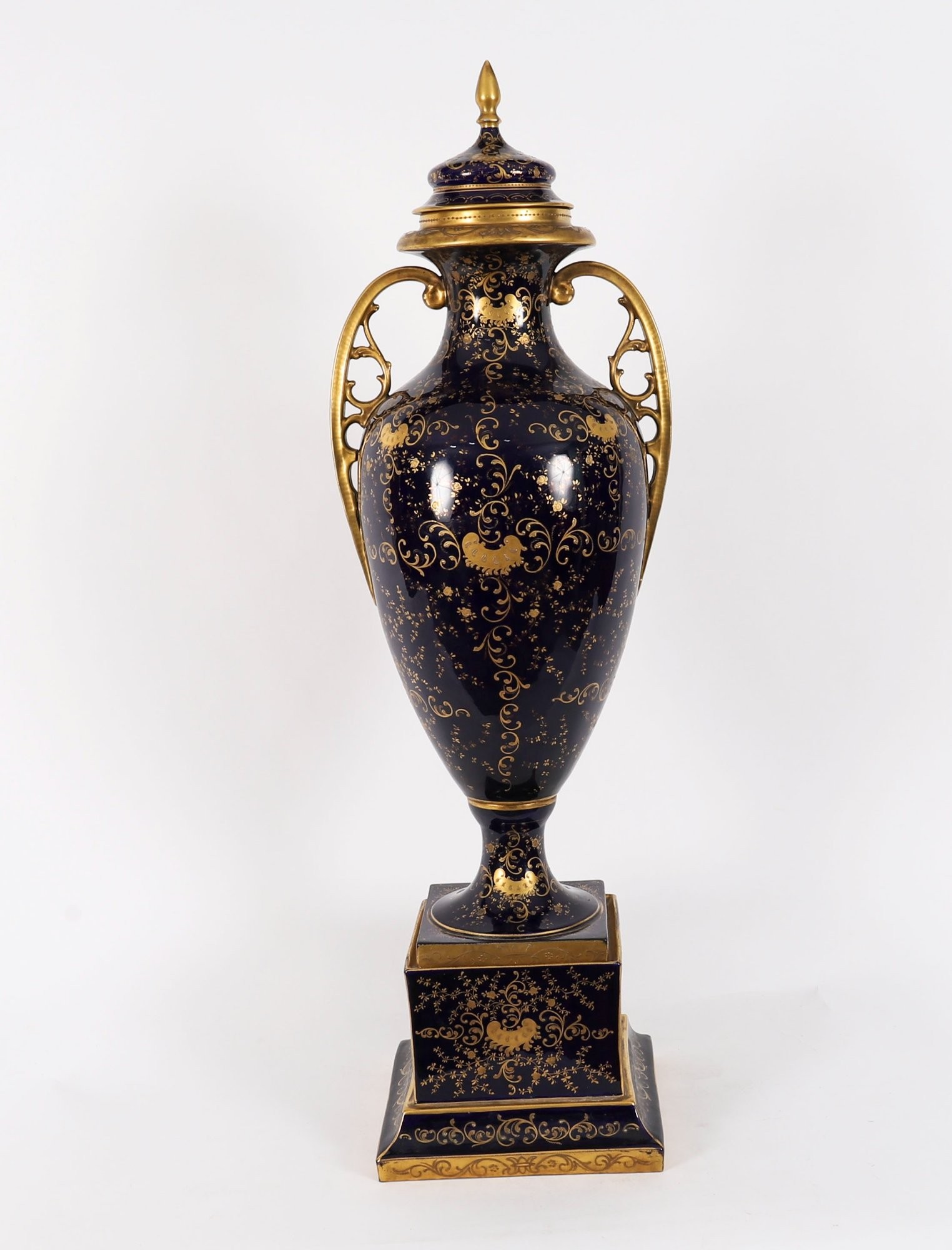
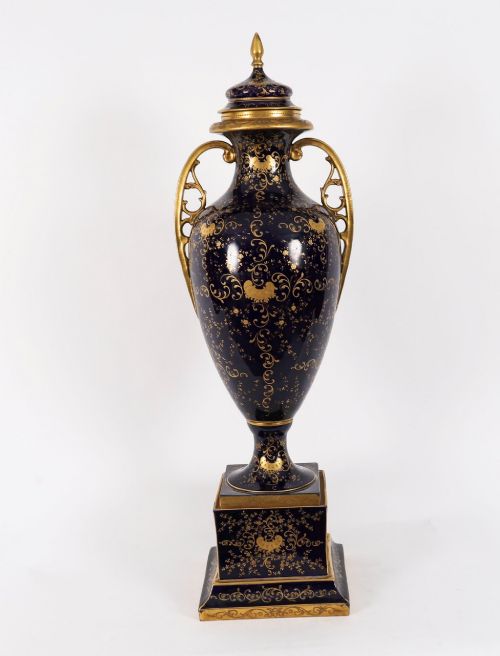
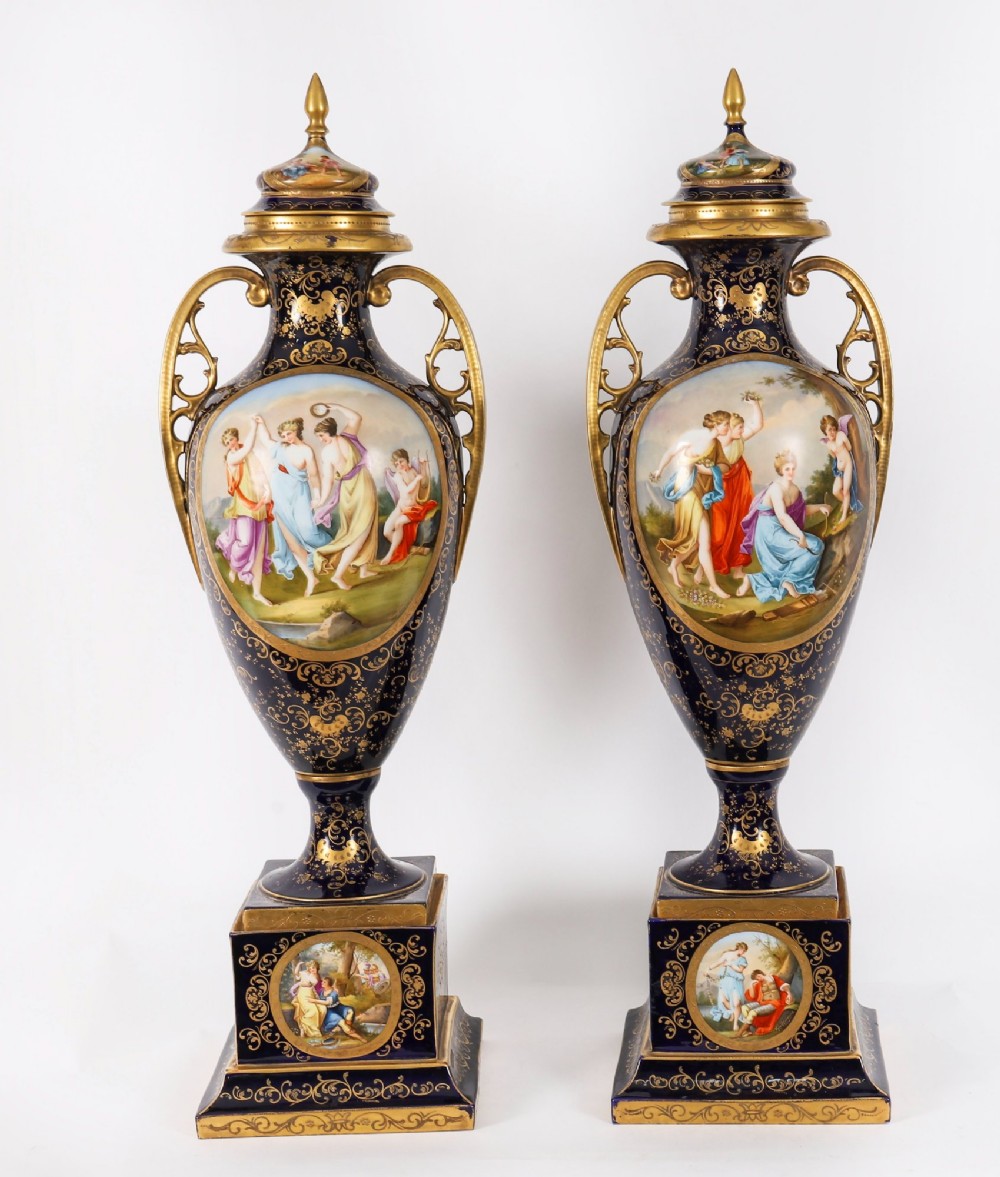
Regent Antiques has dated these Royal Vienna Porcelain Vases to the 19th Century.
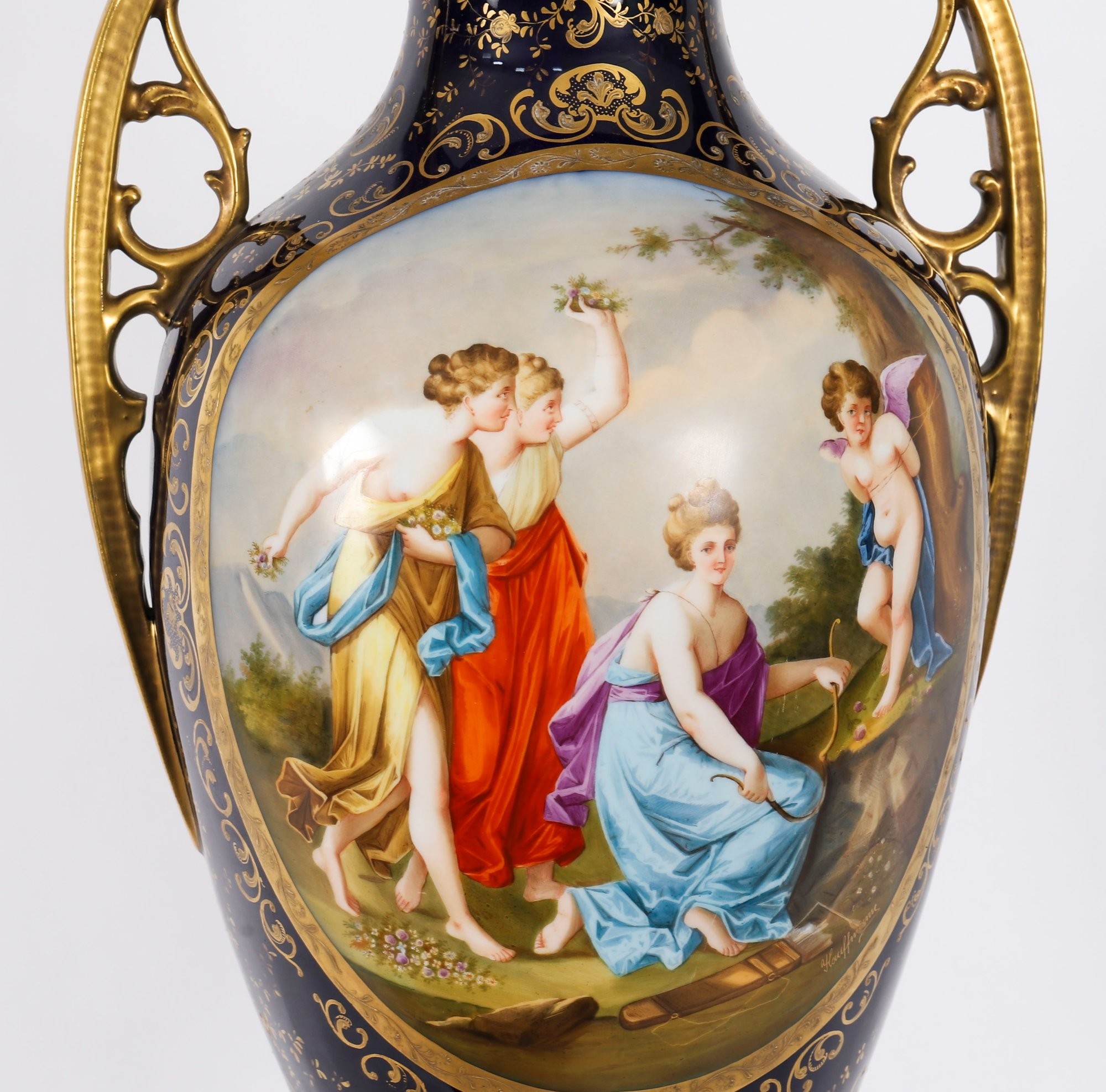
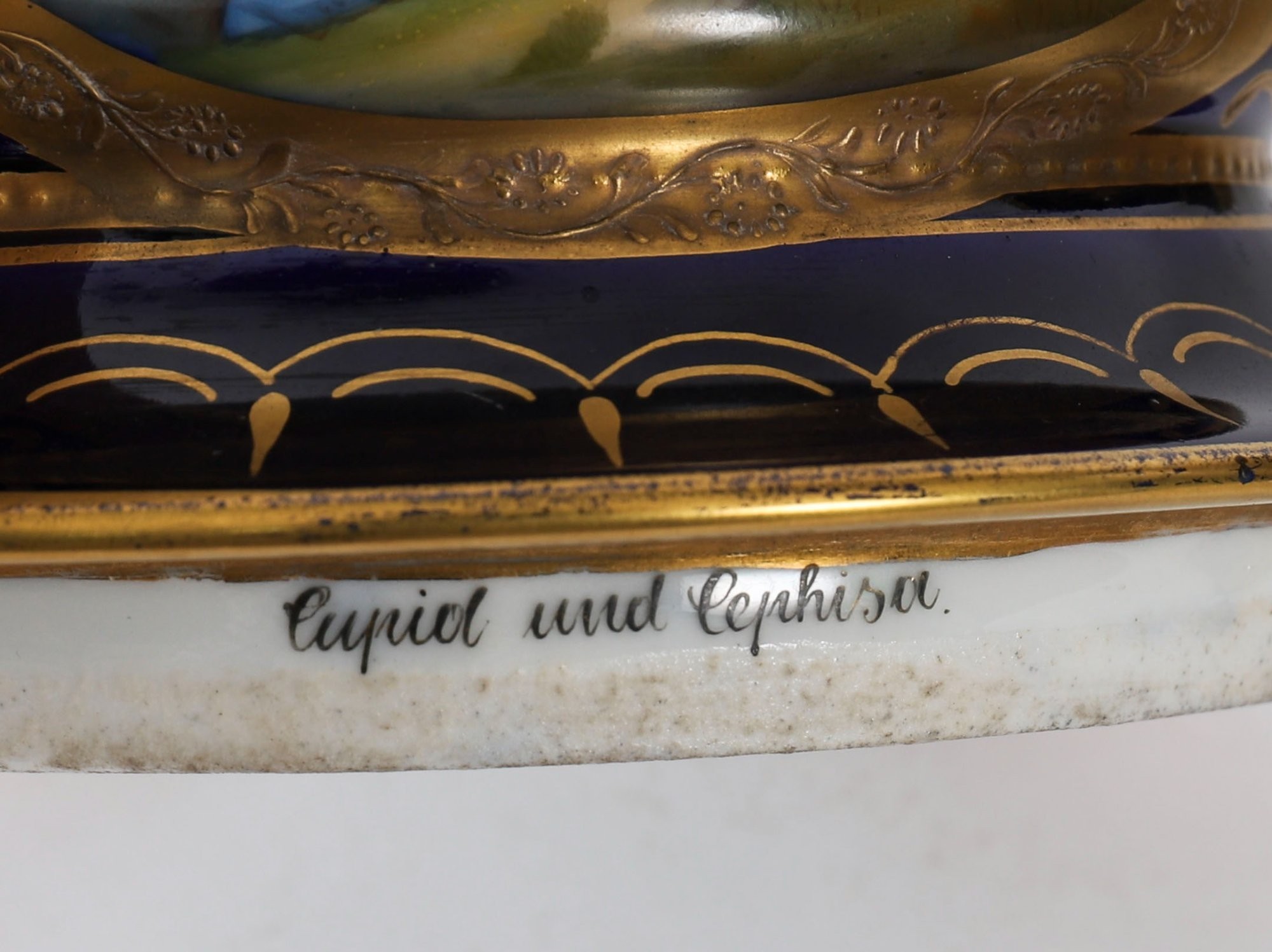
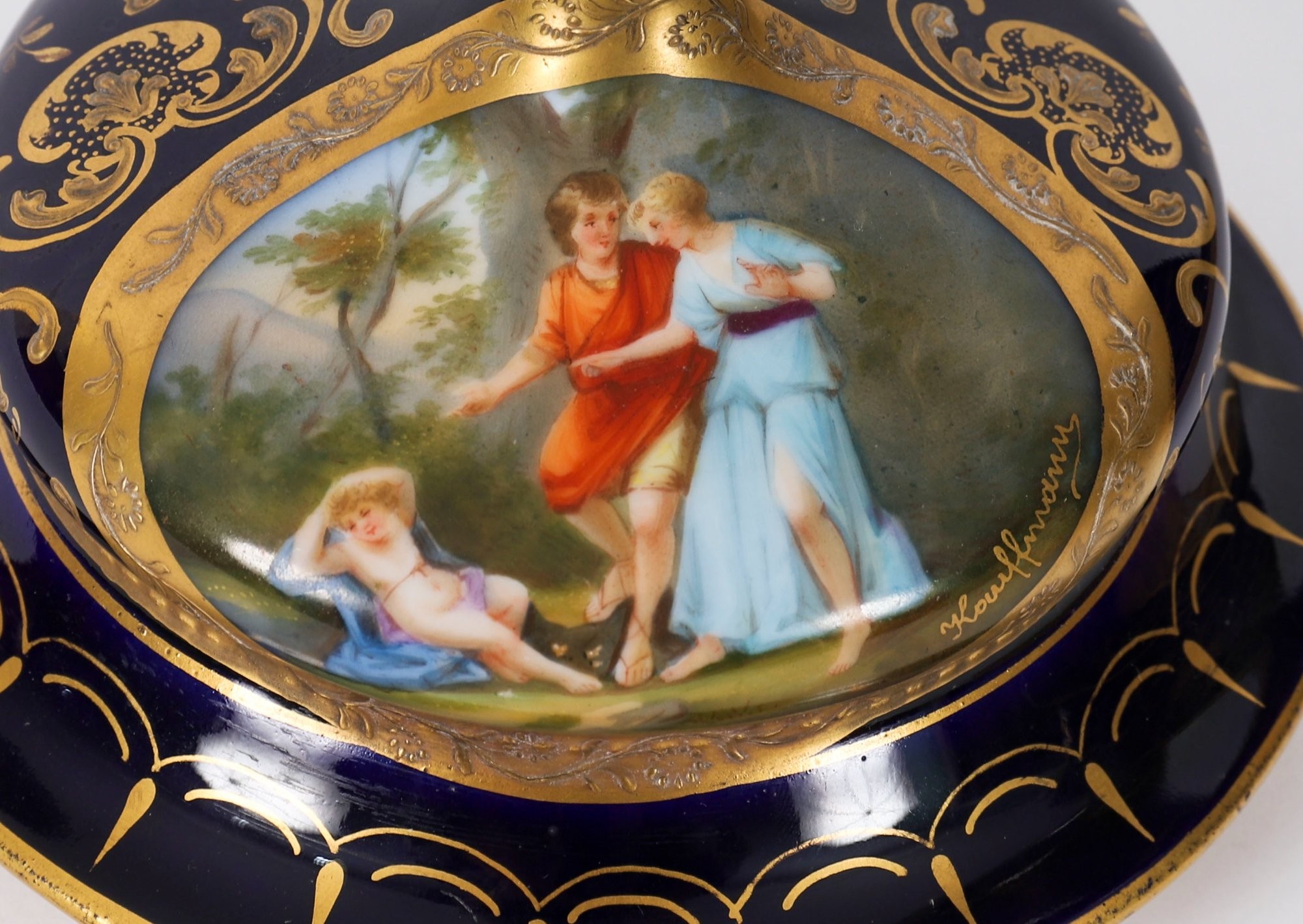
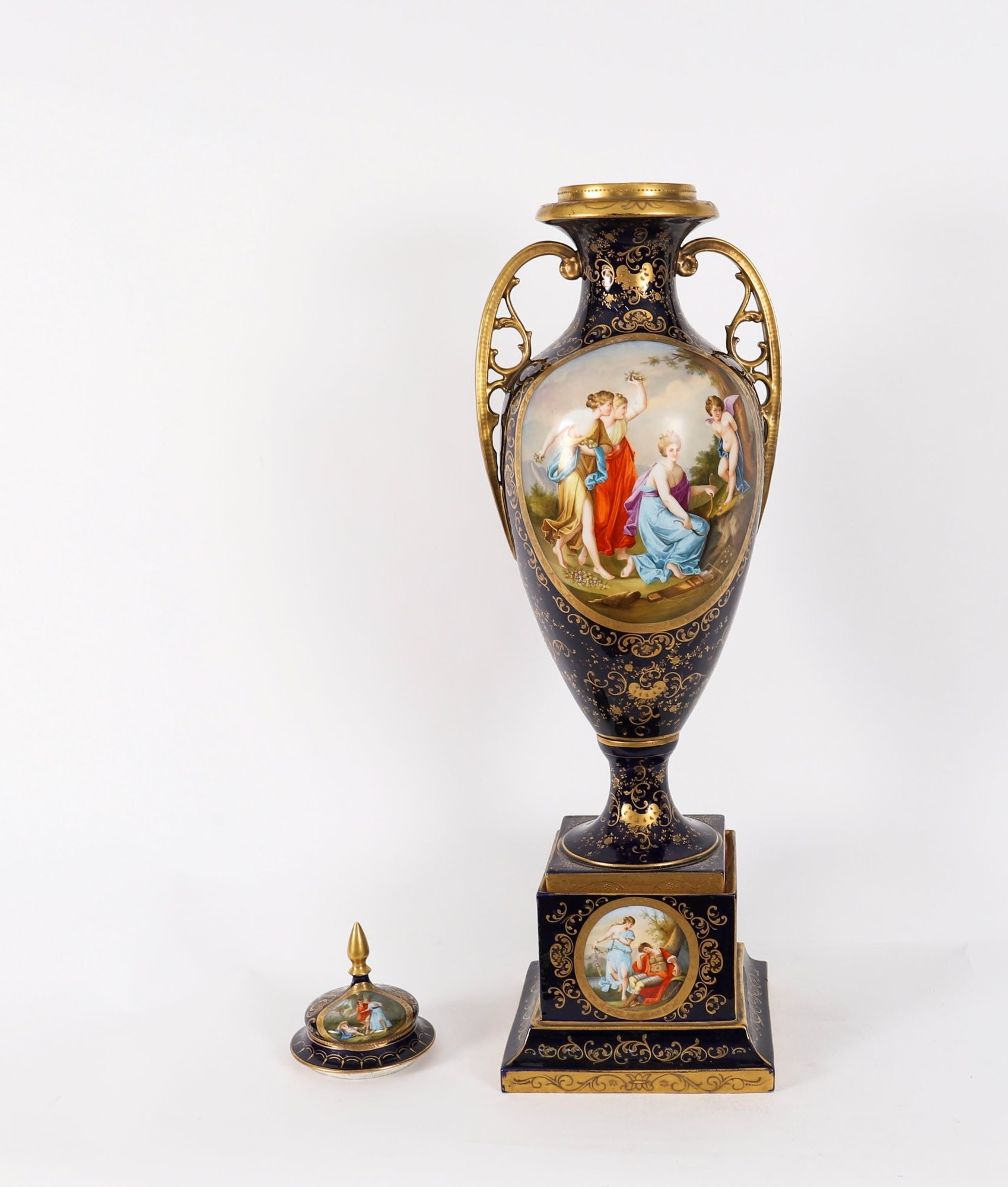
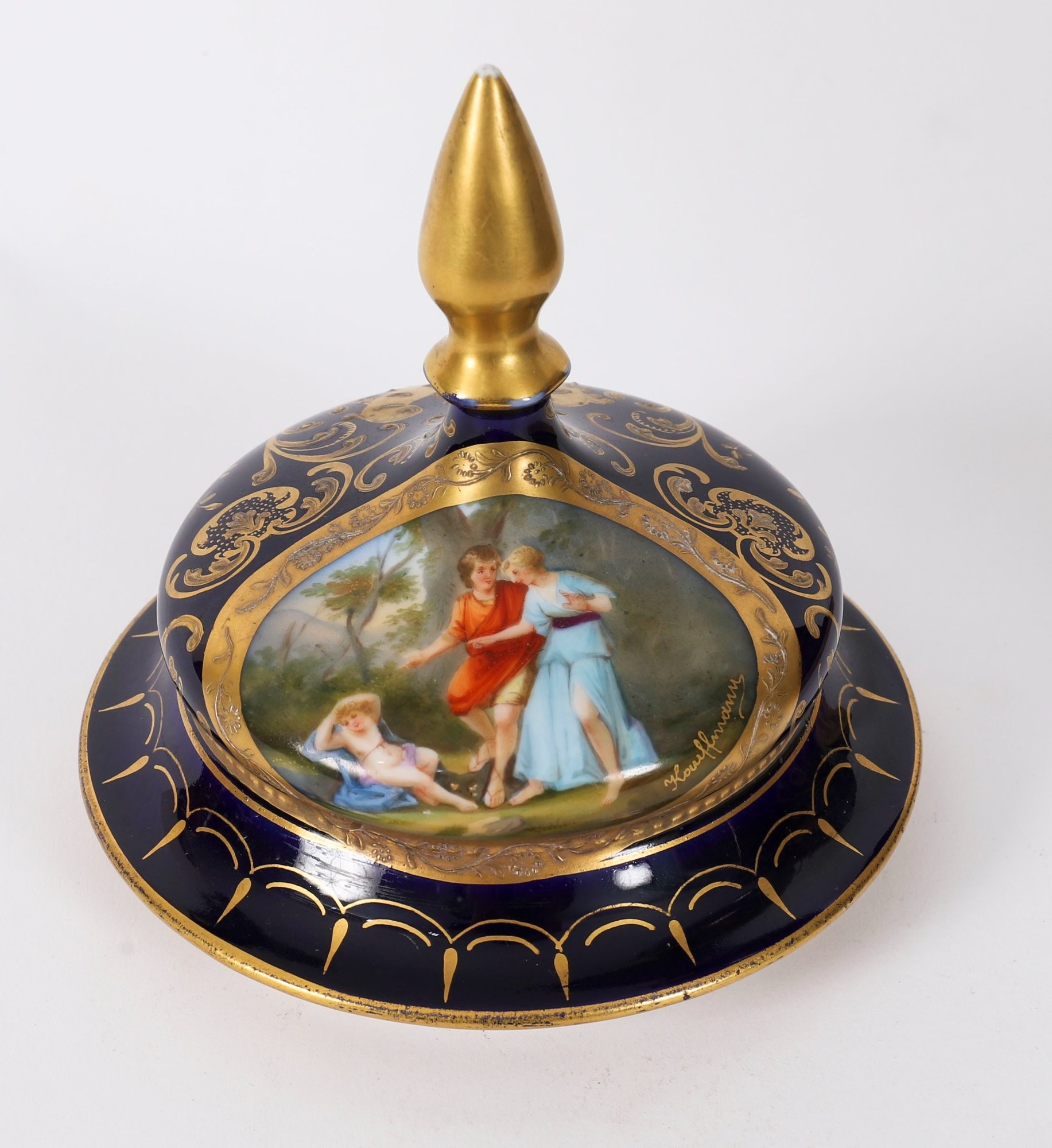
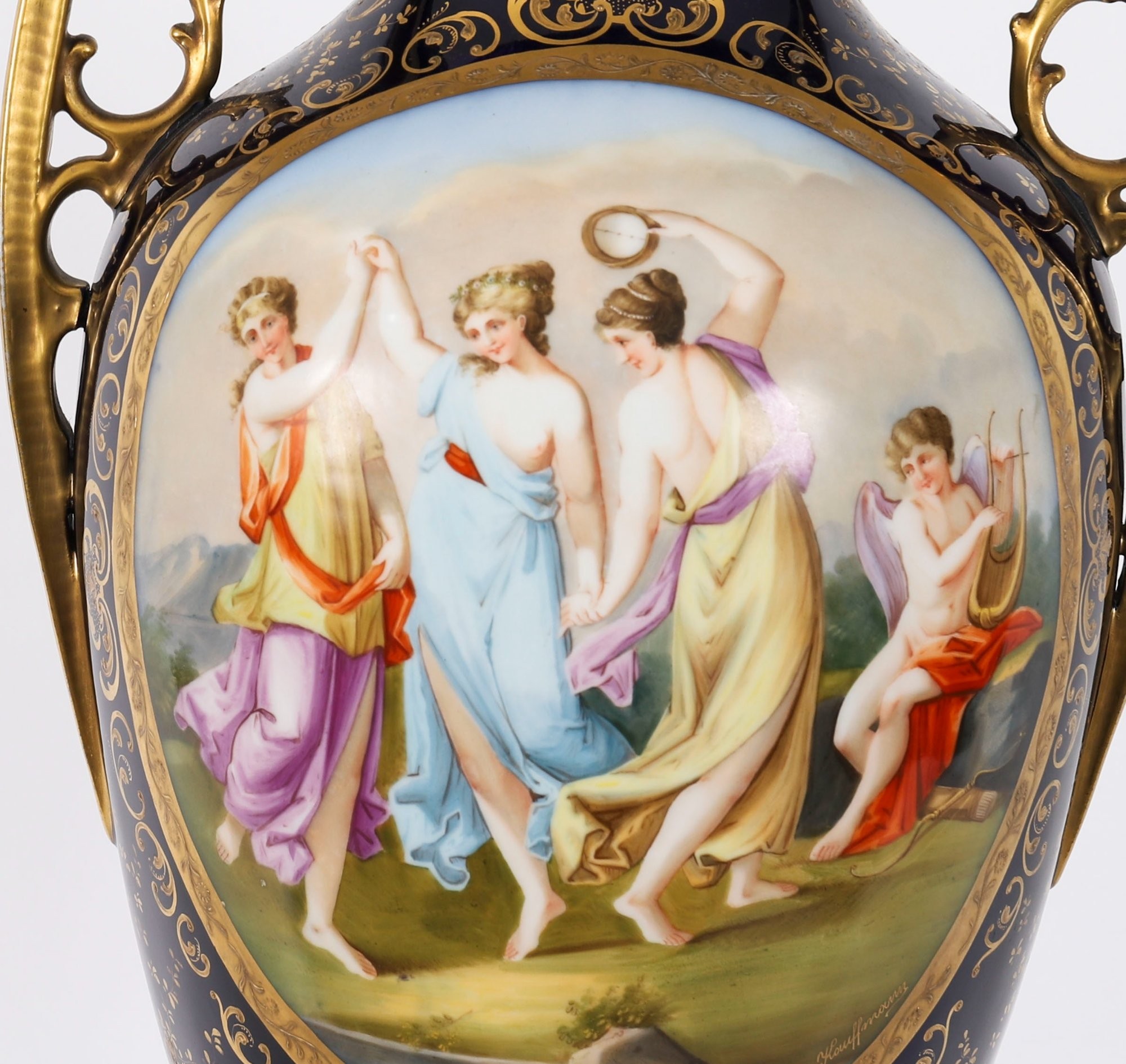
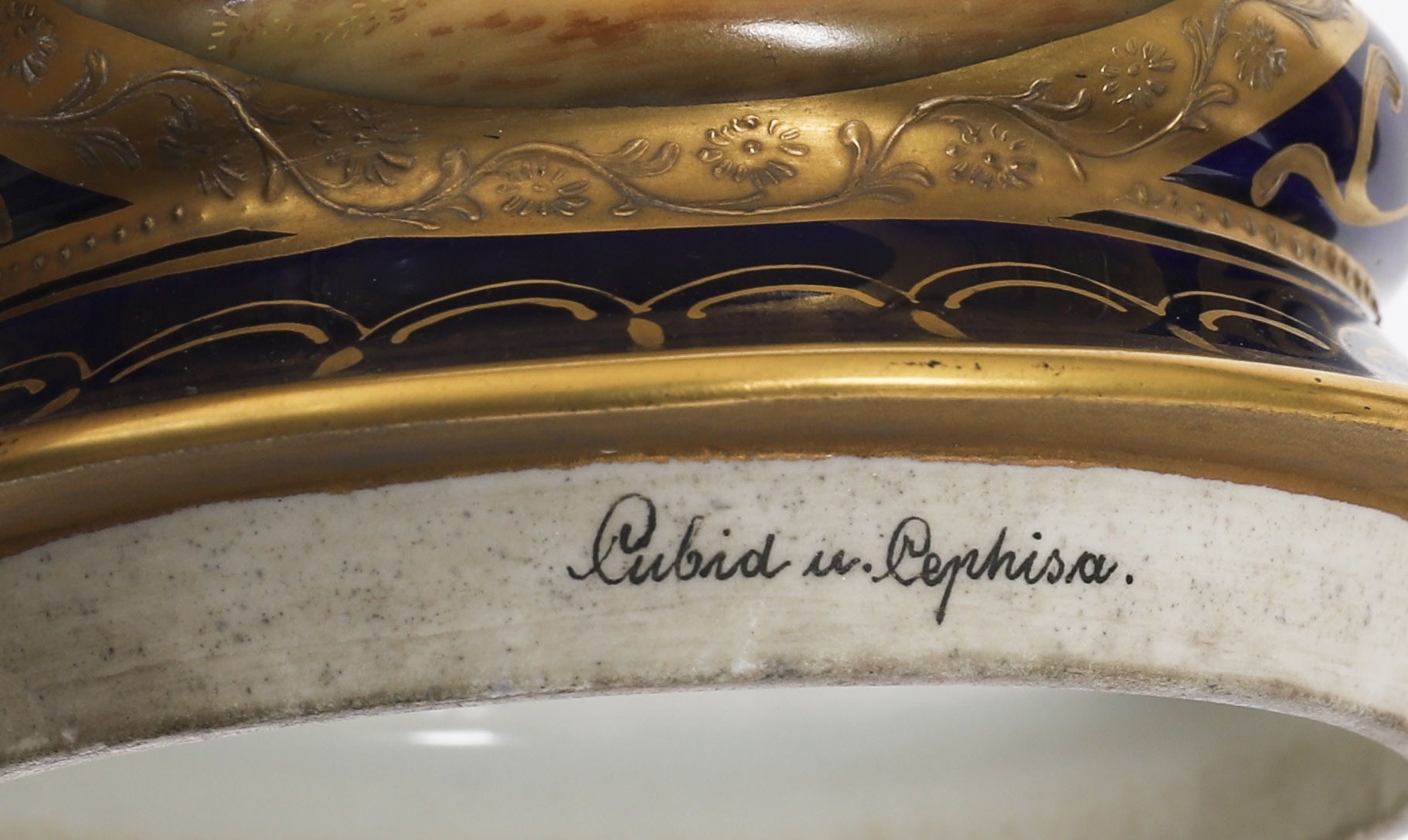
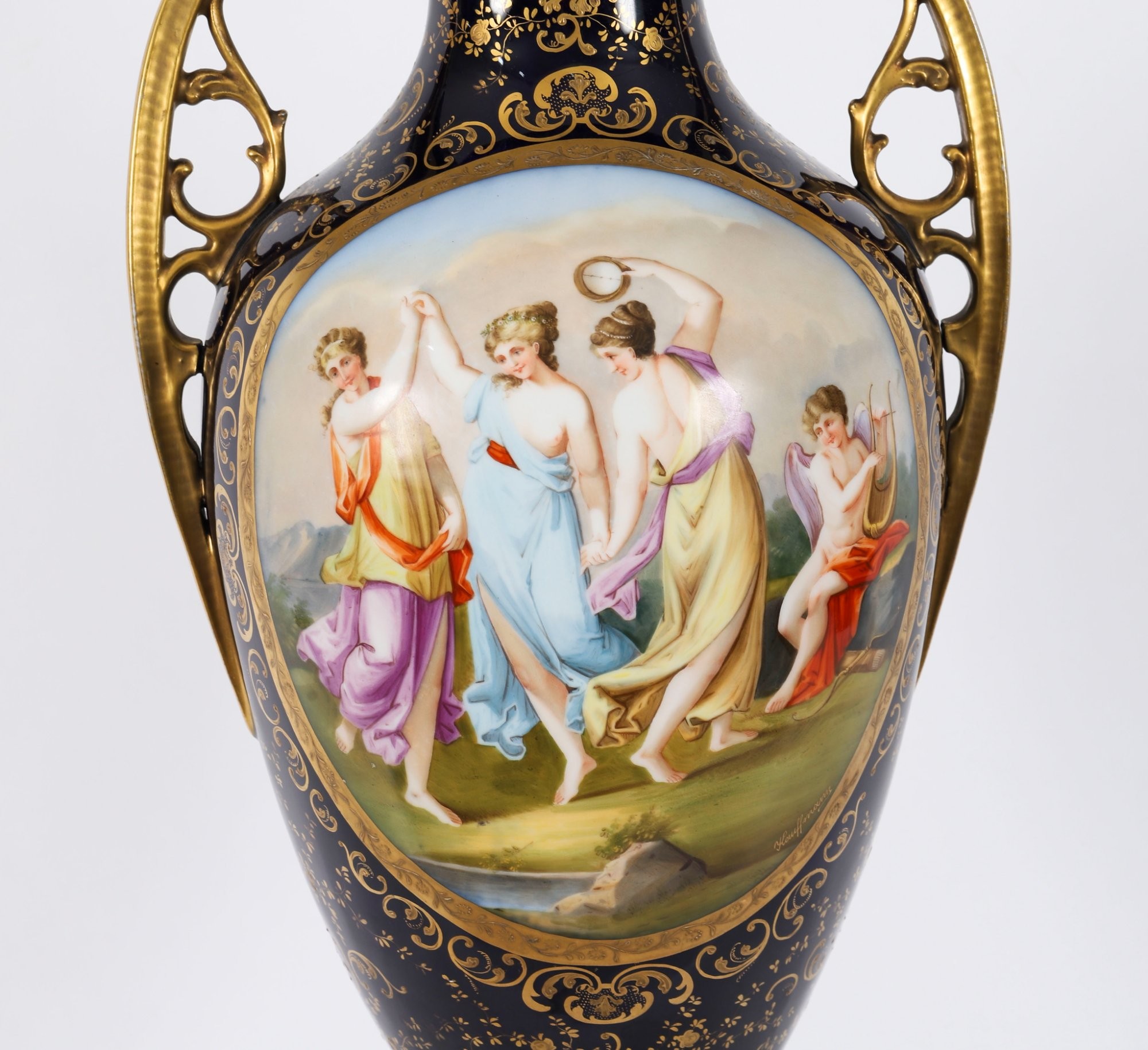
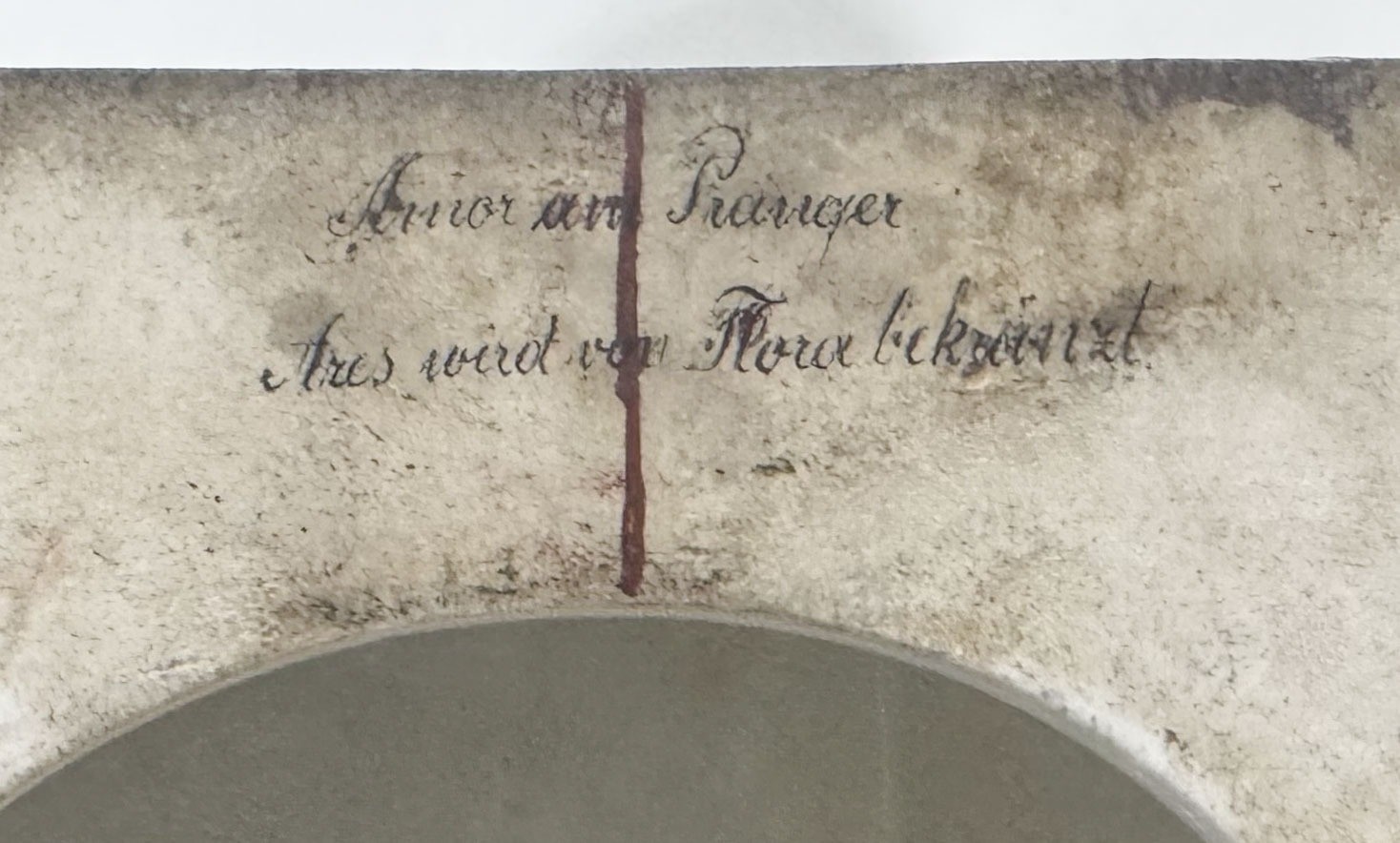
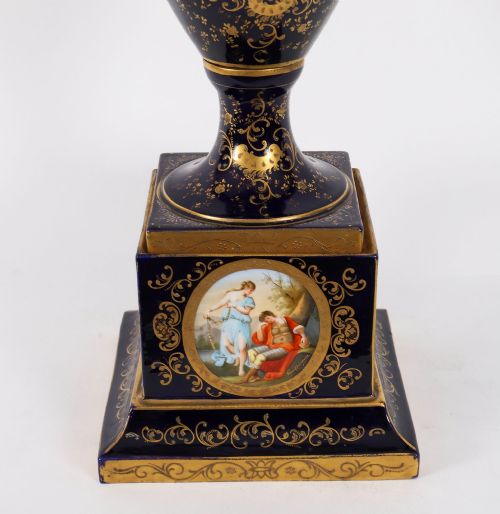
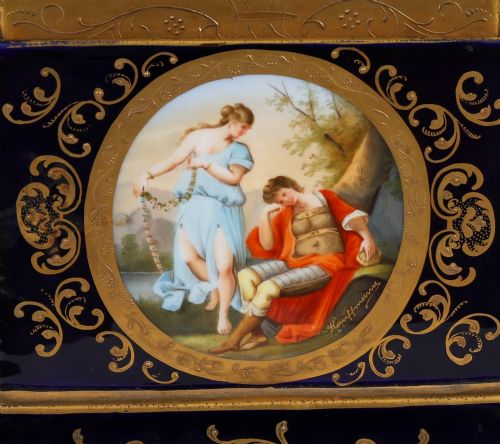
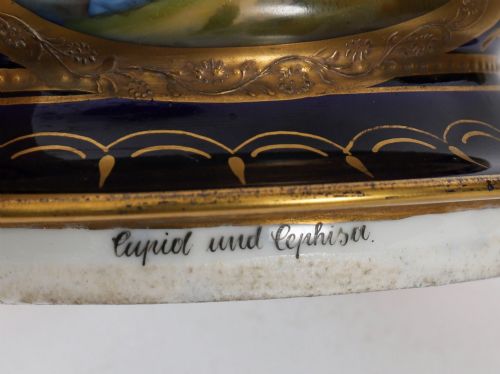
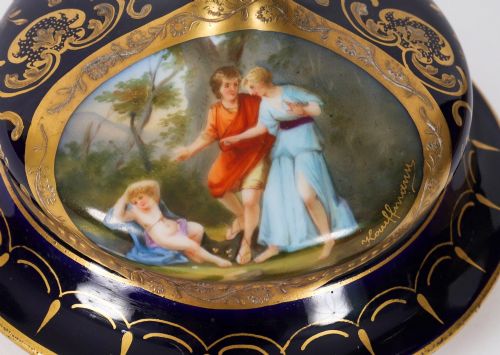
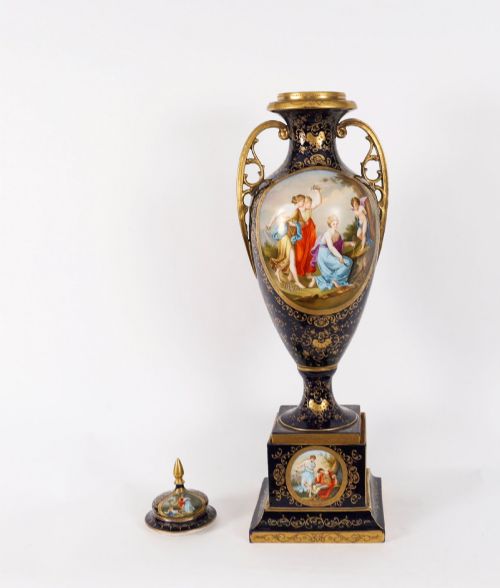
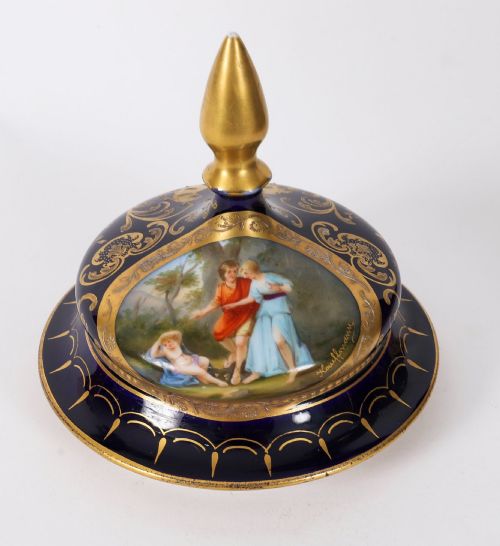
The vases of baluster form, painted to one side with a classical scene of maidens within a raised paste gilt border, on a cobalt blue ground with gilt scroll decoration, the reverse with continued gilt scrollwork designs, with twin pierced handles and a domed cover, painted with a figurative scene inscribed ‘Cupid und Cephisa’;
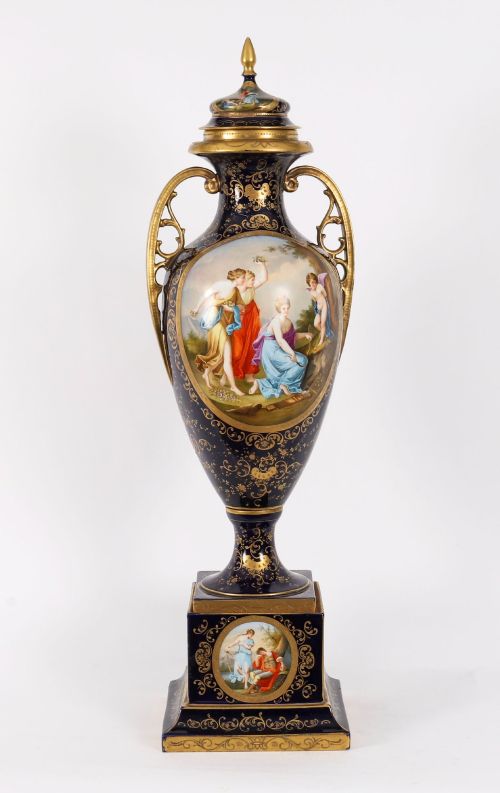
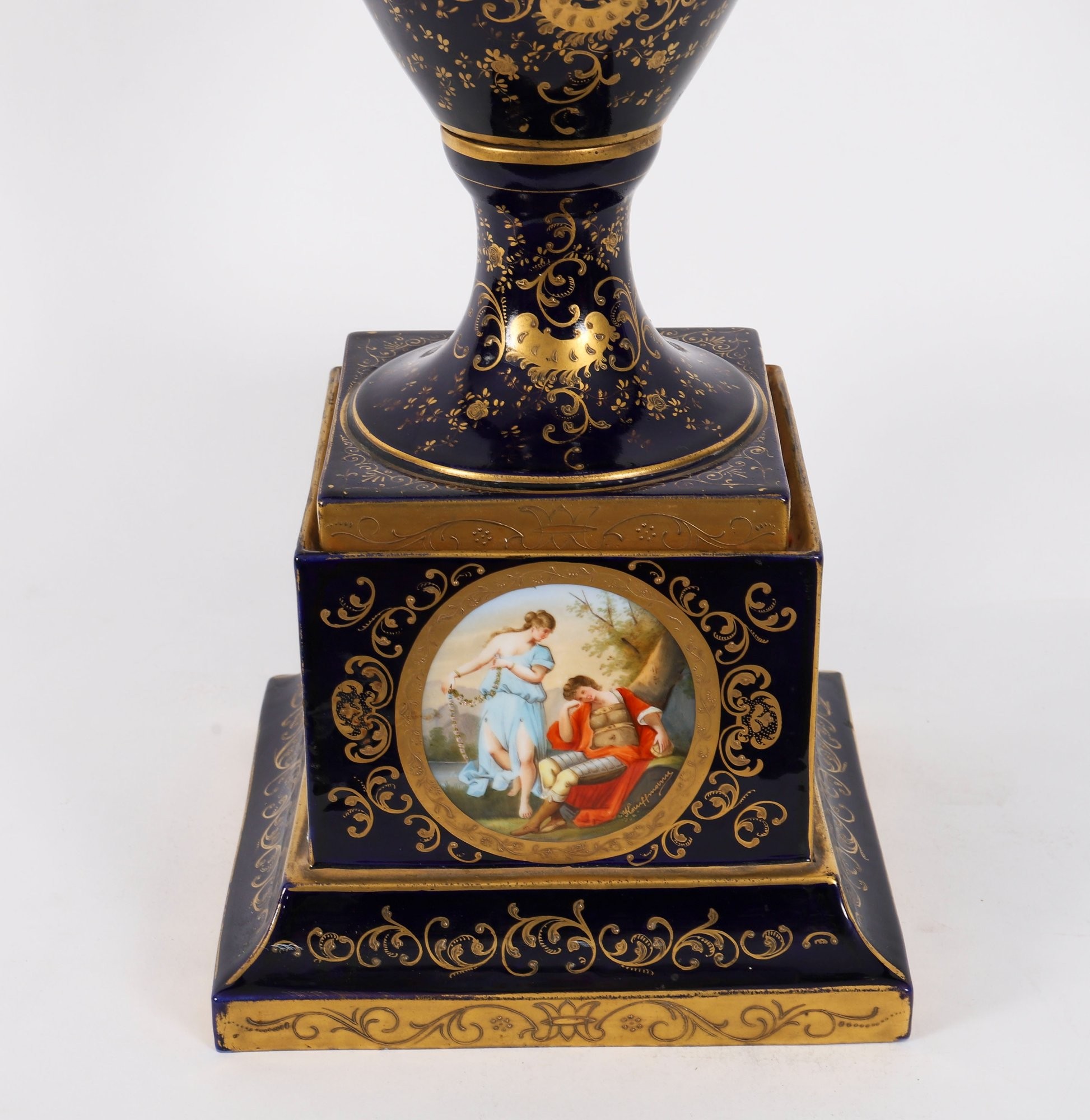
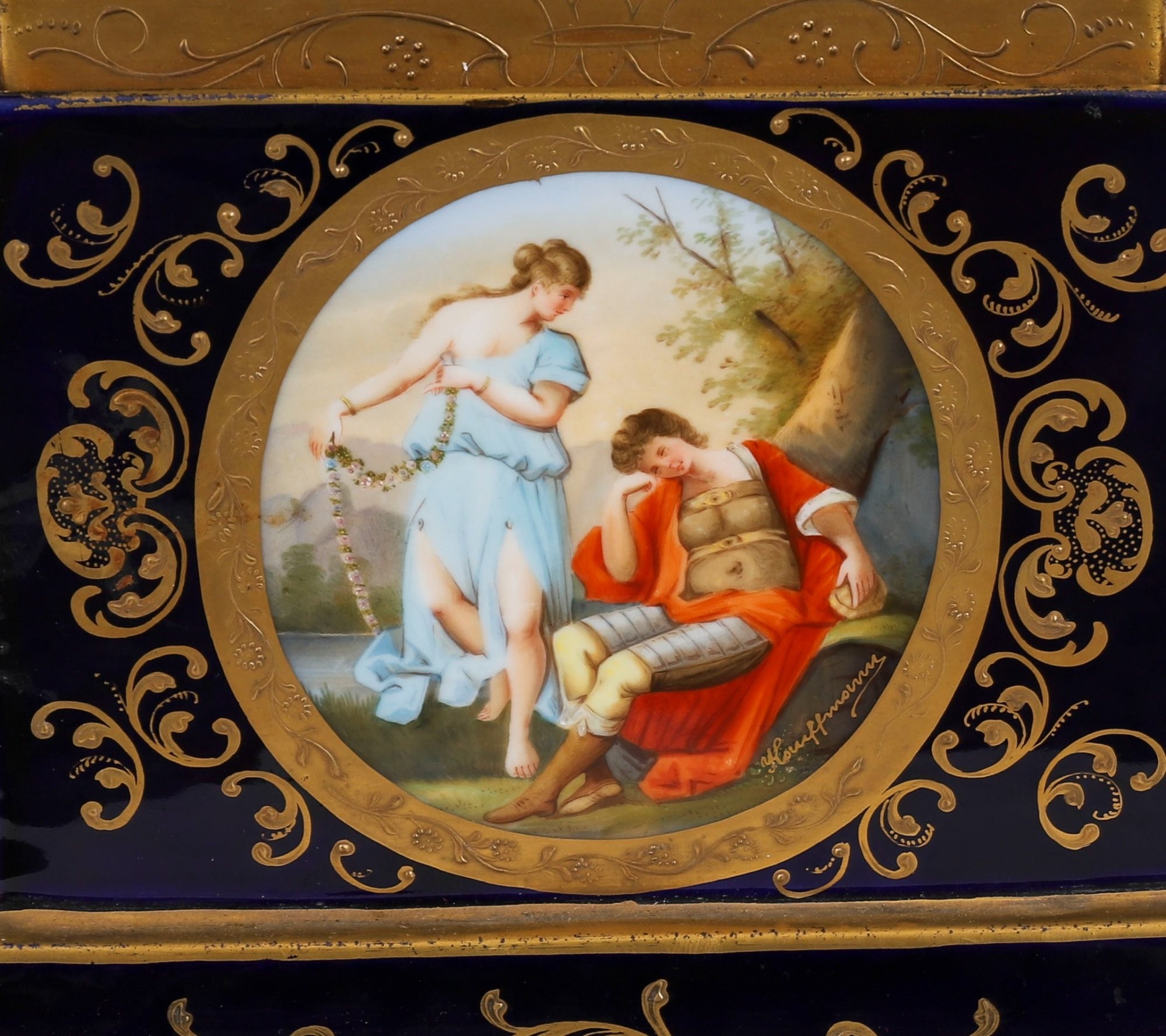
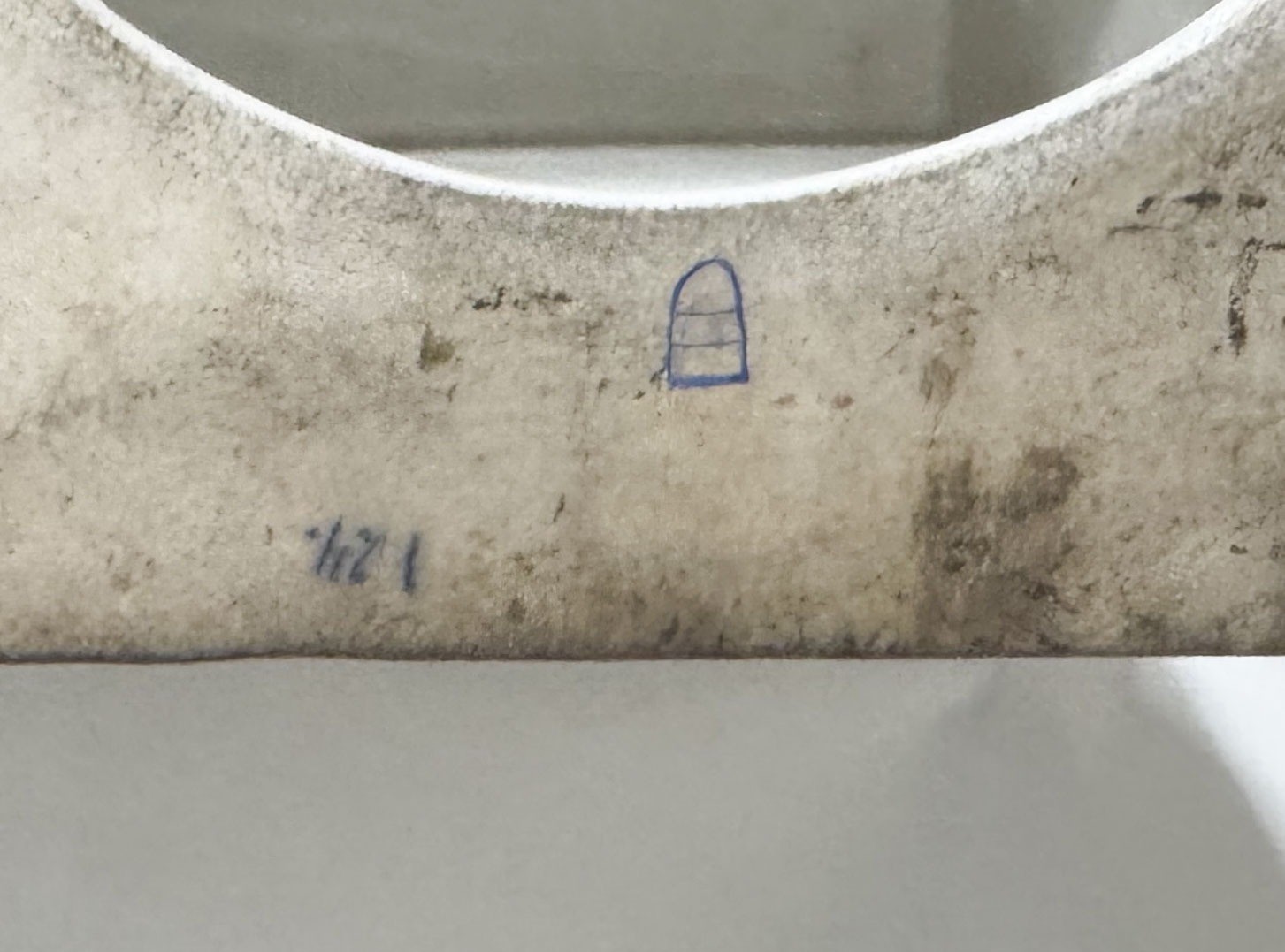
The square section base with an enamelled figurative roundel, painted scenes all signed ‘Kauffmann’ in gilt, marked underneath with the enamelled blue beehive mark, numbered 118 and 124, each with an inscribed title.
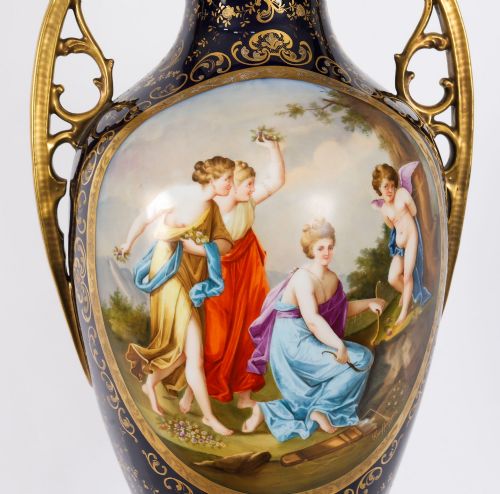
"Cupid and Cephisa" originates from an 18th-century fable by the French philosopher Montesquieu, which inspired popular neoclassical artworks such as the stipple engravings by Thomas Burke after Angelica Kauffmann.
Condition:
In excellent condition, with no damage or repairs, please see photos for confirmation.
Dimensions in cm:
Height 91 cm x Width 25 cm x Depth 25 cm
Dimensions in inches:
Height 3 feet x Width 10 inches x Depth 10 inches
Royal Vienna is the generic name given to items made in a particular decorative style reminiscent of Renaissance paintings and sculptures. Strong elements of Greek Classicism are almost always present and the colour palette seems to be dominated by soft hues and romantic vibrancy. Gilding and elaborate border designs, and sometimes even Ormolu or Metal Mounts, were frequent decorative details that enhanced the superb painting and colours on Royal Vienna antiques. Almost all Royal Vienna porcelain was meant primarily for display and adoration, with the notable exception of some super-fine chinaware, that most likely is used quite rarely and on very auspicious occasions.
Royal Vienna appears mostly in the form of Porcelain such as Portrait plates, Urns &Vases, and elegant Chinaware. Most bear a likeness of what is widely referred to in English-speaking countries as the beehive mark, which is actually an upside-down representation of the original bindenschild or Royal Shield found in the centre of the Royal Crest of the Hapsburg [or Habsburg] Royal Family of 18thC Vienna, Austria.
The Hapsburg Royal Family mentored the Imperial & Royal Porcelain Manufactory in Vienna that lasted between 1718 to 1864. They produced exceptional porcelain second to none and equivalent in quality and artistic craftsmanship to their major contemporary competition such as Meissen and Sevres. Original and authentic Royal Vienna porcelain from the Hapsburg era are now found only in major Museums and very fine private collections. The vast majority of items we now call Royal Vienna were made ca early 19thC onwards by many companies around the world.
The original and authentic Imperial & Royal Vienna "beehive mark" on porcelain is never symmetrical and always underglaze in blue or impressed, with very few exceptions. However, the most common beehive mark used on items in the same style, but made ca 19thC onwards.
The vast majority and most desired Royal Vienna porcelain items are those made around 1870s to 1930s. This period witnessed the peak of their production by hundreds of companies & porcelain studios.
Angelica Kauffman, RA (1741 - 1807)
was a Swiss-born Austrian Neoclassical painter who had a successful career in London and Rome. Though born as "Kauffmann", Kauffman is the preferred spelling of her name in English; it is the form she herself used most in signing her correspondence, documents and paintings.
Our reference: A5416
Regent Antiques has dated these Royal Vienna Porcelain Vases to the 19th Century.
We specialise in english and continental furniture, silver, porcelain and decorative items.
You can view the stock and full dealer information on the Regent Antiques Profile Page
Regent Antiques is a registered member of LAPADA CINOA
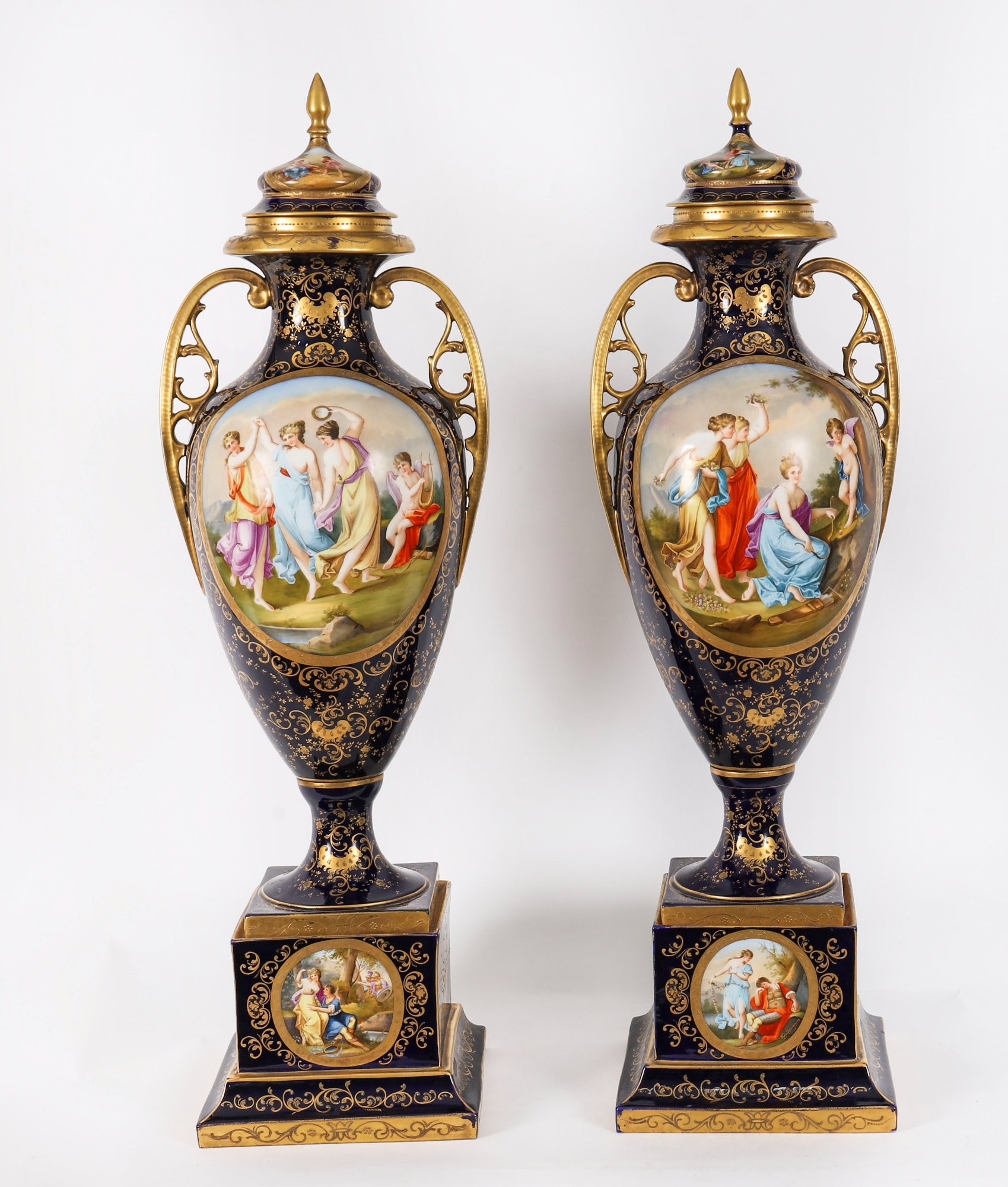
Antique Large Pair 3ft 91cm Royal Vienna Porcelain Vases on Stands 19th C