

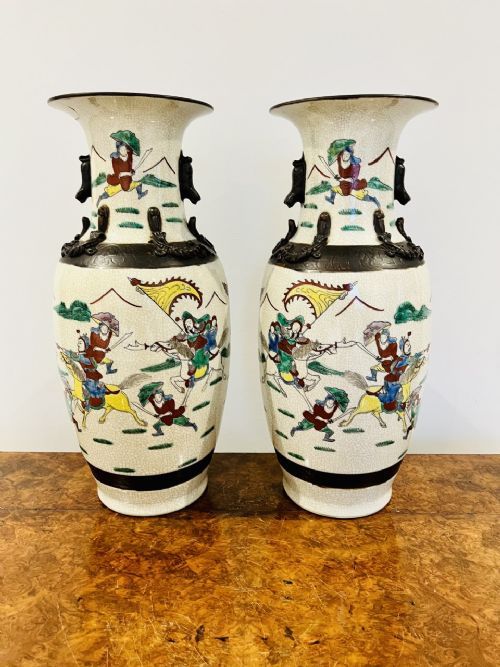
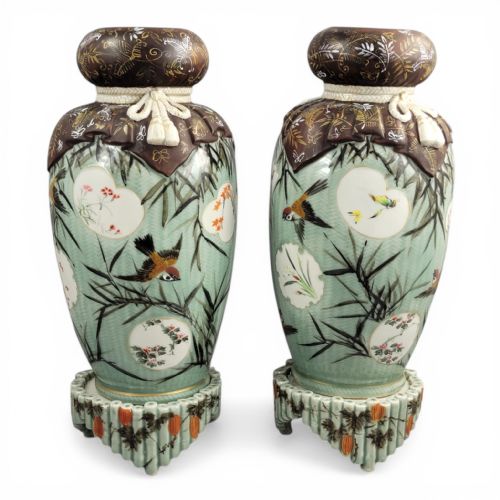


Pair Porcelain Floor Vases
These pair porcelain floor vases bring monumental scale and intricate hand-painted detail to any room, offering a striking focal point for large interiors.
Pair Porcelain Floor Vases
When searching for pair porcelain floor vases, buyers encounter substantial vessels designed to stand directly on the ground, often reaching heights well beyond standard table ornaments. These large decorative objects originate from both Chinese and Japanese workshops, spanning the nineteenth century and the early decades of the twentieth century.
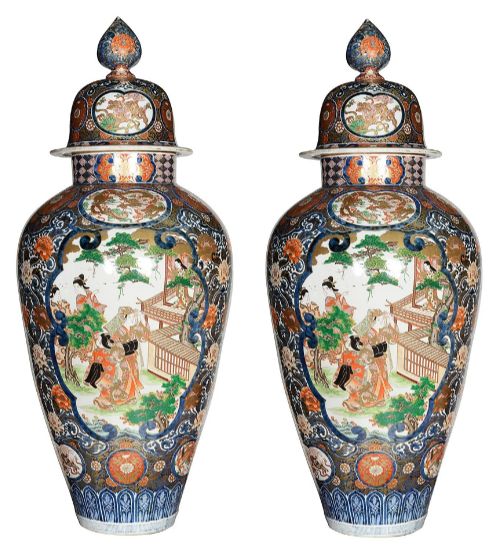
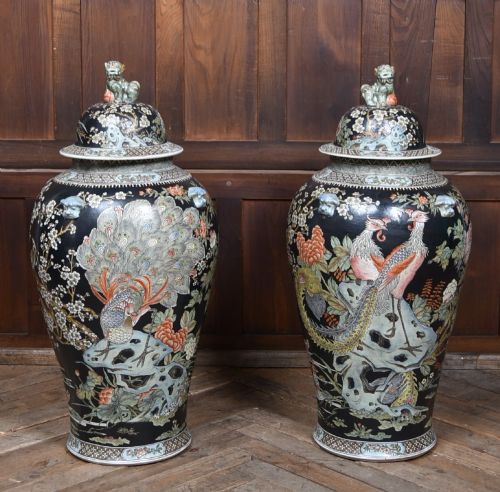
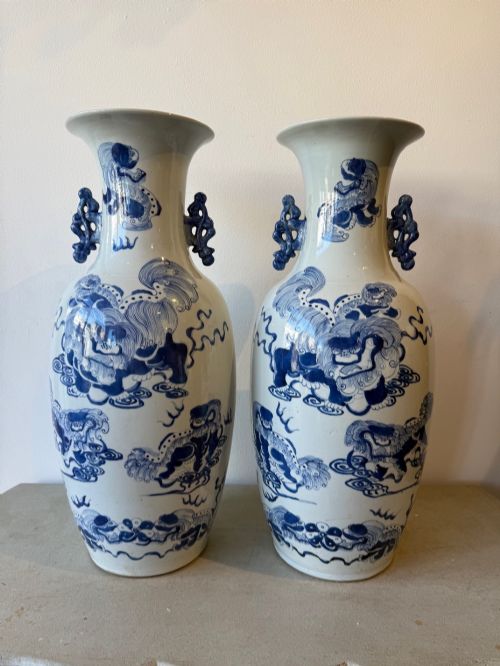
The versions most commonly met on this page include nineteenth-century Chinese Canton, Rose Medallion, and blue and white pieces alongside Japanese Imari, Satsuma, and Kutani wares. Many of these imposing floor pieces retain their original matching stands made from porcelain or wood, while others feature flared necks and baluster forms.
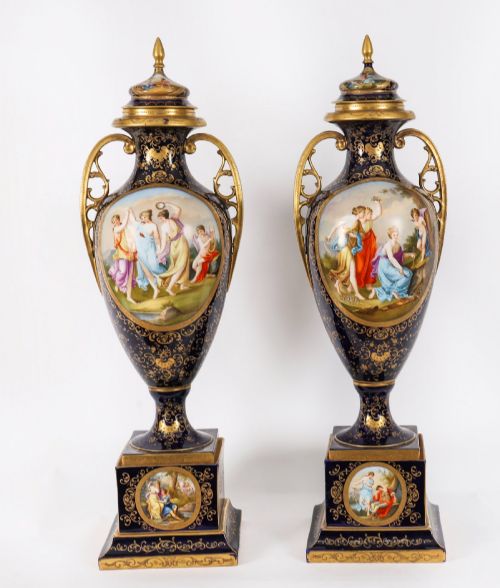
Originating from distinct Asian export traditions and European interpretations like Royal Vienna, these vessels served as grand decorative statements in period interiors. Their substantial presence makes them suited for framing architectural doorways or anchoring large entrance halls.
Materials and methods of construction
Potters shaped these heavy vessels from fine porcelain and earthenware bodies before applying complex layers of enamel glaze. Many examples incorporate hand-painted pigments in Famille Rose and Famille Verte palettes, enriched with gold leaf and detailed gilding.
Surface ornamentation often combines traditional ceramic painting with applied elements such as lacquer panels or carved wooden stands. Firing such large floor-standing forms required considerable technical skill to prevent warping and glazing faults during high-temperature kilning.
Pair Porcelain Floor Vases Retail Price Guide 2026
Typical asking prices for pair porcelain floor vases among the pieces listed under this phrase on Sellingantiques today, from the lower quarter to the upper quarter. They describe what is for sale here now, not the wider market.
Current listings feature nineteenth-century and early twentieth-century floor pieces created in China and Japan, including Imari, Satsuma, Kutani, and Canton styles.
Assessing the grade and finish
Quality in these large vessels rests upon the crispness of the hand-painted brushwork and the vibrancy of the enamel glazes. Superior examples demonstrate meticulous control over intricate floral and figural motifs, whereas simpler pieces show more repetitive or hurried application.
The physical scale and structural integrity of the ceramic body also determine standing value, particularly when paired with matching original stands. Preservation of the delicate gilding and lacquer panels without excessive rubbing distinguishes finer survivals.
Kato Sanhei·Royal Vienna·Fukagawa
The Pair Porcelain Floor Vases Glossary
- Imari
- A style of Japanese porcelain decorated in underglaze blue and overglaze red, gold, and green. This colourful palette became immensely popular for export during the Meiji period.
- Satsuma
- A type of Japanese earthenware featuring a crackled ivory glaze decorated with polychrome enamels and rich gilding. These pieces frequently depict detailed figural scenes and natural subjects.
- Famille Rose
- A major palette of Chinese ceramic glazes introduced in the eighteenth century, distinguished by opaque pink or purple enamel colours. It allowed for subtle tonal gradations in floral and human subjects.
- Baluster
- A vase form with a rounded body that tapers toward the base and flares at the neck. This classical silhouette provides stability for tall floor-standing ceramics.
- Canton
- A style of Chinese export porcelain characterised by compartmentalised panels featuring alternating birds, flowers, and figures. The surrounding areas are densely filled with green and gold botanical motifs.
Pair Porcelain Floor Vases: Frequently Asked Questions
Where should I place a large pair of floor vases?
These tall vessels command significant visual weight and suit open reception spaces, wide hallways, or framing a fireplace.
Placing them directly on the floor or on their designated stands allows their monumental scale to be fully appreciated without crowding smaller furniture.
How do I distinguish Satsuma from Imari ware?
Satsuma ceramics typically display a characteristic cream-coloured, crackled earthenware glaze embellished with heavily applied gold and detailed enamels.
Imari pieces are made of true porcelain rather than earthenware, featuring a distinct palette dominated by cobalt blue underglaze combined with iron red and gold overglaze.
What is Rose Medallion decoration?
Rose Medallion is a nineteenth-century Chinese export style featuring panelled designs filled with alternating scenes of figures, birds, and flowers.
The entire surface is tightly patterned with green foliage and butterflies, centred around a distinctive medallion motif.