


Gilded Porcelain Mantle Urn
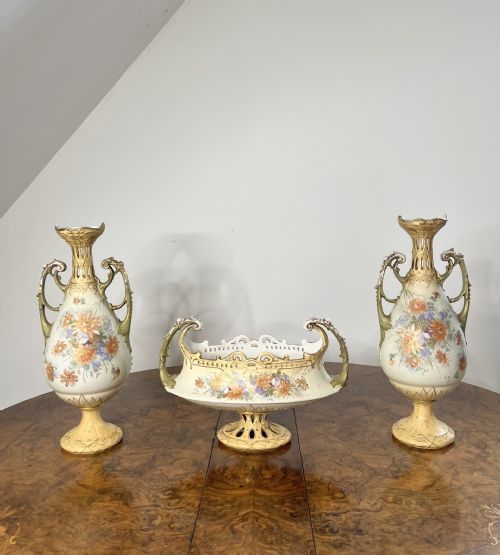
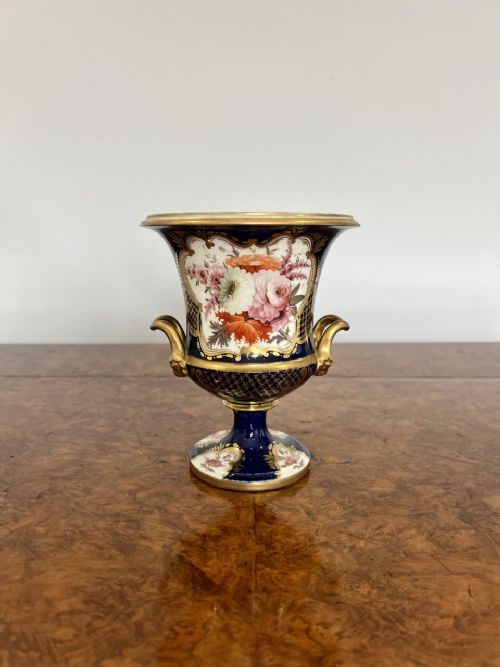
These gilded porcelain mantle urn pieces bring high Victorian presence to a room, combining painted ceramic bodies with rich metallic mounts.
Gilded Porcelain Mantle Urn
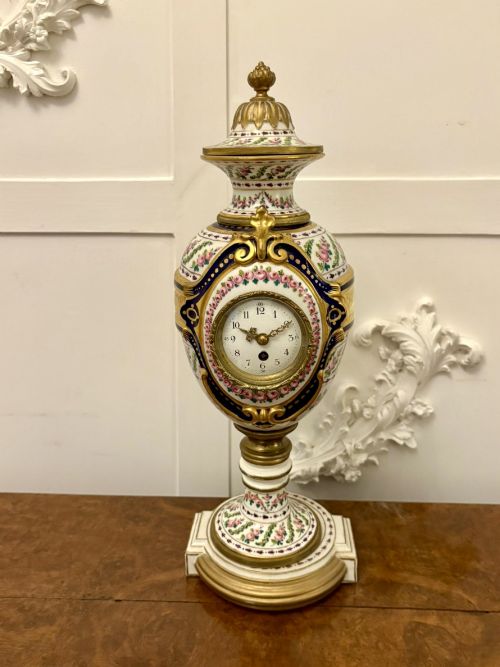
A gilded porcelain mantle urn sits as a decorative centrepiece on a shelf or mantelpiece, often arriving as part of a garniture set accompanied by side vases or a matching clock. The pieces span the nineteenth century and the early twentieth century, originating from English factories such as Royal Worcester, Minton, Derby, and Spode, as well as continental workshops in Paris, Vienna, Dresden, and Sevres.
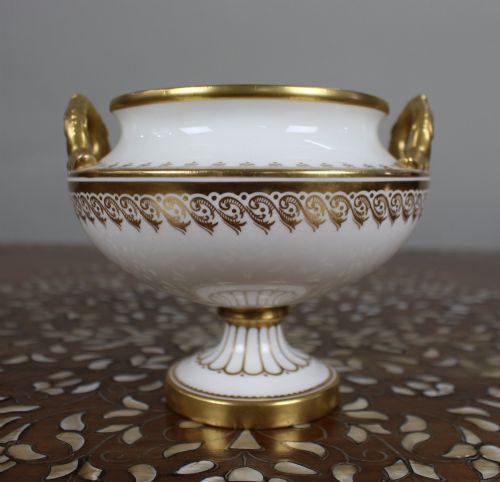
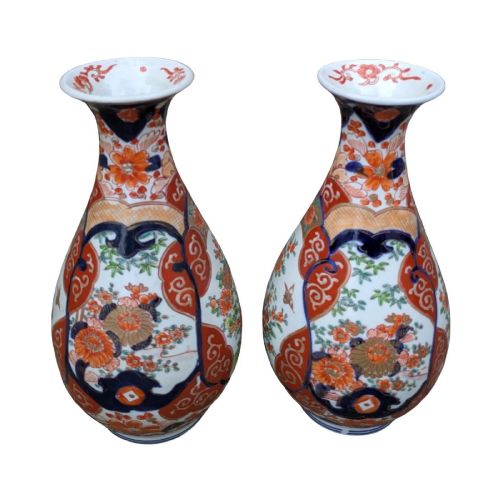
The forms vary from simple two-handled vessels to elaborate lidded garnitures, mantle clocks, and centrepieces. Stylistic influences draw heavily on Rococo Revival, Neoclassical, and French tastes, while other examples incorporate Japanese Imari and Canton designs. Most domestic interiors display them singly or in matched pairs to anchor a fireplace or sideboard.
How they were made
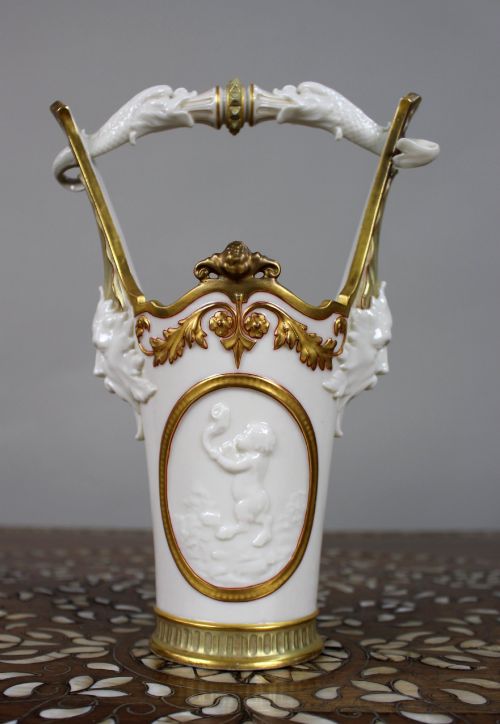
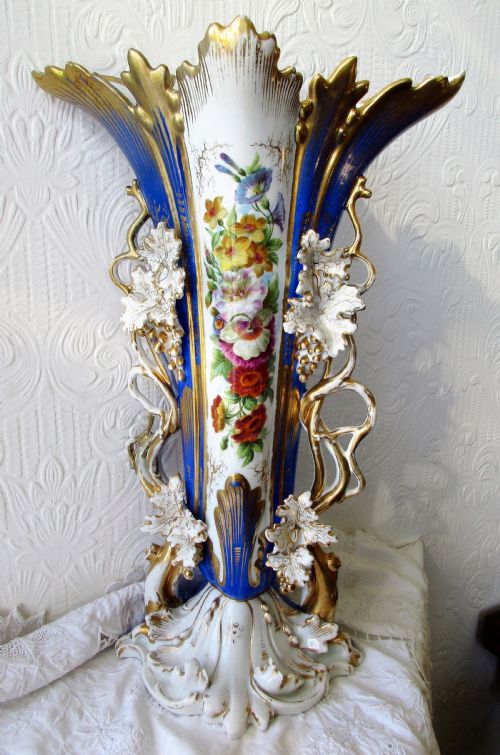
Makers shaped the bodies from fine porcelain and opaque glass, applying hand-painted scenes, floral motifs, and portraits over enamel grounds. Artisans then added rich surface decoration using gold leaf, gilt, and gilding to highlight handles, rims, and panels.
Many of the nineteenth-century continental and English pieces incorporate cast or chased ormolu and gilt bronze mounts. These metal collars, bases, and handles require precise fitting to the fired ceramic bodies.
Listings feature nineteenth-century porcelain and glass urns decorated with gold leaf, gilt bronze, and hand-painted enamel scenes.
What varies in quality
The precision and detail of the hand-painted decoration set the finest examples apart from simpler production ware. Portrait work, intricate pate-sur-pate techniques, and careful brush control indicate skilled studio handiwork.
The integration and quality of the metalwork also dictate overall merit. Heavy cast ormolu mounts that fit the contours of the porcelain precisely elevate the piece well above standard factory output.
Royal Worcester·Royal Vienna·Spode·Royal Crown Derby·Minton·Dresden
The Gilded Porcelain Mantle Urn Glossary
- Gilding
- The application of gold leaf or powdered gold to the surface of porcelain. This technique adds metallic highlights to rims, handles, and painted borders.
- Ormolu
- Gilded bronze used for decorative mounts on nineteenth-century vases and clocks. It provides a bright golden contrast to ceramic bodies.
- Garniture
- A set of three or more matching ornamental vases or urns designed for display together on a mantle. They share common decorative schemes and heights.
- Pate-sur-pate
- A ceramic decoration method where wet porcelain slip builds up in layers to create low-relief cameos on a coloured ground. Minton utilised this technique extensively.
- Imari
- A Japanese export style featuring iron red, cobalt blue, and gold ornamentation. European factories frequently copied these patterns during the nineteenth century.
Gilded Porcelain Mantle Urn: Frequently Asked Questions
How do I style a mantle urn?
Place a single urn centrally on a mantelpiece or sideboard, or arrange a matched pair to frame a mirror or clock. Ensure the room has sufficient depth to support heavy nineteenth-century proportions.
Keep surrounding objects minimal so the painted details and gilt mounts remain the focal point of the display.
What is a garniture set?
A garniture set consists of three or more matching decorative vessels, such as a central lidded urn flanked by two smaller vases. These matched groups were designed to sit symmetrically across a fireplace mantel.
Collectors prize complete sets that retain all their original matching components without replacement pieces.
How do I clean gilded porcelain?
Dust the surface gently with a soft, dry brush to remove particles without disturbing delicate enamel or gilt details. Avoid using water, liquid cleaners, or abrasive cloths on nineteenth-century finishes.
Professional restoration is necessary if the surface sustains damage, as household adhesives can permanently discolour old porcelain.
How do I date a porcelain urn?
Examine the base for factory stamps, painted numbers, or artist signatures that correspond to nineteenth-century registry marks. Stylistic clues like Rococo Revival curves or Victorian neo-classical symmetry also narrow down the period of manufacture.
Comparing the hand-painted motifs and the weight of the ormolu mounts helps confirm whether a piece originates from the early eighteen-hundreds or the later Victorian decades.