




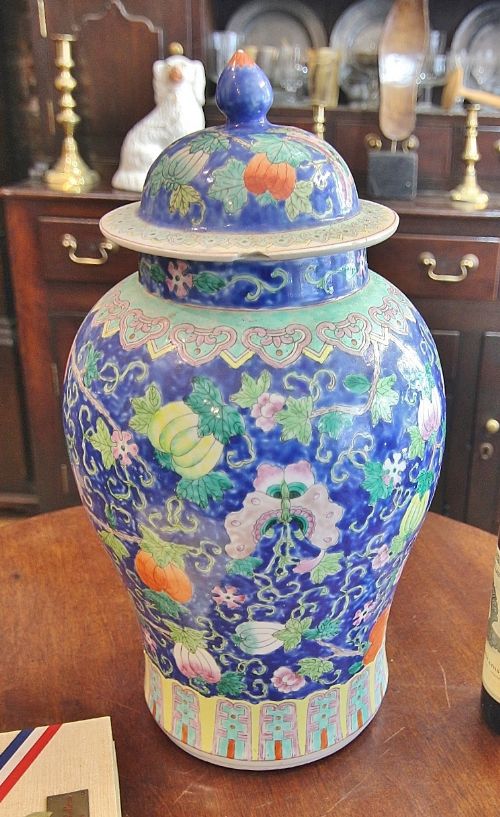


Large Lid Porcelain Urns
Large lid porcelain urns bring scale and ornate presence to a room, combining substantial ceramic bodies with fitted covers.
Large Lid Porcelain Urns
Large lid porcelain urns include substantial covered vessels, ginger jars, and decorative vases originating primarily from the nineteenth century, alongside later twentieth-century examples. These pieces span diverse cultural traditions, incorporating European manufactories like Vienna, Berlin, Sèvres, Dresden, and Royal Worcester, alongside Japanese Meiji period wares including Imari, Kutani, and Satsuma styles.
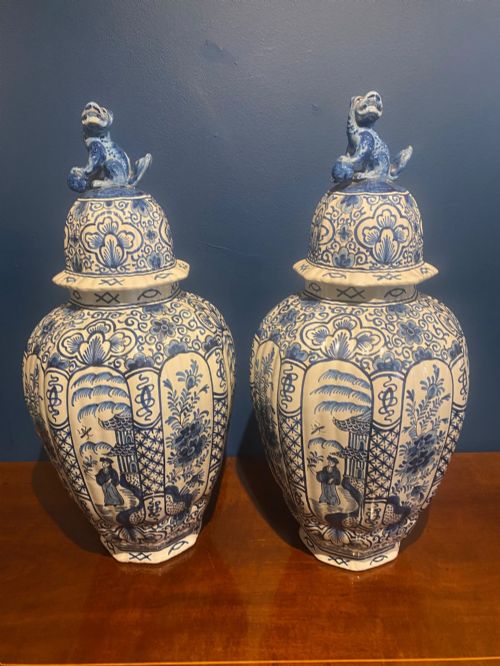
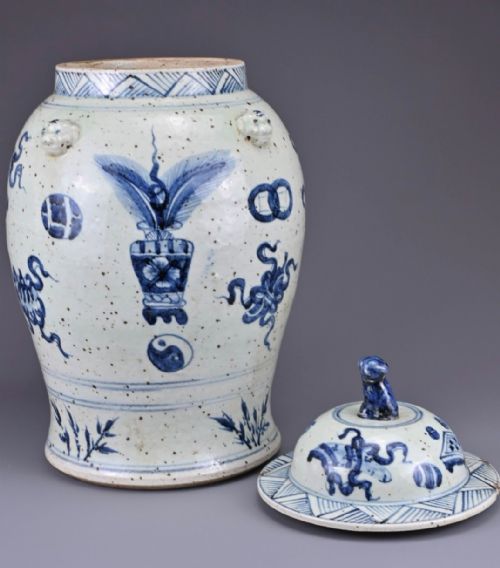
Buyers frequently encounter grand pairs of urns and lidded vases standing alongside single monumental jars and pot pourri vessels. The forms range from classical revival shapes mounted in ormolu to traditional blue and white Chinese designs and brightly coloured Japanese palettes.
Most entries reflect nineteenth-century production methods, encompassing both direct exports from Asian kilns and European interpretations of Eastern and classical aesthetics.
How they were made
These vessels rely on ceramic bodies formed from porcelain, faience, or pottery, finished with specialised glazes and enamel painting. Artisans frequently applied gold leaf, gilding, and gilt highlights to accentuate moulded surface details and pictorial panels.
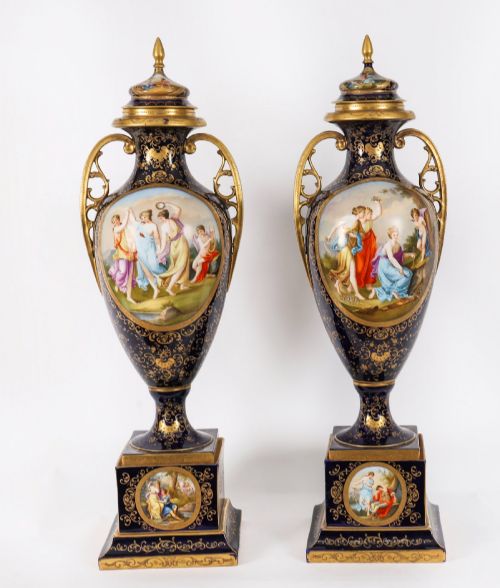
European factories utilised elaborate hand-painted scenes and classical motifs, while Japanese makers employed the distinctive Imari, Kutani, and Satsuma palettes. Mounts cast in ormolu frequently accompany larger European garnitures and decorative vases to frame the porcelain bodies.
Large Lid Porcelain Urns Retail Price Guide 2026
Typical asking prices for large lid porcelain urns among the pieces listed under this phrase on Sellingantiques today, from the lower quarter to the upper quarter. They describe what is for sale here now, not the wider market.
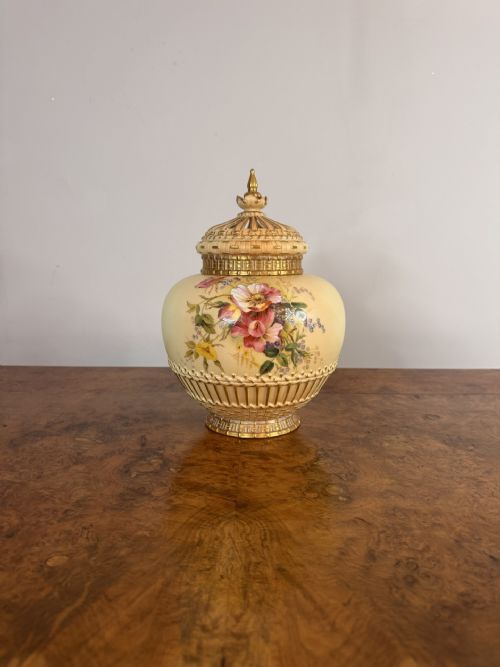
Several pieces feature crown covers designed specifically to let the scent of dried rose petals drift through Victorian drawing rooms.
What varies in quality
Quality rests in the execution of the hand-painted decoration, from finely detailed Watteau scenes and intricate floral reserves to looser, more commercial brushwork. The precision of the gilding and the crispness of the porcelain moulding distinguish superior manufactories.
The presence of original matching covers, bespoke stands, and integrated ormolu mounts elevates the completeness and visual impact of the piece. Grand scale combined with well-preserved enamel colours separates standard decorative items from exceptional works.
The Large Lid Porcelain Urns Glossary
- Imari
- A style of Japanese export porcelain characterised by a palette of underglaze blue, iron red, and gilt. Pieces utilising this technique date largely to the Meiji period and European revivals.
- Ormolu
- Gilded bronze used for decorative mounts on European porcelain urns and vases. It frames the ceramic body during the nineteenth century.
- Garniture
- A set of three or more matching vases or urns designed to be displayed together on a mantelpiece or sideboard. They typically include a central vessel flanked by matching covers.
- Pot Pourri
- A decorative jar or vase featuring a pierced or crown cover designed to hold dried scented plant materials. Royal Worcester examples frequently employ this form.
- Satsuma
- A type of earthenware from Japan featuring a crackle glaze decorated with polychrome enamels and extensive gilding. These works appear frequently in late nineteenth-century inventories.
Large Lid Porcelain Urns: Frequently Asked Questions
What were large lidded porcelain urns used for?
These large vessels served primarily as decorative garnitures on mantelpieces, sideboards, and pedestals within formal nineteenth-century interiors. Certain forms, such as pot pourri jars with pierced covers, held scented botanicals to fragrance rooms.
Beyond domestic display, many of the Asian and European examples functioned as high-status export goods and cabinet pieces. Their substantial scale allowed them to anchor the visual symmetry of a grand room.
How do I care for antique porcelain urns?
Maintain porcelain urns by dusting them gently with a soft dry cloth to prevent the accumulation of dirt within surface crevices. Avoid using chemical cleaners or abrasive materials that might damage fragile enamel decoration and gilding.
Keep these pieces away from direct sunlight and areas subject to sudden temperature fluctuations to protect the ceramic body and any gilt or ormolu mounts. Handle heavy lids with care to prevent chipping the rims.
How can I tell a nineteenth-century piece from a later one?
Nineteenth-century pieces often display the hand-painted brushwork, heavier potting, and specific factory marks associated with Victorian, Meiji, or continental European production. Weight, glaze characteristics, and the handling of enamel pigments help distinguish older works from twentieth-century reproductions.
Examining the foot ring, base wear, and the integration of any gilt or ormolu mounts provides further clues to the manufacturing era. Comparing marks against known factory records confirms the period of origin.