




Royal Vienna Porcelain Urns
Royal vienna porcelain urns combine classical form with meticulous hand-painting to anchor a room.
Royal Vienna Porcelain Urns
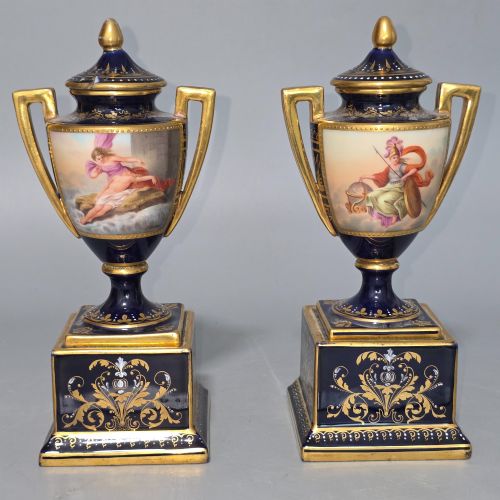
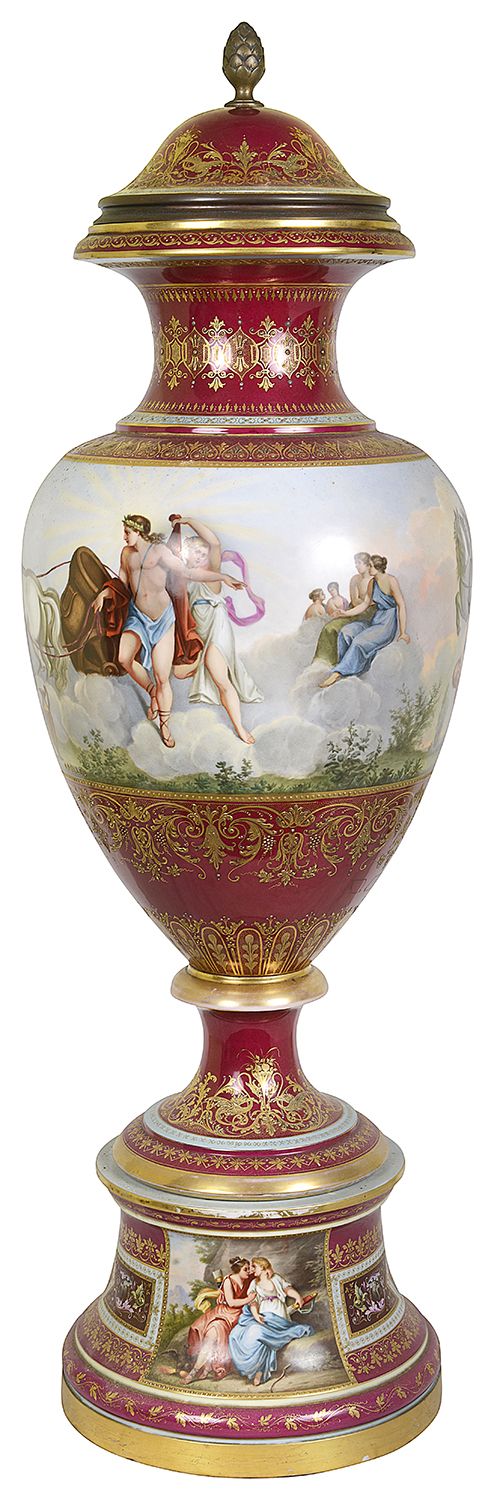
Royal vienna porcelain urns are decorative vessels rooted in nineteenth-century production, appearing as lidded urns, amphora vases, ewers, and garniture sets. These pieces bring formal presence to an interior through substantial scale and sculptural handles.
The versions most commonly found here date from the nineteenth century, including specific years like 1850, 1870, 1880, 1890, and 1900. They adopt styles such as Neoclassical, Empire, Rococo Revival, and Victorian classical revivals.
Makers and artists sometimes sign these works, as seen on signed pieces like those by F. Koller or featuring portrait subjects like Lissette. Collectors encounter them as single decorative urns or balanced pairs designed for mantelpieces and console tables.
How they were made
These urns rely on porcelain bodies shaped into classical vessel forms, often complemented by wooden elements in displays or stands. Potters formed the porcelain to accept detailed surface decoration, including raised motifs and figural scenes.
Artisans applied enamel and hand-painted details directly onto the glazed porcelain surface, creating portraits and classical narratives. Gold leaf, gilt, and gilding complete the decoration, highlighting handles, rims, and borders with metallic brilliance.
Listings feature porcelain urns spanning the nineteenth century, utilising enamel, gold leaf, and wood across Neoclassical and Victorian revival styles.
What varies in quality
Quality in these urns depends heavily on the precision and execution of the hand-painted enamel work and portraiture. Superior pieces exhibit refined brushwork, clear detail in figural scenes, and well-balanced proportions across pairs and garnitures.
The application of gold leaf and gilding dictates the visual richness of the object, with finer examples showing crisp tooling and minimal wear. The complexity of the vessel form, such as lidded urns with elaborate handles, also marks the distinction between standard production and exceptional studio pieces.
F. Koller
The Royal Vienna Porcelain Urns Glossary
- Amphora
- A classical two-handled vessel with a narrow neck, often adapted in nineteenth-century porcelain designs. These shapes mimic ancient Greek storage jars.
- Garniture
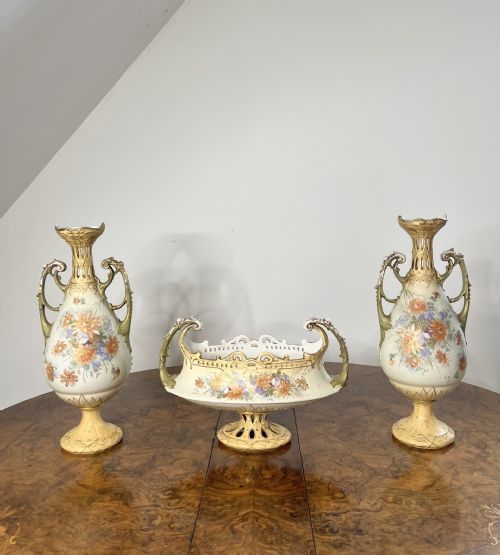
- A set of matching vases or urns designed to be displayed together on a mantelpiece or sideboard. They typically consist of a central urn flanked by two smaller matching pieces.
- Ewer
- A large jug with a wide spout and a looped handle, originally intended for pouring water. In porcelain, it serves a purely decorative function.
- Gilding
- The application of gold leaf or gold powder to the surface of the porcelain. It accents the decorative panels and structural lines of the urn.
- Enamel
- Vitreous glass paste fused to the porcelain surface through firing to create durable, coloured artwork. It allows for rich, permanent pigmentation on historical ceramics.
Royal Vienna Porcelain Urns: Frequently Asked Questions
How were royal vienna porcelain urns used?
These urns served primarily as decorative focal points in nineteenth-century drawing rooms and parlours. They were placed on mantelpieces, pedestals, and console tables to demonstrate the refined taste of the owner.
Larger garniture sets created a balanced, symmetrical display across architectural surfaces. They were ornamental objects rather than functional containers for everyday use.
How do I date a vienna porcelain urn?
Dating relies on stylistic markers such as Neoclassical, Empire, or Rococo Revival motifs, alongside specific period characteristics from the nineteenth century. Examining the handling of the enamel work and the quality of the gilding helps narrow down the decade of production.
Signed pieces or specific portrait titles like Lissette provide additional historical context. Comparing the form against recorded examples from 1850, 1880, or 1900 offers further chronological clarity.
Where should I display a porcelain urn?
Porcelain urns require stable, secure surfaces away from heavy foot traffic due to their fragile composition and historical value. Mantelpieces, sideboards, and dedicated display cabinets provide safe environments that showcase their height and form.
Pair arrangements look best when centered on a wall or balanced evenly across a large piece of furniture. Ensuring adequate clearance protects the delicate handles and gilt surfaces from accidental knocks.
What is a vase garniture?
A vase garniture is a matched set of three or more vessels, usually comprising a central large urn and two flanking side vases. These sets were manufactured together to create a cohesive decorative scheme on prominent furniture.
Displaying them as an intact group preserves their original visual harmony. Collectors prize complete garniture sets for their symmetry and grand scale.