
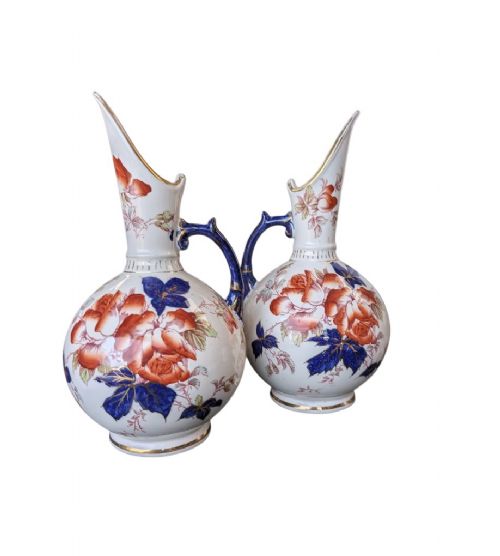


Antique Ceramic Ewers Pair
These antique ceramic ewers pair examples are decorative vessels shaped with handles and spouts, selected to bring classical form and presence to a room.
Antique Ceramic Ewers Pair
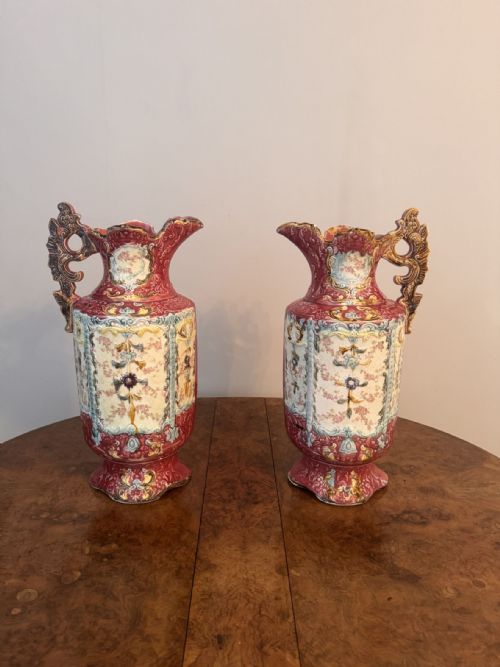
An antique ceramic ewers pair brings together matched vessels originally designed for pouring water or serving decorative function, appearing here in forms ranging from tall handled pitchers to pedestal vases.
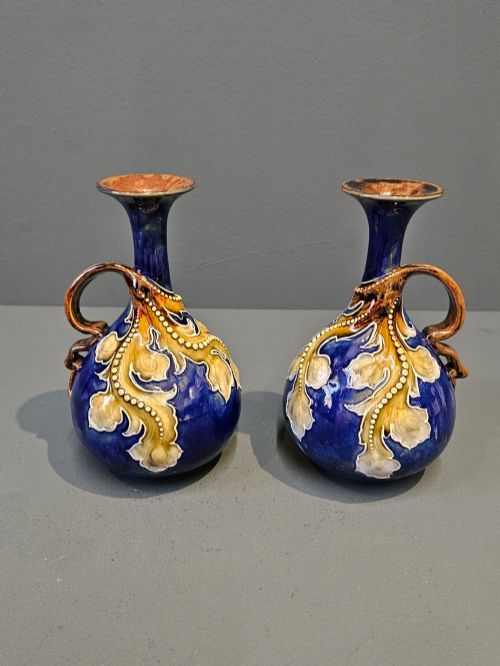
The pieces span periods from the eighteenth century through the Victorian era and into the early twentieth century, taking shapes influenced by Dutch Baroque, French Neoclassical, and Art Nouveau styles.
Makers and potteries represented include Royal Worcester, Doulton, Minton, Vienna, and Royal Crown Derby, showing how domestic tablewares and ornamental ceramics evolved across generations.
How they were made
Potters shaped these vessels using porcelain, earthenware, and glazed ceramic, applying techniques of hand painting and floral encrustation directly onto the clay body.
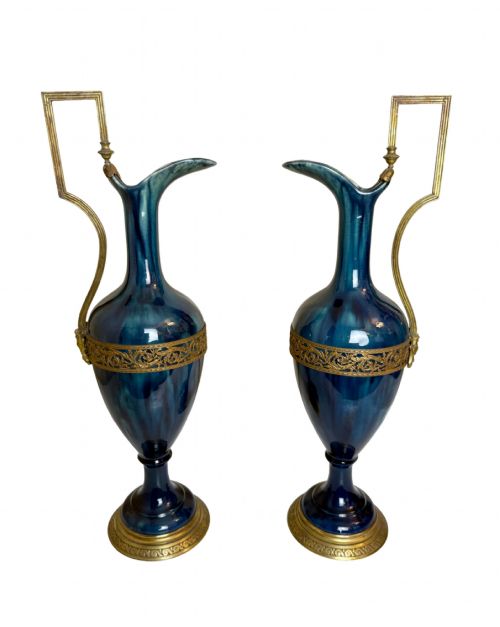
Surface decoration frequently incorporates enamel, gilt bronze trim, and gold leaf gilding, highlighting handles, rims, and moulded details with metallic contrast.
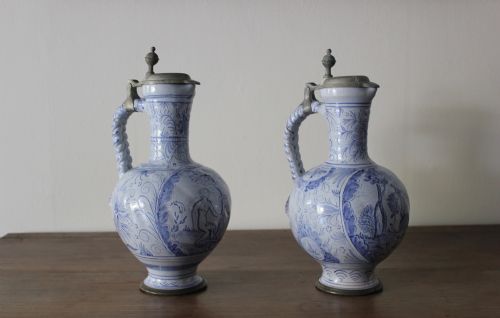
Glazing techniques provide protective outer coats, ranging from the blue glazed finish of eighteenth century Delft vessels to the blush ivory tones of later Victorian production.
Design influences span multiple eras, encompassing Dutch Baroque, French Neoclassical, Victorian Arts and Crafts, and Art Nouveau styles.
What varies in quality
The distinction between standard production and finer pieces lies in the precision of the hand painting and the crispness of moulded ornament.
The inclusion of signed work, such as pieces bearing artist signatures or recognised factory marks, elevates the standing of an individual pair.
Proportion and the integration of auxiliary materials like gilt bronze trim determine the visual balance and overall execution of the design.
Royal Worcester·Doulton Lambeth Ware·Minton·Royal Crown Derby·Vienna Porcelain
The Antique Ceramic Ewers Pair Glossary
- Ewer
- A large jug or pitcher with a wide spout and handle, traditionally used for pouring water but frequently made purely for display. These ornamental examples often feature elaborate handles and slender necks.
- Blush Ivory
- A specialised ceramic ground developed by Royal Worcester that mimics the warm, soft tone of human skin. It serves as a subtle background for hand painted floral decoration.
- Gilding
- The application of gold leaf or powdered gold to the surface of ceramic objects. It accentuates rims, handles, and raised decorative motifs.
- Enamel
- Opaque vitreous material fused to the ceramic body through firing to add colour and pattern. It provides durable and vibrant surface decoration.
- Pedestal vase
- A vessel elevated upon a raised foot or plinth base. This form adds height and formal presence to decorative ewers.
Antique Ceramic Ewers Pair: Frequently Asked Questions
How were ceramic ewers used historically?
While originally designed to hold water for hand washing at washstands, many ewers served purely as decorative objects for display on sideboards and mantelpieces.
Over time, manufacturers produced matched pairs intended strictly for ornamental interior decoration rather than practical service.
How do I care for antique ceramic ewers?
Keep these delicate vessels out of direct sunlight to prevent fading on hand painted surfaces and gilt details.
Dust them gently with a dry, soft cloth, avoiding water or chemical cleaning products that might harm fragile enamel or gold leaf.
How can I tell Victorian ewers from later pieces?
Victorian examples often display heavier ornamentation influenced by Gothic, Baroque, or classical styles, accompanied by robust handles and rich gilding.
Later pieces from the early twentieth century frequently shift towards softer palettes like blush ivory or organic Art Nouveau contours.