
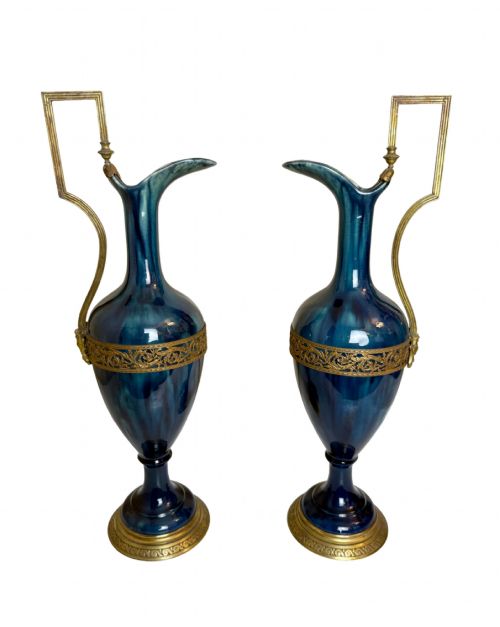
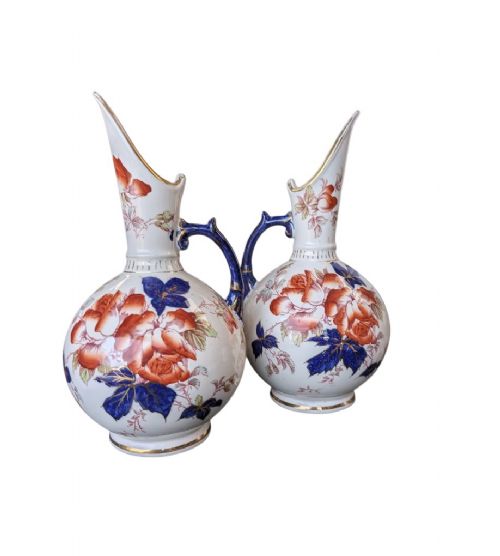


Gilt Porcelain Ewer
A gilt porcelain ewer brings ornamental stature to a room, combining ceramic form with rich metallic embellishment.
Gilt Porcelain Ewer
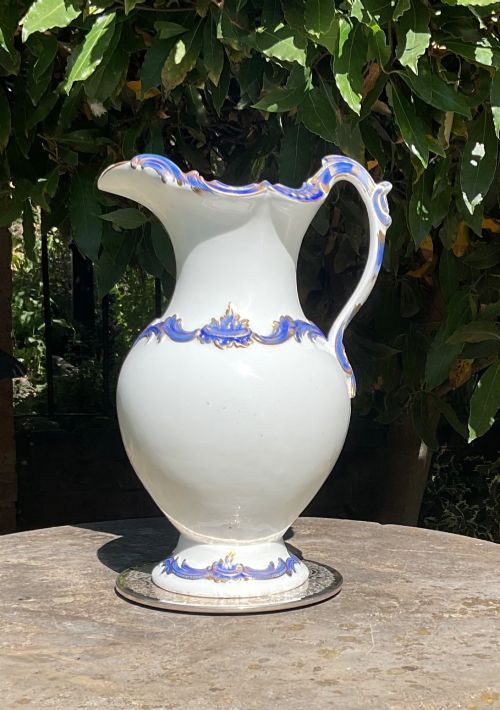
A gilt porcelain ewer is a water vessel shaped with a handle and spout, finished in gold leaf or gilding over ceramic bodies from periods spanning the nineteenth and early twentieth centuries. You are most likely to encounter Victorian and Edwardian examples on this page, alongside earlier Regency and nineteenth-century pieces.
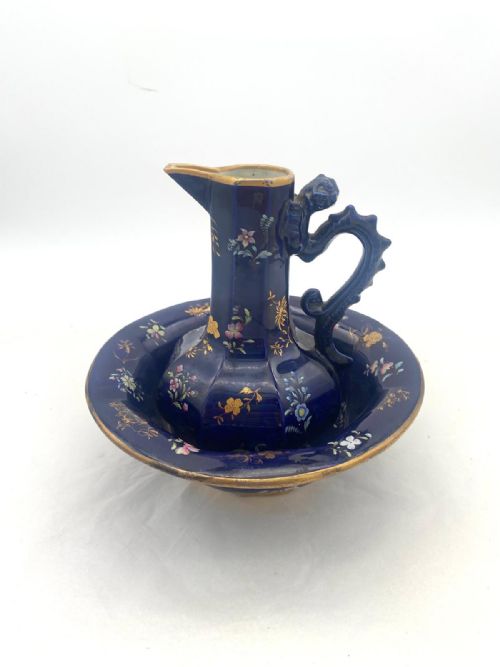
The forms range from grand decorative ewers and miniature vessels to pairs of pedestal vases and jug-and-basin sets. Makers such as Royal Worcester, Mason's, and Minton shaped these objects within British and continental traditions.
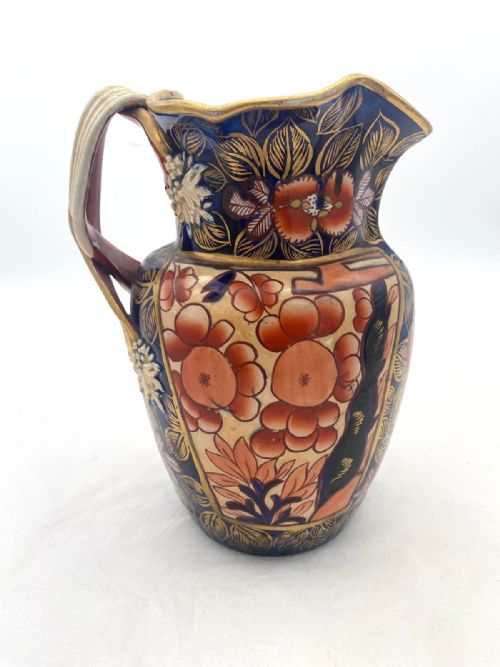
Stylistic influences vary widely, drawing on French Neoclassical, Japanese Imari, Chinoiserie, and Persian designs. This variety reflects the diverse aesthetic tastes of the nineteenth century and the early twentieth century.
Materials and technique
The foundation of each piece is hard-paste porcelain, ironstone, or standard ceramic bodies, shaped by hand or in moulds. Glazes and enamel colours provide the base palette before metallic finishing is applied.
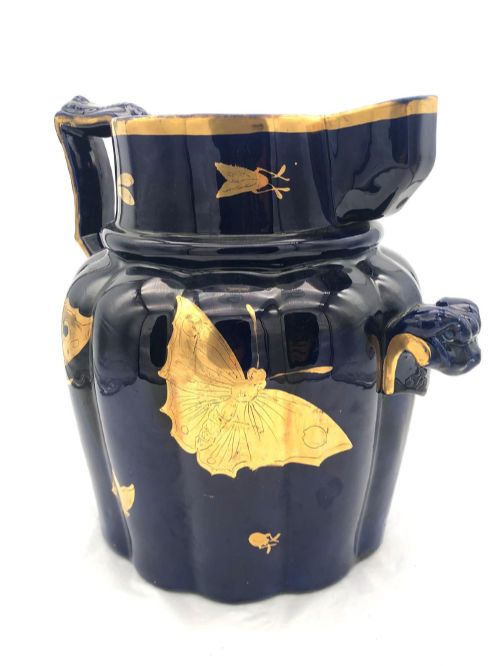
Gold leaf or gilding supplies the characteristic metallic surface, often combined with hand-painted details, cobalt blue grounds, or flower encrustations. Mounts in gilt bronze or metal trim appear on specific continental and nineteenth-century items.
Some nineteenth-century makers attached grotesque handles to their ewers, giving polite floral jugs a delightfully grumpy personality.
Judging quality
The refinement of the hand-painted decoration and the crispness of moulded details distinguish finer pieces from standard production. Quality is evident in the precision of the gilding and the balance of the overall form.
Maker attribution plays a central part, with recognised works from factories like Royal Worcester or Doulton Burslem carrying distinct artistic execution. The complexity of the design, such as reticulated porcelain or grotesque handles, marks the upper tier of the range.
Mason's·Grainger Worcester·Doulton Burslem·Minton·Royal Crown Derby·Vienna·Coalport·Royal Worcester·Staffordshire
The Gilt Porcelain Ewer Glossary
- Gilding
- The application of gold leaf or gold powder to the ceramic surface to create a metallic finish. This decorative technique highlights handles, rims, and moulded motifs.
- Ewer
- A large jug with a wide spout and a decorative handle, historically used for water but collected primarily for display. Ewers often form matching pairs in nineteenth-century arrangements.
- Ironstone
- A dense, durable type of feldspathic stoneware patented in the early nineteenth century. It provides a robust body for heavily decorated jugs and pitchers.
- Reticulated
- Describes ceramic work featuring an openwork or pierced lattice design. This intricate technique requires skilled cutting before firing and glazing.
- Blush ivory
- A soft cream-coloured ceramic ground popular in late Victorian production, often associated with Royal Worcester. It provides a muted background for delicate floral hand-painting.
Gilt Porcelain Ewer: Frequently Asked Questions
What is a gilt porcelain ewer used for?
These vessels were originally designed for pouring water at the washstand or table, functioning alongside matching bowls and basins. Over time, their role shifted entirely to ornamental display on mantelpieces, pedestals, and sideboards.
Today, collectors place them as standalone decorative objects or in balanced pairs to add architectural and metallic warmth to a room.
How do I identify the period of an ewer?
Dating relies on a combination of ceramic bodies, glaze colours, and stylistic markers such as Victorian aesthetic movement patterns or Edwardian forms. Factory marks stamped or painted on the underside provide the most reliable evidence for specific decades.
Comparing the handle construction and decorative motifs against documented examples from makers like Mason's or Royal Worcester narrows down the era of manufacture.
What distinguishes ironstone from porcelain?
Ironstone is a heavy, opaque earthenware containing slag and feldspar, designed to withstand daily use while mimicking the appearance of Chinese porcelain. It offers greater structural heft and durability compared to fine ceramic bodies.
Porcelain is vitrified, harder, and often thinner, allowing for translucent qualities and more delicate moulding in handles and rims.
How should I care for antique gilded ceramics?
Gilding and hand-painted enamels require gentle maintenance to prevent wear over the years. Dusting with a dry, soft cloth is sufficient for routine cleaning.
Water and chemical cleaning agents should be avoided, particularly on nineteenth-century surfaces where metallic leaf or enamel colours sit lightly on top of the glaze.