


Cobalt Blue Ewer
A cobalt blue ewer brings deep, resonant colour and classical form to a room, drawing the eye instantly.
Cobalt Blue Ewer
A cobalt blue ewer stands as a vessel of utility transformed into ornament, tracing its lineage from historical serving pitchers to purely decorative forms. When you search for a cobalt blue ewer, you encounter objects designed for pouring that instead showcase rich blue pigments beneath glazes or upon ceramics.
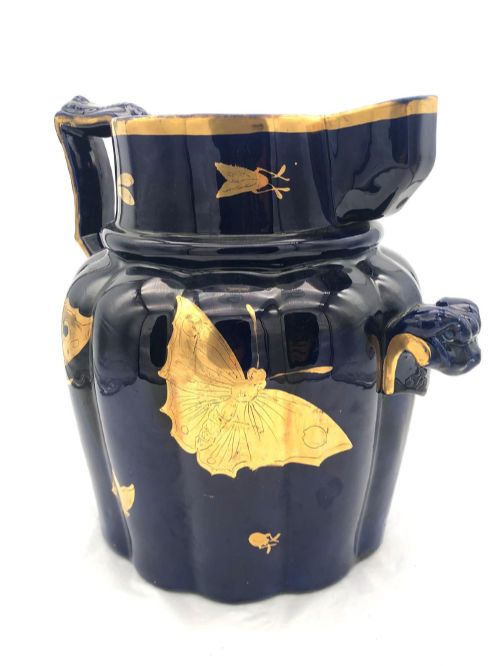
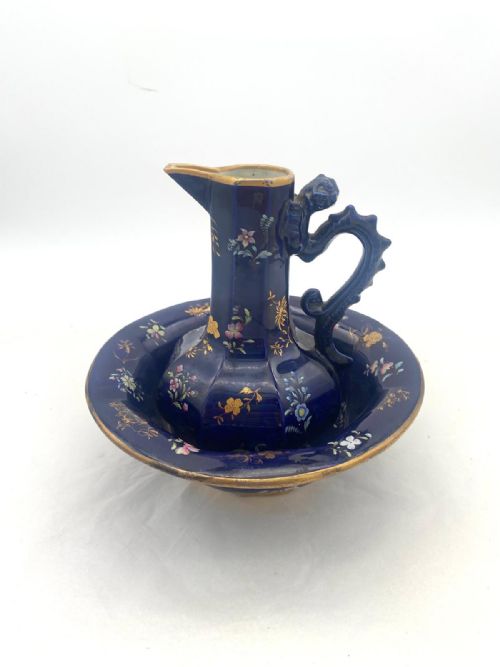
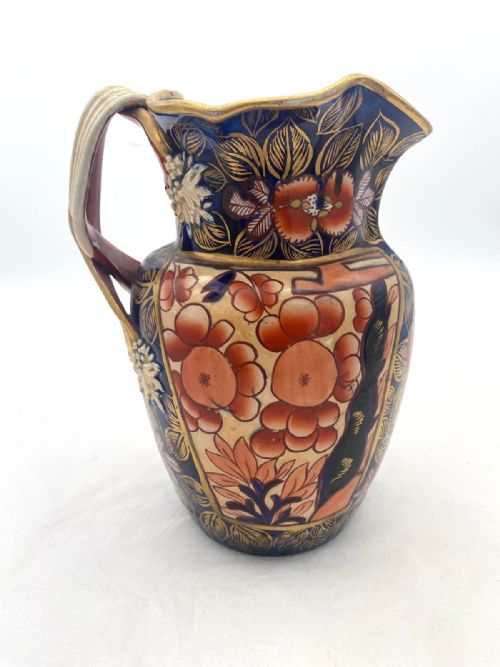
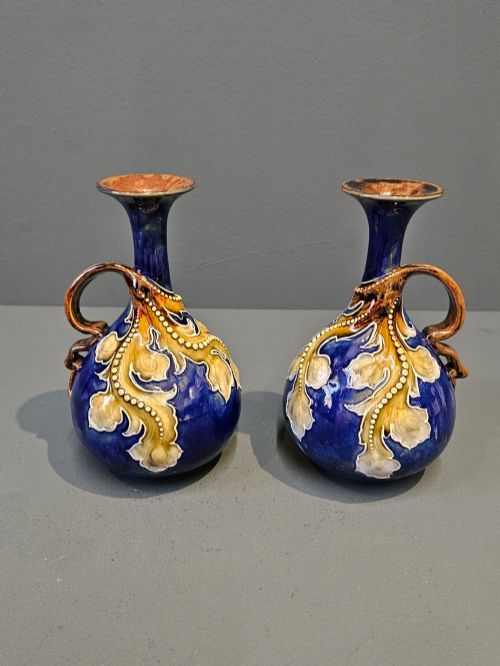
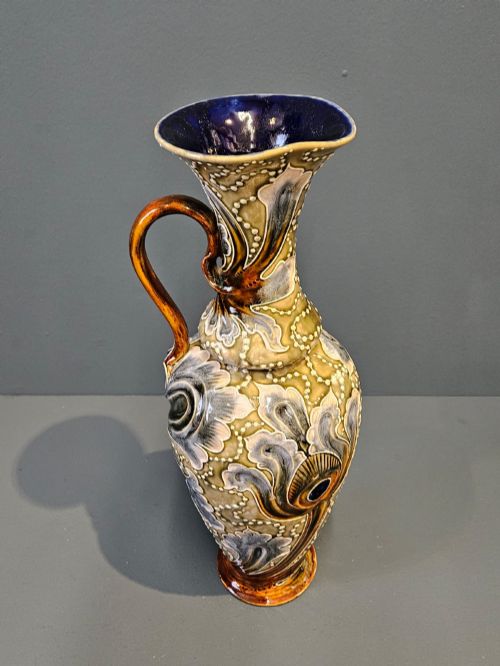
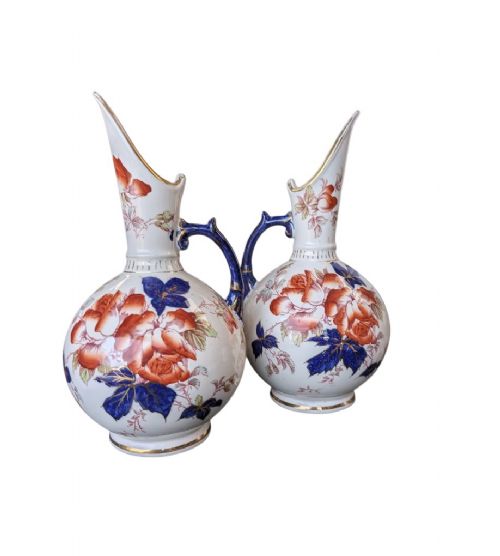
The pieces grouped here span the nineteenth century into the early twentieth century, taking in Victorian interpretations alongside Japanese export wares and German stoneware. Jug and basin sets, ornamental pitchers, and large handled vessels dominate the selection, often carrying deep cobalt grounds beneath gilt or enamel highlights.
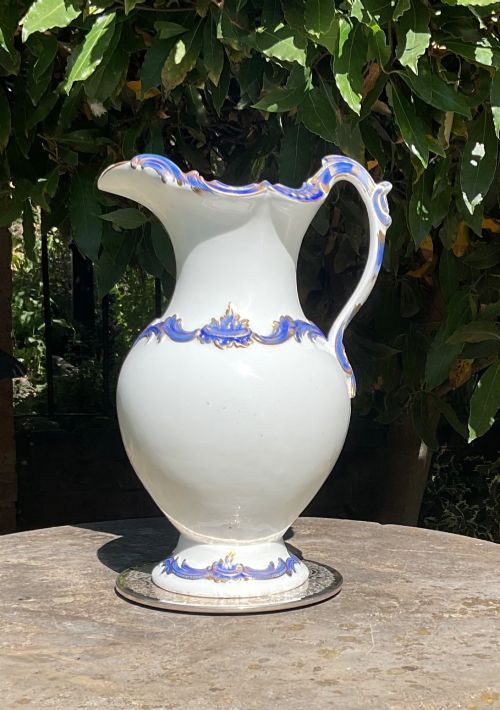
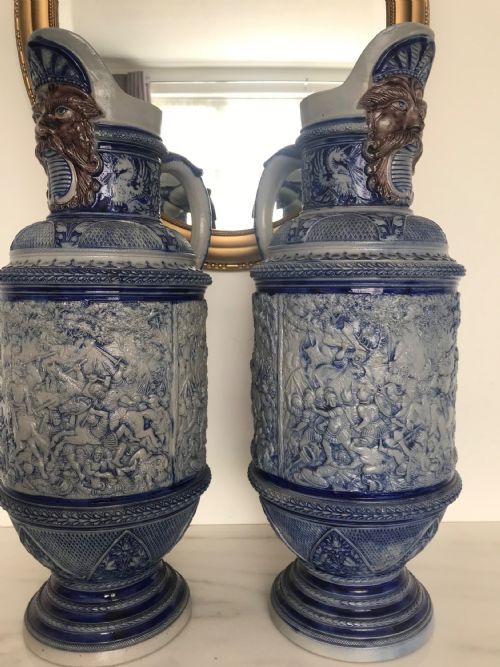
Makers ranged from major English potteries like Mason's and Coalport to specialised salt-glaze workshops in Germany and stoneware artisans at Doulton Lambeth. The forms shift from octagonal ironstone bodies to slender porcelain shapes and heavy salt-glazed stoneware pitchers decorated with moulded battle scenes.
Materials and construction
Potters built these vessels using porcelain, ironstone, and heavy stoneware, shaping them on the wheel or pressing them into moulds. Ironstone provided a dense, heavy body suitable for large ewers and basins, while porcelain allowed for finer, more delicate handled forms.
Cobalt pigment applied beneath the glaze provided the intense blue ground, capable of withstanding high kiln temperatures without losing its depth. Artisans frequently added gold leaf, enamel, or gilt highlights over the glaze once the primary firing was complete.
Some nineteenth-century makers attached grotesque handles to their ewers, turning a simple pouring handle into a snarling mythological creature.
Assessing quality and execution
Quality rests in the crispness of the moulded relief and the control of the cobalt pigment across the ceramic body. Better examples display an even, saturated blue ground without pooling or dry patches in the glaze.
The treatment of the handle reveals the maker's hand, particularly on pieces featuring grotesque or elaborately scrolled grips. Superior ewers balance the weight of the handle with a stable, well-proportioned foot and a cleanly drawn pouring lip.
Mason's Ironstone·Doulton Lambeth Ware·Simon Peter Gerz·Coalport
The Cobalt Blue Ewer Glossary
- Ewer
- A large jug with a wide spout and a handle, historically used for washing hands at table or serving water. Today, these vessels are primarily collected for their sculptural forms and decorative glaze work.
- Cobalt Blue
- A deep, intense blue pigment derived from cobalt salts, capable of withstanding high temperatures in ceramic kilns. It remains stable under most glazes, producing a characteristic rich hue.
- Ironstone
- A dense, durable type of earthenware patented in the nineteenth century as a sturdier alternative to porcelain. It readily accepts cobalt blue grounds and heavy gilding.
- Salt Glaze
- A vitreous coating formed by throwing common salt into the kiln during high-temperature firing. This process creates a characteristic orange-peel texture on stoneware bodies.
- Historismus
- A nineteenth-century European style that revived historical artistic forms, particularly from the Renaissance and medieval periods. German stoneware pitchers frequently utilise this aesthetic.
Cobalt Blue Ewer: Frequently Asked Questions
What is a cobalt blue ewer used for?
These vessels served originally as functional pitchers for water, often paired with matching basins for washing.
Over time, many of these pieces transitioned into purely decorative objects, displayed on sideboards, mantels, or used as ornamental lamps.
How do I date a cobalt blue ewer?
Dating relies on the ceramic body type, stylistic markers, and any maker marks stamped or printed underneath. Ironstone and salt-glazed stoneware point toward nineteenth-century production, while porcelain variants often align with Victorian or early twentieth-century manufacturing.
Examining the handling of the cobalt pigment and the presence of gilt or enamel details helps narrow the period further.
Are these ewers made of porcelain or pottery?
The pieces span several ceramic types, including fine porcelain, durable ironstone, and heavy stoneware. Each material imparts a different weight and texture to the finished vessel.
Ironstone provides a robust, heavy body suited to large ewers, while porcelain offers a more refined, translucent finish.
How should I clean my ewer?
Dust the surface gently with a soft, dry cloth to remove everyday particles. Avoid harsh chemical cleaners or abrasive scouring pads that might damage the surface glaze, enamel details, or gold leaf highlights.
If washing is necessary, use lukewarm water and mild soap, drying the vessel thoroughly afterwards.