



Gilded Porcelain Ewer
These gilded porcelain ewer pieces bring grand historic forms to a room, offering striking decorative presence through metallic highlights and ceramic bodies.
What a gilded porcelain ewer is
A gilded porcelain ewer takes the ancient shape of a water-carrying vessel and repurposes it purely for display. When searching for a gilded porcelain ewer, buyers encounter works ranging from compact cabinet miniatures to large decorative mantel ornaments.
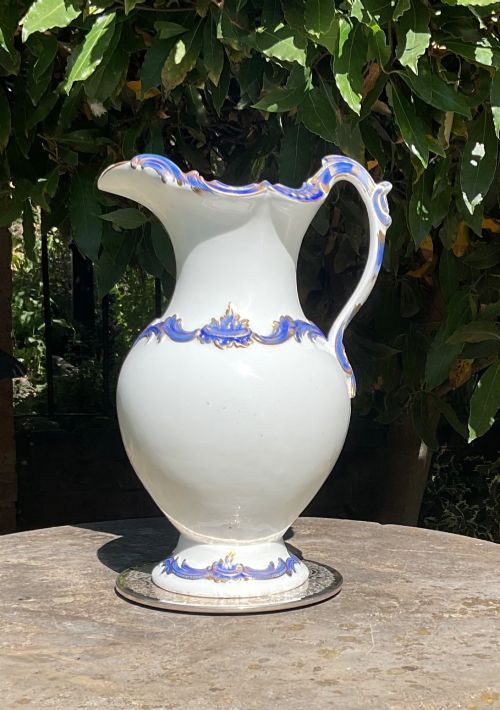
The selection on this page spans the nineteenth century through the early twentieth century, taking in Victorian, Edwardian, and French styles. Makers and potteries such as Royal Worcester, Coalport, Mason's, and Volkstedt dominate the field with varied regional aesthetics.
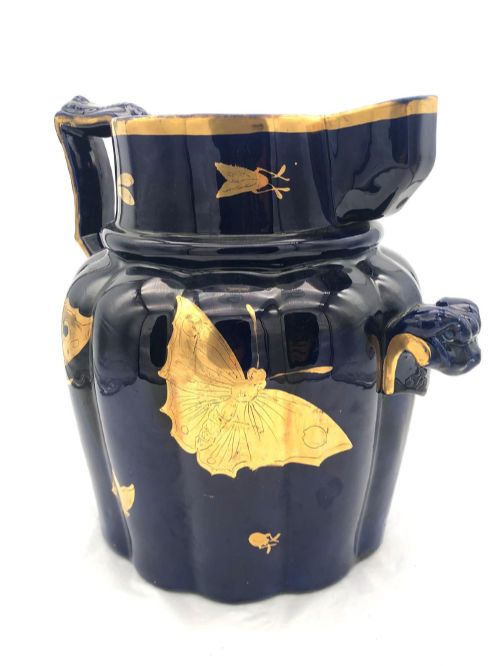
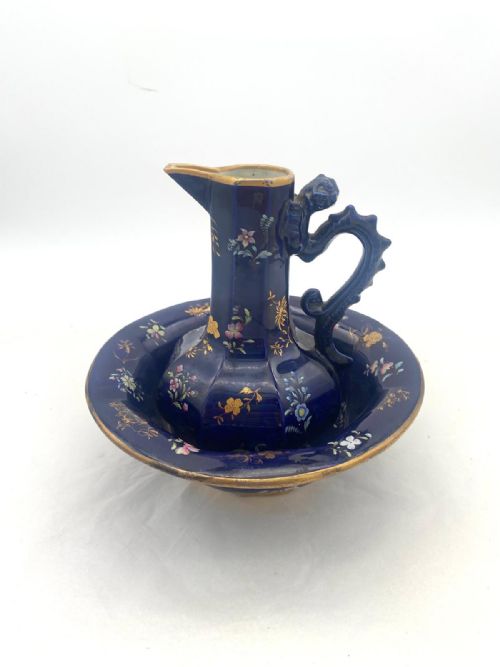
Forms include pieces with cobalt blue grounds, grotesque handles, and painted mythological figures. Alongside standard porcelain, ironstone appears within these listings alongside hard-paste porcelain bodies.
How they were made
Makers shaped hard-paste porcelain and ironstone into complex vessel forms, frequently incorporating sculptural elements like grotesque handles. Glaze seals the ceramic body, providing a smooth surface for subsequent enamel painting and gilding operations.
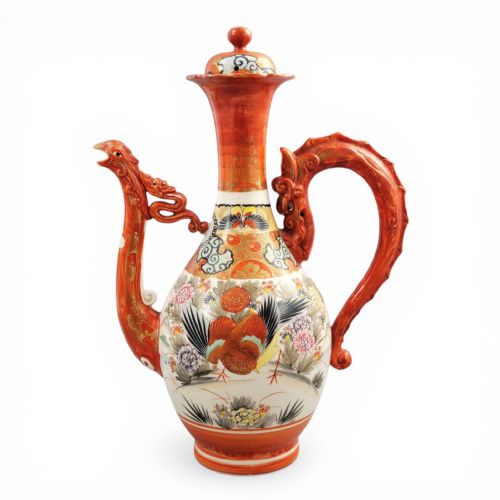
Decoration relies on applied enamel colours and gold leaf or gold gilt. Artisans hand-painted intricate scenes, such as mythological figures or botanical subjects like roses, before applying metallic highlights to rims, handles, and moulded details.
Retail Price Guide 2026
Typical UK retail prices for gilded porcelain ewer, calculated from the Sellingantiques database of over a million retail prices indexed since 2003. This retail price guide relies exclusively on Sellingantiques data; no external sources or auction records are used, so the figures do not describe the wider market.
Listings feature periods spanning from the nineteenth century through 1920, incorporating porcelain, ironstone, and gold leaf.
What varies in quality
The refinement of the hand-painting separates ordinary production from exceptional work, particularly in figurative scenes and botanical studies. Painted detail executed by named decorators demonstrates a higher degree of artistic investment.
The precision and weight of the gilding further distinguish the range, as dense gold leaf and crisp hand-applied gilt endure better than thin washes. Sculptural ambition, seen in elaborate handles and moulded bodies, also marks out superior pieces.
Mason's·Royal Worcester·Coalport·Volkstedt
The Gilded Porcelain Ewer Glossary
- Ewer
- A large pitcher or jug with a wide spout and a handle, historically used for water but produced in these periods as an ornament. The form derives from classical metalwork.
- Ironstone
- A heavy, durable type of earthenware patented in the nineteenth century to imitate porcelain. It provides a robust body for decorative wares.
- Hard-paste porcelain
- A true ceramic composed of kaolin and petuntse fired at high temperatures. It yields a hard, translucent white body.
- Gilding
- The application of gold leaf or gold powder to a surface. On these pieces, it emphasises handles, rims, and raised mouldings.
- Chinoiserie
- A decorative style reflecting European interpretations of Chinese and East Asian artistic traditions. It frequently appears on nineteenth-century ceramic bodies.
Frequently Asked Questions
Were these ewers meant for practical use?
These vessels served primarily as decorative ornaments rather than functional tableware. Their elaborate handles and delicate gilded surfaces made them unsuited for daily pouring.
Displaying them on sideboards, mantels, or within cabinets was the intended purpose from the time of manufacture.
How do I identify a Victorian ewer?
Victorian examples often feature revivalist styles, heavy gilding, and ornate sculptural details like grotesque handles. Makers from this era embraced varied historicism and vibrant enamel colours.
Examining the marks and the weight of the ironstone or porcelain helps confirm the nineteenth-century origin.
What is hard-paste porcelain?
Hard-paste porcelain is a durable ceramic fired at extremely high temperatures using natural clay and stone components. It produces a dense, non-porous body that resists chipping.
This material formed the robust base for the fine enamelling and gold leaf seen on French and English pieces.
How should I display a gilded ewer?
Position these vessels away from direct sunlight and high-traffic areas to protect their delicate enamel and gold leaf. Stable surfaces such as interior cabinet shelves or secure mantelpieces work best.
Allowing sufficient space around the piece highlights its sculptural handle and painted decoration.