




Decorative Cobalt Jug
A decorative cobalt jug brings deep blue richness to a room, offering both historic craftsmanship and striking colour.
Decorative Cobalt Jug
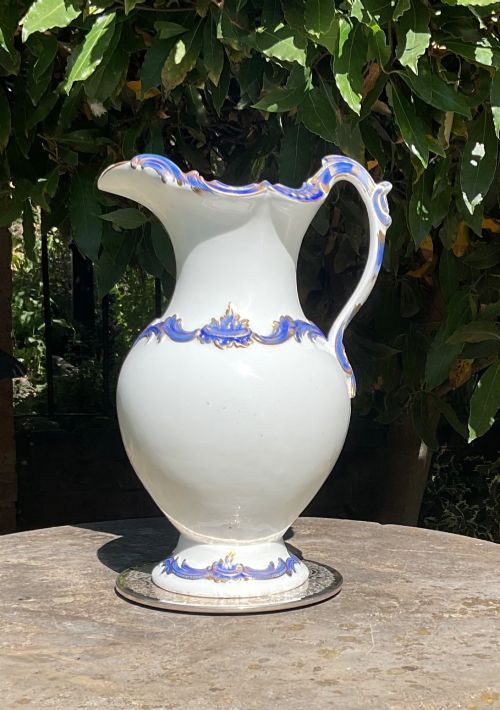
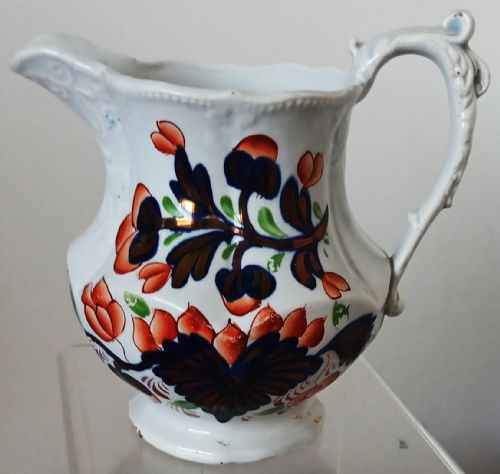
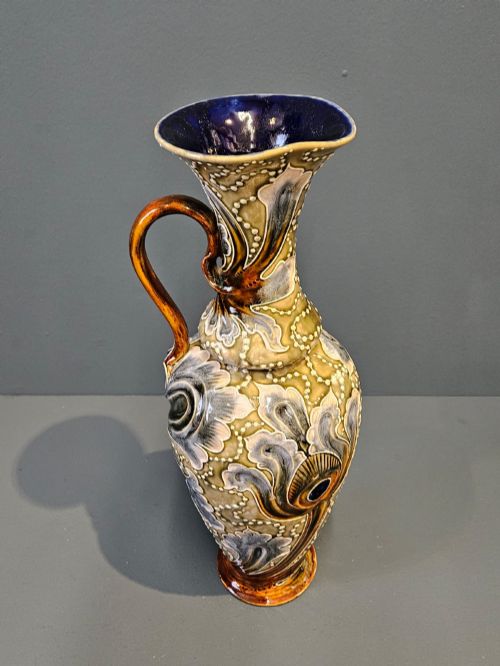
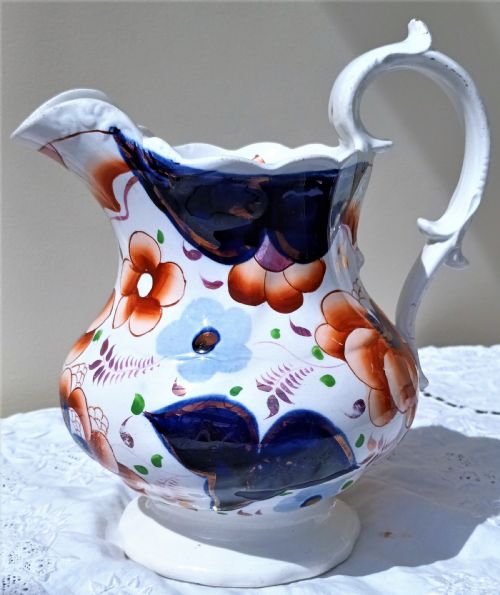
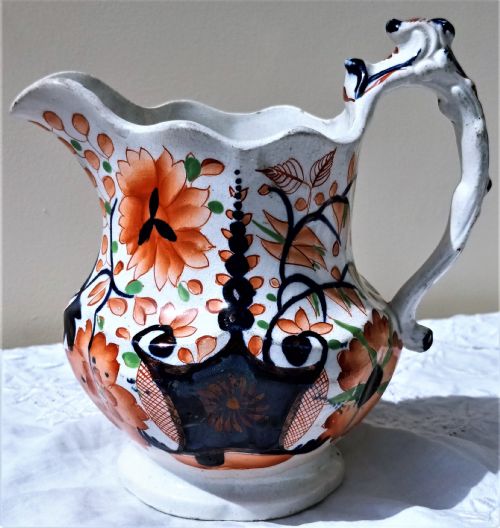
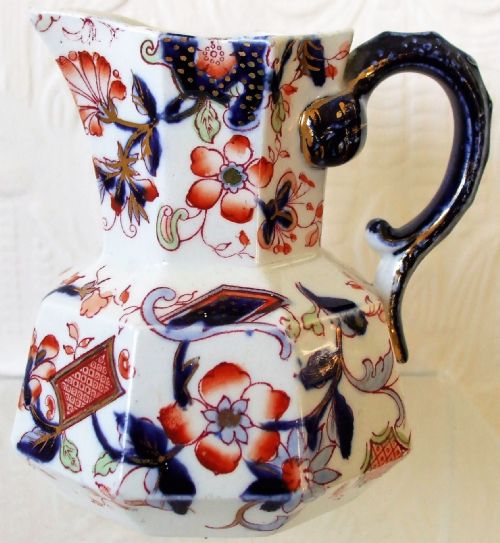
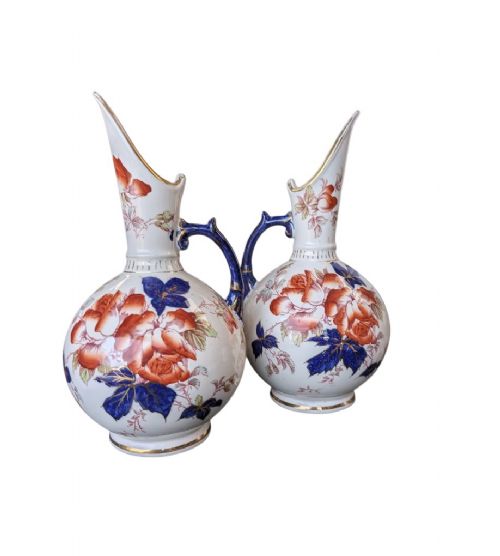
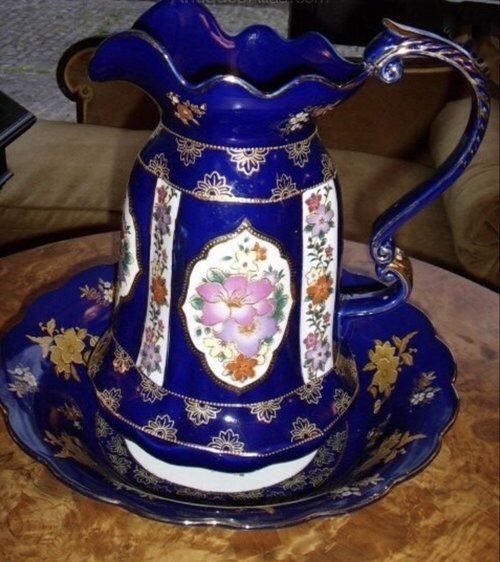
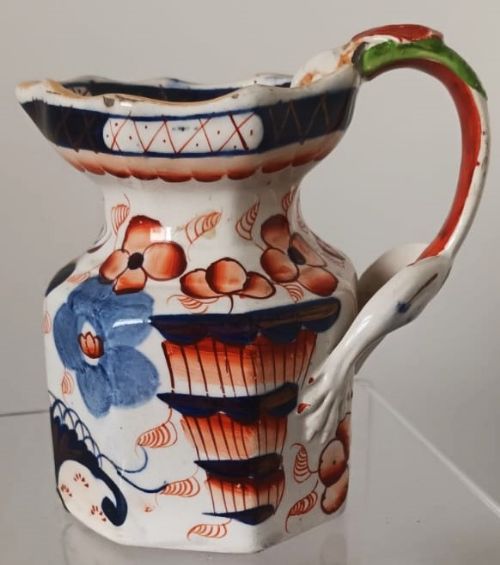
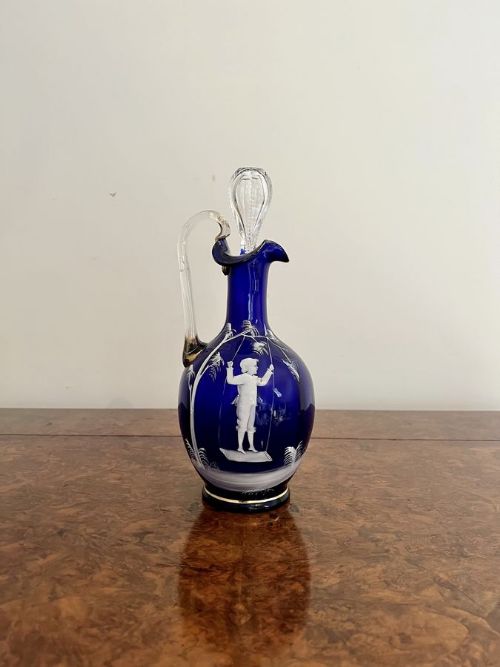
The versions you are most likely to meet on this page include nineteenth century Gaudy Welsh pottery jugs featuring patterns like Grape, Drape, Pagoda, and Gwent, alongside Doulton Lambeth ware and Victorian porcelain water jugs. Styles range from Victorian Arts and Crafts and Rococo Revival to Japanese Imari aesthetics.
Each piece demonstrates the versatility of cobalt blue within ceramic traditions, whether applied to large nineteenth century porcelain water jugs or salt glaze water jugs with lids. The selection reflects diverse origins, from English potteries to Japanese decorative pitchers.
Materials and construction
These jugs rely on ceramic bases such as earthenware, stoneware, and porcelain, shaped into pitchers, ewers, and pouch jugs. Makers applied cobalt glaze to achieve the characteristic deep blue coloration before firing.
Surface decoration frequently incorporates enamel, gold leaf, and gilt details over the glaze, adding intricate patterns to the ceramic body. Salt glaze techniques also appear on specific stoneware pieces, creating a distinct textured finish.
Manufacturing methods combine traditional pottery shaping with careful hand-painting and glazing, evident in pieces from Doulton Lambeth and various nineteenth-century English potteries.
The documented periods range across the nineteenth century, Victorian era, and specific years from 1860 to 1930.
Assessing quality and execution
Quality in these jugs depends on the precision of the cobalt glaze application and the clarity of the underlying ceramic body, whether porcelain, earthenware, or stoneware. Superior examples display even coloration without pooling or fading.
The refinement of hand-painted details, such as enamel work, gold leaf, and gilt highlights, separates standard utility items from finer decorative exhibition pieces. Form and balance also dictate worth, with well-proportioned handles and spouts showing superior craftsmanship.
Doulton Lambeth·Keeling and Co·Royal Doulton·Coalport·Mary Gregory
The Decorative Cobalt Jug Glossary
- Cobalt glaze
- A metallic oxide mixture applied to ceramics to produce a rich, deep blue colour during the firing process. It remains stable at high temperatures.
- Ewers
- Large jugs featuring a wide spout and a substantial handle, traditionally used for holding water rather than serving drinks. Many examples survive as decorative display pieces.
- Salt glaze
- A vitreous coating of sodium silicate formed by throwing common salt into the kiln during high-temperature firing. This creates a characteristic orange-peel texture on stoneware.
- Gaudy Welsh
- A style of colourful pottery produced in Wales and Staffordshire during the nineteenth century, known for cobalt blue, iron red, and copper lustre decoration.
- Gilt
- A thin layer of gold applied to the surface of porcelain or pottery for decorative enrichment. It is often combined with enamel and cobalt blue.
Decorative Cobalt Jug: Frequently Asked Questions
What is a decorative cobalt jug?
A decorative cobalt jug is a ceramic, porcelain, or stoneware pitcher or ewer coloured with rich blue cobalt glaze. These pieces were produced across the nineteenth and early twentieth centuries.
They serve primarily as ornamental items or historic display objects rather than everyday kitchenware.
How do I date a Victorian jug?
Dating relies on maker marks, ceramic bodies, and decorative styles recorded in the manufacturing history. Nineteenth-century pieces often feature specific glazing techniques and pattern names.
Victorian examples frequently combine cobalt glaze with enamel, gilt, or gold leaf embellishments typical of the period.
Were these jugs used for water?
Many larger examples functioned as water jugs, washstand set components, or ewers for domestic use. Over time, their role shifted entirely to decorative display.
Sturdier stoneware and salt glaze versions were designed for practical liquid storage, while delicate porcelain pieces were ornamental from creation.