
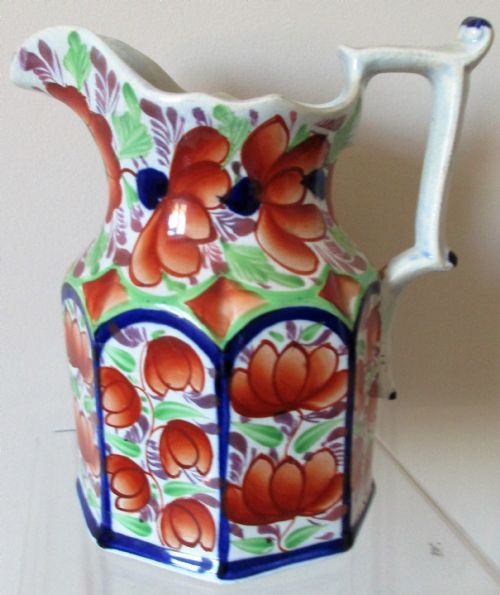


Victorian Floral Porcelain Pitcher
These Victorian floral porcelain pitcher examples combine floral decoration with functional ceramic pouring forms, prized for their decorative appeal on washstands and sideboards.
Victorian Floral Porcelain Pitcher
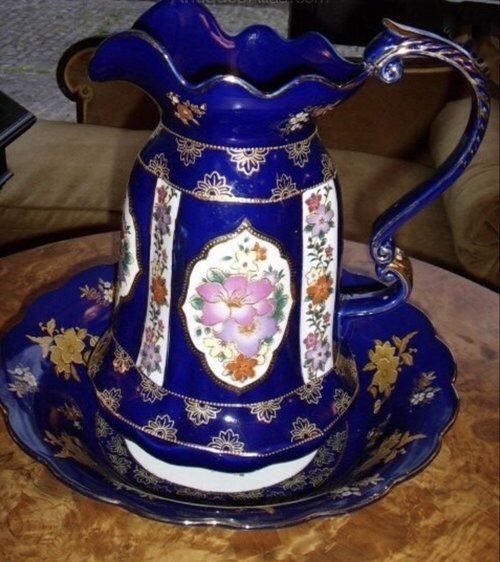
A victorian floral porcelain pitcher brings together domestic utility and decorative display, appearing in forms ranging from standalone pouring vessels to complete washstand sets with matching bowls. These pieces emerge primarily from the nineteenth century into the early twentieth century, carrying floral motifs across diverse shapes.
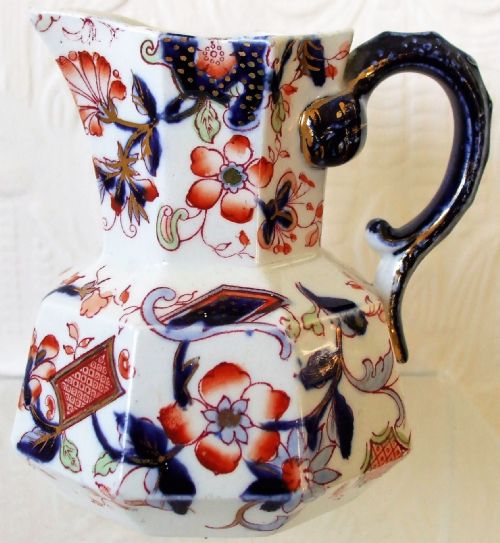
The selection here includes specific pouring forms such as ewers, cleft jugs, and Hydra jugs alongside larger bathroom sets. Makers apply flower designs either as hand-painted details or through transfer printing, often paired with colours like cobalt blue or blush ivory.
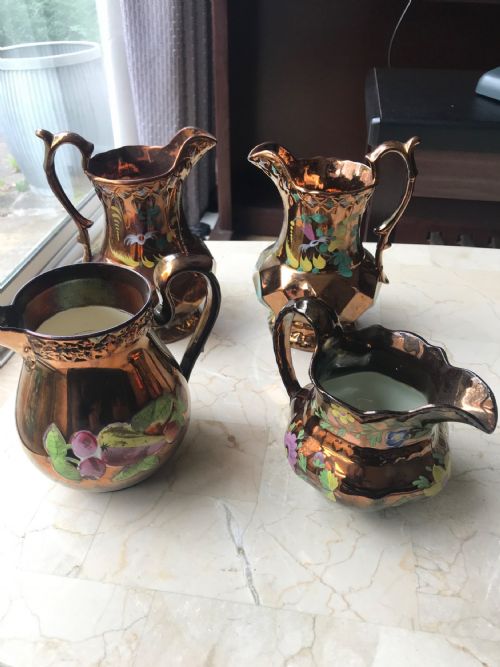
Buyers encounter traditional Victorian styles alongside Edwardian pieces, ranging from diminutive cabinet items to large chamber or washing vessels. Each piece reflects the domestic habits and decorative tastes of its period.
Determinants of quality
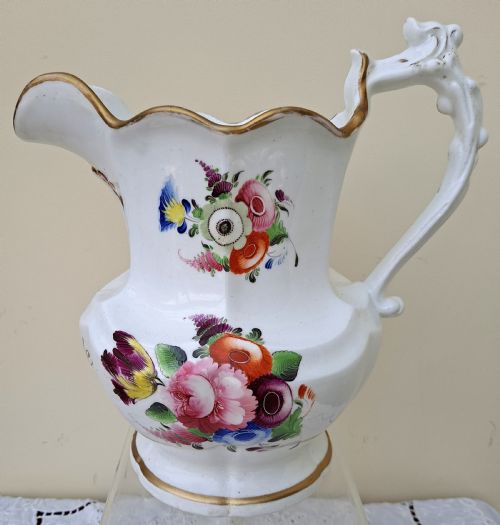
Quality rests upon the crispness of the modelling, especially on moulded shapes like cleft jugs and ewers where sharp relief defines the silhouette. Finer pieces display careful hand-painting in the floral motifs rather than simple transfer prints.
The application of gilding and gold leaf also separates standard production from superior examples, with better pieces showing precise brushwork and well-preserved metallic lustre. Potteries known for high-standard porcelain bodies and complex glaze work naturally produce the most refined vessels.
Miniature jugs measuring only a few inches tall allowed Victorian children to practice proper tea-pouring etiquette.
Keeling and Company·John Baley·Masons·Royal Worcester·Doulton Burslem
The Victorian Floral Porcelain Pitcher Glossary
- Ewer
- A large ornamental jug with a flared spout and an arched handle, historically used for washing or as a decorative display piece.
- Hydra jug
- A specific ceramic jug form featuring a distinctive looped handle and a broad pouring lip, produced by various English potteries.
- Blush ivory
- A speciality ceramic finish developed by potteries like Royal Worcester, showing soft cream and peach tones beneath floral decoration.
- Gilding
- The application of gold leaf or gold paint to ceramic surfaces, highlighting rims, handles, and raised ornamental details.
- Washstand set
- A matching group comprising a large pitcher and a deep basin, designed for bedroom washing before plumbed bathrooms became standard.
Victorian Floral Porcelain Pitcher: Frequently Asked Questions
What is a ewer?
A ewer is an ornamental pitcher characterised by an elongated spout, a curved handle, and often a pedestal base. These vessels served both decorative functions and practical washing duties in period homes.
Unlike standard milk or water jugs, ewers were frequently displayed on sideboards or paired with basins as part of washstand sets.
How do I date these pitchers?
Dating relies on maker marks, ceramic bodies, and stylistic indicators such as the use of blush ivory finishes or transfer-printed floral patterns. Nineteenth-century pieces often display specific registry marks or factory stamps on the underside.
Edwardian examples tend to show lighter floral palettes and different glaze formulations compared to earlier Victorian production.
Were these pitchers used daily?
Many pitchers formed part of washstand sets used for morning ablutions in bedrooms before modern plumbing. Smaller jugs handled water or milk at the dining table.
Decorative ewers and pedestal versions, however, served primarily as ornamental display objects in parlours and drawing rooms.
What is blush ivory?
Blush ivory is a matte ceramic ground developed during the Victorian period, presenting soft cream and peach tones that imitate ivory. Potteries applied floral painting directly onto this tinted surface.
The technique creates a subtle background that highlights hand-painted flower designs and gold leaf detailing.