


Antique Porcelain Coffee Pot
These antique porcelain coffee pot examples offer refined historic service, bringing traditional craftsmanship and hand-painted artistry straight to your table.
Antique Porcelain Coffee Pot
An antique porcelain coffee pot represents a focused vessel type designed for serving hot coffee in domestic interiors across the eighteenth, nineteenth, and twentieth centuries. When you search for an antique porcelain coffee pot, you encounter standalone pots alongside larger sets that include matching covers and service components.
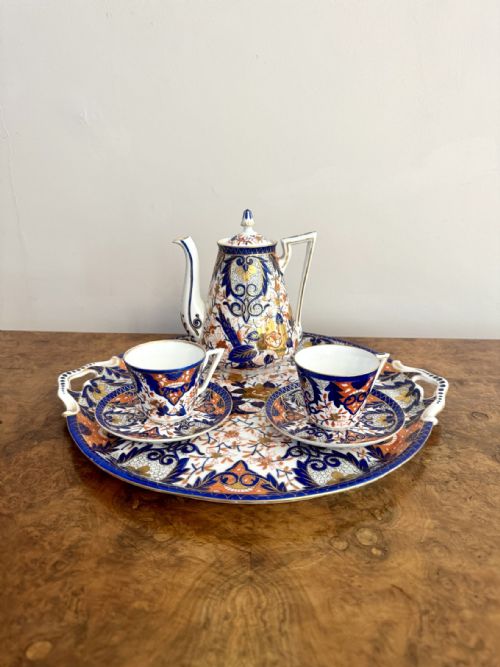
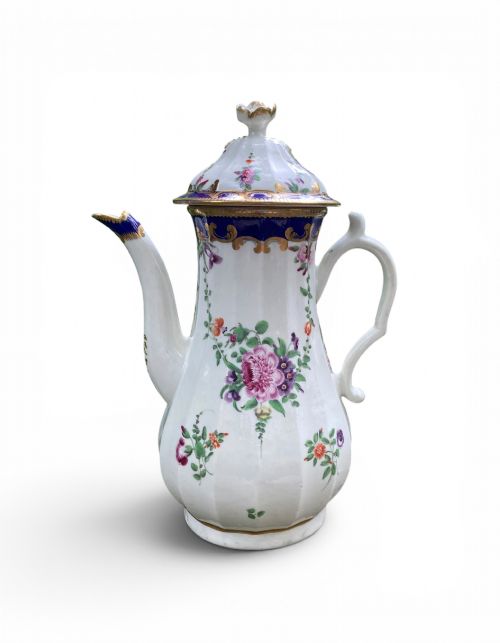
The examples recorded here span diverse eras from the mid-eighteenth century onward, incorporating Victorian Imari, Georgian, Rococo, Neoclassical, and Art Deco styles. You are most likely to meet nineteenth-century English and continental productions, often featuring refined floral motifs or hand-painted gilding.
Many items function as part of broader coffee services, tea and coffee sets, or intimate tête-à-tête configurations. Each piece reflects the social rituals of its period, balancing functional capacity with decorative ceramic artistry.
How they were made
Potteries shaped these vessels using fine ceramic pastes, including traditional porcelain and bone china, fired at high temperatures to achieve durable bodies. Artisans frequently applied gold leaf, gilding, and gold gilt to handles, spouts, and rims for ornamental contrast.
Decoration relied heavily on enamel painting, cobalt enamel, and handpainted details executed by skilled ceramic artists. Covers were wheel-thrown or slip-cast to fit precisely atop each pot, maintaining thermal retention during service.
Antique Porcelain Coffee Pot Retail Price Guide 2026
Typical asking prices for porcelain coffee pot among the pieces listed under this phrase on Sellingantiques today, from the lower quarter to the upper quarter. They describe what is for sale here now, not the wider market.
The enduring popularity of the Blue Onion pattern means you might pour your morning brew from a design that has mocked actual onions for centuries.
What varies in quality
Excellence in these vessels often lies in the precision of the hand-painted brushwork and the crispness of the moulded details, particularly across Rococo scrolls or Neoclassical panels. Superior pieces demonstrate exceptional control over cobalt enamel and gold leaf application without blurring or fading.
The prominence of the maker and the sophistication of the ceramic paste dictate the upper tier of the range. Master painters signing their work elevate the artistic standing of a vessel far beyond standard factory output.
Royal Worcester·Coalport·Ahrenfeldt & Asalvary·Russian Imperial Porcelain Manufactory·KPM·Meissen
The Antique Porcelain Coffee Pot Glossary
- Porcelain
- A white, vitrified ceramic material made from kaolin and petuntse, fired at high temperatures to create a hard, non-porous body. It forms the essential substrate for nearly all pots on this page.
- Bone China
- A type of porcelain incorporating bone ash into the ceramic paste, yielding a milky, translucent body prized for refined domestic wares. It gained widespread popularity in nineteenth-century English manufacture.
- Gilding
- The application of gold leaf or powdered gold to the surface of ceramic wares for decorative enrichment. Artisans often burnished the gold to create contrasting matte and bright finishes.
- Cobalt Enamel
- A deep blue metallic oxide pigment applied under or over the glaze before firing, remaining stable at extreme temperatures. This pigment creates the intense blue tones seen in traditional onion patterns.
- Imari
- A decorative style originating in Japan and widely copied by European potteries, characterised by a palette of underglaze blue, iron red, and abundant gilding. Victorian examples adapt these vibrant orientalist schemes to standard coffee pot forms.
Antique Porcelain Coffee Pot: Frequently Asked Questions
How do I date an antique coffee pot?
Dating relies primarily on factory marks stamped or painted on the underside, stylistic indicators like Rococo or Art Deco moulding, and the composition of the ceramic body. Comparing glaze textures and pattern numbers against historical records helps narrow the production window.
Changes in handle design and spout attachment also offer reliable clues to specific decades, moving from heavier Georgian forms to more delicate Victorian and Edwardian shapes.
Were these pots used daily?
Most surviving pots served formal dining or drawing-room hospitality among affluent households rather than heavy daily kitchen duties. Their survival in good condition often stems from careful storage in display cabinets or service cupboards between social gatherings.
While some show signs of active wear around the rim and handle, many retain pristine gilding indicating sparing use on special occasions.
What is a tête-à-tête service?
A tête-à-tête service is a small, intimate coffee or tea set specifically designed for two people, typically comprising a coffee pot, a small cream jug, a sugar bowl, and two cups with saucers. These compact sets were popular for private parlour conversations or bedroom service.
The Russian Imperial example listed here illustrates the grand scale at which such private palace sets were occasionally executed.