


Cobalt Blue Porcelain Tray
A cobalt blue porcelain tray brings deep cobalt richness and crisp white ceramic together on a table, prized for serving coffee or displaying small treasures.
Cobalt Blue Porcelain Tray
A cobalt blue porcelain tray serves as a striking functional piece or a decorative display dish, appearing across nineteenth-century and early twentieth-century periods. These items range from shaped serving platters and cabaret trays to intricate inkstands and fan-shaped dishes created by major European and Asian makers.
Makers drew upon diverse design languages including Regency elegance, Victorian Rococo Revival, and Japanese Imari palettes. Buyers most frequently encounter English bone china and porcelain alongside French Sevres and Chinese export wares on this page.
Forms vary from oval serving dishes to miniature solitaire sets and shell-shaped plates, each utilising rich cobalt glaze as a foundational colour. Such pieces reflect the shifting tastes of Victorian and Edwardian households towards ornate, painted tabletop ceramics.
Materials and technique
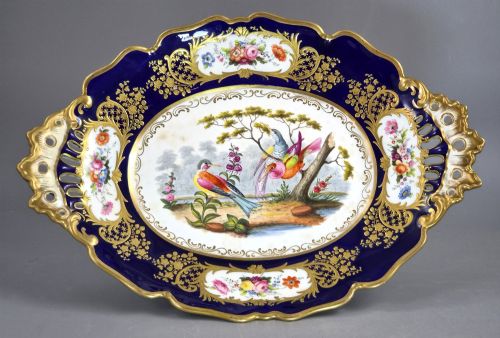
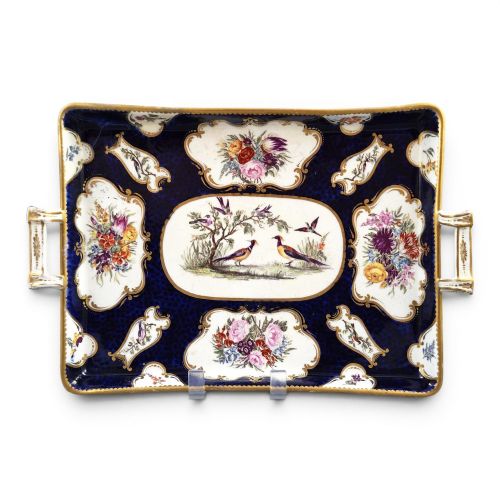
Craftsmen shaped porcelain and bone china bodies before applying cobalt glaze to achieve the signature deep blue coloration under high-temperature firing. Enamel colours and gilding or gold leaf were subsequently hand-painted onto the glazed surface to create detailed motifs of exotic birds, florals, and Imari patterns.
Many items incorporate delicate hand-painted artistry by named artists, while others display moulded relief work or pierced borders shaped into intricate forms. Artisans balanced traditional Chinese and Japanese aesthetic influences with European factory standards in porcelain production.
Listings feature 19th century, Victorian, Regency, and Edwardian periods across porcelain, bone china, earthenware, and enamel materials.
Quality and craftsmanship
Quality rests in the precision of the hand-painted brushwork, particularly in complex floral, bird, or Imari designs where fine detail separates standard wares from superior examples. The crispness of porcelain moulding, the depth of the cobalt glaze, and the preservation of hand-applied gold leaf heavily influence the distinction between standard production and fine pieces.
The sophistication of the ceramic body and the prestige of the producing factory, from English porcelain works to continental Sevres or Dresden ateliers, dictate the standing of individual trays and dishes.
Royal Crown Derby·Coalport·Spode·Minton·Royal Worcester·Dresden Helena Wolfsohn
The Cobalt Blue Porcelain Tray Glossary
- Cobalt Glaze
- A vitreous blue ceramic coating applied to porcelain before firing to achieve deep, permanent coloration. This glaze withstands high kiln temperatures without losing its characteristic intensity.
- Imari
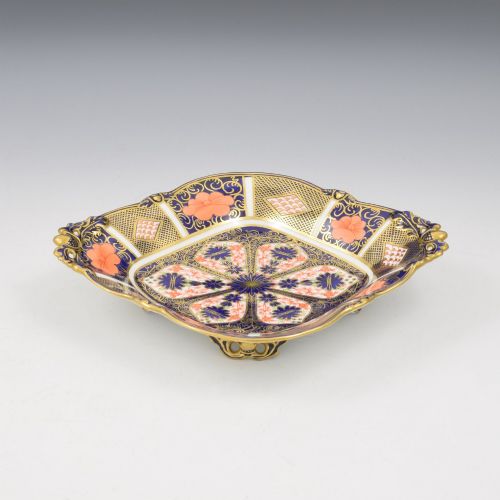
- A decorative style originating in Japan and widely copied by European porcelain factories, using cobalt blue, iron red, and gold. These patterns often incorporate intricate panels of florals and brocade motifs.
- Gilding
- The application of gold leaf or powdered gold paint to ceramic surfaces to highlight rims and handles. Skilled artisans burnished the metal to create a bright metallic contrast against the cobalt glaze.
- Bone China
- A type of porcelain incorporating animal bone ash for added strength, translucency, and whiteness. English factories utilised this material extensively for nineteenth-century tea and coffee wares.
- Cabaret Tray
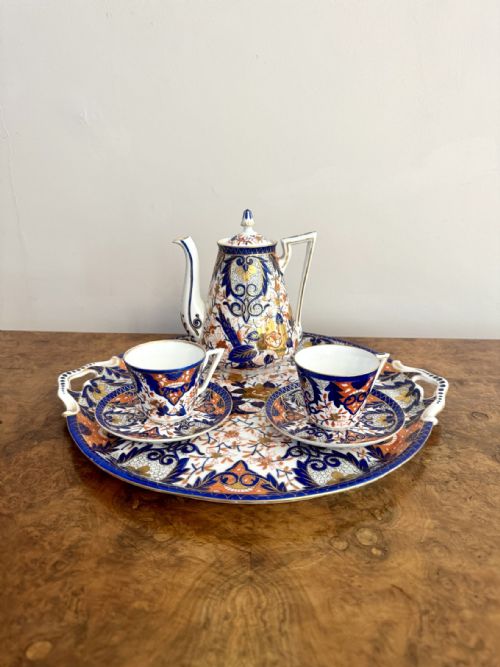
- A small specialised serving tray designed to hold a matching coffee pot, creamer, and cups for intimate service. These sets represent high-status social rituals of the Victorian period.
Cobalt Blue Porcelain Tray: Frequently Asked Questions
How were cobalt blue porcelain trays used?
These items served during formal afternoon tea or coffee services to carry small pots, cups, and sugars safely between rooms. They also functioned as decorative display dishes on sideboards or dressing tables to hold small valuables.
Over time, their roles shifted from active kitchen and parlour service to cabinet display pieces prized for their painted surfaces and rich cobalt tones.
How do I identify Regency pieces?
Regency ceramics often feature clean classical forms, sophisticated moulded details, and restrained floral or exotic bird painting influenced by contemporary neoclassical tastes. Makers from this era typically employed refined bone china bodies with precise cobalt underglaze work.
Look for specific pattern numbers and early nineteenth-century factory marks stamped or painted directly onto the unglazed base of the dish.
What is Japanese Imari influence?
Japanese Imari influence refers to the distinctive decorative scheme featuring deep cobalt blue underglaze combined with iron red and gold overglaze painting. European factories adopted these vibrant colour palettes during the nineteenth century to satisfy growing demand for Eastern aesthetics.
These designs typically present complex geometric borders surrounding central floral or shell motifs on fan-shaped or circular plates.