
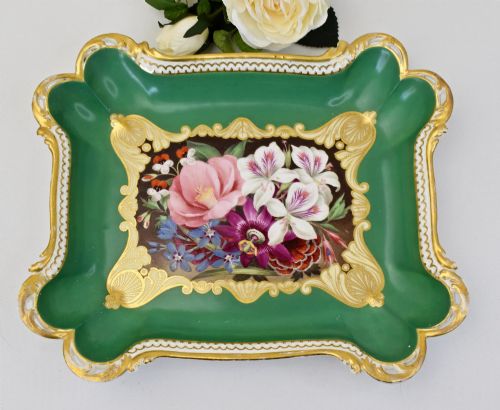


19th Century Porcelain Tray
These 19th century porcelain tray pieces are refined serving and decorative items designed to bring painted artistry and gilded detail into domestic interiors.
What 19th century porcelain tray examples exist
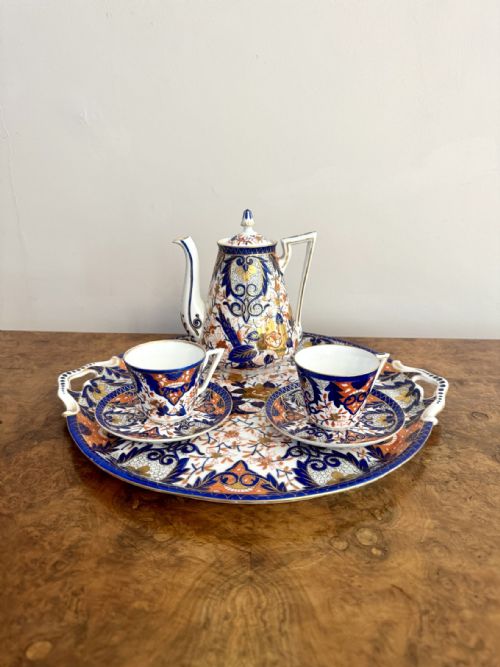
A 19th century porcelain tray encompasses various forms including oval dishes, serving plates, pen trays, and large framed decorative platters. Pieces span the Georgian, Regency, and Victorian periods, reflecting shifting interior tastes throughout the century.
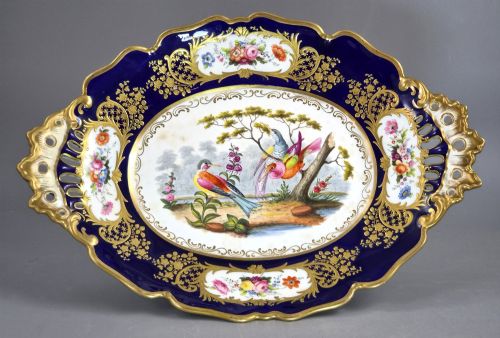
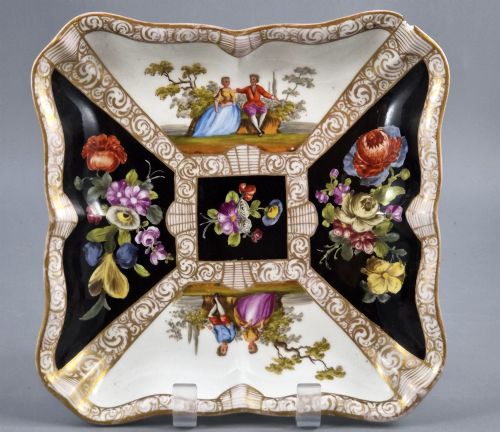
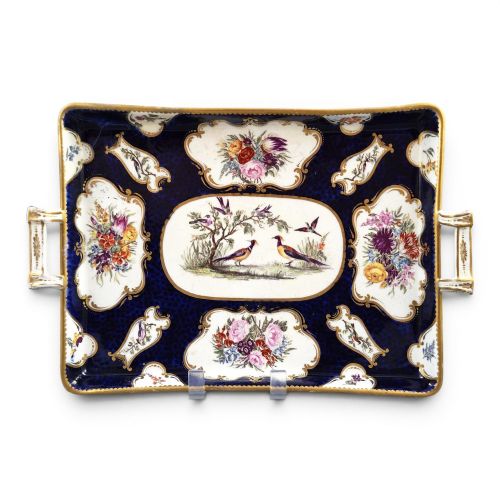
The most common items found on this page are mid-19th century English and continental examples, often decorated with hand-painted birds, classical figures, or intricate cobalt and gold borders in revival styles.
Makers and traditions range from Derby and Coalport to Worcester and Vienna, displaying forms that bridge functional table service and purely decorative display.
Materials and construction methods
These items utilise high-fired ceramic paste combined with rich polychrome enamel painting and extensive gilding, sometimes incorporating applied gold leaf for heightened decorative impact.
Retail Price Guide 2026
Typical UK retail prices for 19th century porcelain tray, calculated from the Sellingantiques database of over a million retail prices indexed since 2003. This retail price guide relies exclusively on Sellingantiques data; no external sources or auction records are used, so the figures do not describe the wider market.
Bacchus and Ariadne occasionally share a ceramic tray with exotic birds and family crests.
Determinants of quality
Quality rests principally on the precision and artistry of the hand-painted imagery, separating mass-produced transfer-printed items from finely executed artist-painted scenes.
The crispness of the porcelain moulding, the depth and purity of cobalt blue grounds, and the preservation of hand-applied gilding distinguish finer pieces from standard production.
Coalport·Derby Porcelain·Vienna
The 19th Century Porcelain Tray Glossary
- Cobalt Blue
- A deep blue metallic oxide pigment used under the glaze to create rich background colours and borders on porcelain.
- Rococo Revival
- A decorative style popular during the Victorian era featuring asymmetrical scrolls, naturalistic motifs, and elaborate C-scroll borders.
- Gilding
- The application of gold or gold leaf to the edges, handles, and borders of a porcelain tray to enhance its visual splendour.
- Enamel
- Opaque glass-like pigments painted onto the glazed surface of the porcelain and fired to achieve permanent colourful decoration.
Frequently Asked Questions
What were porcelain trays used for?
These pieces served multiple domestic functions, from presenting visiting cards and holding writing implements on desks to serving sweetmeats or simply acting as decorative display items in drawing rooms.
Larger examples were framed and hung on walls or exhibited on cabinets to showcase intricate hand-painted mythological or botanical scenes.
How do I date a 19th century tray?
Dating relies on identifying the stylistic markers of periods such as Georgian, Regency, and Victorian Rococo Revival, alongside factory marks where present.
Examining the type of porcelain paste, the application of gilding, and the painting palette provides further clues to whether a piece originates from the early or late nineteenth century.
How should I clean porcelain trays?
Maintenance requires gentle dusting with a soft, dry cloth to protect fragile surface enamels and delicate gold leaf detailing from abrasion.
Submerging antique porcelain in water or using chemical cleaning agents should be strictly avoided to preserve the integrity of the antique glaze and pigments.
Are these trays suitable for serving food?
While originally designed for functional domestic use, many surviving pieces have delicate hand-painted surfaces and delicate gilding that make them better suited for decorative display.
Using them for serving food risks wearing away historic enamels and gold leaf built up over generations.