
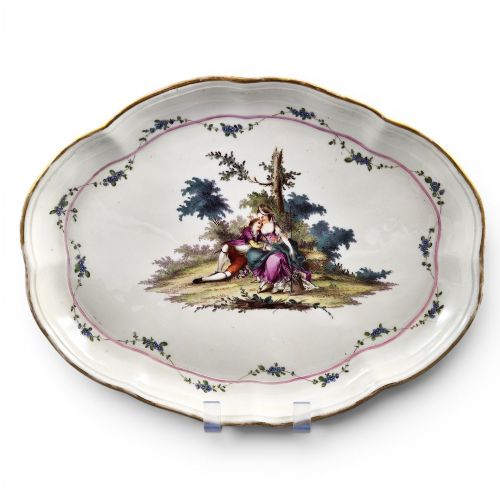
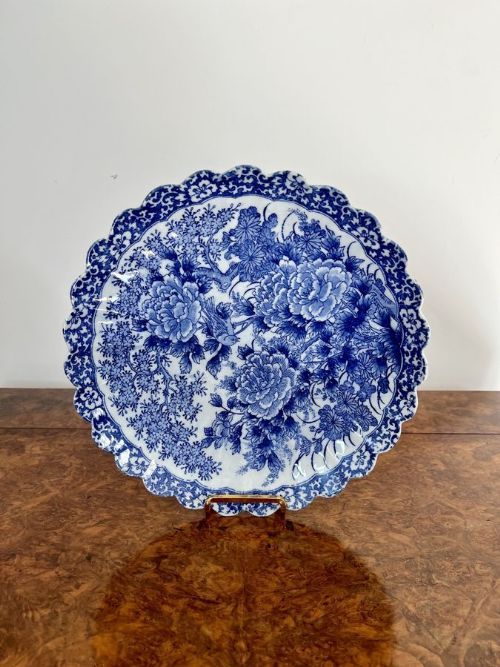


Antique China Platter
An antique china platter brings eighteenth and nineteenth century craftsmanship to the dining table, offering generous proportions for serving family joints and gathering guests.
Antique China Platter
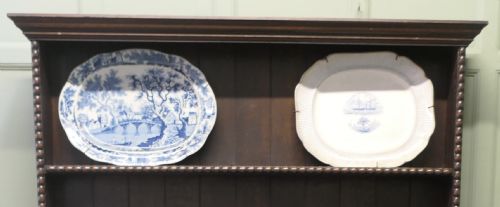
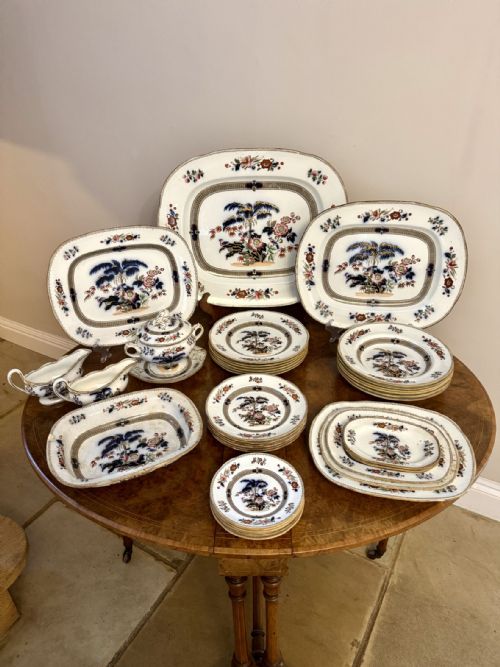
When you search for an antique china platter, you are looking at large ceramic serving vessels designed for presentation at the table during the Georgian, Regency, and Victorian periods. These pieces span standard oval meat platters, deep serving dishes, and specialised forms like platter drainers designed to catch juices.
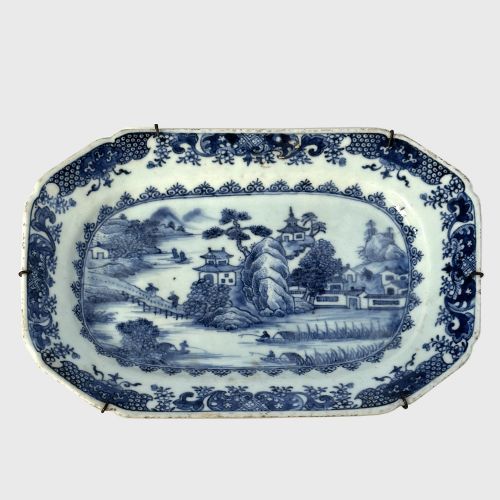
The versions you will most frequently meet on this page hail from English factories like Spode, Wedgwood, and Copeland, alongside Chinese export wares made for Western markets. They range from robust ironstone transfer-printed with blue and white scenes to finely painted porcelain decorated with botanical studies and hand-coloured flowers.
Forms adapt to the dining customs of their era, shifting from deep octagonal dishes intended for large communal feasts to expansive meat platters shaped to accommodate carved roasts. Collectors encounter everything from plain earthenware drainers to gilded porcelain serving trays intended for dessert courses.
How they were made
Potters shaped these vessels using earthenware, porcelain, and durable ironstone bodies, often throwing them on wheels or pressing them into moulds. Ironstone provided a sturdy, vitrified base suited to heavy daily use, while fine porcelain allowed for thin walls and translucent glazes.
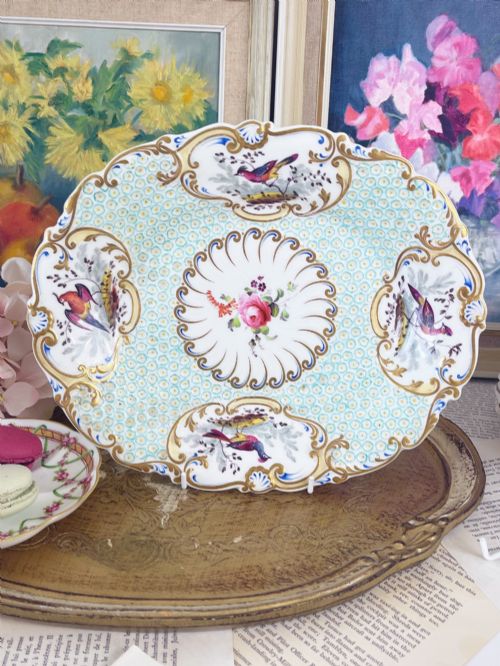
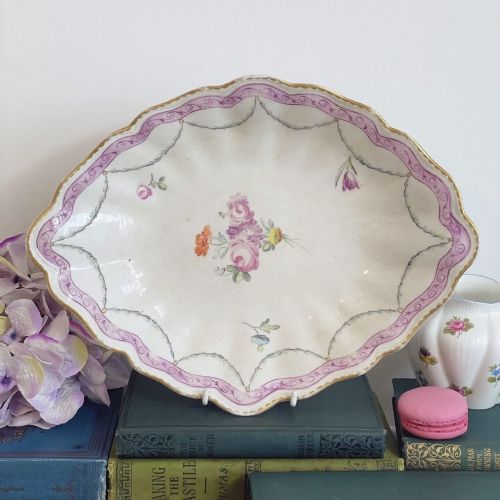
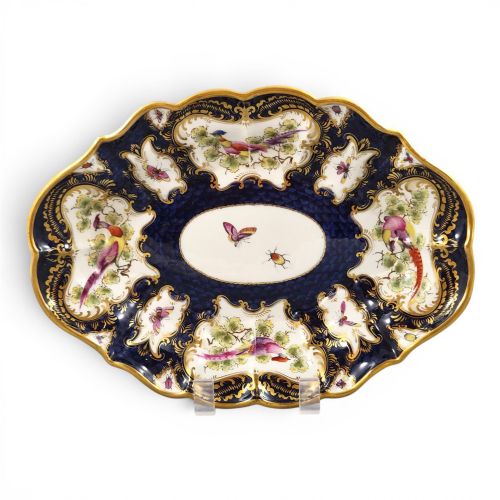
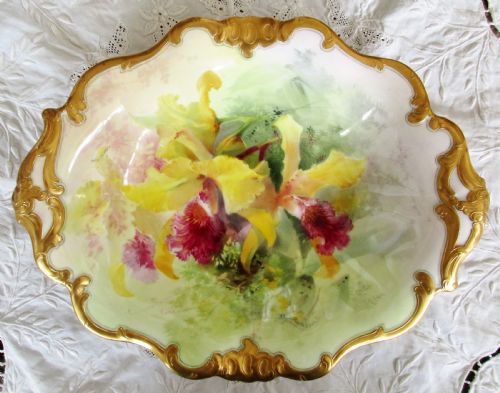
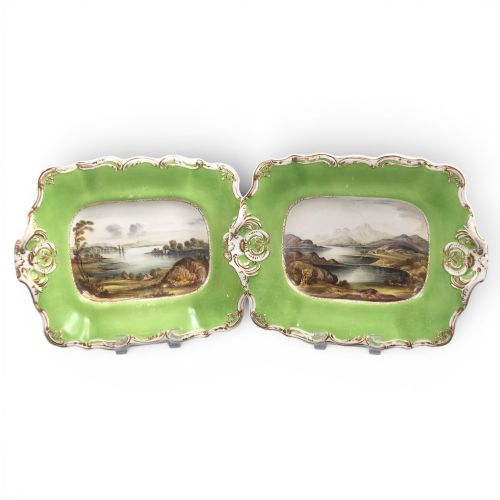
Decoration relied on underglaze blue transfer printing or meticulous hand-painting using polychrome enamels and gold leaf highlights. Workers applied intricate patterns before firing the pieces in kilns to fuse the glaze permanently to the ceramic body.
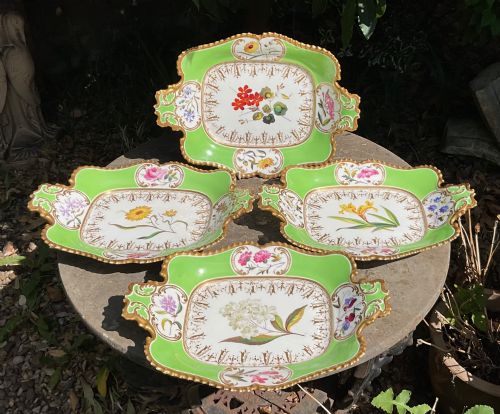
Listings for antique china platter feature robust ironstone, refined porcelain, and creamware bodies decorated with transfer-printed landscapes and hand-painted botanical studies.
What varies in quality
The refinement of the ceramic body and the crispness of the painted or printed transfer set the baseline for quality. Finer platters exhibit thinner walls, translucent porcelain bodies, and precise brushwork that reveals the hand of a skilled decorator rather than a hurried factory operative.
Composition and balance dictate the aesthetic success of a piece, with superior examples displaying harmonious borders and well-centred motifs that command the eye. The stability of the glaze and the preservation of any gilt accents also separate everyday utilitarian wares from high-status cabinet pieces.
Royal Crown Derby·H and R Daniel·Chamberlains Worcester·Wedgwood·Royal Worcester·Royal Doulton·John Davenport of Longport·Copeland and Garrett·Joseph Gaspard Robert·Rockingham Pottery·Booths·Spode·Pucher Deroche·Coalport·Minton·Hicks Meigh and Johnson·Mason·Bow Porcelain
The Antique China Platter Glossary
- Ironstone
- A heavy, durable ceramic body patented in the nineteenth century to imitate Chinese porcelain while offering greater resistance to chipping. It provides a sturdy foundation for heavy meat platters.
- Transfer printing
- A mechanical decoration technique where an engraved copper plate transfers a design onto tissue paper, which is then pressed onto the ceramic biscuit. This allowed factories to produce uniform blue and white patterns efficiently.
- Flow blue
- A nineteenth-century ceramic decoration style where cobalt blue ink deliberately blurred into the surrounding white glaze during the kiln firing. This created a hazy, ethereal effect popular in domestic dinner services.
- Imari
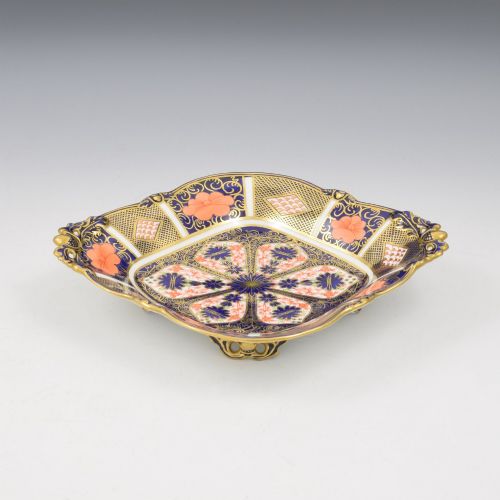
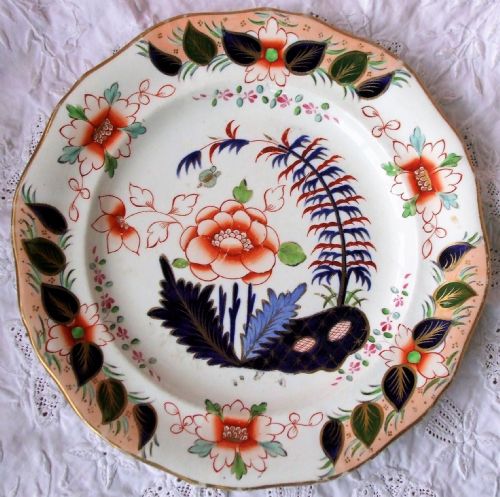
- A decorative style inspired by Japanese export wares featuring iron-red, cobalt blue, and gilt highlights. English potteries frequently reinterpreted these striking colour palettes on their own porcelain and ironstone dishes.
- Platter drainer
- A perforated ceramic insert that fits inside a serving dish to elevate meat above accumulated juices. These scarce items were essential for carving roasts cleanly at the Victorian dining table.
Antique China Platter: Frequently Asked Questions
How do I date an antique platter?
Dating relies on combining the factory backstamps underneath the glaze with the stylistic clues of the border patterns and ceramic body. Early nineteenth-century pieces often feature impressed factory marks rather than printed names.
Changes in ceramic technology, such as the introduction of heavy ironstone bodies in the Regency era, also help narrow down the decade of production.
Can I use these platters for serving food?
Most antique china platters remain entirely functional for serving dry foods, cold meats, and fruits at the modern dining table. Traditional earthenware and ironstone are robust enough for gentle handling during meals.
Avoid exposing fine gilded porcelain or fragile eighteenth-century enamel pieces to acidic foods, harsh dishwasher cycles, or sudden thermal shocks.
What caused the blue blur on some plates?
The hazy effect known as flow blue was an intentional chemical reaction achieved by introducing volatile ammonia chloride into the kiln atmosphere during firing. This caused the cobalt pigment to bleed softly into the liquid glaze.
Potters embraced this technique during the mid-nineteenth century to give transfer-printed dinnerware a richer, atmospheric depth.
How are meat platters different from dinner plates?
Meat platters were manufactured in much larger, elongated oval or octagonal formats specifically designed to present whole joints of poultry, beef, or game at the centre of the table. Their expansive surfaces often incorporated recessed wells or channels to gather carving juices.
Standard dinner plates remained smaller and round, intended for individual portions rather than communal presentation.