
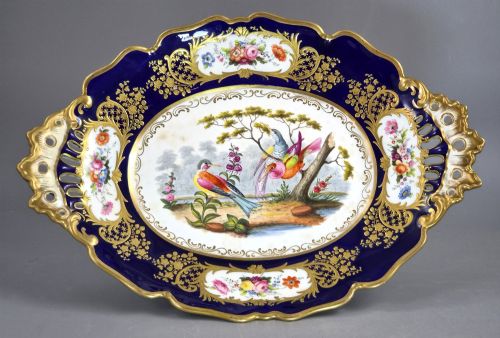
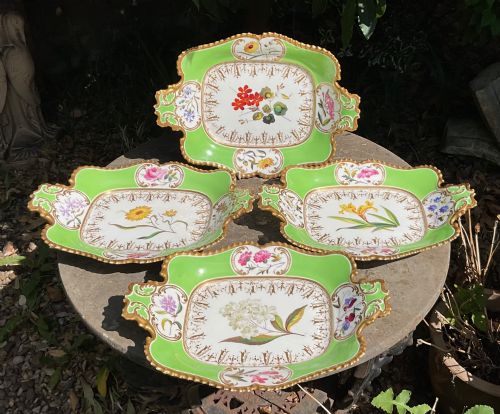


Hand Painted Botanical Platter
These hand painted botanical platter examples combine floral artistry with functional ceramic history, offering refined serving vessels for the table.
Hand Painted Botanical Platter
A hand painted botanical platter represents functional ceramics designed to serve food while displaying detailed floral subjects. Buyers seeking a hand painted botanical platter look for decorative dishes, serving platters, and wall chargers produced across the Georgian, Regency, and nineteenth-century periods.
The pieces on this page span English, European, and Japanese production, including hard-paste porcelain and enamel-decorated serving dishes. You will encounter forms ranging from cabinet plates and ribbon trays to large serving plates finished with gilt accents and botanical motifs.
Materials and construction
Makers utilised hard-paste porcelain and enamel to build durable bodies capable of holding detailed pigment layers. Artisans applied hand-painted botanical subjects directly onto the ceramic surface before firing.
Gilding and gold leaf often frame the central floral decoration, adding reflective borders to the edges of plates and platters. These metallic highlights complement the polychrome enamels used for the botanical subjects.
Some nineteenth-century birds were painted with such lively expressions they appear ready to fly off their plates.
Judging quality in painted platters
Quality rests upon the precision of the botanical painting and the finesse of the brushwork across the ceramic surface. Superior examples display botanical accuracy and confident pigment application without stiff outlines.
The application of gilding and the quality of the porcelain body further separate standard items from finer pieces. A balanced composition and well-preserved enamel colours indicate higher craftsmanship.
Coalport·Chamberlains Worcester·Spode·Copeland·Royal Crown Derby·Meissen·KPM·Herend
The Hand Painted Botanical Platter Glossary
- Hard-paste porcelain
- A dense, vitrified ceramic made from kaolin and petuntse fired at high temperatures. This material forms a durable base for detailed botanical painting.
- Enamel
- Opaque glass-like pigments fused to the ceramic surface during a secondary low-temperature firing. Enamels provide the vibrant colours seen in floral subjects.
- Gilding
- The application of gold leaf or powdered gold to ceramic borders and handles. This technique adds decorative contrast to the painted centre.
- Cabinet plate
- A decorative ceramic plate intended for display in a cabinet rather than for daily dining use. These pieces often feature elaborate botanical scenes.
- Charger
- A large decorative plate or platter used traditionally as a base setting or for serving communal dishes. Chargers provide a wide surface area for extensive floral compositions.
Hand Painted Botanical Platter: Frequently Asked Questions
What were hand painted botanical platters used for?
These platters served food at formal dining tables during the Georgian and nineteenth-century periods. Their painted botanical subjects also allowed them to function as decorative display items.
Over time, many larger platters and chargers transitioned from dining rooms to cabinet displays or wall hanging pieces to protect their painted surfaces.
How do I identify a Georgian botanical platter?
Georgian and Regency pieces typically feature hand-painted floral motifs framed by gilt borders on hard-paste porcelain bodies. Look at the weight, glaze consistency, and form characteristics.
Makers from this era often utilised specific porcelain formulas like felspar porcelain, which help date the item alongside the painting style and backstamps.
Can I use these antique platters for serving food?
While these items were originally made for dining, modern use requires caution due to age, potential lead in historic enamels, and fragile gilding. Gentle hand washing is essential if used.
Many collectors prefer to keep antique porcelain platters for display rather than active dining service to preserve the hand-painted enamel decoration.
How should I display a porcelain charger?
Porcelain chargers and large platters look best mounted on sturdy plate stands or displayed securely on walls using padded hangers. Ensure the display location avoids direct sunlight to protect the enamel colours.
Grouping platters with matching cabinet plates creates a cohesive display that highlights different botanical species and factory styles.