
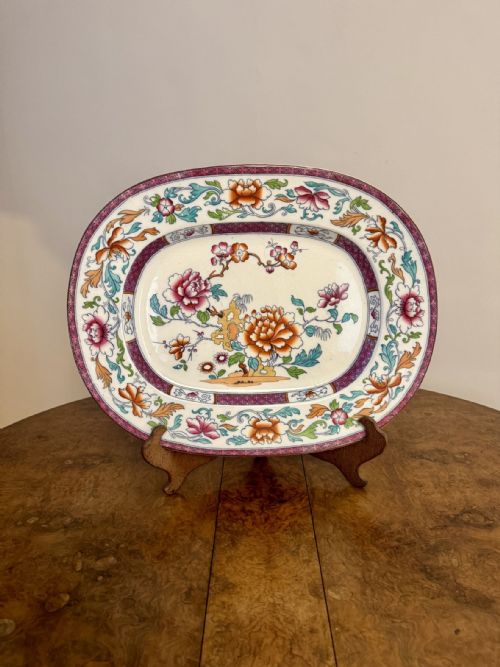
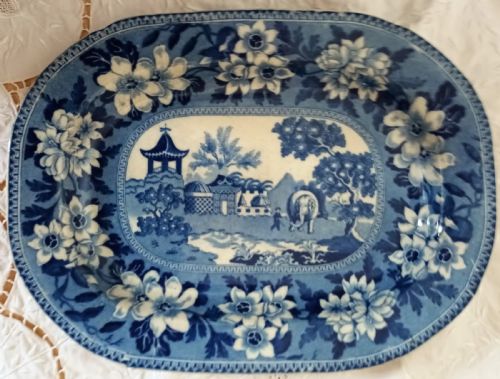


Antique Floral Meat Platter
These antique floral meat platters are robust serving vessels designed for grand dining, offering substantial historic character to your table.
Antique Floral Meat Platter
An antique floral meat platter is a large serving dish created to present joints of meat at the table. These pieces emerge from the Georgian and Victorian eras, alongside Chinese export wares of the eighteenth century. You will most frequently encounter large nineteenth-century earthenware and ironstone examples bearing transfer-printed or hand-painted botanical motifs.
Makers produced these substantial platters in rectangular, oval, and rounded shapes to accommodate heavy roasts and poultry. The selection ranges from robust utilitarian ironstone dishes fitted with drainage strainers to finely painted porcelain plates intended for display. Blue and white transfer printing dominates the available forms, though polychrome Chinese export and Imari styles appear among them.
How They Were Made
Potters formed these heavy serving dishes using durable earthenware, ironstone, or porcelain bodies capable of supporting substantial weight. Manufacturers applied detailed botanical and landscape designs through copper-plate transfer printing or direct hand-painting in enamels and cobalt blue. Artisans then sealed the ceramic bodies beneath a smooth glaze, sometimes adding gilt highlights or gold leaf to enhance the decorative borders.
Ironstone formulations provided exceptional density and strength, preventing the porous body from absorbing meat juices during grand dinners. Workshops utilised high-temperature kilns to fire the ceramic and set the glaze, resulting in a durable surface designed for practical service. Master potters shaped large serving plates with recessed wells and drainage grooves to collect juices from the roast.
Many heavy platters bear faint knife-scratch scars across their centres, left behind by Victorian carvers carving roast beef with enthusiasm.
What Varies in Quality
The sophistication of the transfer print or the precision of the hand-painted enamel botanical details distinguishes standard kitchen utility wares from exceptional dining room pieces. Crispness in the floral borders and clarity in the underlying ceramic body indicate superior manufacturing standards. Weight and thickness also vary, with denser ironstone dishes offering greater durability and substance than softer earthenwares.
The presence of specialised functional elements, such as matching ceramic drainer inserts or integrated gravy wells, separates standard serving plates from comprehensive platters. Finer examples display meticulous alignment in complex multi-transfer patterns and careful application of gold leaf accents along the rim. Maker recognition adds distinction, as established potteries maintained stricter quality control over their clay mixtures and glaze firings.
John Rogers and Son·Minton·Mason·Elkin Knight and Bridgwood
The Antique Floral Meat Platter Glossary
- Ironstone
- A heavy, durable type of earthenware patented in the nineteenth century to rival true porcelain. It resists chipping and cracking effectively.
- Transfer printing
- A decoration technique using an engraved copper plate to press a design onto tissue paper, which is then transferred to the ceramic body. This method allowed intricate floral patterns to be repeated rapidly.
- Ashet
- A Scottish term for a large serving platter or dish placed at the centre of the table for meat. You will find this word used regionally in British trade listings.
- Imari
- A Japanese-inspired decorative style featuring cobalt blue, iron red, and gold highlights on white porcelain. Staffordshire potteries frequently copied these bold motifs.
- Strainer
- A ceramic insert pierced with drainage holes that sits inside the platter to keep meat elevated above its juices. These functional components are often missing from surviving examples.
Antique Floral Meat Platter: Frequently Asked Questions
How were antique meat platters used?
These large serving dishes held whole roasts, poultry, and game joints at the dining table during formal meals. Servants brought the heavy platter to the table laden with meat before carving.
Many featured internal drainage channels or separate ceramic strainers to collect juices away from the joint. Afterward, they served as substantial display pieces on sideboard tables or dressers.
Can I use these platters for serving food?
Most nineteenth-century ironstone and glazed earthenware platters remain suitable for serving dry foods or roasted meats at the table. You should inspect the surface for deep crazing or old hairline cracks that might harbour bacteria before use.
Many collectors prefer to use them exclusively for display or dry presentation due to their age and historical value. Modern acidic foods can occasionally affect vulnerable historic glazes.
How do I date an antique floral platter?
Examine the back of the ceramic for impressed factory marks, registration diamonds, or maker stamps that indicate specific production years. The style of the floral border and the depth of the ironstone body offer further clues to the manufacturing era.
Georgian and Victorian transfer-printed designs display distinct colour tones and border motifs typical of their respective decades. Comparing the pattern name against historical pottery records helps narrow down the production period.