


English Porcelain Ewer
An english porcelain ewer brings sculptural grace to a room, combining fine ceramic bodies with classical poured forms.
English Porcelain Ewer
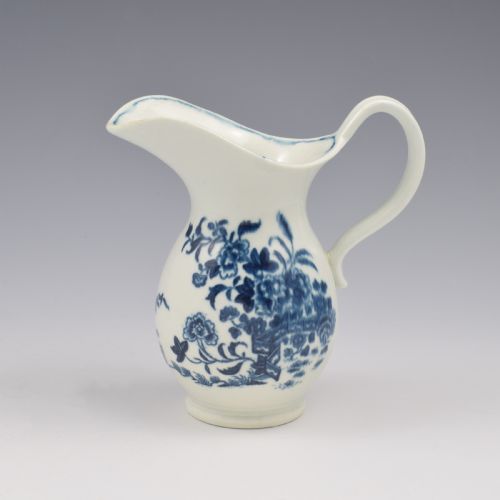
An english porcelain ewer spans shapes from eighteenth-century cream boats and dolphin ewers to large nineteenth-century decorative pieces and twentieth-century cabinet items. You will encounter forms styled in Georgian, Regency, and Victorian periods, alongside specific revivals like Rococo Revival and Chinoiserie.
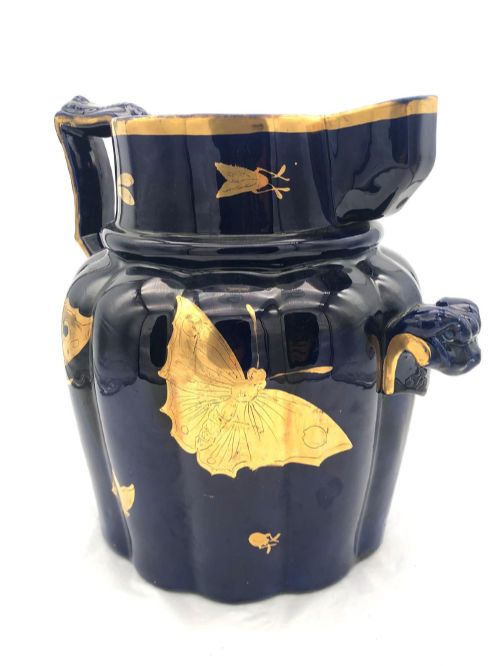
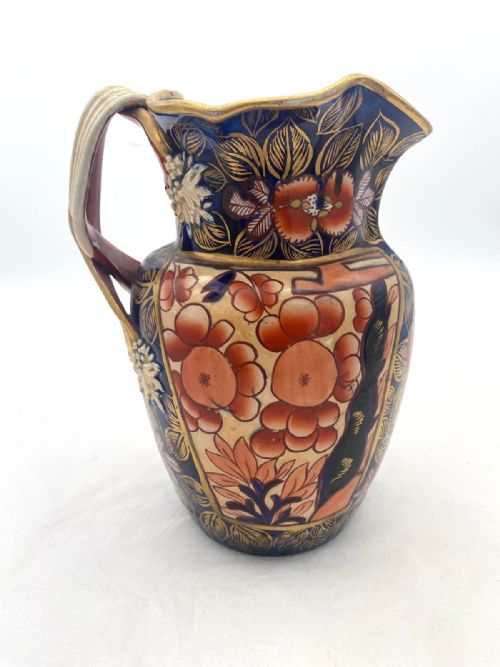
The selection ranges from early Worcester and Derby porcelain examples featuring delicate lamprey handles to robust Mason's ironstone octagonal jugs and intricate Royal Worcester painted vessels. These objects served functional pouring roles or stood purely as decorative ceramic ornaments on sideboards and tables.
Makers represented across the eras include Worcester, Coalport, Minton, Rockingham, and Royal Crown Derby, showing how domestic factories adapted classical vessel shapes. Whether you examine a small cream jug or a large painted wine ewer, each piece reflects the prevailing aesthetic of its decade.
Materials and production methods
Makers utilised fine porcelain and ironstone bodies, shaping them through throwing, moulding, or casting to achieve complex handles and curved lips. Dolphin handles, cleft bodies, and distinct footbath profiles required skilled manipulation of the clay before firing.
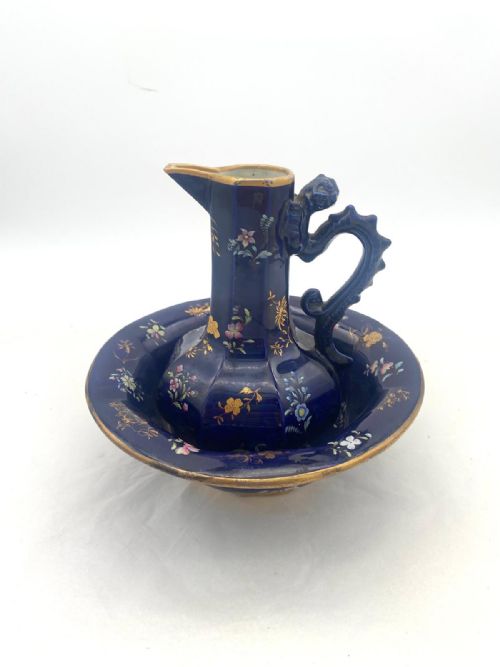
Surface decoration relies on applied glaze, enamel painting, and rich gold leaf or gilding to highlight moulded details. Flower encrustations and hand-painted floral panels appear frequently, fixed to the ceramic surface through subsequent kiln firings.
Listings span the eighteenth, nineteenth, and early twentieth centuries, featuring porcelain, ironstone, enamel, and gold leaf.
Evaluating craftsmanship and execution
Quality rests in the crispness of the moulded relief and the fluidity of the handle attachment, particularly on complex shapes like dolphin ewers. Finer pieces display precise control over the ceramic body during firing, avoiding distortion in tall necks or flared rims.
The standard of hand-painted enamel work and the application of gold leaf or gilding differentiate standard production from superior cabinet pieces. Skilled brushwork on floral panels or named artist signatures elevates the artistic merit of the vessel.
Royal Worcester·John Rose Coalport·Royal Crown Derby·Rockingham Porcelain
The English Porcelain Ewer Glossary
- Ewer
- A large jug with a wide spout and handled shape, traditionally used for pouring water or wine.
- Ironstone
- A heavy, durable type of earthenware patent-created in Britain to resemble porcelain.
- Gilding
- The application of gold leaf or gold powder to ceramic surfaces for decorative accent.
- Enamel
- Coloured glass fused to the porcelain body through high-temperature firing.
- Cleft jug
- A pitcher featuring an indented or split body contour formed during shaping.
English Porcelain Ewer: Frequently Asked Questions
What is an english porcelain ewer used for?
These vessels originally functioned as pouring jugs for water, wine, or cream at the dining table. Many examples from later periods served purely as ornamental display pieces on mantelpieces or sideboards.
Smaller forms like cream boats functioned directly in tea service, while larger decorative ewers highlighted the ceramic artistry of factories such as Royal Worcester.
How do I date an english porcelain ewer?
Dating relies on stylistic markers, factory marks stamped or painted on the base, and the specific composition of the ceramic body. Eighteenth-century pieces often feature soft-paste porcelain and delicate forms like dolphin handles.
Nineteenth and twentieth-century items typically exhibit heavier ironstone bodies, distinct Victorian revival styles, or specific artist signatures associated with documented factory periods.
What styles are common in these ewers?
Georgian and Regency examples tend to show classical restraint, featuring elegant curves and restrained floral motifs or specialised forms like low Chelsea ewers. Victorian pieces often embrace Rococo Revival, Chinoiserie, or Aesthetic Movement influences.
Later Victorian and Edwardian items introduce heavier gilding, flower encrustations, and elaborate hand-painted scenes by named artists.
How should I display an antique ewer?
Place your ewer on a stable surface away from direct sunlight and heavy foot traffic to protect delicate handles and surface gilding. Ensure the display location supports the specific weight of the ceramic body, particularly for larger ironstone or porcelain pieces.
Grouping ewers with matching jugs or basins can highlight their historical form and decorative painted panels within a room.