


Blush Ivory Porcelain Jug
A blush ivory porcelain jug brings soft, creamy tones and delicate gilt work to a room, offering both charm and historic utility.
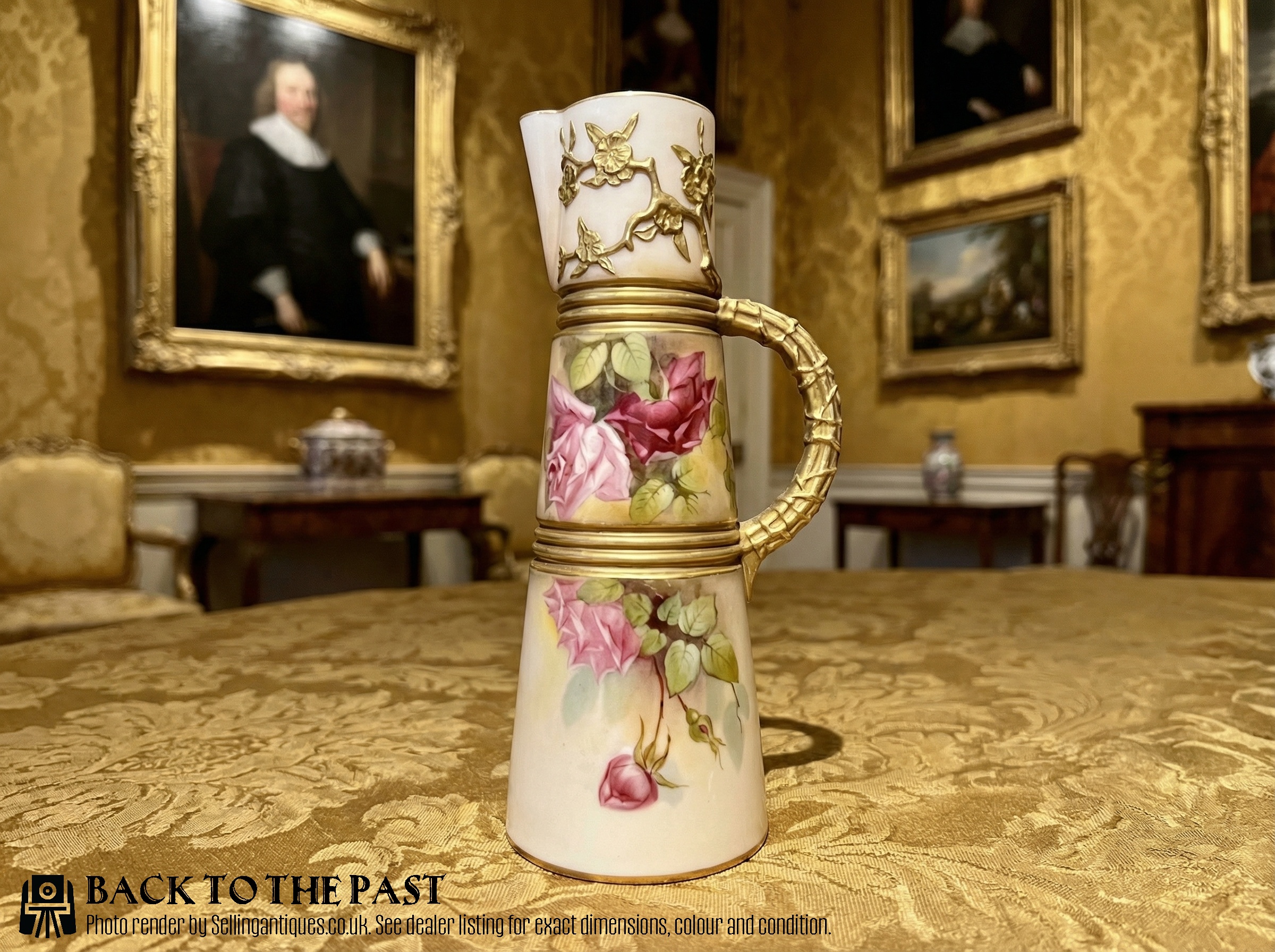
Blush Ivory Porcelain Jug
A blush ivory porcelain jug represents a distinctive aesthetic category spanning the Victorian, Edwardian, and Art Nouveau periods. These items typically take the form of ewers, pitchers, and decorative jugs shaped from ceramic materials.
Most examples found in this range date from the late nineteenth century through to the early decades of the twentieth century. Makers of this era often combined soft ivory bodies with gilt highlights and painted enamel details.
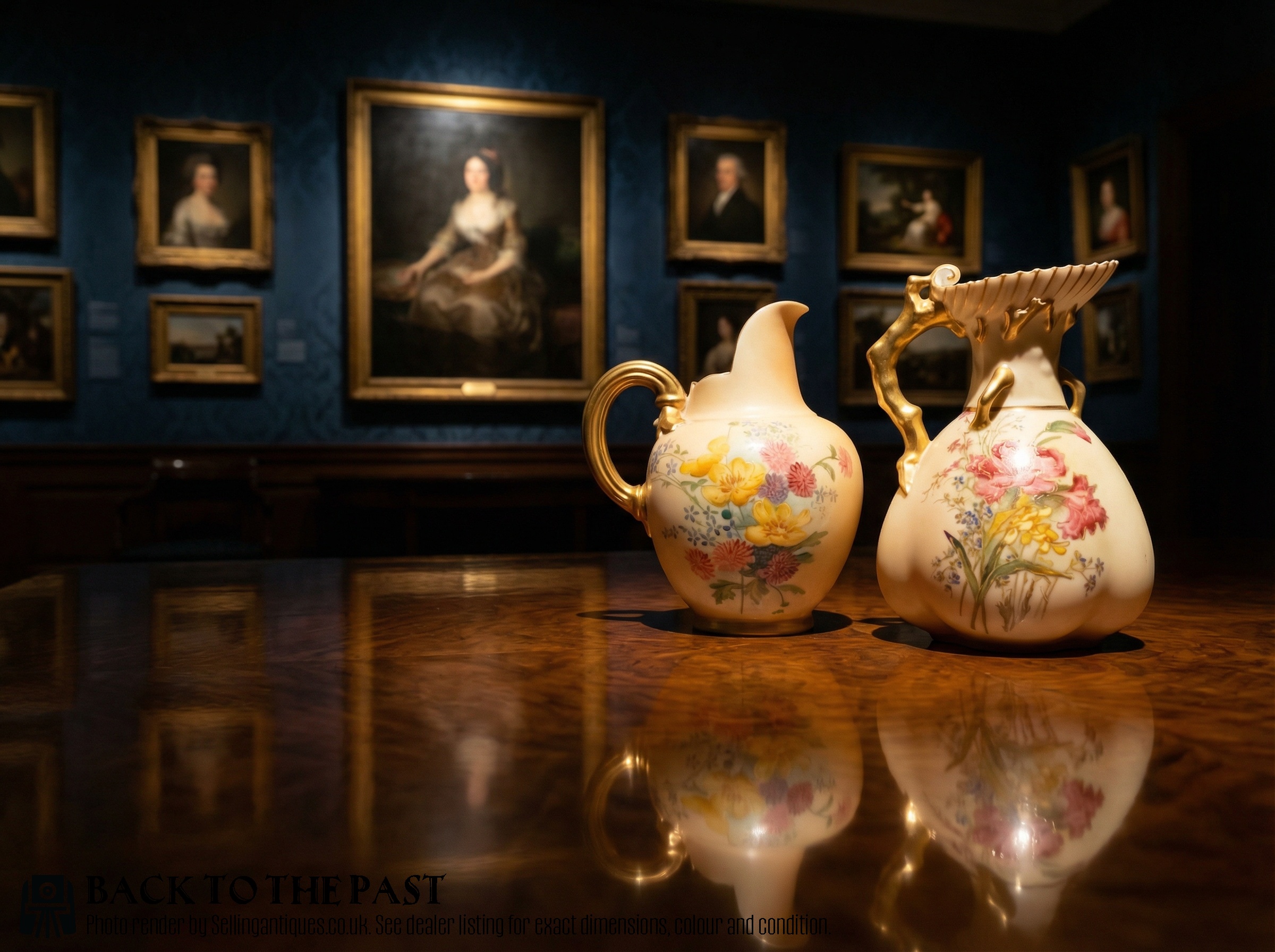
Buyers will encounter various vessel configurations, from single wine ewers and cleft jugs to comprehensive jug and basin sets. The aesthetic movement and early twentieth-century tastes heavily influenced these curving, decorative forms.
How they were made
Potters shaped these vessels using porcelain, earthenware, and fine ceramic bodies fired to hold liquid or serve as purely decorative objects. Artisans then applied pale ivory glazes to create the characteristic soft background finish.
Makers enriched the surfaces using gold leaf, gilding, and gold gilt to accent handles, rims, and moulded floral reliefs. Enamel colours were often hand-painted over the glaze to add botanical or abstract motifs.
Blush Ivory Porcelain Jug Retail Price Guide 2026
Typical asking prices for blush ivory porcelain jug among the pieces listed under this phrase on Sellingantiques today, from the lower quarter to the upper quarter. They describe what is for sale here now, not the wider market.
What varies in quality
The refinement of the modelling and the crispness of the moulded details distinguish finer pieces from standard production wares. Potters who spent greater care on sculptural handles and botanical relief work achieved superior definition.
The application of gold leaf and hand-painted enamel also dictates the standing of an individual piece. Richer, more precise gilding and layered enamel painting elevate the overall decorative presence of the ceramic.
Royal Worcester·Doulton Burslem·Royal Dux
The Blush Ivory Porcelain Jug Glossary
- Ewer
- A large jug with a wide spout and a large handle, traditionally used for holding water or wine. Many Victorian examples served purely decorative purposes in the parlour.
- Gilding
- The application of gold leaf or gold powder to the surface of porcelain. This technique highlights raised ceramic details and rims.
- Enamel
- A glass-like substance fused to the surface of ceramics through firing. Painters used coloured enamels to create floral designs on the ivory body.
- Cleft jug
- A vessel featuring a pinched or indented body form. This shaping required skilled handling while the ceramic was still pliable.
Blush Ivory Porcelain Jug: Frequently Asked Questions
What is blush ivory porcelain?
Blush ivory porcelain refers to ceramics finished with a soft, warm, matte cream glaze that mimics the tone of ivory. Manufacturers popularised this technique in the late nineteenth century to provide a subtle backdrop for hand-painted flowers and gilding.
This specific finish avoids the stark white of traditional porcelain, offering a gentler aesthetic that proved very popular during the Victorian and Edwardian periods.
How should I clean my jug?
Clean these antique ceramic pieces using a soft, dry cloth to remove dust from the surface. Avoid using chemical cleaners, abrasive sponges, or immersion in water, as these can damage the delicate enamel and gold leaf.
Because many of these items feature hand-painted details over the glaze, gentle maintenance preserves the original finish for years to come.
Were these jugs used for serving?
Some pieces were made as functional tableware, such as coffee pots or water pitchers in jug and basin sets. Others, particularly elaborate ewers with ornate handles, were intended entirely for display on mantelpieces and sideboards.
Examining the spout and interior helps determine whether a specific vessel was designed for actual utility or purely as an ornamental ceramic sculpture.
How do I identify the period?
Makers' marks stamped or painted on the underside of the ceramic provide the most reliable guide to dating an item. Different symbols and crown arrangements used by factories changed across the decades from the Victorian era into the twentieth century.
Stylistic cues such as the flowing lines of Art Nouveau or the structured ornamentation of the Aesthetic Movement also help narrow down the date of manufacture.