


Rococo Revival Pitcher
A rococo revival pitcher is a wonderfully ornate vessel bringing exuberant nineteenth-century curves and sculptural detail straight to your table.
Rococo Revival Pitcher
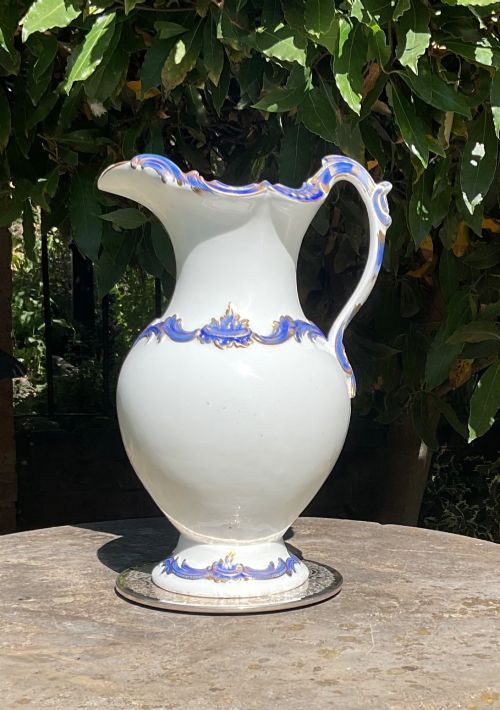
A rococo revival pitcher draws on eighteenth-century design traditions, reappearing across the nineteenth century in various domestic forms. These objects include decorative ewers, water jugs, cream jugs, and occasionally adapted lamp bases.
The pieces on this page span the nineteenth century, including specific dates such as 1870, 1880, 1900, and 1920, alongside broader Victorian periods. They originate from English and French makers, showing both domestic utility and purely decorative intent.
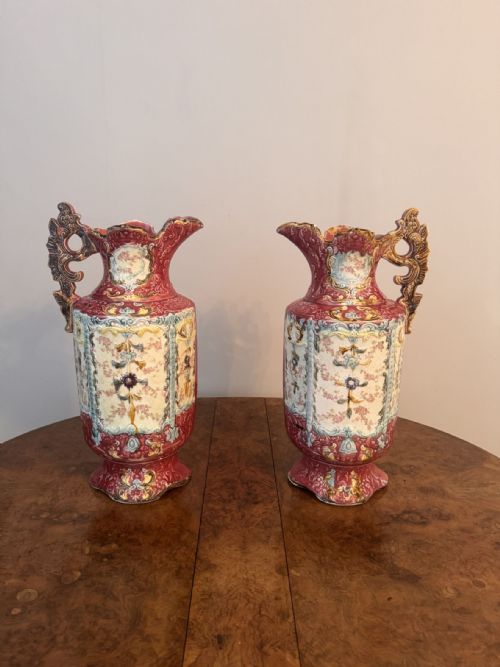
Most examples lean towards porcelain, earthenware, glass, and silver, often enhanced with gilt metal and enamel details. Buyers frequently encounter ewers and jugs featuring prominent floral panels or sculptural handles.
How they were made
Makers shaped porcelain and earthenware bodies through traditional moulding techniques, applying hand-painted floral panels and rich gilding before firing. These ceramic pieces rely on careful glazing to achieve their lustrous surfaces.
Metalwork examples incorporate silver and gilt metal, utilising casting and chasing methods to create complex, flowing asymmetrical scrolls. Glass components involve blown vessels mounted with ormolu fittings and metal mounts.
Some ewers are so enthusiastically curvy they look like they might waltz off the sideboard entirely.
What varies in quality
The standard of modelling and hand-painted detail dictates the visual weight of each piece, distinguishing ambitious studio work from standard production ware. Crispness in the cast metal mounts and subtlety in the gilding separate superior examples from simpler ones.
Integrity of form matters greatly, particularly where delicate handles and spout terminals join the main body of the pitcher. The depth and clarity of enamel work and floral decoration reveal the original maker's skill.
The Rococo Revival Pitcher Glossary
- Ewer
- A large jug with a wide spout and a shaped handle, traditionally used for holding water or wine at the table. Many Victorian examples served purely decorative purposes.
- Ormolu
- Finely ground high-carat gold applied to a bronze or brass base object using a mercury amalgamation process. This technique gives metal mounts a warm, enduring lustre.
- Gilding
- The application of gold leaf or gold dust to the surface of porcelain, metal, or wood. It highlights decorative motifs and adds richness to the design.
- Enamel
- A glassy substance fused to the surface of metal or ceramic through firing to provide smooth colour. It decorates surfaces with durable, vibrant patterns.
- Rockingham
- An English porcelain and pottery tradition known for rich glazes and elaborate floral panels. Pieces from this heritage display distinct regional potting styles.
Rococo Revival Pitcher: Frequently Asked Questions
What is a rococo revival pitcher used for?
These vessels served practical dining functions such as pouring water, cream, or wine, while many functioned purely as decorative ewers on sideboards. Their sculptural forms made them centrepieces in nineteenth-century formal dining rooms.
Today, buyers use them to display dried flowers, as standalone decorative objects on mantelpieces, or as functional jugs for special occasions.
How can I date a Victorian pitcher?
Dating relies on examining the ceramic paste, the style of the gilding, and any registration marks or maker stamps on the base. Stylistic clues, such as the boldness of the rococo scrolls, also point towards specific decades like the 1870s or 1880s.
Comparing the manufacturing techniques with known factory periods helps narrow down the decade of production. French and English pieces often display characteristic regional traits from their respective eras.
Are these pitchers made of porcelain or metal?
The listings include both ceramic and metal examples, ranging from fine porcelain and earthenware to silver and gilt metal. Some pieces combine materials, such as glass bodies fitted with ormolu mounts.
Each material dictates how the piece was formed, fired, or cast by nineteenth-century artisans. Ceramic versions often feature hand-painted floral panels, whereas metal ones rely on chased surface detail.