


Delft Blue White Vase
A delft blue white vase brings hand-painted cobalt pigment and tin-glazed earthenware into a room, offering centuries of ceramic history.
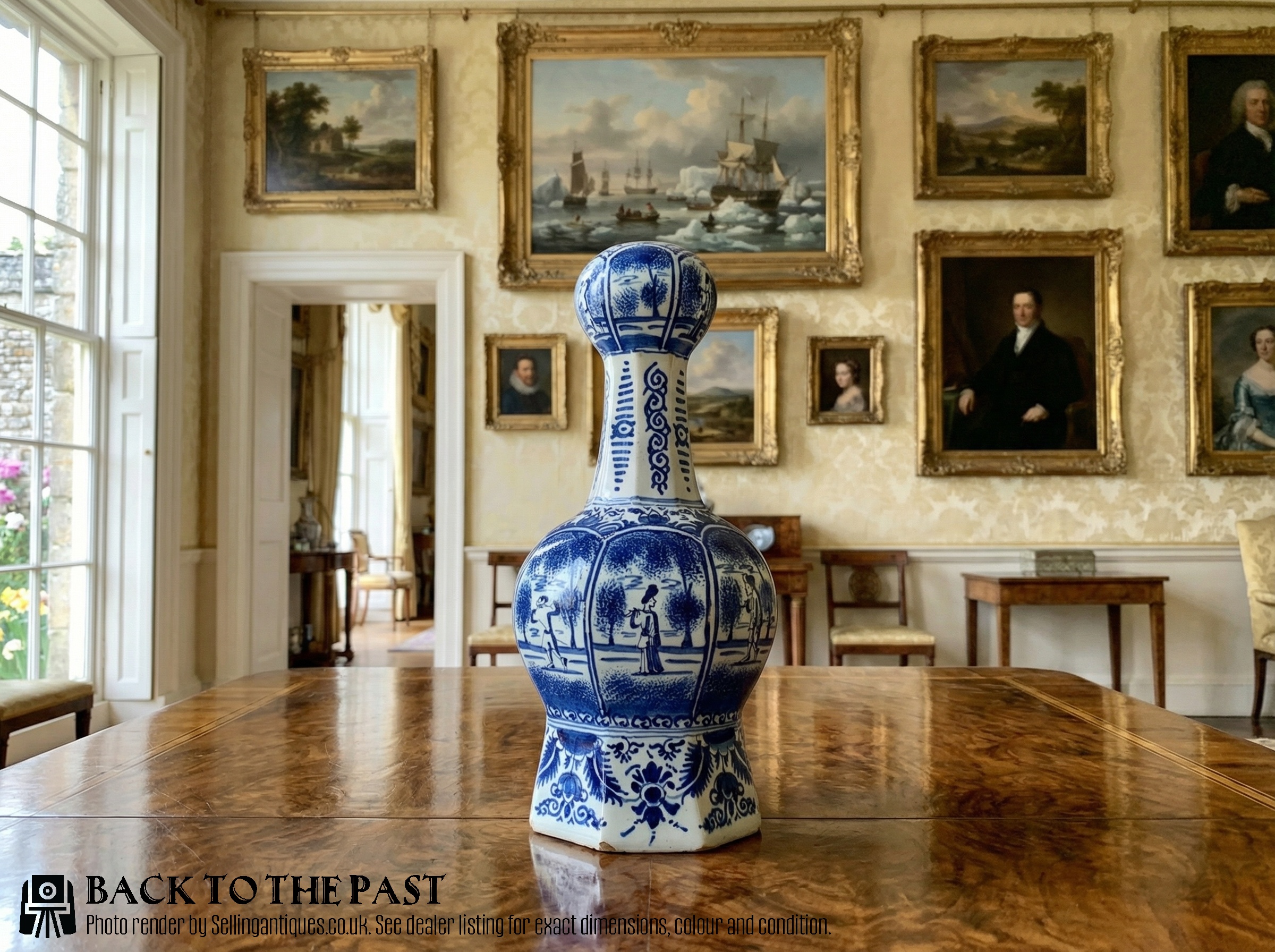
Delft Blue White Vase
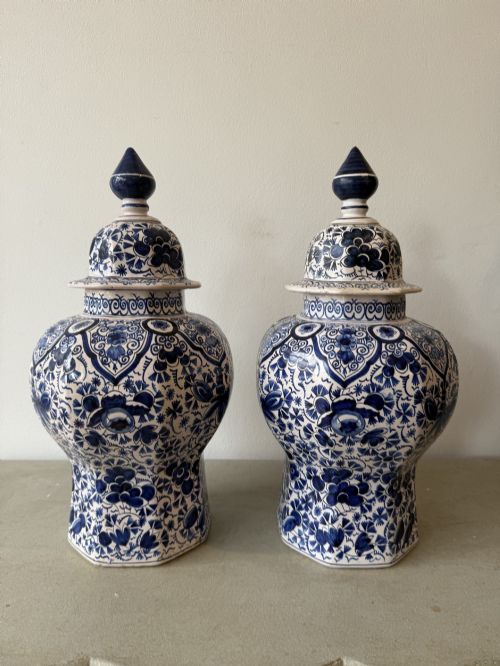
When you search for a delft blue white vase, you encounter tin-glazed earthenware vessels spanning from the seventeenth century to the twentieth century. These pieces range from lidded baluster forms and garden urns to decorative jugs and table lamps.
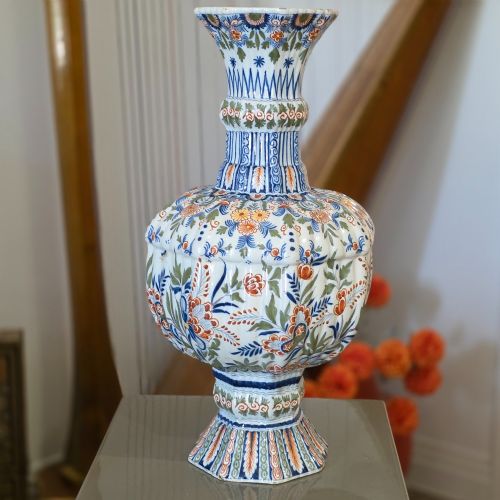
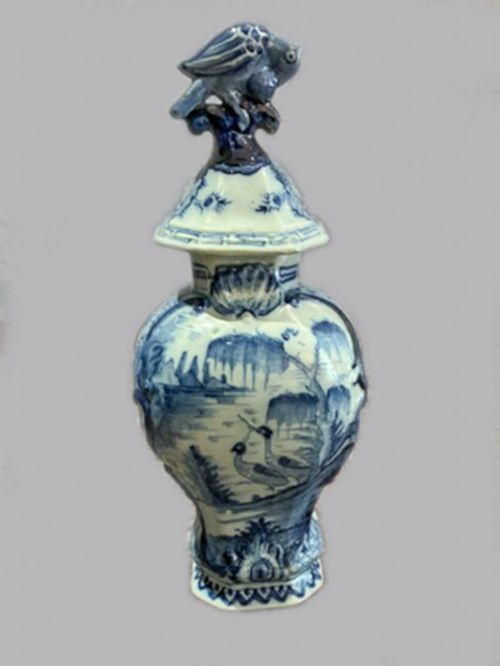
The version most commonly met on this page is the eighteenth-century Dutch delft vase, often decorated with Chinoiserie scenes or floral motifs. Alongside these, nineteenth-century interpretations and French faience examples appear frequently.
Forms vary from ribbed beaker vases and gourde shapes to tiered flower holders and large garden planters. Many historical examples have been adapted into table lamps over time.
How they were made
These pieces utilise an earthenware body covered in an opaque white tin glaze, which provides a smooth surface for painting. Artisans applied cobalt pigment directly onto the unfired or fired glaze, creating the characteristic blue and white design.
Firing took place in kilns where the liquid glaze bonded with the clay body, yielding the distinct gloss and surface texture seen on seventeenth and eighteenth-century examples. Later nineteenth-century production methods incorporated similar tin glaze and earthenware techniques.
Several eighteenth-century vessels traded their original lids long ago for a new lease of life as electric table lamps.
What varies in quality
The distinction between standard examples and the finest works lies in the execution of the cobalt painting and the crispness of the earthenware form. Superior pieces display confident, detailed brushwork depicting birds, flowers, or intricate Chinoiserie scenes.
The purity of the white tin glaze and the balance of the vessel proportions also separate ordinary items from exceptional survivors. Early seventeenth and eighteenth-century pieces often demonstrate superior potting and depth of blue pigment.
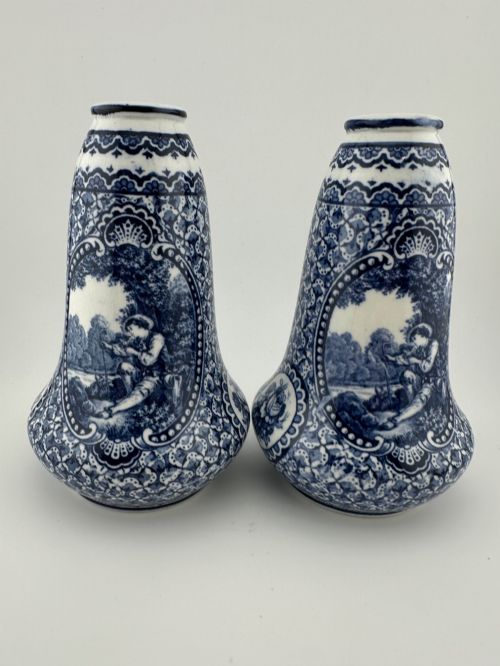
Franz Anton Mehlem·Royal Bonn
The Delft Blue White Vase Glossary
- Tin-Glaze
- A ceramic glaze made opaque by the addition of tin oxide. This coating provides the white background essential for traditional blue and white painting.
- Cobalt Pigment
- A metallic colourant used to achieve the deep blue tones on earthenware. It reacts with the glaze during firing to produce stable, vivid hues.
- Baluster Vase
- A vessel with a rounded body that tapers toward the base and swells near the centre. This form appears frequently in historical ceramic design.
- Chinoiserie
- European decorative motifs inspired by Chinese art and landscapes. Artisans painted these imaginary scenes onto tin-glazed earthenware during the seventeenth and eighteenth centuries.
- Faience
- European tin-glazed pottery produced in France and other regions outside the Netherlands. These pieces often mirror Dutch delft styles and colour palettes.
Delft Blue White Vase: Frequently Asked Questions
How do I date an old delft vase?
Dating relies on examining the tin glaze, the depth of the cobalt pigment, and the potting style. Seventeenth and eighteenth-century examples typically show softer clay bodies and hand-painted variations compared to later nineteenth-century pieces.
Changes in shape, such as the transition from baluster jars to beaker vases or later lamp conversions, also offer clues to the period of manufacture.
Were these vases used for cut flowers?
Many historical vessels, including tiered flower vases and lidded jars, held fresh water and stems. Others served purely as decorative mantel ornaments or architectural garnitures.
Lidded pieces protected dried herbs or potpourri in period interiors, while open beaker forms accommodated seasonal floral displays.
How should I display a converted lamp?
Placing a lamp version on a sturdy sideboard or side table highlights the painted cobalt details without cluttering the surface. Ensure the wiring meets modern safety standards while preserving the ceramic body.
Keep these ceramic lamps away from direct foot traffic to protect the vintage earthenware and glaze from accidental knocks.
What is the difference between delft and faience?
Delft specifically refers to tin-glazed earthenware made in the Netherlands, particularly in the city of Delft. Faience is the broader French and European term for similar tin-glazed ceramics.
Both utilise a white glaze and cobalt blue painting techniques, though subtle differences in clay composition and painting style distinguish Dutch pieces from French or German works.