
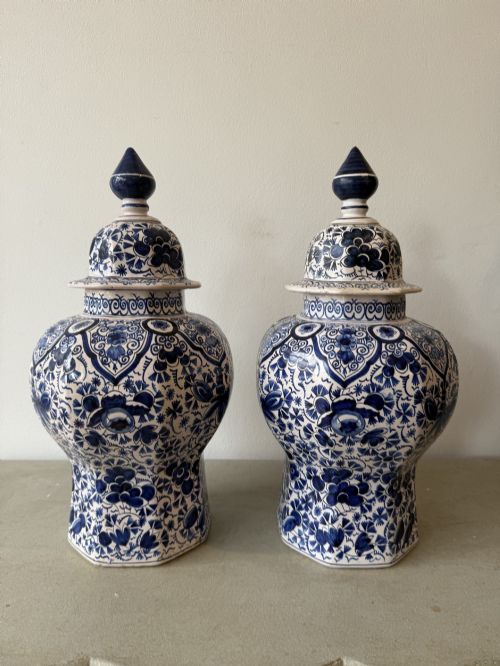


Dutch Delftware Vases
Dutch delftware vases bring tin-glazed earthenware into the room, offering blue-and-white palettes and Chinoiserie scenes that catch the eye instantly.
Dutch Delftware Vases
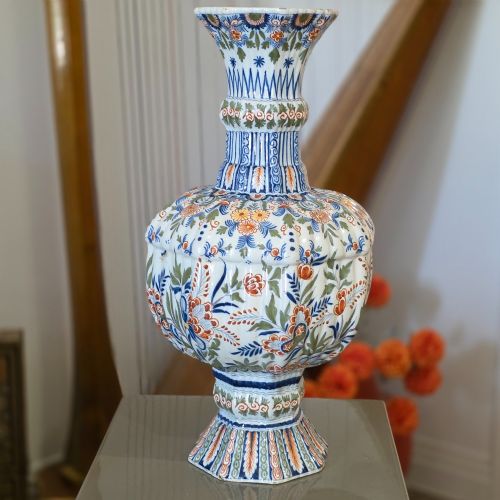
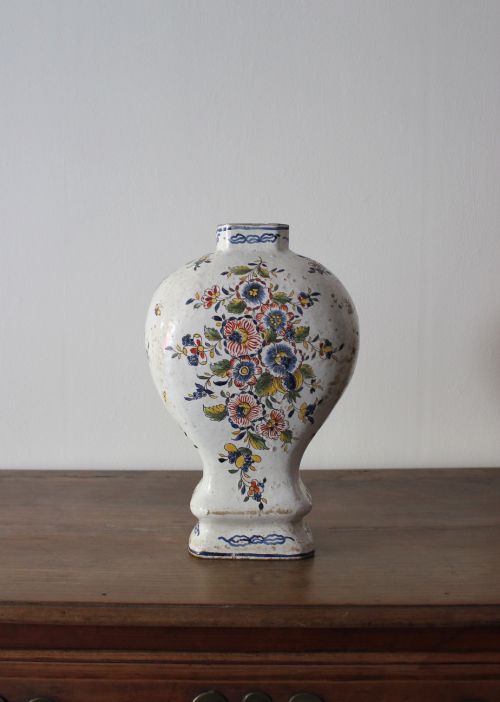
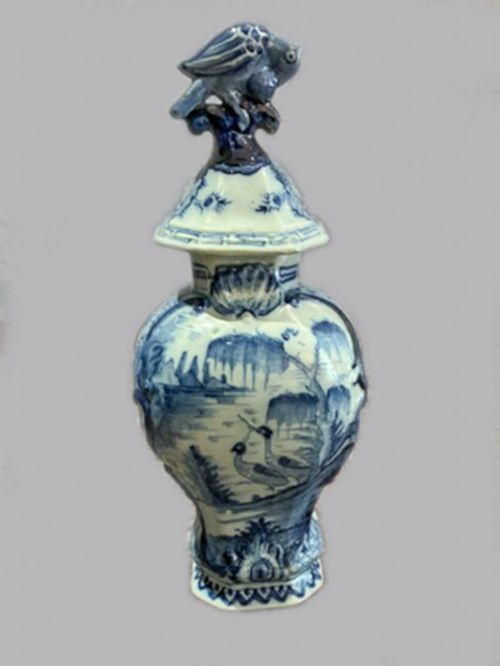
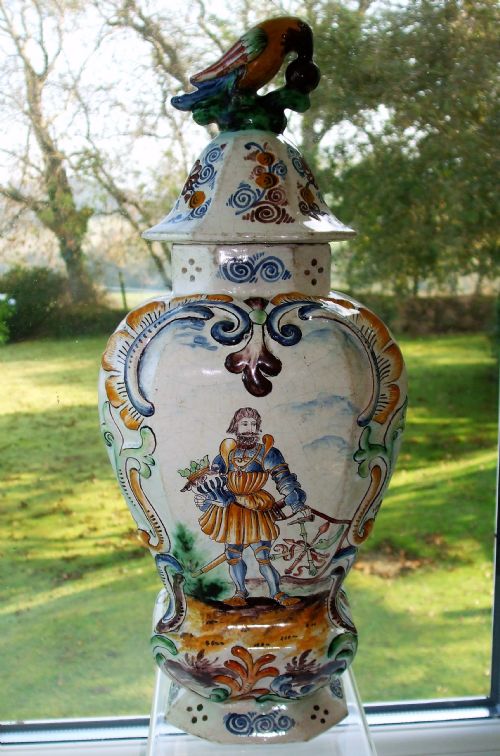
Dutch delftware vases are tin-glazed ceramic vessels spanning the seventeenth, eighteenth, and nineteenth centuries. You will frequently encounter eighteenth-century baluster jars, lidded vessels, and beaker vases bearing blue-and-white or polychrome decoration.
The forms range from large garden urns and handled vases to table lamps adapted from earlier bodies. Chinoiserie motifs, floral sprays, and bird designs dominate the surfaces across these periods.
Makers and factories of the era produced individual decorative pieces as well as matched pairs for display on mantelpieces or cabinets. These earthenware items capture centuries of ceramic tradition originating in the Netherlands.
Materials and construction
Potters shaped local clays into earthenware bodies before applying an opaque tin glaze that provided a smooth, white ground for painting. Cobalt pigment was then brushed directly onto the unfired glaze to create characteristic blue designs.
Polychrome examples incorporated additional mineral pigments to introduce contrasting colours alongside the traditional blue tones. Firing in traditional kilns fixed the metallic oxides into the glaze, producing a glossy finish.
Some seventeenth-century vases feature birds perched so earnestly they appear ready to chirp right off the glaze.
Judging quality and character
Quality rests in the crispness of the painted decoration and the fluidity of the brushwork on the tin glaze. Fine examples display detailed Chinoiserie scenes or botanical motifs executed with confident control.
The integrity of the earthenware body and the depth of the glaze also distinguish finer pieces from simpler commercial output. Retaining original lids or surviving as a matched pair elevates the standing of a vessel.
3 BELLS Drie klokken Factory·Louis Victor
The Dutch Delftware Vases Glossary
- Tin-glazed earthenware
- Pottery coated with a white, opaque glaze containing tin oxide to obscure the darker clay body beneath. This layer served as a canvas for cobalt painting.
- Chinoiserie
- European artistic style reflecting Chinese motifs and landscapes, frequently painted in blue on seventeenth and eighteenth-century ceramics. It remains a defining feature of many early pieces.
- Baluster vase
- A tall vessel characterised by a curved, swelling lower body that tapers towards a narrow neck. This classic shape appears regularly among lidded jars.
- Polychrome
- Decoration employing multiple colours rather than a single hue like blue. These pieces often feature iron red, green, and yellow alongside cobalt.
- Faience
- European tin-glazed earthenware produced in various countries, closely related to the traditions of Dutch delftware. It describes similar ceramic techniques.
Dutch Delftware Vases: Frequently Asked Questions
How are these vases dated?
Datings rely on stylistic shifts in painting, form, and glaze composition across the seventeenth to nineteenth centuries. Comparing decorative motifs like Chinoiserie birds or floral sprays helps establish the period.
Changes in the earthenware body and tin glaze density further assist in narrowing down the era of production.
Were these vases meant for flowers?
Many lidded jars and baluster vases served primarily as decorative garnitures rather than functional containers for water. Their primary role was display within grand interiors.
Some forms with wider openings accommodated cut blooms, but surviving lids often indicate they functioned as ornamental objects.
Why do some vases have lids?
Lidded jars were produced as part of garniture sets designed to sit atop mantelpieces or cabinetry in matching arrangements. The covers completed the vertical silhouette of the baluster form.
Finding a vase with its original matching lid is a notable attribute for collectors of early earthenware.
How should I clean my delftware?
Dusting gently with a dry, soft cloth is usually sufficient to maintain the surface of tin-glazed earthenware. Avoid harsh chemical cleaners or submersion in water, which can harm historic glazes.
Careful handling prevents accidental chipping of the delicate ceramic edges and painted finishes.