

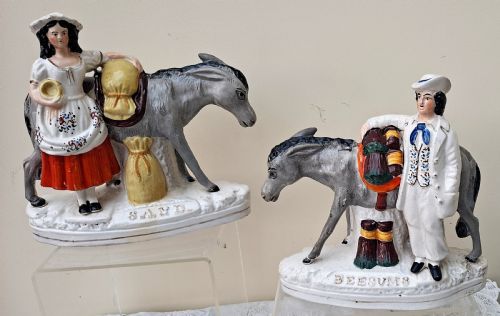


19th Century Staffordshire Flatback
These 19th century staffordshire flatback figures bring Victorian hearths and parlours into the room with cheerful colour and narrative charm.
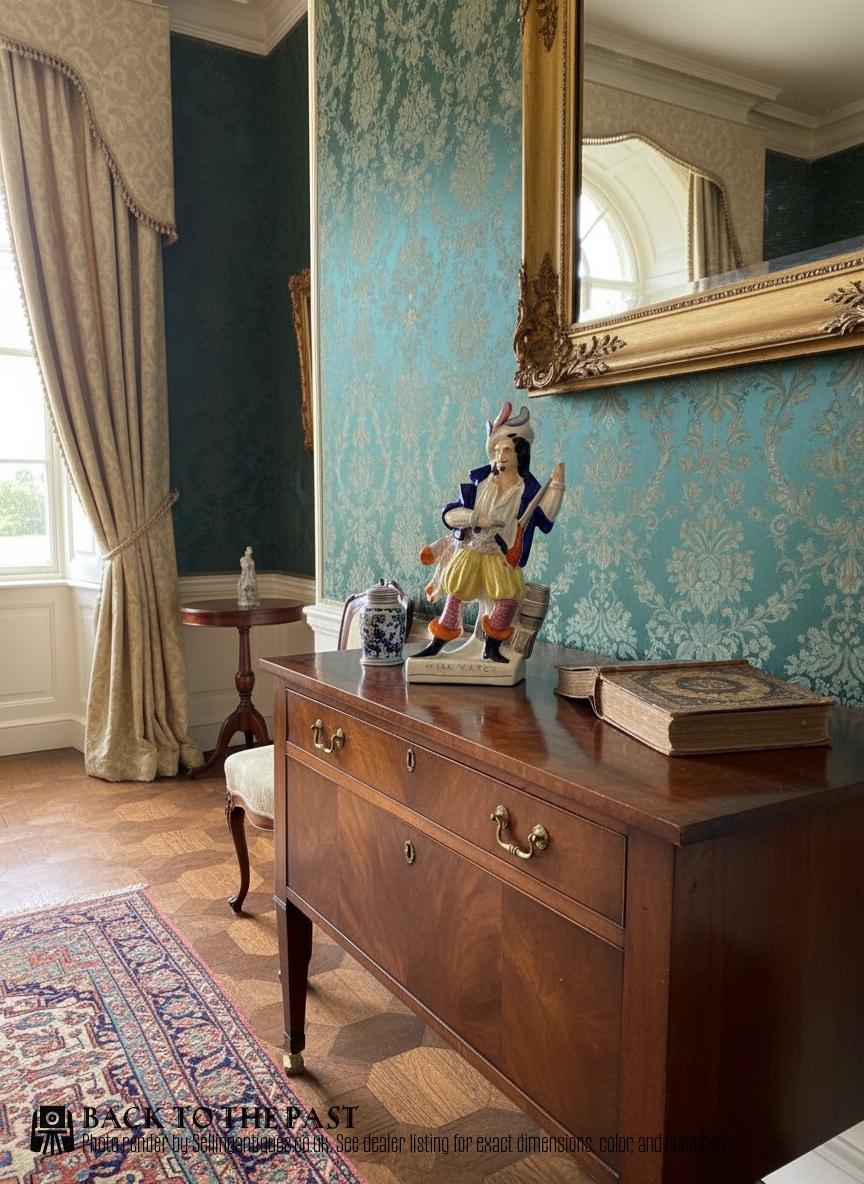
19th Century Staffordshire Flatback
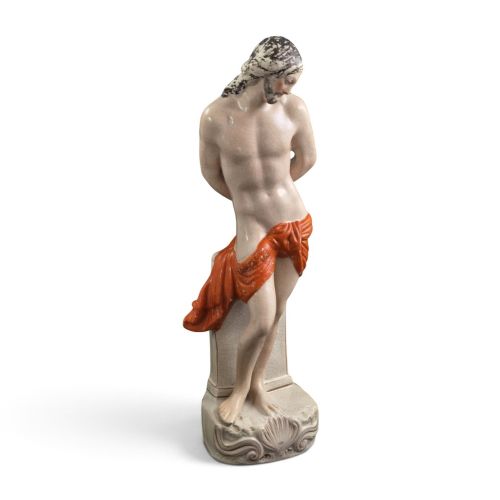
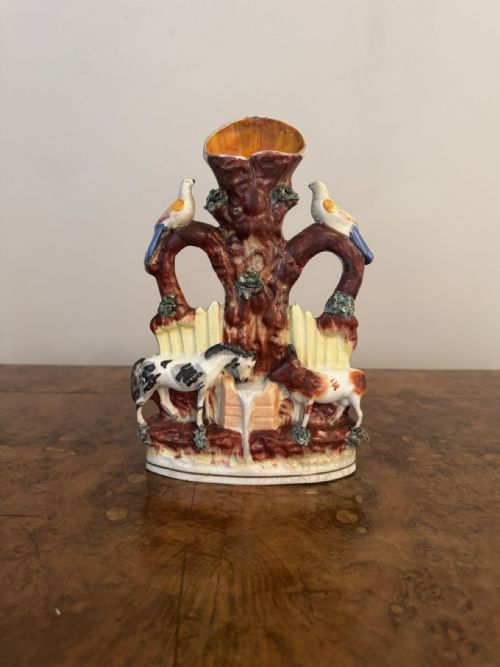
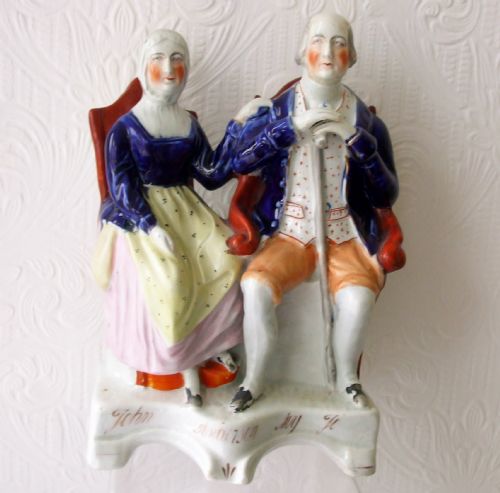
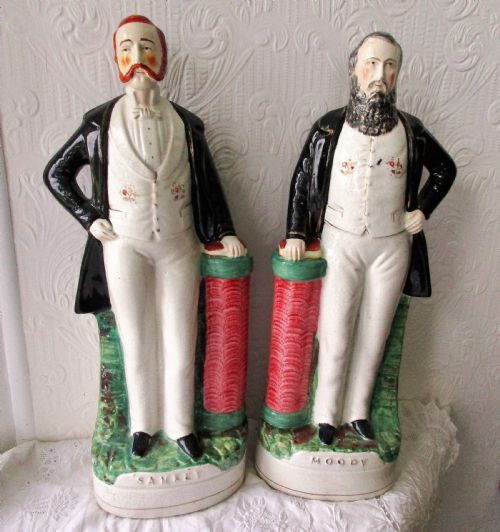
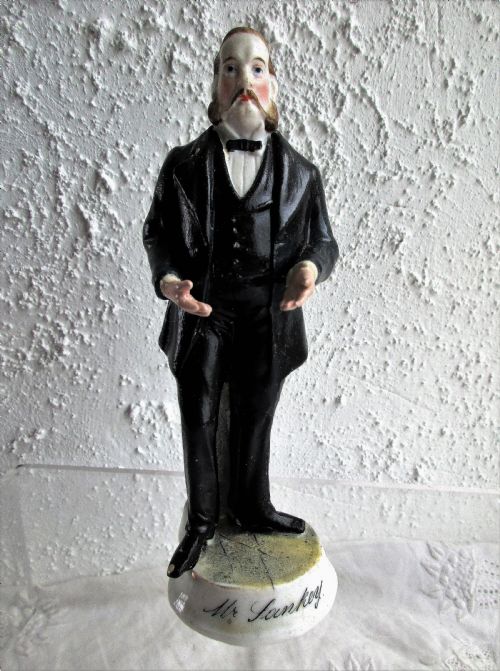
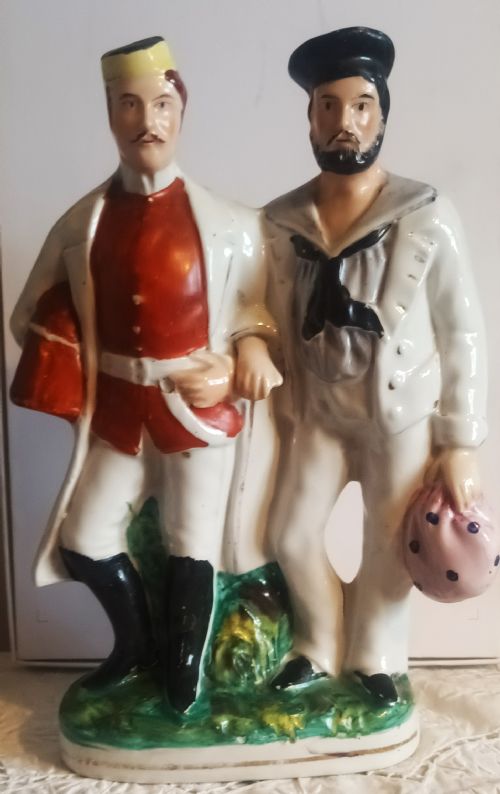
A 19th century staffordshire flatback is a ceramic portrait, animal model, or architectural spill vase designed to stand against a wall on a mantelpiece. The pieces gathered here span the Victorian era, capturing notable figures, literary characters, and rustic scenes.
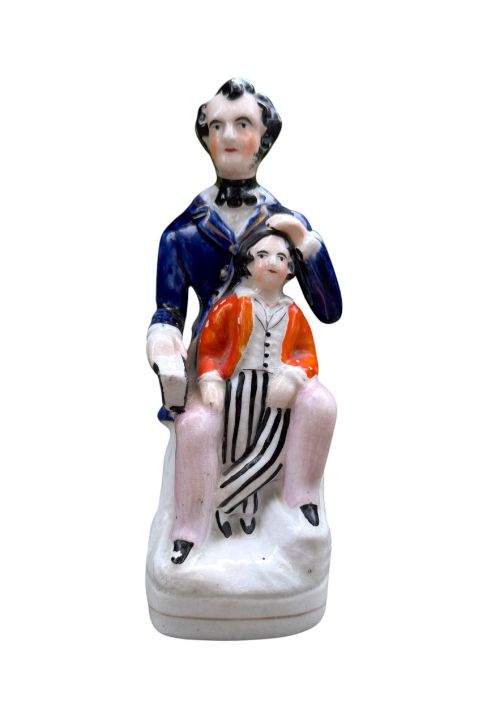
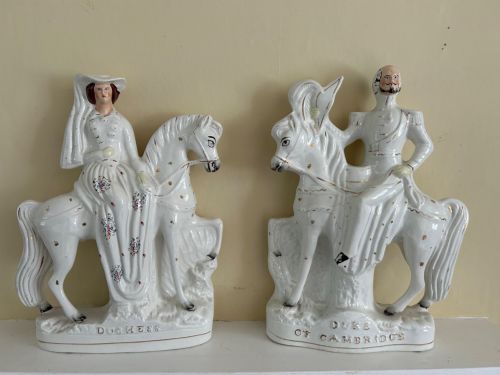
Collectors frequently encounter royal portrait groups, theatrical pairs, and domestic animals rendered with unglazed backs and painted fronts. These earthenwares served as affordable household ornaments for the burgeoning middle classes during the nineteenth century.
Subjects range from military heroes and royal weddings to temperance figures and exotic animals like zebras. The form relies on press-moulded construction, producing a flat reverse that saved clay and weight for domestic display.
How They Were Made
Potters shaped these figures using clay pressed into plaster moulds in halves, which were then luted together before firing. The resulting earthenware body received a liquid lead glaze to seal the porous ceramic.
What Varies in Quality
Quality rests in the crispness of the mould and the care taken with hand-painted facial expressions. Superior examples retain bright enamel colours and fine detailing on clothing and accessories.
Proportion and stance differentiate standard commercial output from more carefully modelled portrait groups and spill vases. Heavier gilding and well-defined eyes distinguish the finer modelling seen across these Victorian works.
The 19th Century Staffordshire Flatback Glossary
- Flatback
- A figure moulded with a finished front and a flat, unpainted reverse intended to sit against a mantelpiece wall. This method conserved clay during production.
- Spill vase
- A hollow cylindrical holder incorporated into a ceramic figure, designed to hold wooden spills for lighting pipes or candles. These combine utility with decorative narrative.
- Earthenware
- A porous pottery body fired at lower temperatures, requiring a glaze to hold liquids or protect the surface. It forms the standard substrate for Victorian Staffordshire figures.
- Enamel
- A coloured glass powder mixed with oil and painted over a fired glaze before a final low-temperature fixation. It provides the bright reds, blues, and greens on figures.
- Watch-holder
- A figural ceramic stand featuring a small hook or recess near the top to suspend a pocket watch. They sat upon bedside tables during the Victorian period.
19th Century Staffordshire Flatback: Frequently Asked Questions
What is a flatback figure?
A flatback figure is a moulded ceramic ornament with a fully painted and decorated front and a plain, flat back. They were constructed this way to sit flush against a wall on narrow mantelpieces.
Potters produced them in vast numbers during the Victorian period to decorate middle-class homes with portraits of royalty, literary heroes, and animals.
How were spill vases used?
Spill vases incorporated a small cylindrical tube alongside or behind the main figure to hold thin wood splints. Households used these wooden spills to transfer flames from the hearth fire to candles and lamps.
They combined practical function with the decorative appeal of traditional pottery figures.
How do I date these figures?
Dating relies on subject matter, such as historical events or reigning monarchs, alongside the style of the glaze and modelling. Queen Victoria, the Crimean War, and specific political figures help narrow the production window.
Most pieces date from the mid to late nineteenth century, reflecting the Victorian penchant for commemorative household ceramics.