

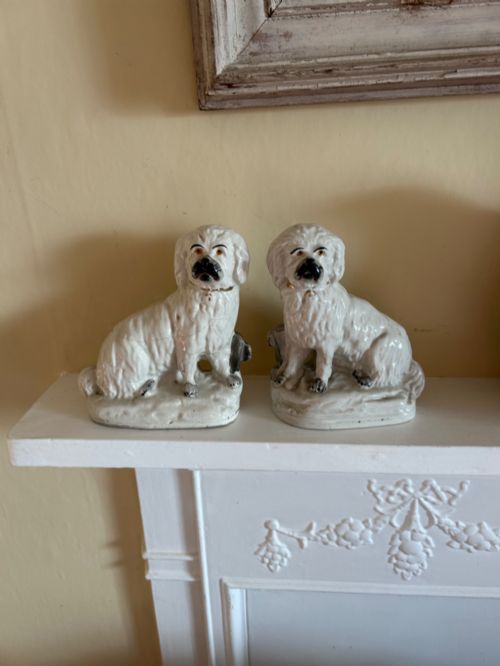


Victorian Pottery Chimney Ornament
These Victorian pottery chimney ornaments bring character straight from the mantelpiece, offering the tactile charm of nineteenth-century earthenware figures.
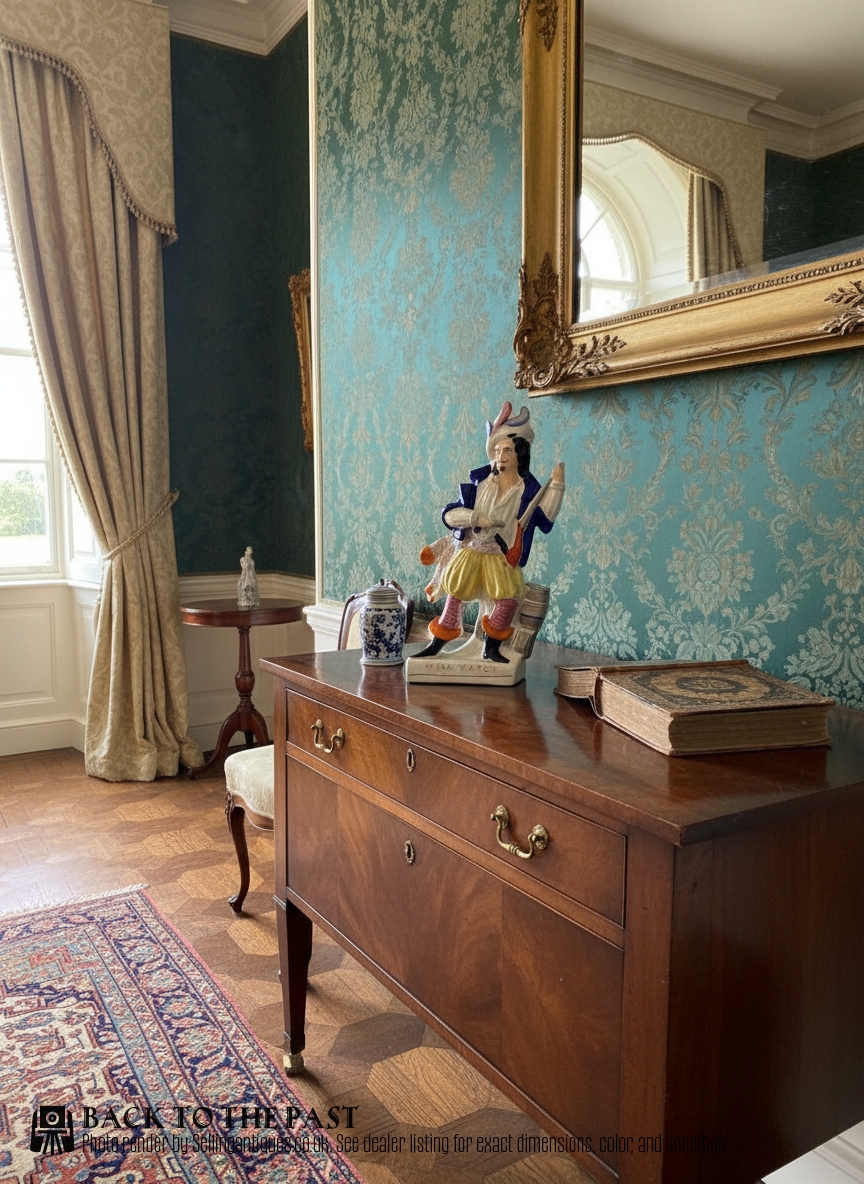
Victorian Pottery Chimney Ornament
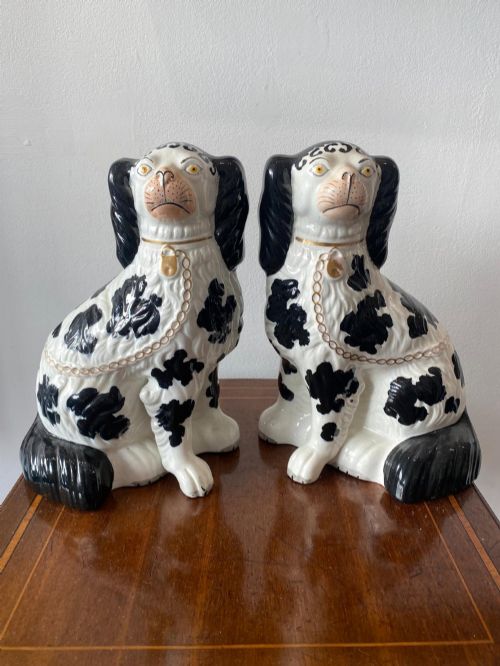
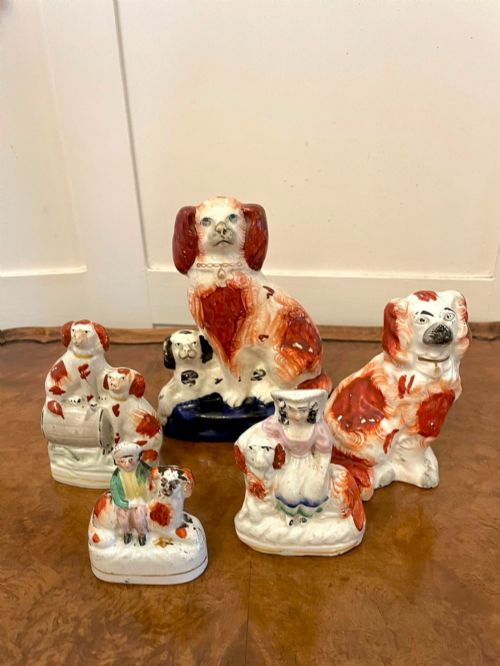
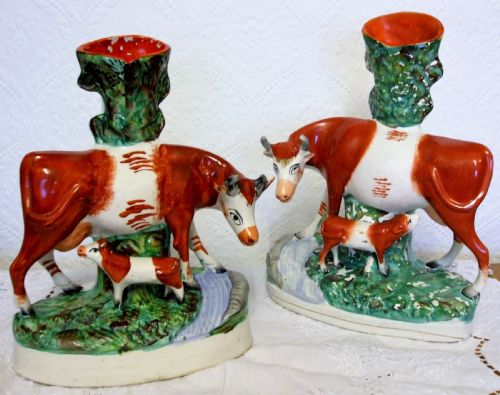
A Victorian pottery chimney ornament takes the form of dogs, pugs, spaniels, lions, deers, and cattle, alongside architectural subjects like castles and cottages. These earthenware pieces include both flatback figures and functional spill vases designed to hold wooden matches or tapers.
The versions most commonly met on this page date from the nineteenth century, specifically spanning the decades from eighteen fifty to nineteen hundred. Animals appear singly or in pairs, frequently modelled as spaniels, pugs, poodles with pups, or maltese terriers.
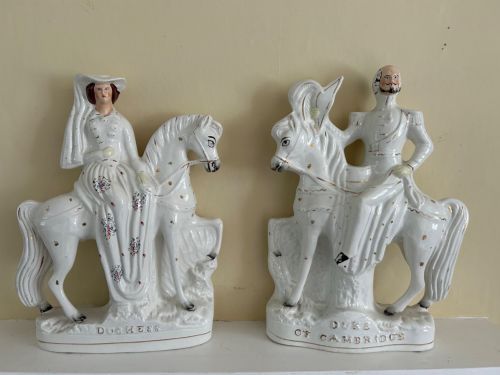
Figurative subjects also represent historical or literary figures, such as the flatback figure of Will Watch the Smuggler, or portray the Duke and Duchess of Cambridge. Architectural forms include Victorian Staffordshire cottages and castles.
How they were made
The decorative finish relies on coloured glazes applied over the ceramic base, producing the characteristic gloss seen on nineteenth-century Staffordshire figures. Artisans frequently painted details by hand over the fired glaze, leading to variations in expression and colour across individual pairs.
Victorian Pottery Chimney Ornament Retail Price Guide 2026
Typical asking prices for victorian pottery chimney ornament among the pieces listed under this phrase on Sellingantiques today, from the lower quarter to the upper quarter. They describe what is for sale here now, not the wider market.
Pairs of Staffordshire pugs and spaniels kept watch from the hearth, standing ready to guard the Victorian parlour from draughts.
What varies in quality
The application of enamel painting and gilt or gold leaf dictates visual impact, with carefully hand-painted details offering greater depth. Pairs that retain matching proportions and consistent glaze coverage demonstrate higher workshop execution.
The Victorian Pottery Chimney Ornament Glossary
- Earthenware
- Porous pottery fired at lower temperatures, forming the primary ceramic body for these nineteenth-century figures. It requires a glaze to achieve an impermeable surface.
- Flatback
- A figure moulded with a finished front and a plain, unadorned reverse designed to sit flush against a wall or mantelpiece. This construction saved ceramic material during production.
- Spill vase
- A hollow ceramic vessel incorporating a small upright cylinder meant for holding wooden spills or tapers used to light fires. These dual-purpose objects combine figurative modelling with utility.
- Lead glaze
- A glossy coating containing lead oxide applied to ceramic bodies before firing to create a smooth, waterproof finish. It gives these ornaments their characteristic reflective sheen.
- Enamel
- Opaque coloured decoration applied over the fired glaze and subjected to a lower second firing to bond with the surface. It provides the bright hues on coats, eyes, and architectural elements.
Victorian Pottery Chimney Ornament: Frequently Asked Questions
What is a flatback figure?
A flatback figure is a ceramic ornament moulded with a detailed front and a flat, unpainted reverse. This design allowed the piece to sit securely against a chimney breast or shelf.
Potters adopted this construction method during the nineteenth century to economise on materials and weight for mantelpiece display.
How were spill vases used?
Spill vases served a practical domestic purpose alongside their decorative function as mantelpiece ornaments. The hollow cylindrical section held thin wooden tapers used for transferring fire from the hearth to candles or pipes.
These pieces combine animal or architectural modelling with a functional container.
How do I date these ornaments?
Dating relies on stylistic clues, glaze characteristics, and subject matter typical of nineteenth-century production. Pieces often span from the mid-nineteenth century through to nineteen hundred.
Markings, manufacturing techniques, and the evolution of Staffordshire flatback styles help narrow the period of creation.
Why are animals common subjects?
Animal subjects reflected Victorian domestic life and the popularity of household pets like spaniels, pugs, and terriers. Figures of lions, cows, and deers also catered to contemporary tastes for rural and exotic imagery.
Potters produced these popular forms in pairs to sit balanced on either end of a fireplace mantel.