

Victorian Staffordshire Figurine
These figures bring the parlour shelf and mantelpiece of the nineteenth century straight into a modern room.
Victorian Staffordshire Figurine
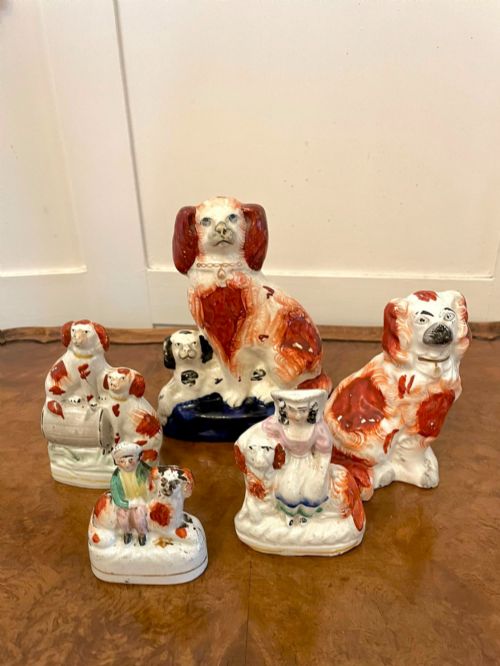
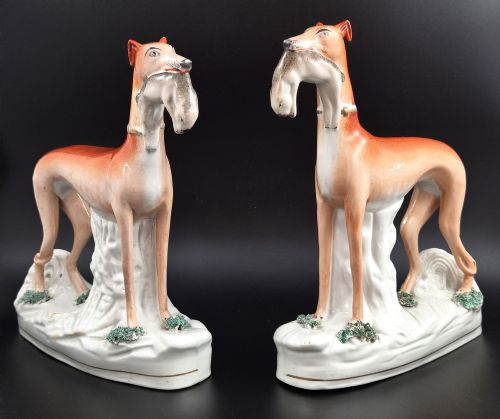
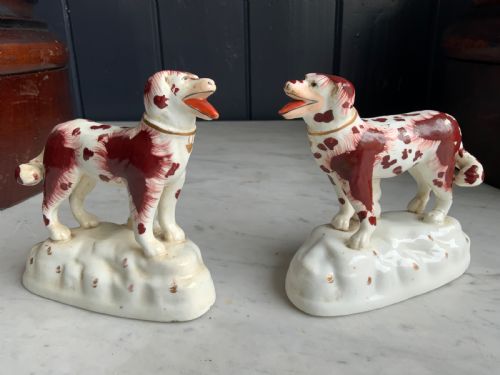
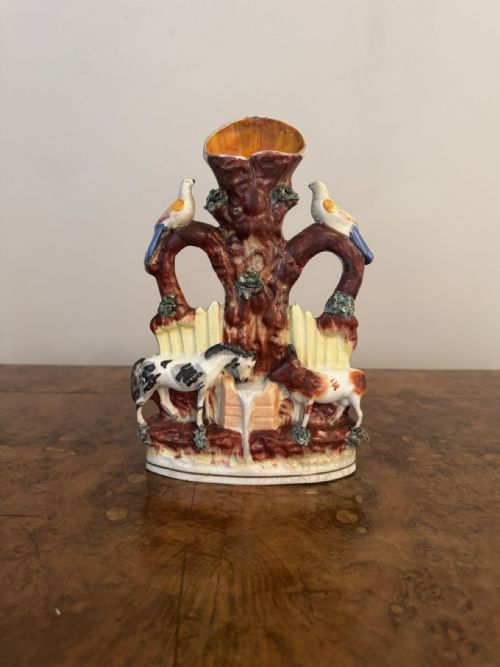
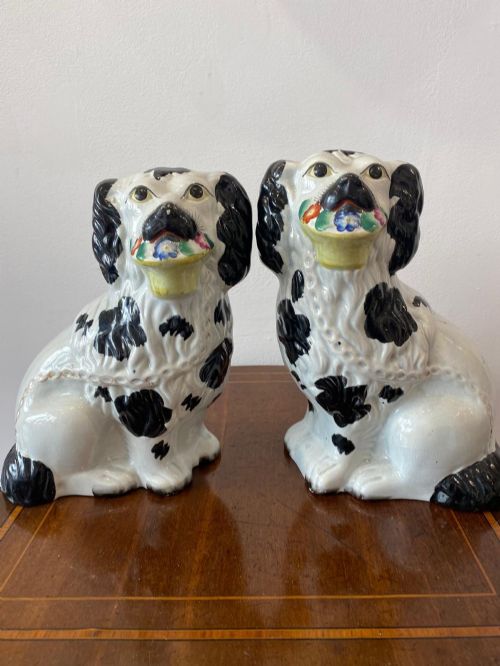
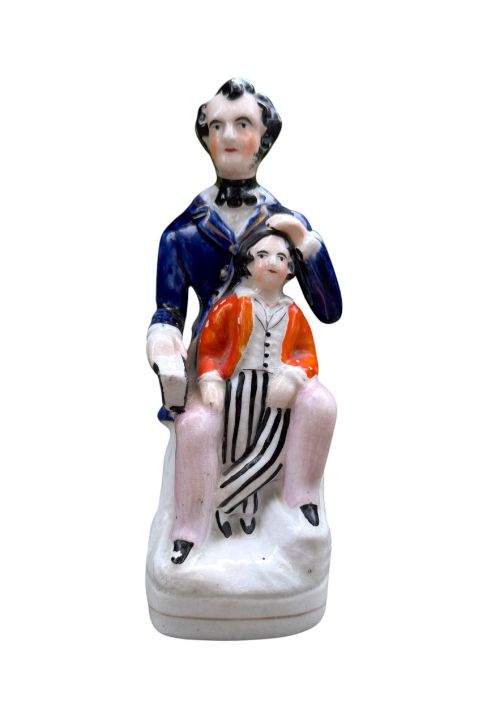
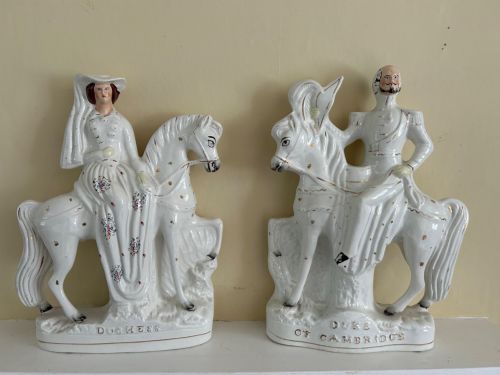
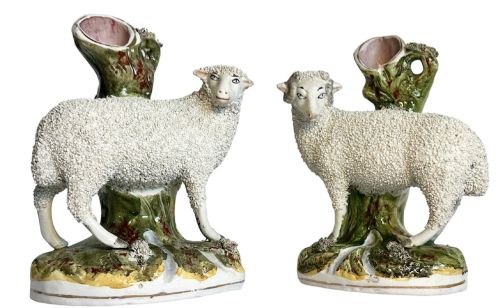
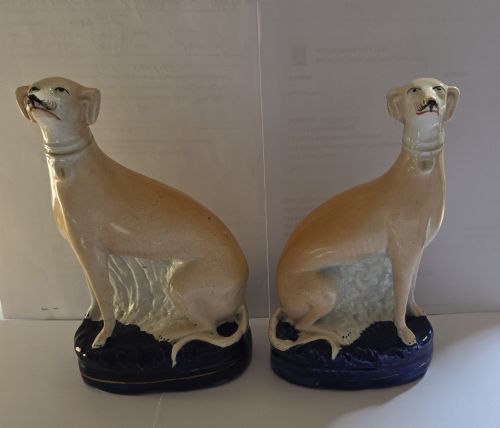
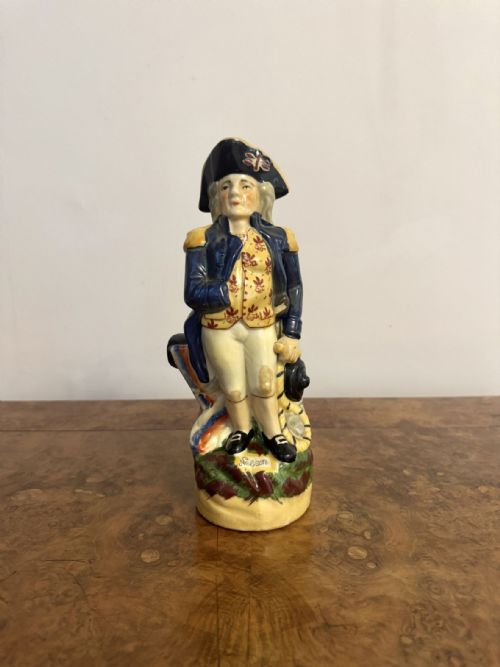
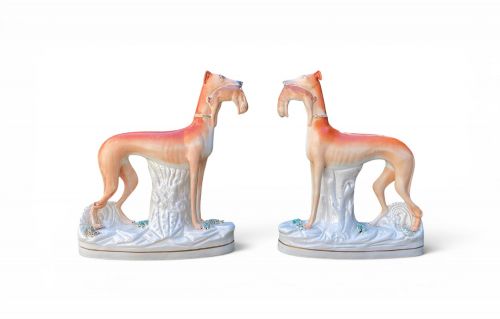
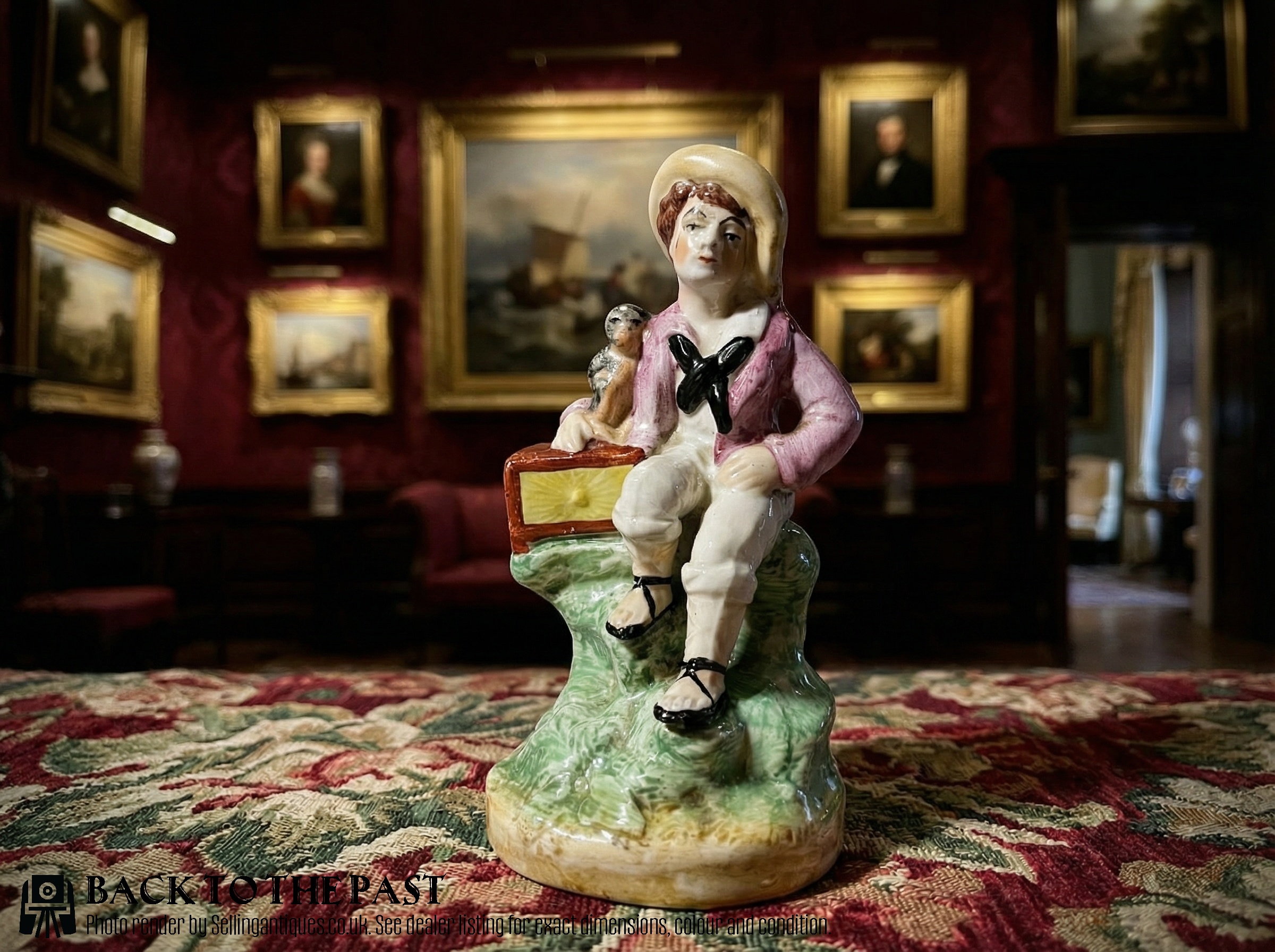
A victorian staffordshire figurine is a ceramic object made for domestic display during the nineteenth century, capturing animals, historical personages, and theatrical characters in glazed earthenware. These pieces range from simple flatback portrait figures meant to stand against a wall to pairs of seated spaniels and greyhounds placed symmetrically on either side of a fireplace.
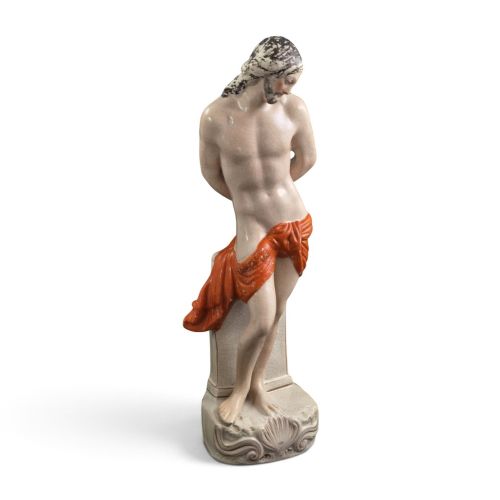
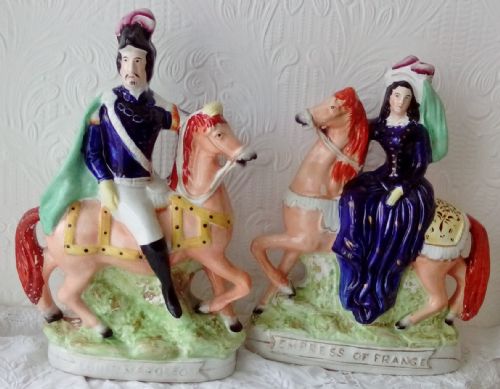
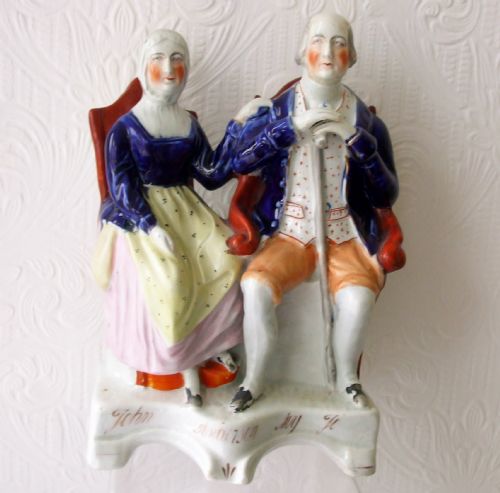
The objects frequently depict literary heroes, military leaders, and everyday scenes of pastoral life, modeled with varying degrees of realism and folk art charm. Buyers often encounter matched pairs of dogs, spill vases featuring sheep or stags, and figures commemorating specific political events or notable individuals of the era.
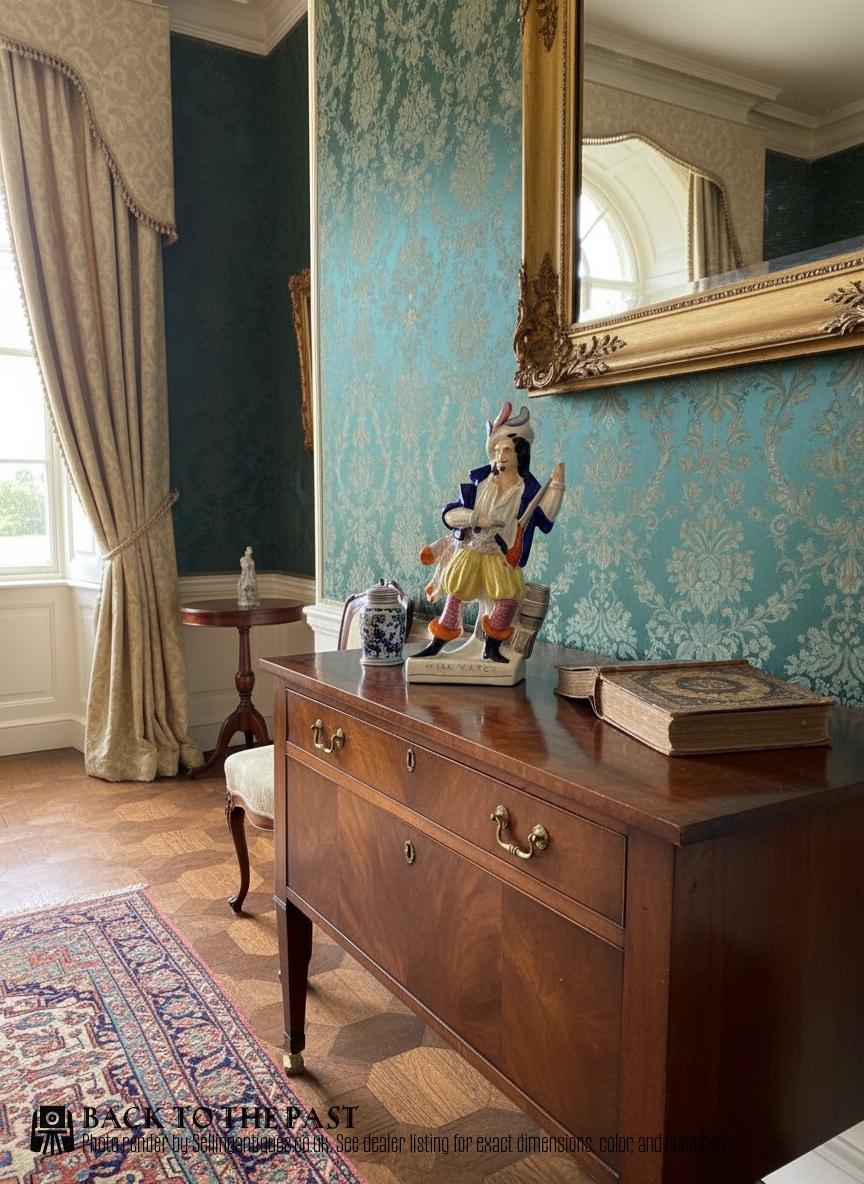
Variations in quality
Pairs that have survived intact without extensive restoration command greater attention, as many utilitarian ceramic figures suffered chips and hairline cracks during decades of domestic use.
Common forms include seated greyhounds, spaniels, lions, and portrait figures of political leaders and literary characters.
John Bevington·Rockingham Pottery
The Victorian Staffordshire Figurine Glossary
- Flatback
- A figure moulded with a finished front and a flat, unpainted or partially glazed back designed to sit flush against a wall.
- Spill vase
- A hollow ceramic vessel incorporating a holder meant to contain wooden spills used for lighting pipes and fires.
- Earthenware
- A porous pottery body fired at a lower temperature than porcelain and traditionally coated in a lead glaze.
- Comforter spaniel
- A seated pottery dog produced in pairs to guard the hearth of a nineteenth century home.
- Enamel paint
- A glossy, opaque pigment applied over the fired glaze to add colour and detail to the ceramic figure.
Victorian Staffordshire Figurine: Frequently Asked Questions
What is a flatback figure?
A flatback figure is a ceramic piece moulded with a decorated front and a plain, flat reverse designed to sit neatly against a wall or mantelpiece.
This method of construction saved clay and simplified production for pieces meant to be viewed from a single angle.
How were spill vases used?
Spill vases combined a decorative pottery animal or human figure with an integrated cylindrical holder for thin wooden taper splints.
Households used these wooden spills to transfer flames from the hearth fire to candles and oil lamps before matches became common.
Why do staffordshire dogs come in pairs?
Potters produced dogs such as spaniels and greyhounds as symmetrical pairs to adorn the left and right corners of a fireplace.
Arranging them facing inward toward each other was a standard convention of nineteenth century domestic interior display.
How do you date a staffordshire figure?
Dating relies on stylistic clues, costume details, and the historical events or people commemorated in the portrait models.
Figures depicting specific military campaigns or political figures offer a narrow window of production following those events.