

Victorian Pottery Figurines
Victorian pottery figurines are tactile pieces of Staffordshire earthenware that bring character and history into a room.

What victorian pottery figurines are
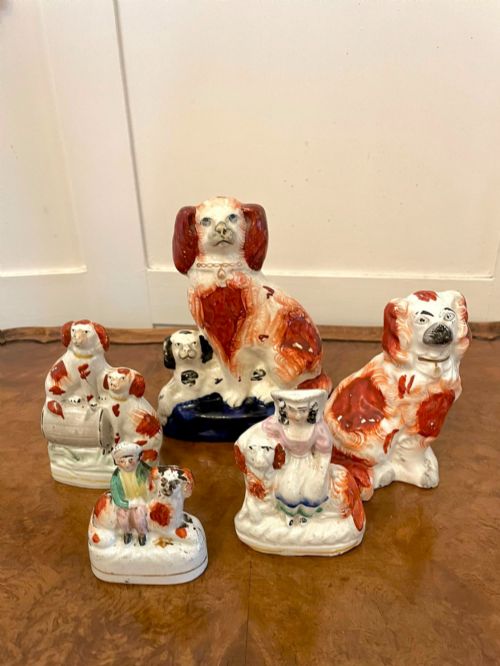
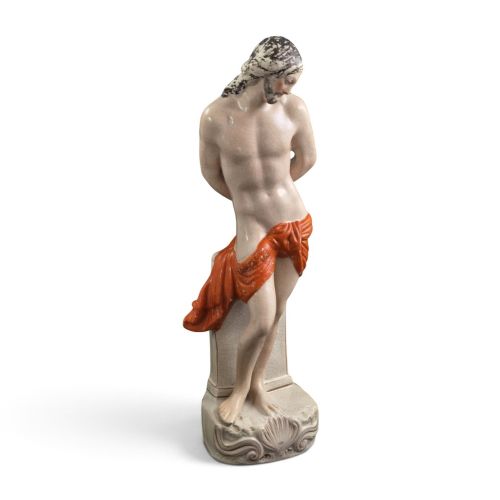
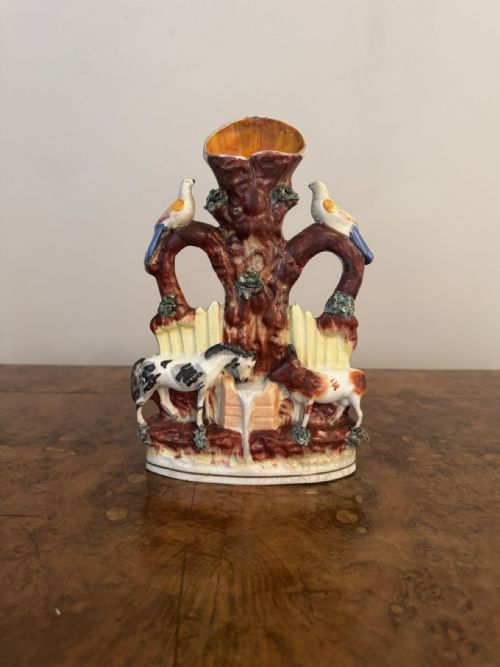
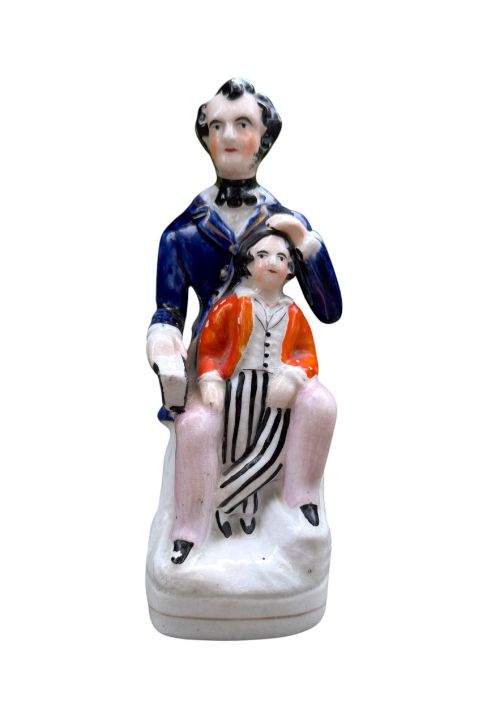
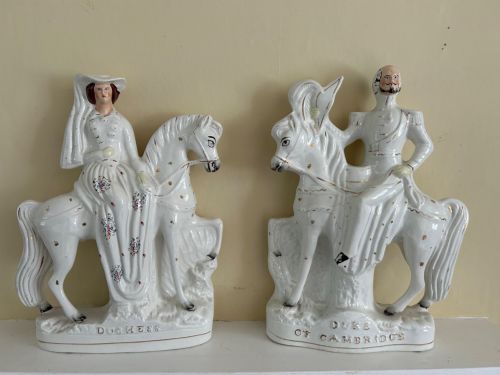
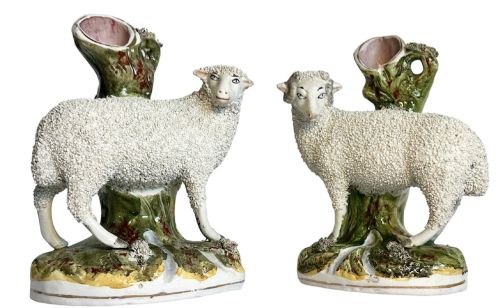
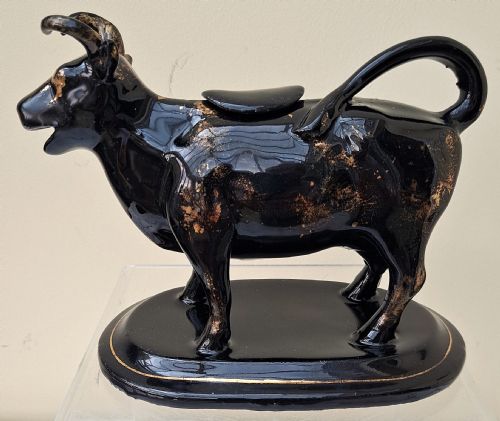
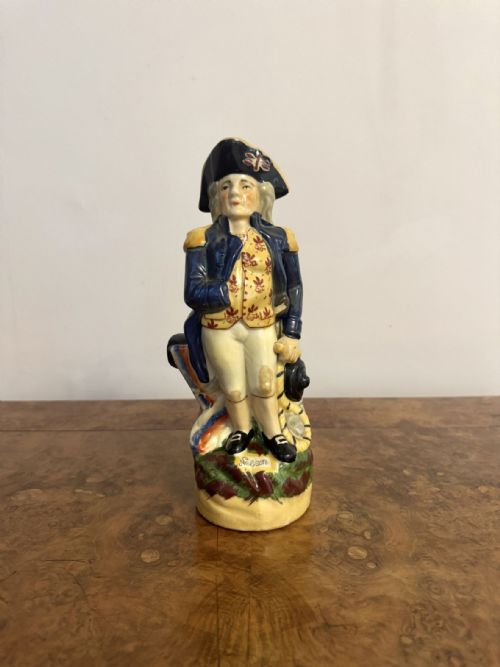
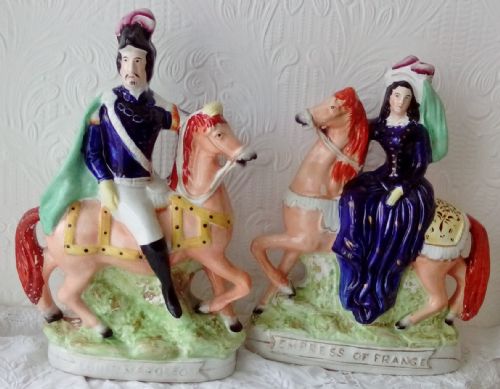
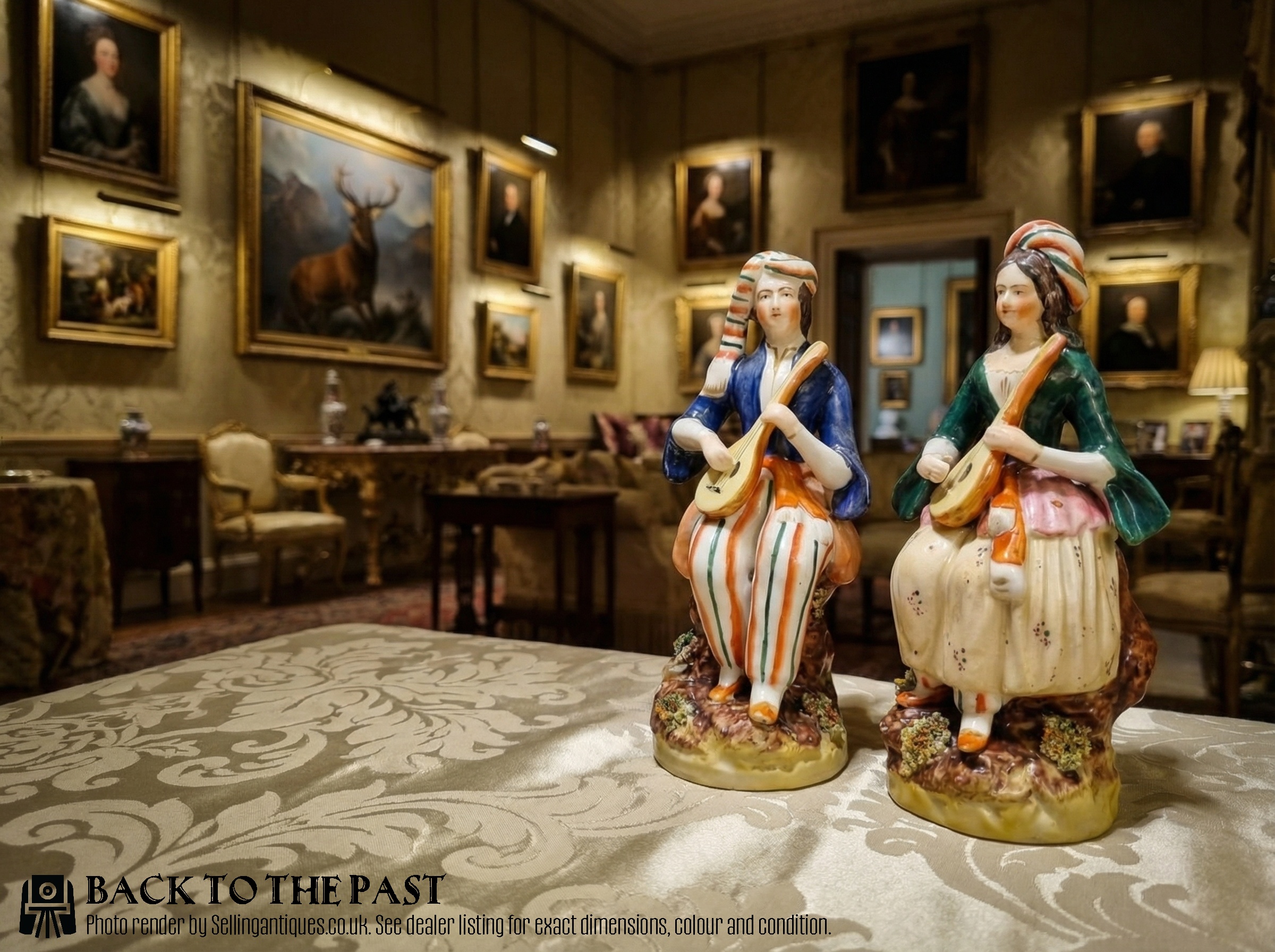
Victorian pottery figurines take many forms, from pairs of Scottish figures and goatherds to seated Turks and portraits of the Duke and Duchess of Cambridge. These earthenware pieces capture the popular tastes and characters of the nineteenth century in ceramic form.
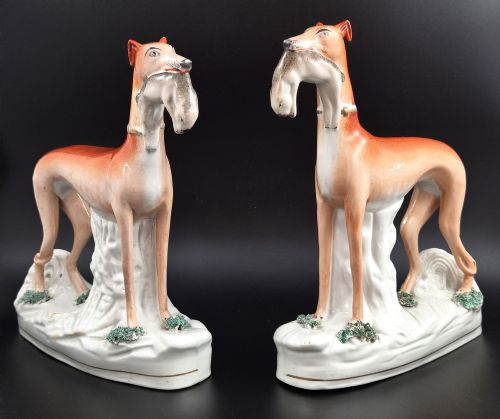
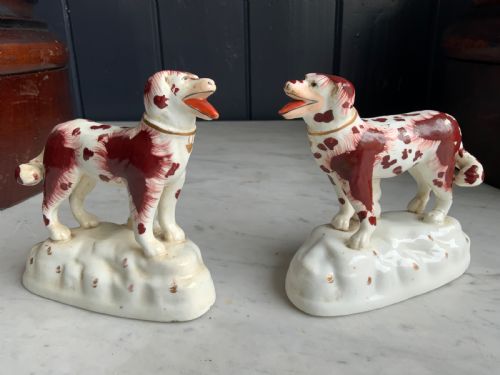
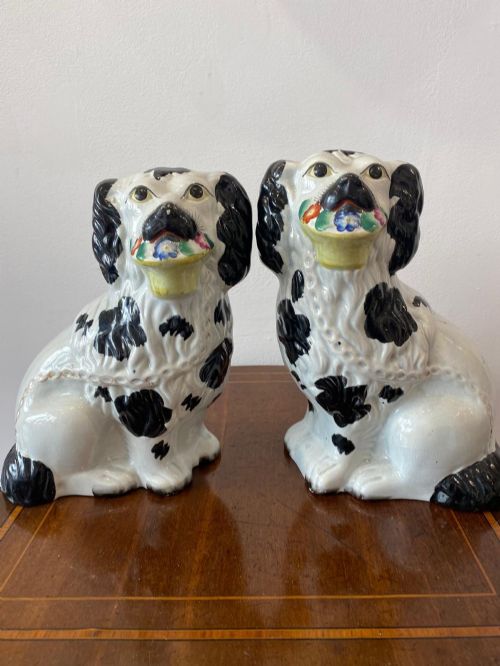
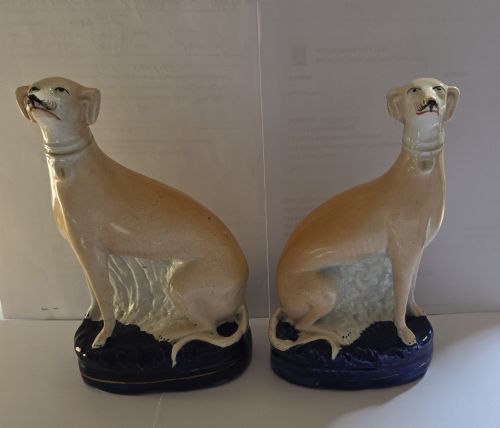
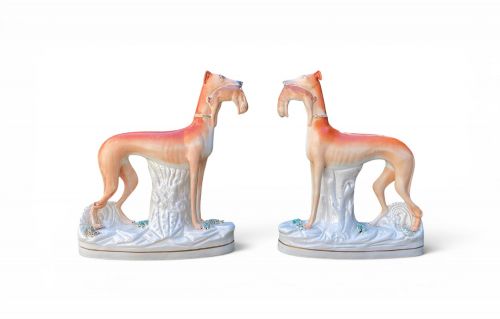
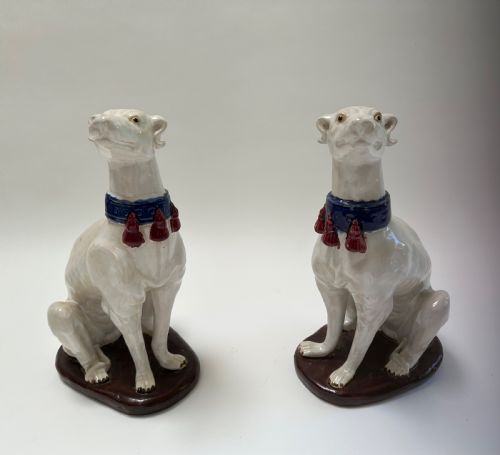
The Staffordshire tradition dominates this selection, offering both flatback figures designed to stand against a mantelpiece and free-standing models like hand-painted dogs. These decorative figures range from the simpler modelling of the mid-nineteenth century to later Victorian examples.
How they were made
The production relied on careful hand painting to bring expression to each figure, ensuring that identical moulds gained individual character through the decorator's brushwork.
Retail Price Guide 2026
Typical UK retail prices for victorian pottery figurines, calculated from the Sellingantiques database of over a million retail prices indexed since 2003. This retail price guide relies exclusively on Sellingantiques data; no external sources or auction records are used, so the figures do not describe the wider market.
Sometimes a pair of Staffordshire dogs appears with such fierce expressions that they look more ready to guard a castle than warm a hearth.
What varies in quality
Pairs tend to command greater attention when the matching figures retain balanced proportions and consistent glaze coverage across both pieces, preserving their original decorative partnership.
The Victorian Pottery Figurines Glossary
- Flatback
- A style of Staffordshire figure moulded with a finished front and a flat, unglazed or minimally glazed rear designed to stand flush against a wall or mantelpiece. This method saved time and materials during production.
- Earthenware
- A porous pottery body fired at lower temperatures than stoneware or porcelain, requiring a glaze to become impermeable. It forms the standard ceramic base for these nineteenth-century figures.
- Lead glaze
- A glossy coating containing lead oxide applied to earthenware before firing to create a smooth, protective finish. It gives these older pieces their characteristic surface shine.
- Gilt
- A thin layer of gold or gold-like material applied to accent specific areas of the pottery. It adds a decorative touch to collars, bases, and garments.
Frequently Asked Questions
What are flatback figures?
Flatback figures are ceramic pieces designed with a detailed front and a flat reverse side. Potters made them specifically to sit neatly against a wall or on a mantelpiece.
This construction method reduced the weight and cost of the pottery while creating a strong visual presence for interior display.
How do I care for my figurine?
Keep your pottery figurines out of direct sunlight to protect the painted enamel colours from fading over time. Dust them gently with a soft, dry brush rather than using liquid cleaners.
Handle them carefully by the base and body rather than delicate protruding parts like arms or accessories.
What subjects do these figures show?
These ceramic pieces depict a wide range of subjects, including royal personages like the Duke and Duchess of Cambridge, rural workers such as goatherds, and exotic figures like seated Turks. Animal models, particularly dogs, also form a significant part of the tradition.
Such diverse subjects reflect the varied interests and decorative tastes of Victorian households.