



Staffordshire Equestrian Figures
Staffordshire equestrian figures bring Victorian portraiture and folk narrative into ceramic form, capturing mounted royals, soldiers and literary heroes for the shelf.
Staffordshire Equestrian Figures
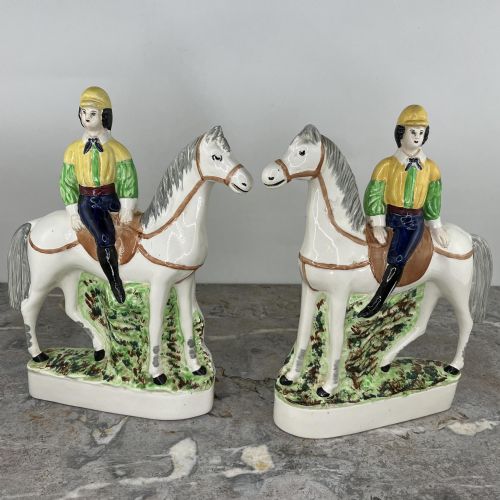
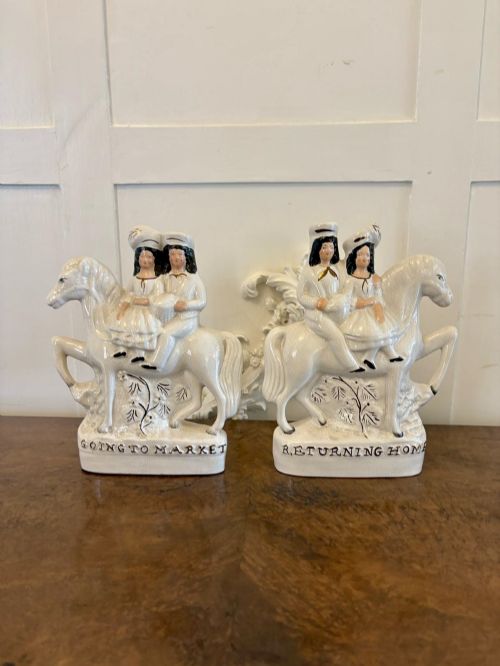
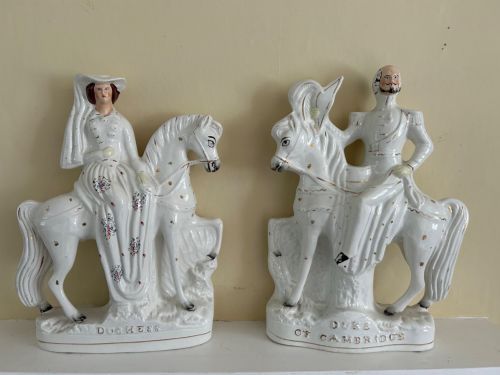
Staffordshire equestrian figures represent a distinct branch of nineteenth-century ceramic output, depicting mounted subjects ranging from named historical figures like the Duke and Duchess of Cambridge to anonymous Scottish highlanders and highwaymen. These pieces typically take the form of flatback pottery figures designed to sit before a wall, presenting a lively silhouette from the front and sides.
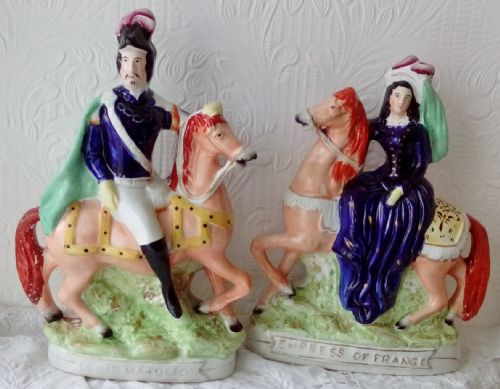
The subjects seen across these listings include political leaders, royalty such as Louis Napoleon and the Empress of France, military heroes like Garibaldi, and literary or romantic archetypes including Joan of Arc and Tom King. Buyers encounter pairs and individual models alike, with many capturing children on horseback, mounted jockeys, musicians and leopard hunters.
Originating predominantly in the Victorian period, particularly during the middle and later decades of the nineteenth century, these earthenware sculptures reflect popular tastes of the era. The form bridges domestic decoration and narrative portraiture, giving pride of place to notable contemporary personalities and dramatic rural scenes.
Materials and Making
Potters constructed these figures using earthenware clay, shaped through press-moulding techniques that allowed for consistent production of horses and riders. The resulting ceramic bodies were finished with lead glazes or enamel paints to achieve the bright, glossy surfaces characteristic of the period.
Makers applied enamel paint over the glaze and occasionally added gilt highlights to emphasise costume details and harnesses. This combination of ceramic body, vibrant enamel and liquid glaze created the colourful, durable finish seen on nineteenth-century flatback figures.
Staffordshire Equestrian Figures Retail Price Guide 2026
Typical asking prices for staffordshire equestrian figures among the pieces listed under this phrase on Sellingantiques today, from the lower quarter to the upper quarter. They describe what is for sale here now, not the wider market.
Among the royal children and generals on this page sits Tom King, reminding us that Victorian mantelpieces welcomed highwaymen as warmly as monarchs.
Evaluating Quality
The application of enamel paint and glaze also distinguishes finer pieces, where colours remain bright and registration stays clean across the moulded contours. Weaker examples show heavy, blurred brushwork or indistinct moulding that obscures the narrative detail of the scene.
The Staffordshire Equestrian Figures Glossary
- Flatback
- A ceramic figure modelled fully on the front and sides while the reverse remains largely unadorned or flat. This design allowed the piece to sit flush against a mantelpiece or shelf.
- Earthenware
- A porous, opaque pottery body fired at lower temperatures than stoneware or porcelain. It requires a glaze to become impermeable to liquids.
- Lead Glaze
- A glossy surface coating containing lead compounds, commonly used on nineteenth-century Staffordshire pottery to impart shine and protect the earthenware body.
- Enamel Paint
- Opaque vitreous colours applied over the fired glaze and subjected to a lower heat firing to fix the pigment. This technique permitted a wider palette of bright reds, blues and greens.
Staffordshire Equestrian Figures: Frequently Asked Questions
What are Staffordshire equestrian figures?
Staffordshire equestrian figures are nineteenth-century ceramic sculptures depicting historical, political or literary figures on horseback. They were produced primarily as decorative mantel ornaments for Victorian homes.
These pieces combine moulded earthenware with hand-applied enamel paints and glazes to portray notable subjects such as royalty, military commanders and highwaymen.
How were Staffordshire equestrian figures displayed?
Makers designed these flatback pieces to stand directly against a wall on mantelpieces, sideboards or shelves. Their flat backs made them stable in domestic interiors.
Pairs of figures often balanced each other visually on either side of a clock or centrepiece within the Victorian parlour.
How do you identify Victorian periods?
Victorian Staffordshire figures typically feature specific stylistic markers such as moulded flatback construction, earthenware bodies and bright enamel colour palettes. Specific dates often tie to contemporary events or personages depicted in the titles.
Comparative study of costume details, glazing techniques and subject matter helps place individual pieces within the broader nineteenth-century timeline.
Are these figures glazed all over?
Most pieces feature a transparent or tinted lead glaze covering the painted earthenware body to provide a protective, shiny finish. The unglazed areas are usually confined to the flat undersides of the bases.
This all-over glazing protected the enamel paints from dust and wear in coal-heated Victorian households.