


Staffordshire Flatback Pair
These staffordshire flatback pair figures bring nineteenth century portraiture and domestic theatre directly onto the mantelpiece.
Staffordshire Flatback Pair
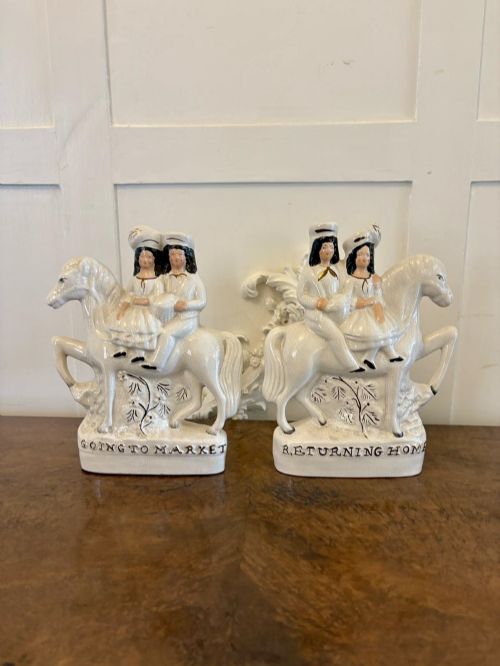
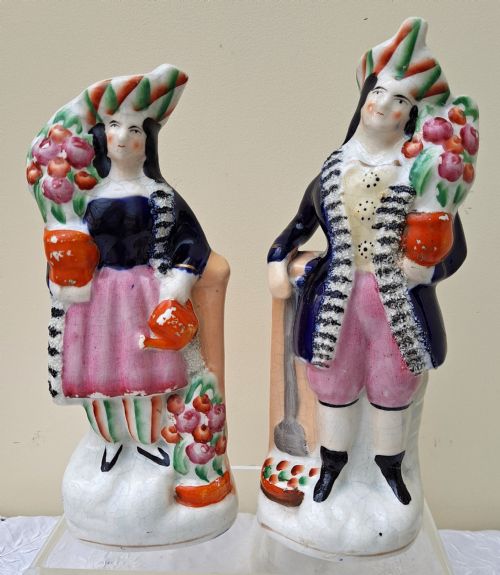
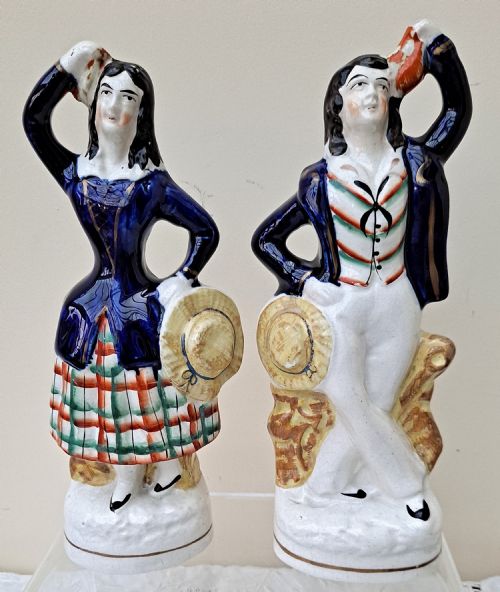
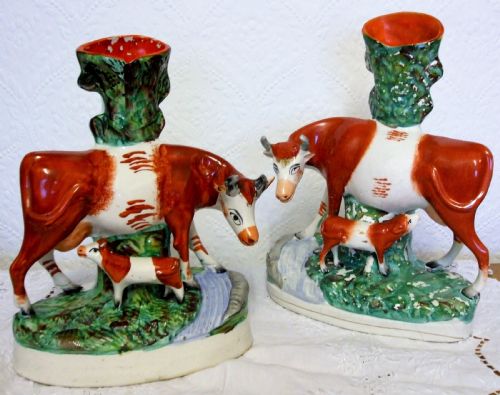
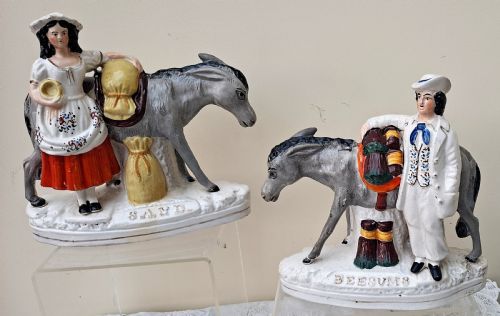
A staffordshire flatback pair comprises matched ceramic figures designed during the nineteenth century specifically for display against a wall, leaving the reverse unglazed and flat. The selection here centres on Victorian earthenware models depicting royalty, theatrical performers, literary characters, and domestic animals.
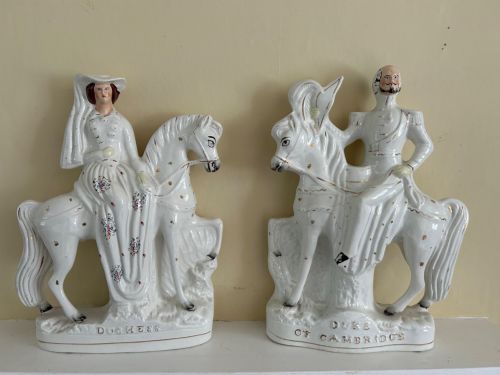
Buyers encounter subjects ranging from the Duke and Duchess of Cambridge to Scottish figures, gardeners, and greyhounds with hares. These pieces served as decorative ornaments in Victorian homes, often flanking clocks or ornaments on parlor mantelpieces.
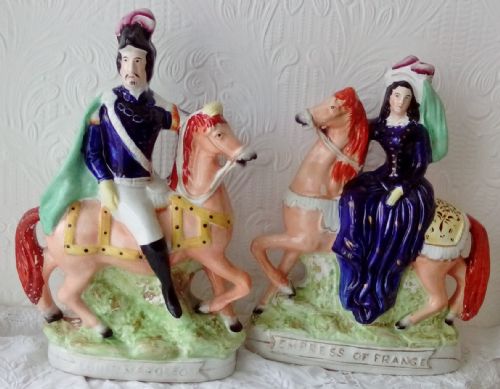
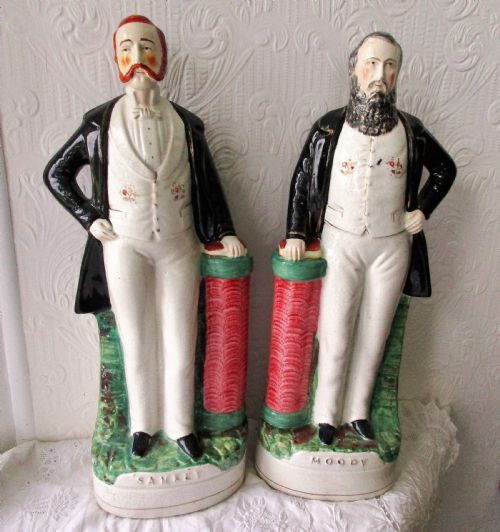
The nineteenth century production includes spill vases and portrait groups modelled as couples or matching companions. These pairs reflect the era's taste for narrative display, pairing subjects like Louis Napoleon and the Empress of France or Moody and Sankey.
How they were made
Potters shaped these earthenware figures using moulds, allowing workshops to replicate popular portrait subjects and animal groups efficiently. The clay body received a lead glaze that gave the surface a smooth, protective sheen.
Listings span nineteenth century production, featuring earthenware, lead glaze, enamel paint, and gilt across Victorian styles.
What varies in quality
The application of gilt and the depth of the glaze also distinguish finer pieces from standard domestic production. Stronger modeling in the clay gives figures such as animals and riders a more lifelike presence.
The Staffordshire Flatback Pair Glossary
- Flatback
- A ceramic figure moulded with a finished front and sides while the reverse remains flat and unadorned. This design allowed the piece to sit flush against a wall or mantelpiece.
- Spill vase
- A hollow pottery figure incorporating an attached cylinder designed to hold wooden spills for lighting fires or candles. These combination pieces served a practical household function alongside their decorative role.
- Earthenware
- A porous ceramic body fired at lower temperatures than stoneware or porcelain. It formed the standard base material for nineteenth century Staffordshire figures before being glazed and painted.
- Lead glaze
- A liquid glass coating applied to pottery before firing to create a glossy, waterproof surface. This finish enriched the colours of the underlying enamel paint.
- Enamel paint
- Coloured vitreous pigments applied over the fired glaze and subjected to a lower temperature fix. It provided the bright palette seen on Victorian portrait and animal figures.
Staffordshire Flatback Pair: Frequently Asked Questions
What subjects appear most often?
The listings feature royal portraits, historical figures, theatrical pairs, and various animals including greyhounds, cats, and goats.
Human subjects range from evangelists and musicians to harvesters and nobility.
Where were these figures displayed?
Owners placed these ornaments on parlor mantelpieces, often arranged in pairs to flank clocks or other decorative objects.
Their flat backs enabled them to sit securely against interior walls.
How do I identify the period?
The pieces date from the nineteenth century, specifically the Victorian era, utilising earthenware and lead glaze techniques common to that time.
Stylistic markers include moulded subjects and hand-painted enamel details typical of Victorian potteries.
What is a spill holder?
A spill holder combines a decorative figural group with an integrated vase designed to hold thin wooden tapers.
Households used these tapers to transfer flames from the hearth to candles or lamps.