




19th Century Pottery Figures
These 19th century pottery figures capture the character, portraiture and domestic animal life of the Victorian and Georgian eras.
19th Century Pottery Figures
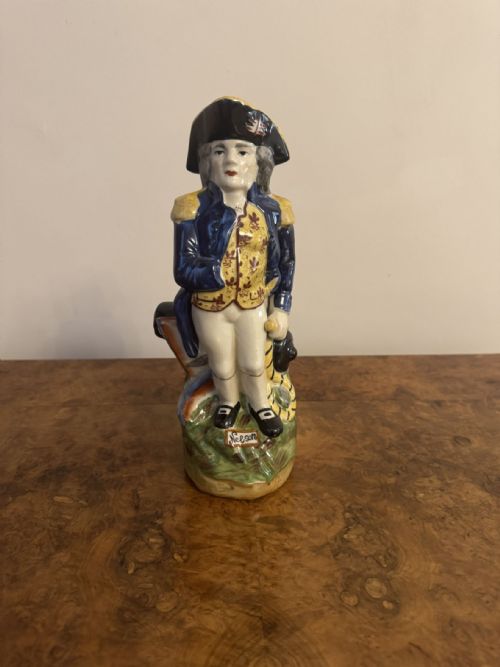
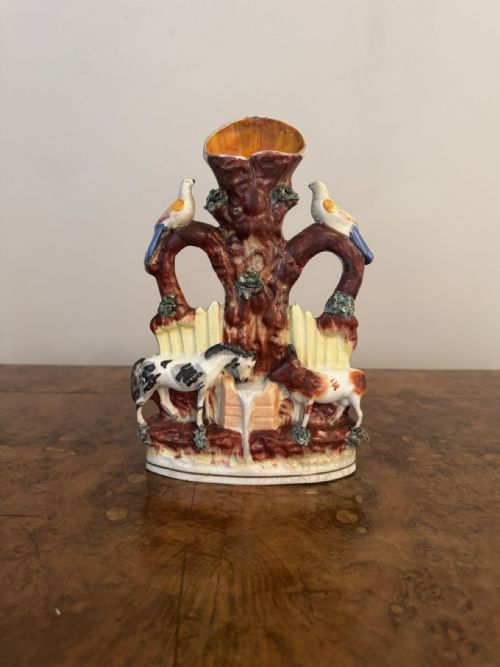
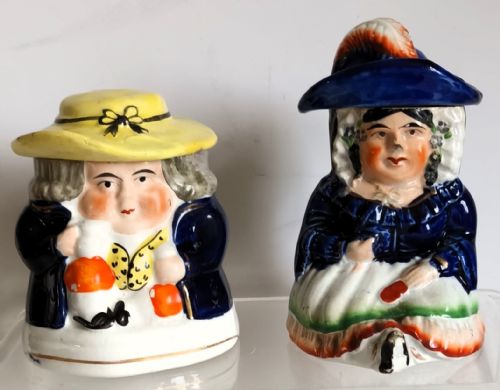
When you search for 19th century pottery figures, you encounter a diverse array of earthenware and ceramic sculptures spanning the Victorian and Georgian periods. These pieces range from portrait figures and historical subjects to spill vases, Toby jugs and animal studies.
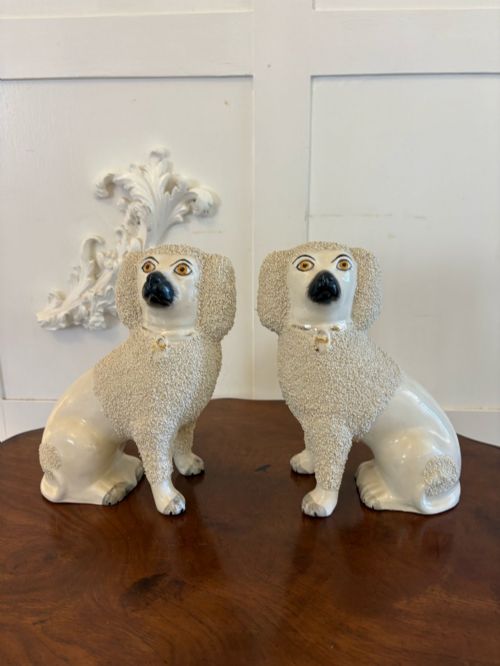
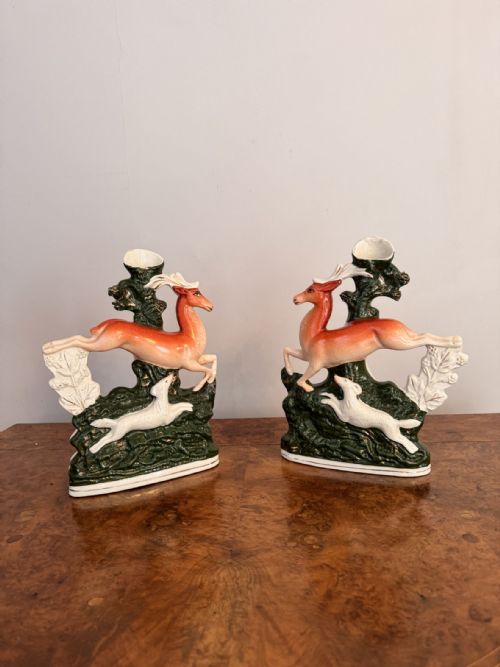
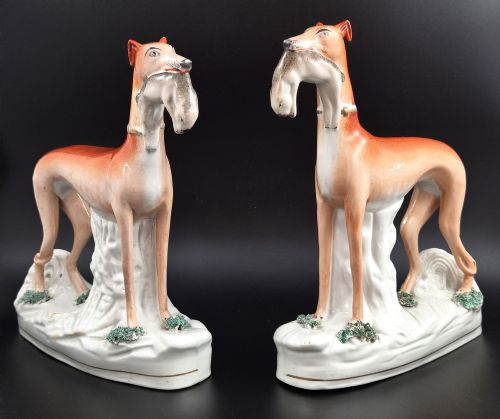
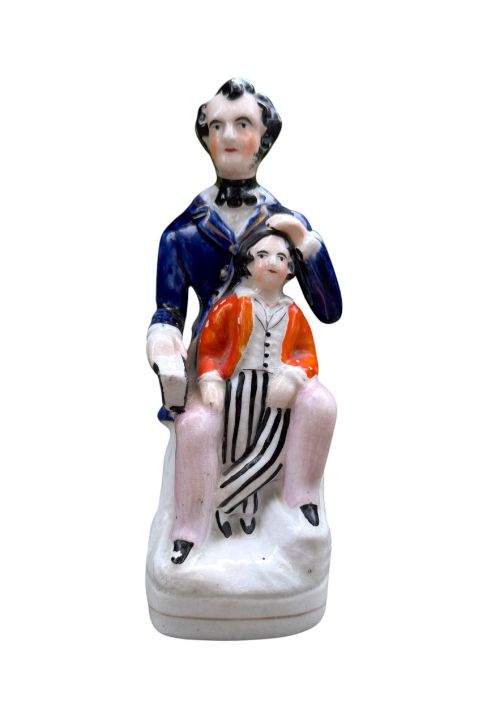
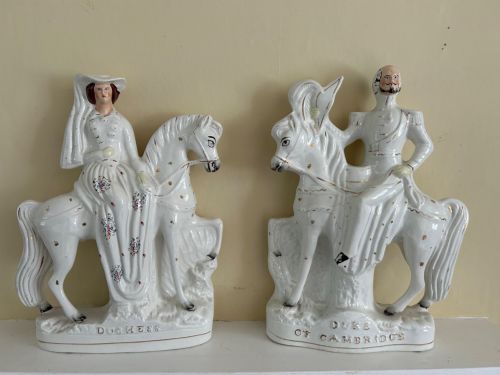
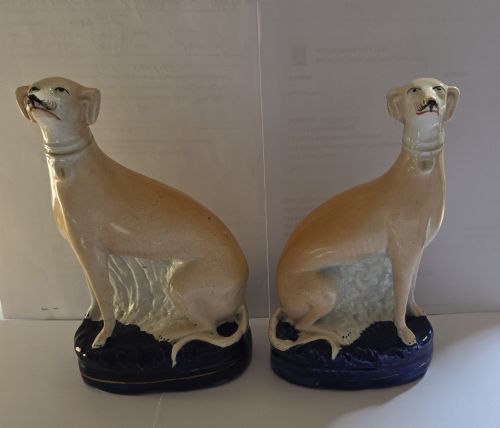
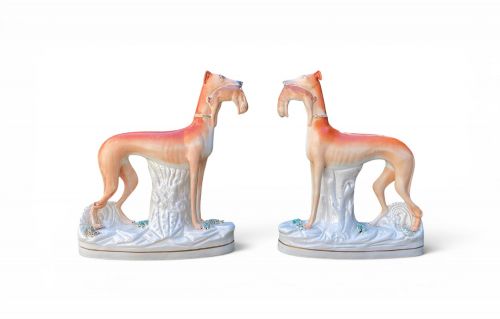
The most common examples on this page are Staffordshire pottery figures, often featuring pairs of poodles, greyhounds, lions or deer. Flatbacks and figural groups depicting literary characters, historical events and royalty also feature prominently among the listings.
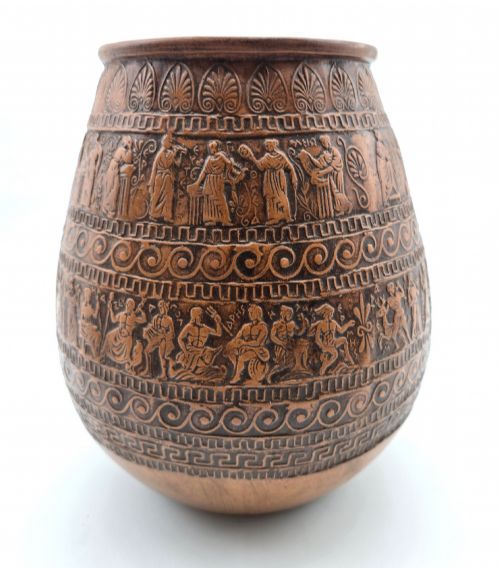
Originating predominantly from English potteries, the selection occasionally extends to French faience, Dutch Delftware, Italian majolica and Japanese satsuma wares. Forms vary from simple decorative figurines to functional tobacco jars and water pitchers.
How They Were Made
These pieces are constructed primarily from earthenware and ceramic bodies, shaped through moulding or casting techniques typical of nineteenth-century production. Makers utilised lead glazes and enamel colours to finish the surfaces, frequently adding gold leaf highlights for decorative effect.
Pearlware and specialised tin glazes appear on earlier Georgian examples, whilst later Victorian pieces often showcase rich cobalt blue details and hand-painted polychrome enamels. The application of glaze and pigment varies from simple block colouring to detailed facial expressions and patterned attire.
Current listings feature earthenware, pearlware, and glazed ceramic materials across Victorian and Georgian periods.
What Varies in Quality
The sophistication of the modelling separates standard decorative wares from exceptional portrait pieces and matched pairs. Greater artistic intent shows in the naturalism of animal forms and the proportion of flatback architectural elements.
John Bevington·Thomas Parr·Goldscheider
The 19th Century Pottery Figures Glossary
- Flatback
- A pottery figure designed with an unglazed or simply decorated flat reverse, intended to be placed against a mantelpiece or wall.
- Spill Vase
- A hollow figural vessel incorporating a cylindrical holder designed to store wooden matches or tapers for lighting fires and pipes.
- Pearlware
- A fine-grained earthenware developed in the late eighteenth century, characterised by a pale bluish-grey glaze that pooled in recesses.
- Majolica
- A type of pottery covered with an opaque lead glaze, known for vibrant, heavy-moulded relief decoration and rich coloration.
- Toby Jug
- A pottery jug modelled in the form of a stout, cheerful person, usually seated and holding a mug or glass of beer.
19th Century Pottery Figures: Frequently Asked Questions
What are Staffordshire flatback figures?
Staffordshire flatback figures are earthenware ornaments produced in the nineteenth century with finished fronts and flat backs. They were designed specifically for display on mantels and shelves in British homes.
Potters painted these figures with bright enamels to catch the light in dimly lit Victorian rooms. They depicted everything from royalty and military heroes to domestic animals and literary scenes.
How were nineteenth century pottery figures used?
These figures served primarily as decorative ornaments in nineteenth century parlours and drawing rooms. Pairs of dogs, lions or human figures flanked clocks and filled mantel spaces.
Some forms served a dual purpose, such as spill vases that held wooden tapers for lighting lamps or tobacco jars that stored smoking supplies.
How do I date a pottery figure?
Dating relies on stylistic clues, manufacturing materials like pearlware or earthenware, and subject matter reflecting historical events. Reign dates, specific costume details and registration marks help narrow the period.
Comparing modelling techniques and glaze types against known historical benchmarks clarifies whether a piece originates from the Georgian or Victorian era.
What subjects are most common?
Animals such as greyhounds, poodles, deer and lions form a large portion of surviving pieces. Pairs of dogs and seated wildlife dominate the domestic pottery output.
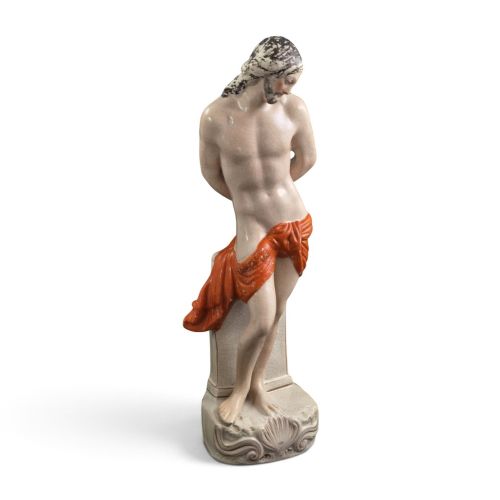
Portrait figures of political leaders, military commanders, literary characters and royalty also appear frequently, capturing the popular culture and interests of the nineteenth century.