




English Pottery Spill Vase
These English pottery spill vase examples are charming nineteenth century Staffordshire earthenware figures designed to hold wooden matches, combining domestic utility with naive sculptural character.
English Pottery Spill Vase
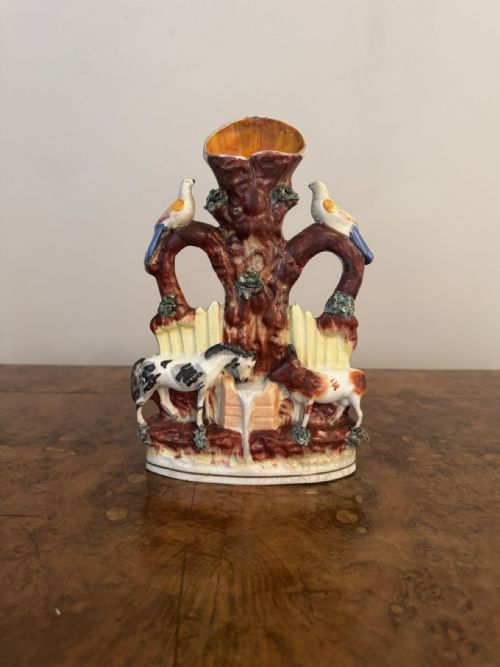
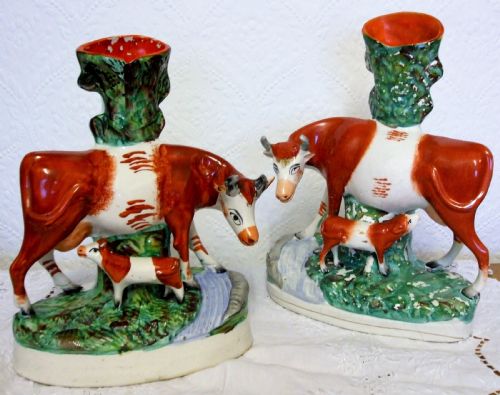
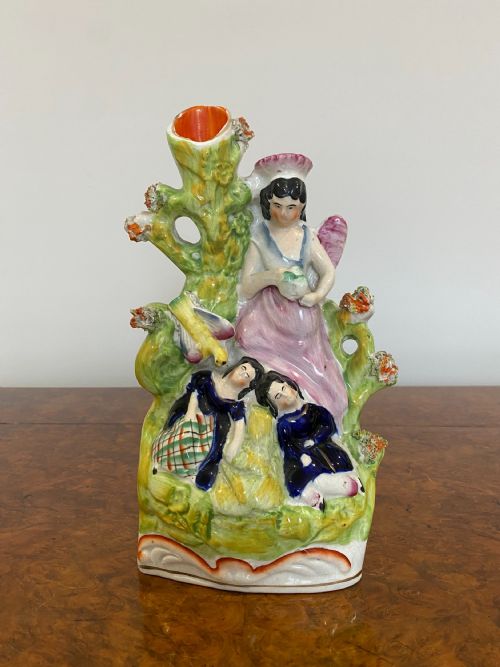
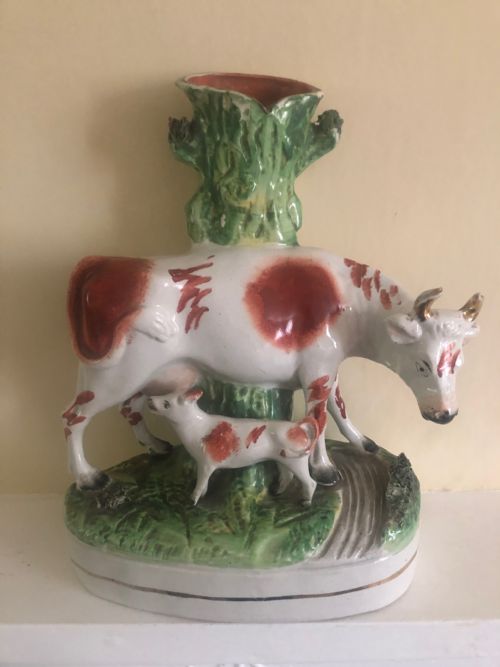
An english pottery spill vase is typically encountered as a Victorian Staffordshire figure or animal group incorporating a hollow cylindrical tube for matches alongside the main sculptural subject. These nineteenth century pieces depict cows and calves, deers, sheep, swans, and human figure groups such as Scots harvesters and the Band of Hope.
Most items on this page belong to the Victorian era, spanning decades from the eighteen-sixties through to the eighteen-nineties. Buyers find both individual figures and balanced pairs designed for display on a mantelpiece.
Forms range from simple utilitarian holders to elaborate flatback castles and figurative scenes like Babes in the Wood. The core function remains the containment of wooden spills used to transfer fire from a hearth to a candle or pipe.
Materials and construction
Makers shaped these earthenware bodies using traditional pottery techniques before applying lead glaze and surface enamel colours. Many examples incorporate hand-painted details over glazed ceramic surfaces, sometimes enhanced with gold leaf accents.
The construction typically relies on slip casting or pressing clay into moulds, creating the characteristic flat backs intended for display against a wall. The separate spill tube is attached firmly to the main body during the initial forming stage prior to firing.
Listings feature nineteenth century earthenware items utilising lead glaze, enamel, and gold leaf decoration across Victorian Staffordshire styles.
Distinguishing quality levels
Pairs and complex multi-figure groups generally demonstrate greater sculptural ambition than simple single figures, rewarding the collector with more engaging narrative subjects like stags chased by dogs or pastoral farm scenes.
The English Pottery Spill Vase Glossary
- Earthenware
- Porous ceramic pottery fired at lower temperatures, serving as the standard body material for nineteenth century Staffordshire production. It requires an applied glaze to become impermeable to liquids.
- Lead glaze
- A shiny coating containing lead compounds applied to pottery before a final firing to create a glossy, protective surface. This glaze gives Victorian figures their characteristic bright sheen.
- Flat back
- A moulding style where the reverse of the figure is left unadorned and flat. This technique allowed potters to save materials and ensured the piece sat flush against a parlour wall or mantelpiece.
- Spill
- A thin slip of wood or rolled paper used to transfer a flame from a fireplace to a candle or pipe. The integrated vase holds these spills upright and ready for daily domestic use.
- Enamel
- Coloured vitreous paint applied over the fired glaze to add decorative details to pottery figures. These surface pigments are fixed during a subsequent lower temperature kiln firing.
English Pottery Spill Vase: Frequently Asked Questions
What is an english pottery spill vase?
An english pottery spill vase is a nineteenth century ceramic holder, often shaped as a Victorian Staffordshire figure, animal, or castle, featuring a built-in tube to hold wooden matches.
These pieces served a practical household purpose in Victorian parlours while providing decorative charm to mantelpieces.
How were these ceramic figures used?
Victorian households kept wooden spills inside the hollow cylindrical tube attached to the figure. When a fire was needed, a spill was ignited from the hearth to light candles, lamps, or tobacco pipes.
The figures stood on mantelpieces where matches were kept dry and readily accessible for daily use.
How do I date an antique spill vase?
Dating relies on stylistic clues and manufacturing characteristics from the nineteenth century, with specific pieces recorded across the eighteen-sixties, seventies, and eighties. Victorian Staffordshire figures typically display moulded flat backs and hand-painted enamel colours typical of that period.
Examining the crazing in the lead glaze and the wear on the earthenware base helps confirm the age of the piece.
Are these pieces usually found in pairs?
Many Staffordshire pottery spill vases and figures were produced and sold as matched pairs designed to sit symmetrically on either end of a mantelpiece. Common paired subjects include cows and calves, sheep, and swans.
Single figures and multi-piece groups also appear frequently among nineteenth century Staffordshire ceramics.