


Earthenware Spill Vase
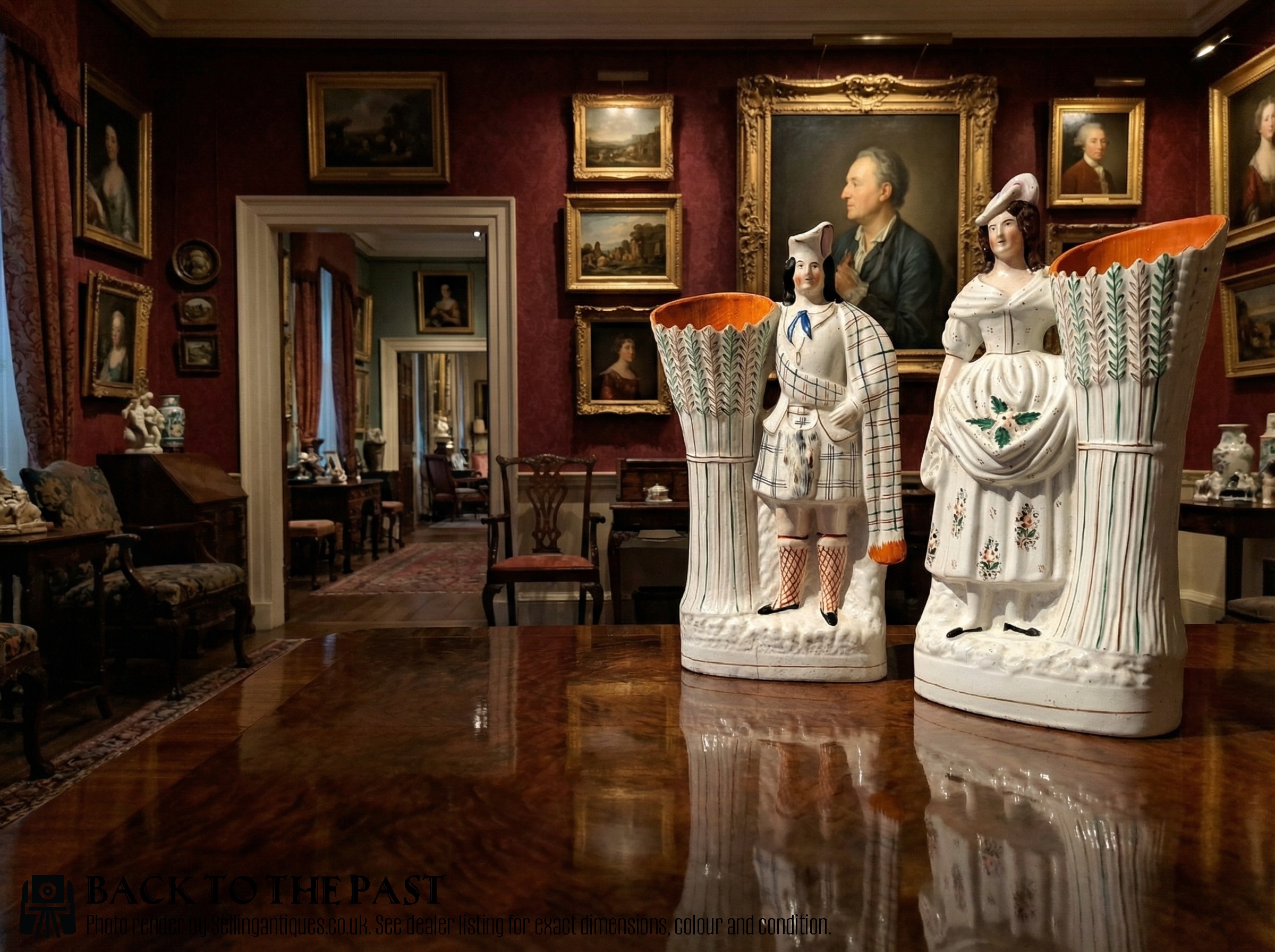
These earthenware spill vase examples are nineteenth century Victorian Staffordshire pottery figures that hold vestas safely.
What an earthenware spill vase is
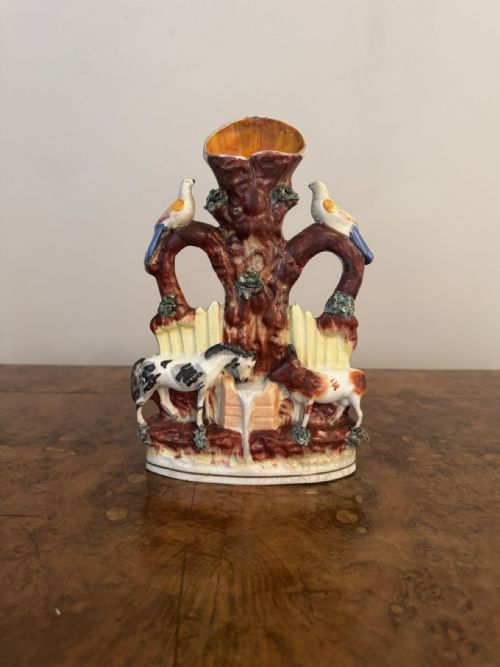
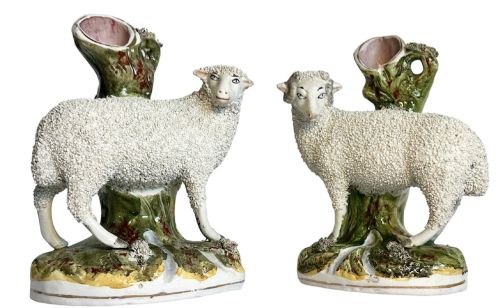
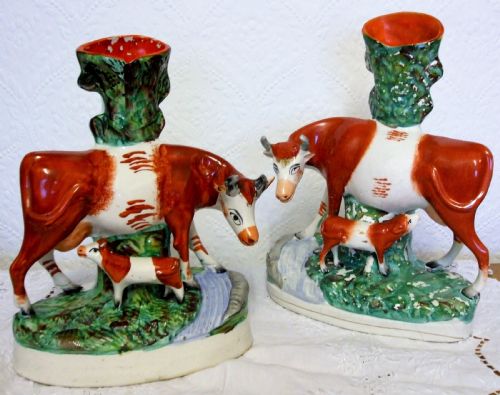
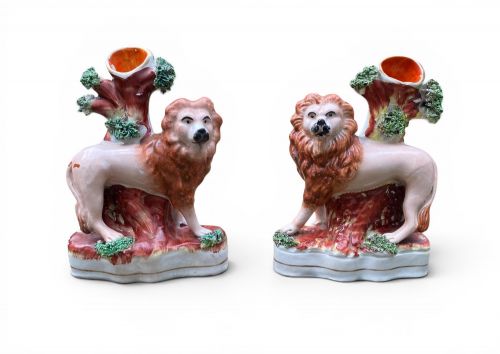
An earthenware spill vase combines a decorative figure with a hollow cylindrical holder designed to contain thin tapers for lighting fires or pipes. These decorative objects take the form of animals or human figures, notably featuring pairs depicting cows and calves, dogs, and deers.
The pieces appearing on this page belong to the nineteenth century, specifically bearing Victorian Staffordshire styles. Collectors encounter subjects ranging from simple animal groups to figural scenes like Scots harvesters.
How they were made
Potters shaped these earthenware vessels using clay before applying surface decoration. The manufacturing process relied on lead glaze and enamel colours to finish the ceramic bodies.
Makers formed the hollow cylindrical spill holders alongside the figural subjects to create a single cohesive ceramic piece. Subsequent firing set the glazed ceramic surfaces and fixed the enamel details.
Retail Price Guide 2026
Typical UK retail prices for earthenware spill vase, calculated from the Sellingantiques database of over a million retail prices indexed since 2003. This retail price guide relies exclusively on Sellingantiques data; no external sources or auction records are used, so the figures do not describe the wider market.
Materials across the selection consistently involve earthenware, lead glaze, and enamel applied in the Victorian Staffordshire style.
What varies in quality
Variations arise in the application of the lead glaze and the richness of the enamel colours across the Victorian Staffordshire range. Stronger modelling separates superior items from simpler production.
The Earthenware Spill Vase Glossary
- Earthenware
- A porous type of pottery fired at lower temperatures, requiring a glaze to hold liquids or serve as a finished surface.
- Spill
- A thin slip of wood or paper used for transferring a flame from a hearth to a candle or pipe.
- Staffordshire
- A geographic region in England famous for its extensive pottery production during the nineteenth century.
- Lead glaze
- A glossy coating containing lead oxide applied to ceramic bodies before firing to create a shiny finish.
Frequently Asked Questions
What is an earthenware spill vase?
An earthenware spill vase is a nineteenth century ceramic figure incorporating a hollow cylinder designed to hold wooden tapers.
Victorian potters shaped these objects into animal groups and figural subjects for domestic use.
How were spill vases used?
These vessels sat on mantelpieces to hold thin tapers ready for lighting candles, lamps, or fires.
Users pulled a spill from the holder and touched it to the hearth to carry a flame safely.
Which periods do these pieces date from?
The available listings originate entirely from the nineteenth century, with specific dates including eighteen sixty and eighteen eighty.
All recorded examples reflect Victorian Staffordshire manufacture.
What subjects appear on these vases?
Makers shaped these ceramic pieces into animal subjects such as dogs, deers, and cows with calves.
Human figures also appear, including depictions of Scots harvesters.