


Staffordshire Spaniel Figures
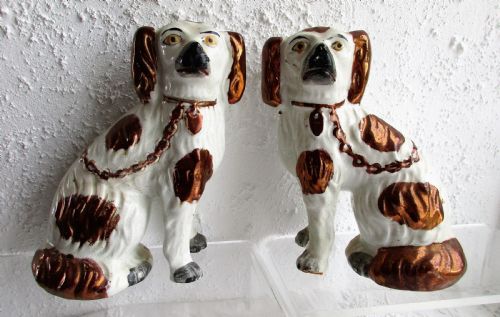
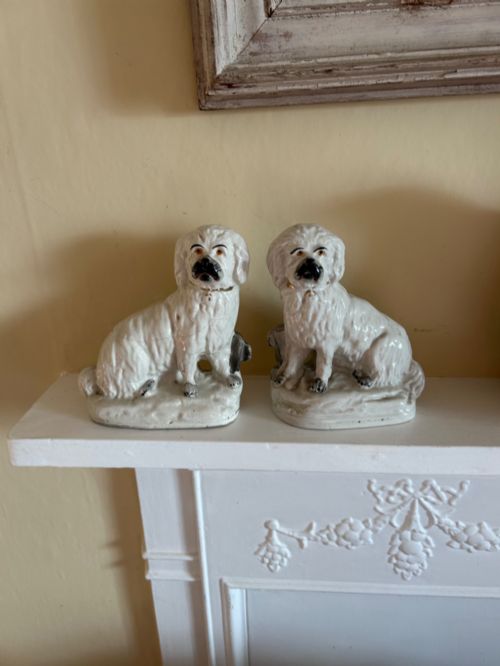
Staffordshire spaniel figures are ceramic mantel ornaments modelled as seated dogs, offering instant domestic charm and a traditional touch of Victorian hearthside character.
Staffordshire Spaniel Figures
Staffordshire spaniel figures appear primarily as seated pairs designed for the mantelpiece, capturing the domestic loyalties of the Victorian era. These ceramic dogs emerge in various forms, including standard comforter spaniels, money boxes, spill vases, quill holders, and clock groups, alongside occasional figures of dogs with children.
Most examples date from the nineteenth century, spanning periods from the eighteen-sixties and eighteen-eighties back to Georgian times, with occasional later twentieth-century pieces. The ceramic creations take inspiration from breeds like King Charles spaniels and Maltese terriers, shaping English traditional ornament with sculptural presence.
How they were made
Potters shaped these earthenware and stoneware bodies using moulds before applying glazes to seal the ceramic fabric. Artisans then added enamel colours, gold paint, and copper lustre decoration to define the eyes, collars, and patches.
Certain Victorian workshops introduced glass eyes to heighten realism, while hand-painted brushwork provided individual expression to each figurine. Firing techniques determined the depth of the glaze and the permanence of the surface pigments.
Listings feature earthenware, stoneware, and glazed ceramic bodies decorated with enamel, gold paint, and copper lustre.
What varies in quality
Quality rests in the crispness of the moulding and the precision of the hand-painted enamels, distinguishing master output from mass production. Pairs that retain matched proportions and deep, even glaze surfaces command greater visual presence on the mantel.
Royal Doulton·Beswick·Bilston
The Staffordshire Spaniel Figures Glossary
- Comforter spaniel
- A ceramic figurine representing the pet dogs popularised during the Victorian period, traditionally placed on mantelpieces facing inward. These figures often appear in pairs guarding the hearth.
- Spill vase
- A hollow ceramic cylinder attached to a figure, designed to hold taper splints used for lighting fires or pipes. This functional addition combines decorative sculpture with household utility.
- Copper lustre
- A metallic glaze technique producing a reflective, coppery sheen across the ceramic surface. Potters utilised this finish to give figures a rich, metallic brilliance.
- Quill holder
- A modelled pottery base featuring openings designed to store writing feathers. These utilitarian additions accompany the seated dog form.
- Earthenware
- A porous ceramic body fired at lower temperatures, commonly used for nineteenth-century Staffordshire figures. Glaze seals the porous clay to create a smooth decorative surface.
Staffordshire Spaniel Figures: Frequently Asked Questions
Why are Staffordshire spaniels found in pairs?
Makers produced these mantel dogs as symmetrical pairs to sit facing one another at each end of a fireplace. This traditional arrangement brought a sense of balance and watchful domestic order to the Victorian parlor.
The matching figures often reflected the posture of real pets kept by Victorian owners, serving as both decoration and sentimental household guardians.
What is a Staffordshire spill vase?
A spill vase incorporates a small cylindrical holder alongside the seated dog figure, intended to hold wooden taper spills. These wooden splints were used to transfer flames from the fireplace to candles and lamps.
This practical addition turned a standard decorative ceramic figure into a useful accessory for the nineteenth-century mantelpiece.
How do you date a Staffordshire dog figure?
Dating relies on examining the ceramic body, glaze characteristics, painting style, and moulding details. Victorian pieces from the mid to late nineteenth century often display characteristic earthenware fabrics and hand-painted enamel highlights.
Earlier Georgian examples and later twentieth-century studio pieces exhibit subtle differences in clay density and glaze coloration that help identify their period of origin.